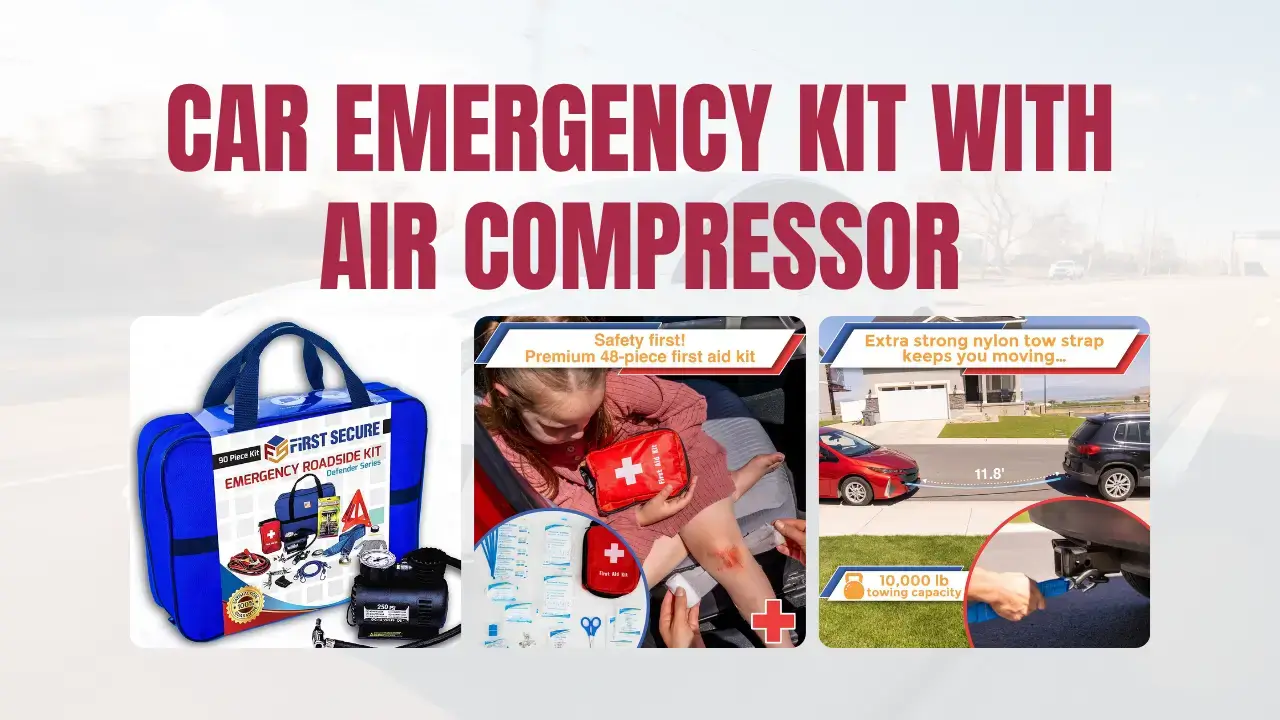
Imagine being stranded in the middle of nowhere with a flat tire and no cell signal. Scary, right? That’s where a well-stocked car emergency kit with an air compressor can be a literal lifesaver. Whether you’re a seasoned road warrior or a casual commuter, having a comprehensive emergency kit gives you not only tools but peace of mind. One of the standout tools in this kit is the air compressor—your go-to for inflating tires, fixing low-pressure issues, and keeping your journey on track without a hitch.
Flat tires are among the most common roadside emergencies, and unfortunately, they rarely happen in convenient spots. An air compressor lets you handle low tire pressure issues without relying on roadside assistance. And with inflation options ranging from mini portable compressors to powerful multi-use units, there’s no reason not to include one.
This guide will take you through everything you need to know about these kits—from what to include, how to use them, and even where to buy them. Buckle up, because this ride is going to be informative and incredibly useful.
Introduction to Car Emergency Preparedness
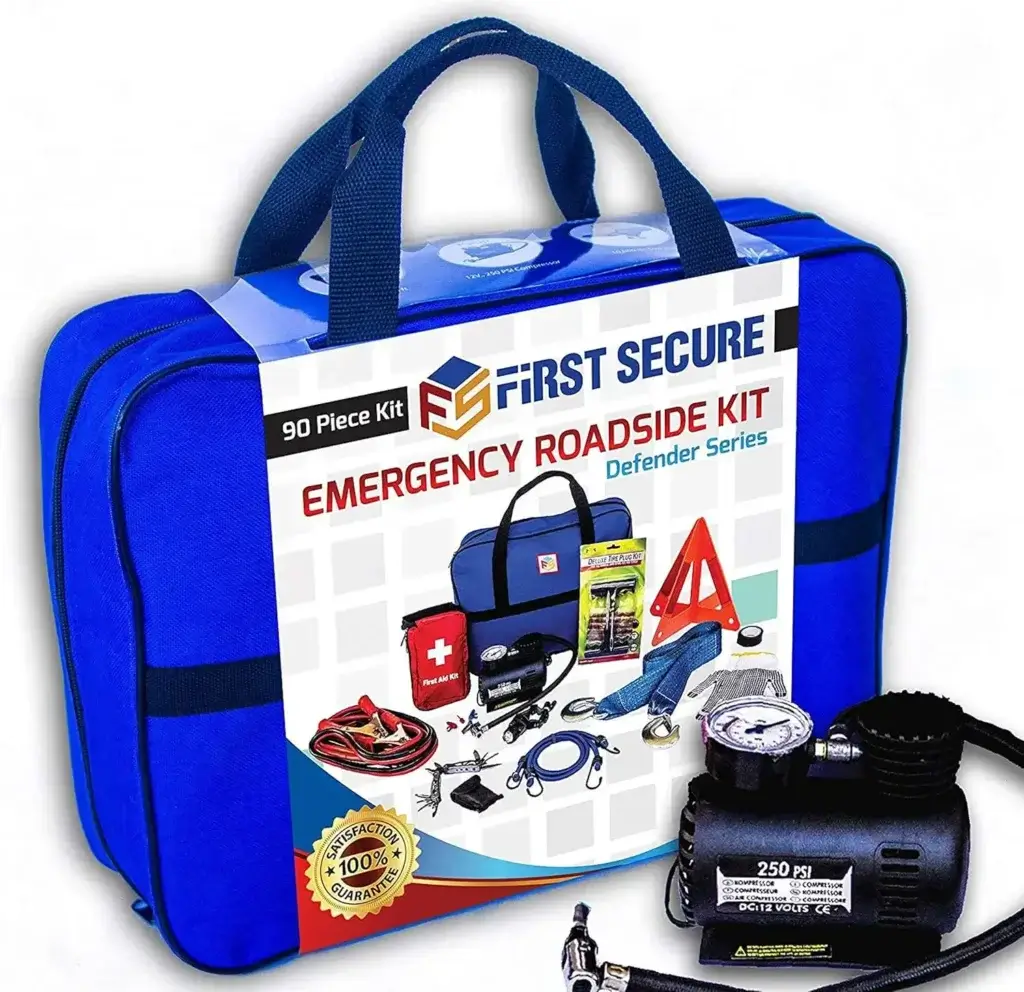
Image Credit: Amazon
Why Every Driver Needs an Emergency Kit
Let’s be honest: most people don’t think about emergencies until they’re in one. But preparation isn’t about paranoia—it’s about practicality. A car emergency kit ensures that you’re equipped for unexpected events like a dead battery, tire blowout, medical emergencies, or harsh weather conditions. The National Safety Council recommends that every vehicle have a basic emergency kit, and for good reason.
Think about the number of trips you take each week—work commutes, school drop-offs, weekend getaways. Each journey is an opportunity for something to go wrong. Without the right tools at hand, even minor issues can spiral into major problems. Flat tire on a rainy night? You’ll wish you had a flashlight, reflective vest, and yes—a reliable air compressor to get back on the road.
Preparedness also gives you control. When your car won’t start or your tire loses pressure, you’re not helpless. You become your own first responder. And that level of independence is not just empowering—it’s essential.
The Growing Importance of Road Safety
Road safety isn’t just about obeying speed limits or wearing your seatbelt. It’s also about being prepared for things beyond your control: reckless drivers, potholes, severe weather, or mechanical failure. According to the AAA Foundation for Traffic Safety, over 32 million drivers experience roadside trouble each year in the U.S. alone. That number paints a pretty clear picture—emergencies are not a question of if, but when.
With more people taking road trips and relying on their vehicles for long-distance travel post-pandemic, the necessity for a well-equipped emergency kit is more relevant than ever. Adding an air compressor can dramatically increase your response time to emergencies involving tire pressure, which not only affect your car’s drivability but also your fuel efficiency and safety.
What is a Car Emergency Kit with Air Compressor?
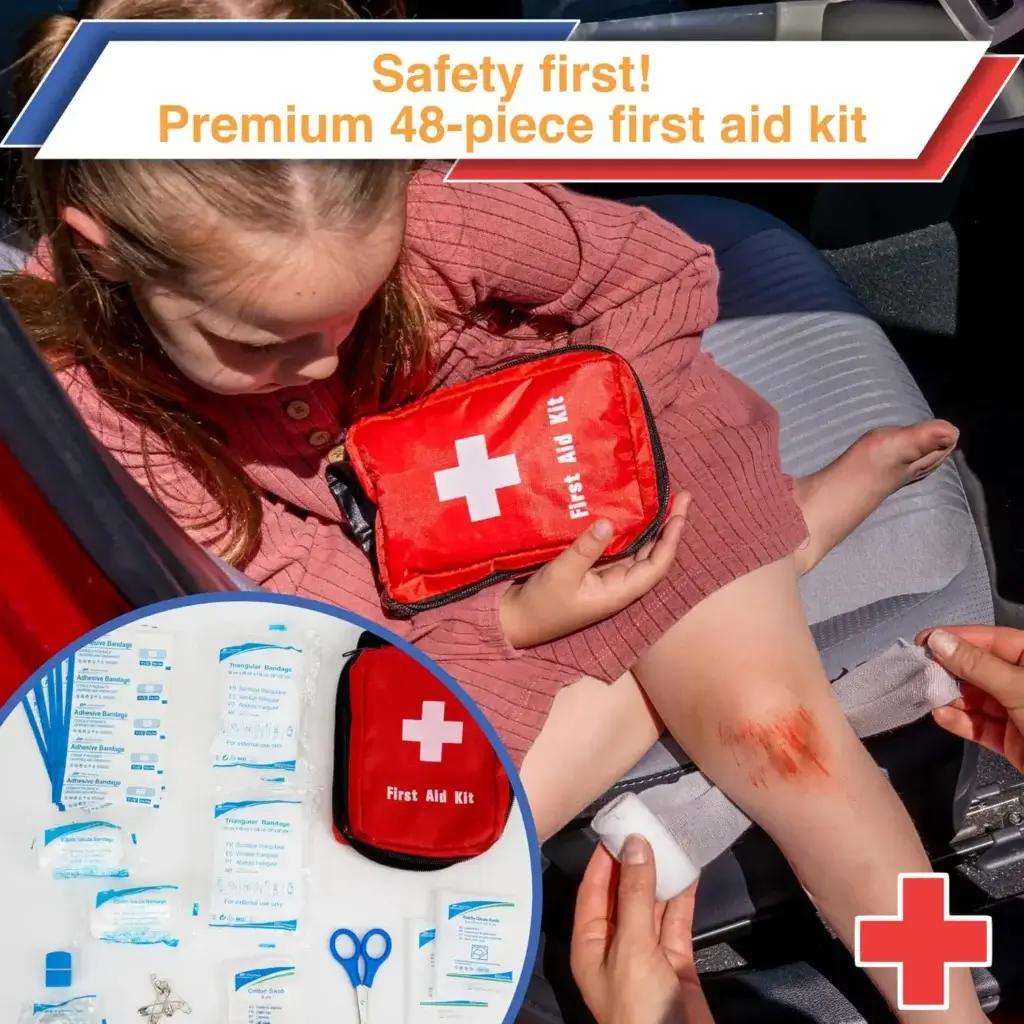
Image Credit: Amazon
Components of a Standard Car Emergency Kit
A basic car emergency kit includes a range of tools and supplies to help in different types of roadside situations. Here’s a quick breakdown of what you’ll usually find in a standard kit:
- Jumper cables
- Flashlight with extra batteries
- Reflective triangles or flares
- First aid supplies
- Basic tools like a wrench, pliers, and screwdriver
- Tire sealant or patch kit
- Gloves and rain poncho
- Blanket and bottled water
- Multi-tool or Swiss army knife
- Phone charger (preferably solar or battery-powered)
When you add an air compressor to this list, your emergency kit transforms from basic to badass. You go from “I hope someone stops to help” to “I got this.”
Role and Importance of the Air Compressor
Here’s the kicker—many drivers overlook tire maintenance until it’s too late. An air compressor changes the game by giving you real-time tire inflation power, anytime, anywhere. Whether you’re dealing with slow leaks, cold-weather pressure drops, or a flat caused by a nail, an air compressor gets you moving again without calling a tow truck.
Portable air compressors are especially valuable because they’re compact, easy to use, and compatible with your car’s 12V power outlet. Some even come with built-in pressure gauges and LED lights for night use. The bottom line? An air compressor isn’t just a nice-to-have—it’s a must-have.
Many modern compressors also include auto-shutoff features, multiple nozzle attachments for sports gear or inflatable mattresses, and digital displays for precise PSI readings. These extra features ensure that you’re not just inflating tires—you’re doing it safely and efficiently.
Key Benefits of Including an Air Compressor
Immediate Tire Inflation
One of the most frustrating experiences on the road is discovering your tire pressure is low just as you’re about to hit the highway. With an air compressor in your trunk, you can address the problem instantly. No need to look for a gas station air pump that may or may not be working (or even free). You’re self-sufficient.
Low tire pressure isn’t just annoying—it’s dangerous. Underinflated tires can lead to poor fuel economy, reduced braking ability, and even tire blowouts. By keeping your tires at the manufacturer-recommended PSI, you’re ensuring not just better performance, but a safer ride for you and everyone in your car.
Plus, some models inflate a standard car tire in under 5 minutes. That’s faster than calling a roadside service and waiting around.
Avoiding Towing Costs
Let’s be real—tow trucks are expensive. One call can cost anywhere between $75 and $200, depending on distance and location. That’s a hefty price to pay for something that could have been solved with a $50 air compressor. Not to mention the time lost and the inconvenience of being stranded.
Owning an air compressor significantly reduces your dependency on roadside assistance services. You’re basically investing in your own mini rescue team that fits neatly in your trunk.
Enhancing Roadside Safety
When you’re stuck on the side of the road, especially at night or in bad weather, every minute matters. An air compressor allows you to take quick action. The sooner your tire is inflated, the sooner you’re back on the road and out of harm’s way.
Many compressors come with built-in flashlights or hazard lights, increasing your visibility to other drivers and reducing the chances of secondary accidents. It’s a win-win for everyone on the road.
Types of Air Compressors for Vehicles
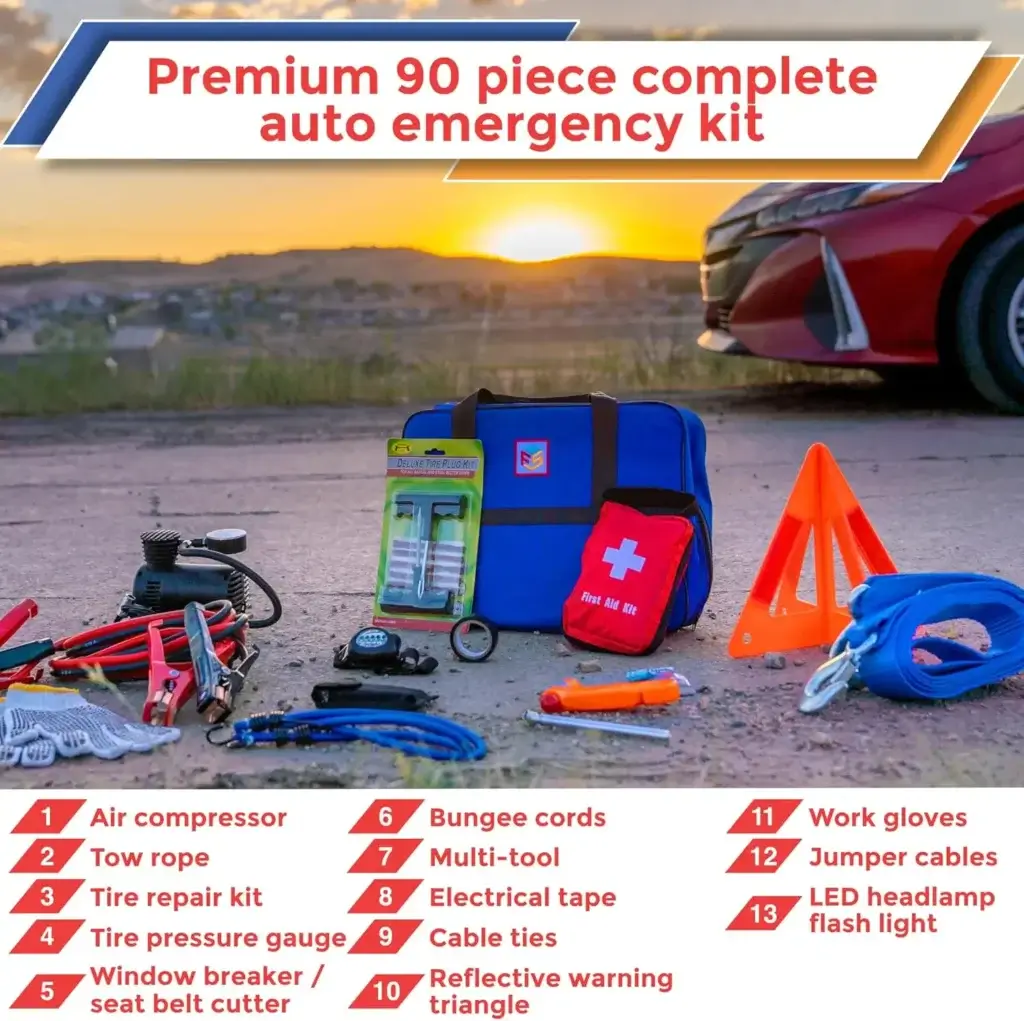
Image Credit: Amazon
Portable Air Compressors
Portable air compressors are the heart and soul of any emergency car kit. Unlike the bulky, garage-style air compressors, these are specifically designed for mobility. They’re compact, lightweight, and easy to store in your trunk or under a seat. These compressors typically plug into your car’s 12V cigarette lighter socket or attach directly to the battery using alligator clips.
Most models come equipped with a long hose, a digital pressure gauge, and auto-shutoff features. What makes them invaluable is their ability to get the job done in minutes. Some can inflate a completely flat tire to 35 PSI in less than five minutes. They also often include adapters for inflating other things like bike tires, inflatable rafts, and sports equipment.
Another huge plus? You don’t need mechanical skills to operate one. They’re user-friendly, often requiring just the push of a button. Some even have preset PSI functions, which means once the tire reaches your desired pressure, the compressor automatically stops. It’s that simple.
Cordless vs Corded Models
When it comes to choosing between a cordless or corded air compressor, there are pros and cons to both. Corded models plug directly into your car’s power outlet and offer a consistent power supply. They’re great for longer jobs and usually don’t run out of juice. However, you’re limited by the cord length and must have access to your vehicle’s battery or lighter port.
Cordless compressors, on the other hand, are battery-powered—making them ultra-portable and versatile. You can use them even when your car battery is dead. Many run on rechargeable lithium-ion batteries and can be charged using a USB cable or a wall socket. These are ideal for off-roaders or campers who may need to inflate tires or gear away from their vehicle.
However, cordless compressors usually have a shorter operational time and may not be as powerful as corded ones. So if you’re going this route, invest in a model with a good battery life and a solid PSI capacity.
PSI Ratings and What They Mean
PSI, or pounds per square inch, is the measurement of pressure a compressor can generate. For most passenger vehicles, tire pressure ranges from 30 to 35 PSI. However, larger vehicles like SUVs, trucks, or RVs may require tires inflated to 50 PSI or more.
When choosing an air compressor, it’s essential to pick one that can at least reach 100 PSI. Why? Because the higher the PSI rating, the faster and more efficiently your compressor can inflate your tire. A low-PSI model might work, but it’ll take longer and could struggle with high-pressure tires.
You’ll also want to pay attention to the CFM rating (Cubic Feet per Minute), which tells you how much air the compressor delivers per minute. A higher CFM means faster inflation. The sweet spot for emergency kits is around 1.0–1.5 CFM at 35 PSI.
How to Choose the Best Emergency Kit with Air Compressor
Factors to Consider Before Buying
Before you click “Add to Cart” on the first kit you find, pump the brakes. You need to consider several critical factors to ensure you’re getting the best bang for your buck:
- Portability – Is the kit compact enough to fit in your vehicle without taking up too much space?
- Compressor Power – Does the compressor meet or exceed your tire’s PSI requirements?
- Build Quality – Look for durable materials, strong hose fittings, and reinforced cables.
- Multifunctionality – Kits that include other items like jumper cables, LED flashlights, and tire repair tools provide better value.
- User Reviews – Always check what other customers are saying about reliability, ease of use, and customer service.
- Warranty – A product backed by a decent warranty is usually a good sign of quality.
You also want to ensure that the air compressor is compatible with your vehicle’s electrical system and that it comes with a long enough hose to reach all tires.
Recommended Brands and Models
Not all kits are created equal. Some top-rated car emergency kits with air compressors include:
- EPAuto 12V DC Portable Air Compressor – Great for sedans and SUVs; features a digital gauge and auto shut-off.
- Kensun AC/DC Digital Tire Inflator – Versatile with both AC and DC plugs; perfect for home and travel use.
- Slime 40026 2X Heavy Duty Compressor – Designed for trucks and larger vehicles; delivers powerful airflow.
- Fortem Car Emergency Kit with Air Compressor – A complete roadside assistance kit with jumper cables, first aid, and a sturdy compressor.
When evaluating these models, focus on functionality over brand hype. You want something that works when you need it most—not just looks good on paper.
Budget vs Premium Options
Let’s talk money. You don’t have to break the bank to get a decent emergency kit, but going too cheap could cost you more in the long run. Budget kits (under $50) typically include basic items and a low-PSI compressor. They’re fine for occasional drivers but may fall short during real emergencies.
Mid-range kits ($50–$100) usually offer better quality components, digital compressors, and extra safety tools. Premium kits (above $100) come loaded with high-end compressors, lithium-powered units, reflective gear, and first aid essentials.
If you’re someone who frequently travels long distances or goes off-road, a premium kit is a worthwhile investment. If you’re mostly city-bound with access to services, a budget kit might suffice—just make sure it includes the essentials.
DIY: Building Your Own Custom Emergency Kit
Advantages of a Personalized Kit
While pre-packaged kits are convenient, building your own custom emergency kit has several benefits. First, you get to choose the exact tools you want—no filler items or fluff. Second, you can tailor the kit to your driving habits, weather conditions, and vehicle type.
For instance, if you live in a snowy climate, adding tire chains and a thermal blanket makes perfect sense. If you drive an electric vehicle, you might include a portable charger or extra cables. Custom kits also let you invest in higher-quality items that last longer and perform better under pressure.
Another advantage? You become intimately familiar with every component, which makes you more confident during an actual emergency. No guessing what’s inside or how to use it—you built it, so you know it.
Shopping Guide for Individual Components
Here’s a checklist of must-have items when building your own car emergency kit:
- Air Compressor (Digital, with Auto Shutoff)
- Jumper Cables or Portable Jump Starter
- LED Flashlight with Extra Batteries
- Tire Pressure Gauge
- Tire Plug Kit or Sealant
- Basic Tool Kit (Wrench, Pliers, Screwdriver)
- First Aid Kit
- Thermal Blanket
- Rain Poncho
- Reflective Warning Triangle or Road Flares
- Gloves and Multi-tool
- Emergency Contact Info Card
- Non-perishable Snacks and Bottled Water
You can find most of these items individually on Amazon, in auto parts stores, or even in large department stores. Don’t forget to also grab a durable storage bag or container to keep everything organized and easy to access.
How to Use an Air Compressor Safely
Image Credit: Amazon
Step-by-Step Inflation Instructions
Using an air compressor is straightforward, but doing it correctly ensures both your safety and your vehicle’s health. Follow these steps the next time you need to inflate a tire:
- Park Safely – Pull over to a safe location away from traffic. Engage the handbrake and turn on your hazard lights.
- Locate the Valve Stem – Remove the cap from your tire’s valve stem.
- Check the Recommended PSI – You’ll find it in your vehicle manual or on a sticker inside the driver’s side door.
- Attach the Compressor – Secure the compressor hose to the valve stem and make sure it’s tightly fastened.
- Turn on the Compressor – Plug the compressor into your vehicle’s power outlet or connect to the battery if using clips. Start the compressor and monitor the pressure gauge.
- Monitor Pressure – Most modern compressors have an auto-shutoff function once the correct PSI is reached. If not, manually stop it once you hit the desired pressure.
- Detach and Secure – Remove the hose, replace the valve cap, and store the compressor properly.
It’s that simple. Always keep a tire pressure gauge in your glove box to double-check if your compressor lacks a digital display.
Safety Tips and Maintenance Advice
To keep your compressor in top shape and avoid accidents, follow these safety tips:
- Avoid Overinflating – Overinflated tires are just as dangerous as underinflated ones. Always stick to the recommended PSI.
- Inspect Before Use – Check the compressor for any visible damage, frayed cords, or leaks.
- Keep the Engine Running – When using a 12V compressor, make sure your engine is running to prevent draining your battery.
- Cool Down Between Uses – Compressors can overheat with prolonged use. Let it cool down for a few minutes between inflating multiple tires.
- Store in a Dry Place – Keep your compressor and accessories in a moisture-free environment to prevent rust and electrical issues.
Regularly test your compressor every few months to ensure it’s functioning correctly. Like any tool, it’s only useful if it works when you need it most.
Real-Life Scenarios Where These Kits Saved the Day
Testimonials from Everyday Drivers
Nothing drives the point home better than real-world stories. Take Jessica, a single mother driving home from work late at night. A sudden pothole gave her a flat tire on a deserted road. Thankfully, she had a car emergency kit with a portable air compressor. Within 10 minutes, her tire was back to a safe PSI, and she was on her way.
Or consider Michael, a road-tripper who found himself in a remote national park with no cell signal and a leaky valve stem. His compressor and patch kit helped him seal the leak and inflate the tire—avoiding what would’ve been an expensive tow in an isolated area.
Stories like these are not rare. They’re happening daily, and they all have one thing in common: preparedness. The people who walk away from roadside emergencies without major stress are the ones who invested in the right tools ahead of time.
Lessons Learned from Roadside Emergencies
If there’s one lesson that comes from every roadside story, it’s this—never assume it won’t happen to you. Most people only think about emergencies in hindsight, often saying, “I should’ve had a kit.”
The second biggest takeaway? Simplicity. The easier a tool is to use, the more likely you’ll use it effectively under stress. A compact, reliable air compressor that plugs in and works with the press of a button can make a huge difference in how you handle an emergency.
Lastly, preparedness builds confidence. You’re not just carrying tools—you’re carrying peace of mind. That’s something no roadside service or smartphone app can replace.
Where to Buy Car Emergency Kits with Air Compressors
Online Retailers vs Local Stores
When shopping for a car emergency kit with an air compressor, you have two primary options: online or in-store. Both come with pros and cons.
Online Retailers:
- Pros: Wide variety, competitive pricing, user reviews, doorstep delivery.
- Cons: Can’t inspect the product before buying, delivery time may vary.
Top online platforms:
- Amazon
- Walmart.com
- AutoZone
- Home Depot
- REI (for outdoor/off-road gear)
Local Stores:
- Pros: See and feel the product before buying, ask in-store experts for advice, immediate purchase.
- Cons: Limited inventory, sometimes higher prices than online.
Common in-store options:
- AutoZone
- O’Reilly Auto Parts
- Walmart
- Target
- Local hardware stores
Where you buy depends on how quickly you need the kit and whether you prefer hands-on selection or the convenience of online shopping.
What to Look for in Product Descriptions
If you’re buying online, it’s crucial to decode the product descriptions effectively. Here’s what to look for:
- Compressor Specs – PSI capacity, power source, inflation time.
- Kit Contents – Ensure the kit includes essentials like jumper cables, first aid, tools, etc.
- Weight & Size – Especially important for compact cars or limited trunk space.
- Customer Reviews – Look for honest, detailed reviews that mention real-life usage.
- Warranty and Support – Reputable sellers often offer return policies or manufacturer warranties.
Pay attention to red flags like vague specs, low-quality product photos, or a lack of brand recognition. And always read the Q&A section—other buyers often ask insightful questions that reveal important details.
Keeping Your Kit Up to Date
Inspection and Replacement Schedule
Having a car emergency kit is a great start—but maintaining it is just as important. Over time, tools can degrade, batteries die, and items expire. Here’s a quick maintenance checklist:
- Every 3 Months: Check battery-powered items like flashlights and compressors. Recharge or replace batteries as needed.
- Every 6 Months: Inspect cables, hoses, and tools for wear and tear. Replace any damaged components.
- Annually: Review the contents of your first aid kit and replace any expired medications or bandages.
- After Every Use: Restock anything you’ve used immediately so your kit is always ready.
Make it a habit to inspect your kit during oil changes or tire rotations. It’s a simple routine that ensures you’re always prepared.
Seasonal Adjustments and Additions
Depending on where you live, your emergency kit may need seasonal upgrades:
Winter:
- Ice scraper
- Windshield washer fluid (anti-freeze version)
- Thermal blanket
- Extra gloves
- Traction aids like sand or kitty litter
Summer:
- Extra water bottles
- Sunshade
- Cooling towel
- UV protectant for dashboard and seats
Tailoring your kit by season ensures you’re ready for any challenge, whether it’s a snowstorm or a heatwave. If you live in areas prone to hurricanes or floods, consider waterproof containers and flotation tools.
Emergency Kits for Different Vehicle Types
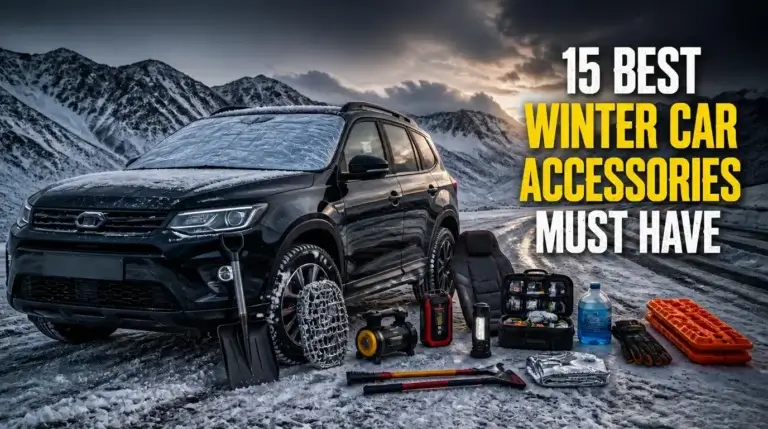
Kits for Sedans and Compact Cars
Compact cars have limited storage space, so emergency kits for these vehicles must be efficient, lightweight, and highly practical. The goal is to include only what’s essential without sacrificing quality. Here’s what a sedan-specific kit should prioritize:
- Compact Air Compressor – A mini portable compressor with at least 100 PSI is ideal. It should plug into the 12V outlet and come with a digital display.
- Slim Jumper Cables or Portable Jump Starter – Instead of bulky cables, a compact jump starter saves space and offers quicker response.
- Foldable Tools – Multi-tools, compact tire iron, and collapsible shovels can serve multiple purposes without taking up much room.
- Minimalist First Aid Kit – A small but comprehensive first aid pouch is perfect for space-saving while still offering medical essentials.
- Reflective Triangle or Safety Light – Important for breakdowns, especially on busy urban streets.
Storage is key for compact vehicles. Use a soft-sided zippered case or cargo organizer that fits under the seat or in the trunk corner. Don’t overload—focus on necessity, not novelty.
Kits for SUVs and Trucks
SUVs and trucks offer more space and are often driven in more rugged conditions, so their kits can be more robust and feature-rich. Here’s what should go into an SUV or truck emergency kit:
- Heavy-Duty Air Compressor – Preferably one with a longer hose and direct-to-battery power option for quicker tire inflation.
- Tow Strap – Trucks often go off-road, and a tow strap can save the day when stuck in mud or snow.
- Tire Repair Kit – Include plug tools, sealant, and even a spare valve stem.
- Shovel and Traction Mats – Useful for digging out of snow or mud.
- Flashlights and Lanterns – Multiple lighting options can help with repairs or emergencies at night.
- Large First Aid Kit – Include extras like burn gel, trauma shears, and thermal blankets.
With extra room, you can also add comfort items like a sleeping bag, high-calorie snacks, or extra clothes. Store in durable hard-shell containers to prevent shifting during driving.
Specialized Kits for RVs and Off-Road Vehicles
RVs and off-roaders face unique risks: isolation, extended travel, and rugged terrain. Their kits must include survival tools in addition to automotive gear:
- Industrial-Grade Compressor – Needs to handle high-pressure tires common on RVs and larger off-road vehicles.
- Power Inverter – Converts battery power to AC power for charging larger devices.
- Portable Air Tank – Great for inflating large tires or even mattresses during camping.
- Survival Tools – Fire starter, water purification tablets, emergency shelter.
- Navigation Aids – Physical maps and a compass in case of GPS failure.
RVs and off-roaders can store gear in compartments or mounted boxes. Given the isolation often involved, having backup systems and redundancy is crucial.
The Environmental Impact of Air Compressors
Power Consumption and Efficiency
Air compressors, particularly portable ones, consume energy—usually from your vehicle’s battery or through rechargeable lithium-ion cells. Although the environmental footprint is relatively low for personal-use compressors, repeated use and poor quality models can strain your vehicle’s alternator and increase fuel usage slightly.
Some models are more efficient than others. Look for energy-efficient certifications or reviews that mention low draw on car batteries. Compressors with auto-shutoff features save energy and reduce emissions by minimizing runtime. Also, compressors with fast inflation times reduce the need for prolonged idling.
In the grand scheme, using an air compressor to maintain proper tire pressure can actually improve your vehicle’s fuel efficiency. Properly inflated tires reduce rolling resistance, which means your car burns less gas over time. So while there is a small power cost, it’s often offset by greater efficiency overall.
Eco-Friendly Alternatives
Looking to go green? Consider eco-conscious alternatives or enhancements:
- Solar-Charging Compressors – A few models now come with solar panel compatibility for off-grid recharging.
- Manual Inflators – While not suitable for full-size cars, manual foot pumps can work for bikes or small inflatables and require no electricity.
- Reusable Packaging – Some kits use recycled materials or reusable cases that reduce waste.
Another great move? Invest in high-quality gear that lasts. Cheap compressors break quickly and end up in landfills. Durable products not only perform better but also reduce long-term environmental impact.
Cost Breakdown and Value Over Time
Comparing DIY and Pre-Assembled Kits
Let’s break down the numbers. A basic pre-assembled kit with a compressor might cost around $50–$100. Mid-range and premium kits with added tools and high-end compressors can cost $100–$200+.
Now, if you go the DIY route, here’s a sample breakdown:
| Item | Estimated Cost (USD) |
|---|---|
| Portable Air Compressor | $30–$80 |
| Jumper Cables | $15–$30 |
| First Aid Kit | $10–$25 |
| Flashlight + Batteries | $10–$20 |
| Reflective Triangle | $10–$15 |
| Basic Tools | $15–$40 |
| Blanket, Gloves, Poncho | $10–$30 |
| Total | $100–$240 |
DIY kits can cost a bit more upfront, but you control the quality of each item. You also avoid paying for filler items included in many budget pre-assembled kits.
Long-Term Savings from One-Time Investment
It’s tempting to think of emergency kits as “nice to have” instead of “need to have,” but let’s look at potential savings:
- Towing Service: $100–$200
- Flat Tire Repair: $25–$40
- Dead Battery Jump Start: $60–$100
A single incident can easily cost more than the price of a complete kit. Not to mention the time, stress, and potential danger involved in being stranded. When you calculate the peace of mind factor, the value skyrockets.
In short, a one-time investment in a quality kit pays for itself the first time you use it—and continues to pay off every time you don’t have to call for help.
Conclusion and Final Thoughts
Let’s wrap it up: a car emergency kit with an air compressor isn’t just a smart idea—it’s a necessity. Whether you’re dealing with a flat tire, a dead battery, or an unexpected road closure, having the right tools at hand can turn a potential disaster into a minor inconvenience.
Air compressors in particular are the unsung heroes of roadside preparedness. They save you time, money, and a whole lot of stress. With so many compact, powerful models available, there’s no excuse not to carry one.
Whether you buy a ready-made kit or build your own, the key is to be prepared. Emergencies don’t schedule appointments. But with a fully stocked kit, you’ll be ready for anything the road throws your way.
FAQs
1. What PSI should my car tires be?
Most cars require between 30–35 PSI, but this can vary. Check your car’s manual or the sticker on the driver’s door for the correct number.
2. Can I use the air compressor for other inflatables?
Yes! Many compressors come with multiple nozzles, making them great for inflating bike tires, balls, air mattresses, and even pool toys.
3. How long do portable compressors last?
With proper care, a quality portable compressor can last 3–5 years or more. Maintenance and occasional testing will extend its life.
4. Should I keep the kit in the trunk or cabin?
Trunk is best for most of the kit, but consider keeping small essentials like a flashlight and first aid items in the glove box for easy access.
5. Are these kits TSA-approved for travel?
No, car emergency kits aren’t TSA-approved for air travel. However, if you’re flying and renting a car, consider buying a compact kit upon arrival.