Introduction to Car Emergency Kits
Why Every Driver Needs One
Let’s get real: how often do you think about the possibility of your car breaking down in the middle of nowhere? Probably not often. But the moment your battery dies on a freezing night, or you get a flat tire in the pouring rain, you’ll wish you had an all-in-one car emergency kit in your trunk. These kits aren’t just for doomsday preppers—they’re for everyday drivers like you and me. Whether you’re a daily commuter, a weekend road tripper, or a long-haul traveler, being prepared for the unexpected can mean the difference between a mild inconvenience and a full-blown crisis.
We live in a world where we rely heavily on our vehicles. Yet, we rarely think about the “what-ifs” that could derail our plans in an instant. What if your phone battery dies and you’re stuck without a charger? What if you’re miles from a gas station, and your engine won’t start? An all-in-one car emergency kit is like having a superhero sidekick riding shotgun, always ready to step in when things go sideways.
Plus, it’s not just about breakdowns. Think of natural disasters, accidents, or even getting lost on a remote road. Emergencies come in all shapes and sizes. With a fully stocked emergency kit, you’re prepared not only for car trouble but for life’s unexpected curveballs.
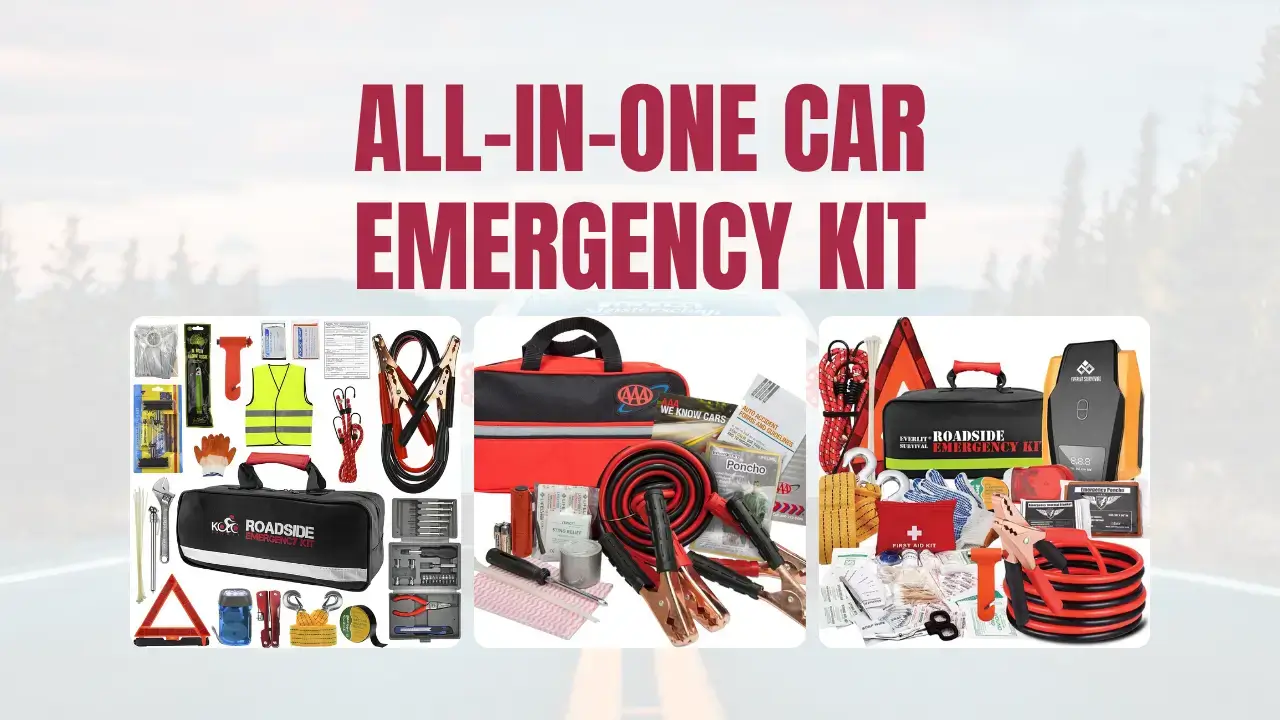
All-in-One Car Emergency Kit
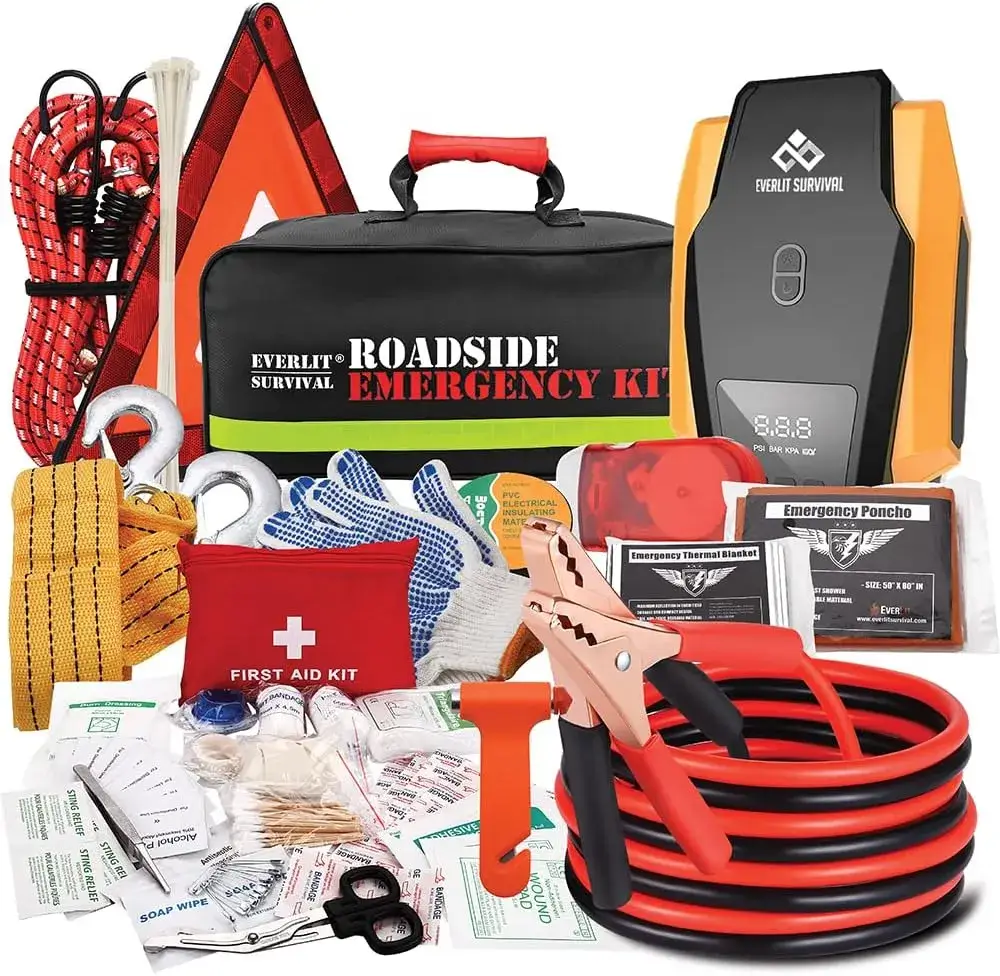
Image Source : Amazon
Be prepared for any roadside emergency with the All-in-One Car Emergency Kit – your ultimate companion for safety and peace of mind on the road. Whether you’re commuting to work, taking a road trip, or navigating harsh weather, this kit ensures you’re ready for the unexpected.
🧰 What’s Inside:
- Jumper Cables (8–12 ft) – Heavy-duty cables for quick and safe battery boosts.
- Air Compressor – Inflate tires on the go, ideal for flats and low pressure situations.
- First Aid Kit – Includes bandages, antiseptic wipes, scissors, gloves, and more.
- Reflective Warning Triangle & Safety Vest – Stay visible and safe on busy roads.
- LED Flashlight + Extra Batteries – Bright, long-lasting light for nighttime breakdowns.
- Tow Strap – Durable and strong enough to pull your vehicle out of trouble.
- Multi-Tool – Screwdriver, pliers, knife, and more in one handy tool.
- Thermal Blanket – Keeps you warm in cold weather emergencies.
- Rain Poncho – Stay dry if you’re fixing a problem in the rain.
- Work Gloves – Protect your hands while handling tools or repairs.
- Emergency Whistle – Attract attention in isolated areas.
Real-Life Scenarios Where Kits Save the Day
Still not convinced? Let’s paint a picture. Sarah, a single mom driving through a snowstorm, blows a tire on a rural road. With no signal and no nearby help, she relies on her car emergency kit: a flashlight, reflective triangle, thermal blanket, and tire inflator. Within an hour, she’s back on the road, safe and warm. No panic, no stress.
Or take Dan, who gets stuck in summer heat with a dead battery. Thanks to the portable jump starter in his kit, he avoids waiting hours for roadside assistance. He’s back in business in minutes.
There are thousands of stories like these. And they all share one thing in common: preparation. It’s not about fearing the worst—it’s about being ready for anything. Having an all-in-one kit transforms potential disasters into manageable hiccups. It empowers you to stay calm, make smart decisions, and keep yourself and your passengers safe.
Key Components of an All-in-One Car Emergency Kit
Safety and Survival Essentials
Your kit should be more than just a collection of tools. Think of it as your mobile survival pack. Let’s break it down into key categories, starting with the essentials that could keep you alive in critical situations.
First Aid Supplies
A solid emergency kit isn’t complete without a well-stocked first aid kit. We’re talking bandages, antiseptic wipes, adhesive tape, scissors, tweezers, gauze pads, and pain relievers. Minor injuries like scrapes and cuts can become serious if left untreated, especially when help is far away.
A quality first aid kit also includes burn cream, gloves, CPR face shields, and even splints. Think beyond the basics—what if you or a passenger gets injured in a crash or while changing a tire? These items can literally be lifesavers.
Emergency Food and Water
Ever been stuck for hours on a traffic-clogged highway with nothing but an empty stomach? Now imagine you’re stranded in the middle of nowhere for a day or two. Non-perishable food like energy bars, dried fruit, or MREs (Meals Ready to Eat) can keep you energized and focused.
Water is even more critical. Keep at least two liters of bottled water in your kit or opt for emergency water pouches with long shelf lives. You can even include water purification tablets for extreme situations. Dehydration can sneak up fast, especially in hot climates or high-stress scenarios.
Vehicle Repair Tools
Safety is vital, but let’s not forget the real hero gear—the tools that get your car back on the road.
Jumper Cables and Battery Pack
Dead battery? No problem. Jumper cables are a must-have. But if you’re alone or in a place with no other vehicles, you’ll be grateful for a portable jump starter. These battery packs are compact, powerful, and easy to use. Some even come with built-in air compressors and USB ports for extra utility.
A high-quality jump starter can revive your battery without needing another car, saving you time, hassle, and a tow truck bill. Make sure it’s charged regularly—it’s useless if dead.
Tire Repair Kit and Inflator
Flat tires are the most common roadside issue. A basic tire repair kit should include sealant, plugs, and a small inflator or air compressor. These tools can temporarily fix a puncture, allowing you to drive to safety or a nearby repair shop.
If you don’t know how to use them, don’t worry—we’ll get into that in the next section. The key is having the tools when you need them most.
Navigation and Communication Tools
Losing your GPS signal is frustrating. Losing it in an emergency is dangerous.
Flashlight with Extra Batteries
Nighttime emergencies require light. A high-lumen flashlight (preferably LED) can help you inspect your vehicle, signal for help, or read instructions. Always pack extra batteries or choose a hand-crank or rechargeable version.
Emergency Radio and Phone Charger
A hand-crank or solar-powered radio can keep you informed during natural disasters or widespread outages. It’s especially useful in remote areas. And don’t forget a universal phone charger or power bank—it’s your lifeline when calling for help or using GPS.
Must-Have Features in a High-Quality Emergency Kit

Image Source : Amazon
Durability and Weather Resistance
Your emergency kit has one job—being ready when you need it. That means it must survive extreme heat, cold, rain, snow, and long-term storage. Look for water-resistant bags, rust-proof tools, and food items with long shelf lives.
Canvas or hard-shell cases are ideal for withstanding tough conditions. Cheap plastic kits may fall apart or leave items exposed to moisture and damage. Investing in quality means your kit will be functional—not decorative.
Portability and Organization
All-in-one doesn’t mean all-over-the-place. A good kit is neatly organized and portable. Compartments, labeled pockets, and see-through pouches help you quickly find what you need—no digging around in a panic.
Weight is another factor. If it’s too heavy to lift, it won’t be practical. Aim for a compact, lightweight design that fits in your trunk without sacrificing key items.
Top Benefits of Owning an All-in-One Car Emergency Kit
Peace of Mind on Every Journey
Imagine this: you’re heading out on a late-night road trip or driving your kids to school in the pouring rain. Suddenly, your tire blows out. Instead of panicking, you calmly reach for your all-in-one emergency kit. That kind of peace of mind? Priceless.
Owning an emergency kit gives you a massive psychological edge. It reduces fear and anxiety because you know you’re prepared. Think of it like insurance you can touch. It’s not about expecting something to go wrong; it’s about being empowered to handle it if it does.
The confidence that comes with being prepared changes how you drive. You’ll worry less about getting stranded, getting caught in bad weather, or being alone on the road at night. It also makes a huge difference if you’re responsible for others—like your kids, a partner, or even coworkers during carpools.
Peace of mind isn’t just emotional—it translates into faster reaction times, calmer decision-making, and fewer mistakes during high-stress moments. It can be the difference between fumbling in fear and executing a clear plan of action.
Saves Time and Reduces Stress in Emergencies
Time is critical in emergencies. Whether you’re trying to beat the weather, get to a hospital, or avoid standing on the side of a highway, every second matters. A well-organized emergency kit saves you from searching for solutions or waiting on roadside assistance that could take hours.
Let’s say your car won’t start. Instead of calling a tow truck and waiting two hours, you simply use your jump starter, restart your car, and keep moving. Same with a flat tire—having a tire inflator or sealant in your kit could have you driving away in 10 minutes instead of being stuck for half a day.
Stress makes every problem seem worse. But when you’re prepared, you’re not overwhelmed—you’re in control. An emergency kit helps you think clearly, act quickly, and make smarter choices. And if you’ve ever had kids crying in the backseat during a breakdown, you know how valuable that is.
How to Use Each Tool in Your Emergency Kit
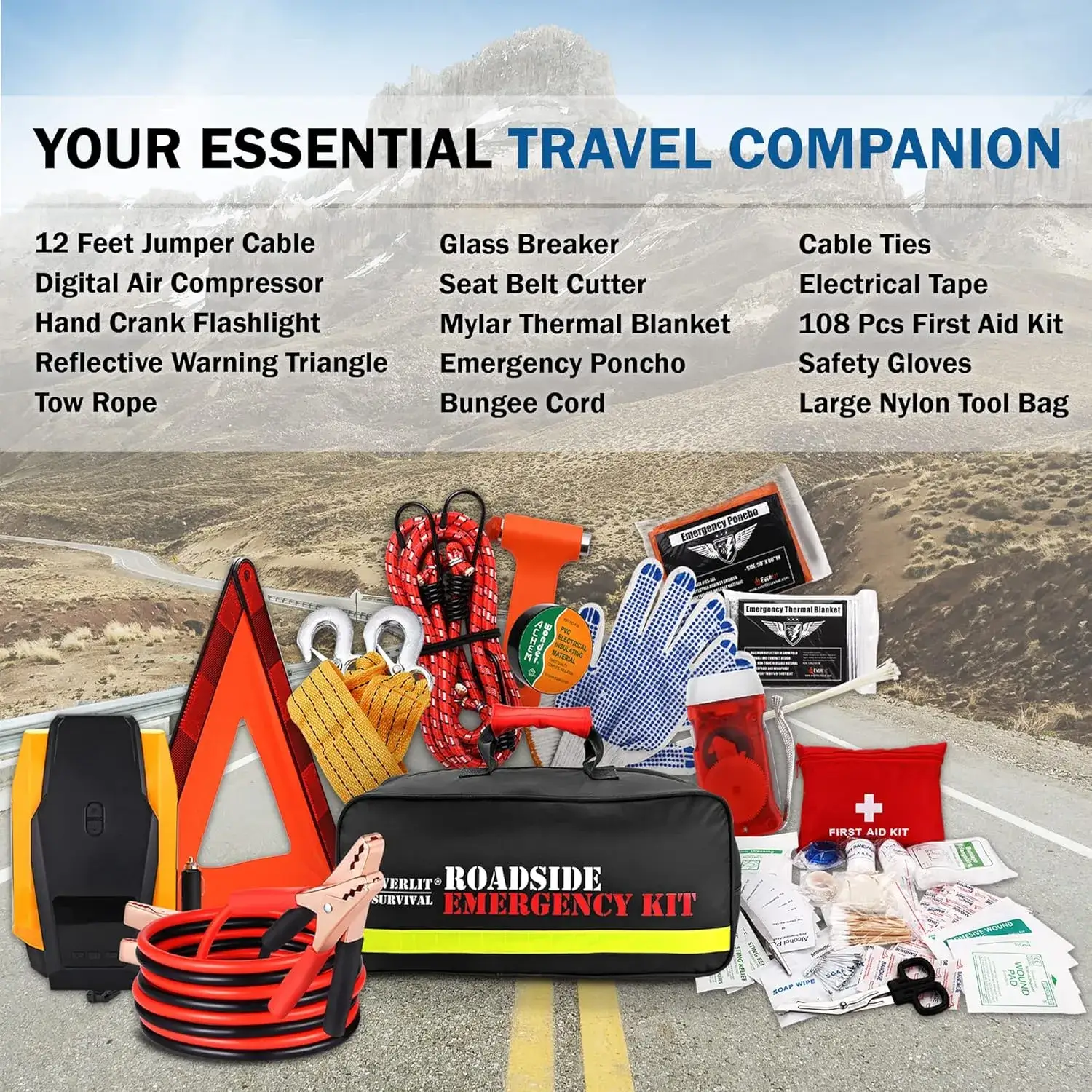
Image Source : Amazon
Step-by-Step Instructions for Common Roadside Fixes
Let’s break it down. Having the gear is one thing—knowing how to use it is another. These are the most common fixes your emergency kit will help you tackle:
Jump Starting a Dead Battery:
- Turn off both vehicles (if using cables) and ensure they’re in park.
- Attach the red clamp to your dead battery’s positive terminal.
- Attach the other red clamp to the booster car’s positive terminal.
- Attach the black clamp to the booster car’s negative terminal.
- Attach the final black clamp to an unpainted metal surface on your car (away from the battery).
- Start the booster vehicle, wait a minute, then try starting your car.
- Once your engine runs, carefully remove the clamps in reverse order.
If you’re using a portable jump starter, simply connect the cables, turn it on, and follow the included prompts. It’s safer and easier for solo drivers.
Tire Repair & Inflation:
- Locate the puncture if visible.
- Remove any object causing the flat.
- Use a tire plug kit or insert sealant as per instructions.
- Attach the tire inflator or compressor.
- Inflate to the recommended PSI (usually listed on your car’s door panel or manual).
- Monitor for slow leaks and drive to a nearby repair shop ASAP.
Using Emergency Lights & Reflectors:
- Exit the vehicle safely and place your reflectors 10 to 20 feet behind your car.
- Turn on emergency hazard lights.
- Use the LED flare or flashlight if at night.
Safety Tips While Using Emergency Tools
- Always pull over to a safe location—ideally away from traffic or on a shoulder.
- Use gloves when handling tools, especially in cold weather or with metal gear.
- Stay visible. Wear a high-visibility vest (which should be in your kit) and set up warning reflectors or flares.
- Don’t overuse jump starters—they’re not a fix for a dying battery. Use it to get going, then get the battery checked.
- Read instructions for every tool before you ever need it. Familiarity could save your life.
- Avoid using flammable products like some tire sealants near heat or sparks.
Practice makes perfect. Spend an afternoon testing out your kit in your driveway. The few minutes you invest now could make a world of difference in an emergency.
Best All-in-One Car Emergency Kits on the Market (2025 Edition)
Top 5 Reviewed Kits
Here are some standout kits in 2025, known for quality, reliability, and real-world practicality:
- Lifeline AAA Premium Road Kit
- Includes: First aid kit, jumper cables, emergency tools, flashlight.
- Best for: Everyday drivers and commuters.
- Price: $65
- Everlit Survival Car Emergency Kit
- Includes: Tactical flashlight, survival tools, medical supplies, thermal blanket.
- Best for: Adventurers, campers, and long-distance travelers.
- Price: $90
- Kolo Sports Roadside Emergency Kit
- Includes: Tire tools, battery booster, rope, poncho, glow sticks.
- Best for: Budget-conscious drivers looking for versatility.
- Price: $50
- First Secure Car Emergency Kit
- Includes: Air compressor, reflective triangle, multi-tool, safety hammer.
- Best for: Families with kids or elderly passengers.
- Price: $110
- Vetoos 142-Piece Emergency Kit
- Includes: Fire extinguisher, heavy-duty jump cables, emergency whistle.
- Best for: Preparedness junkies and rural drivers.
- Price: $130
Comparison Table of Features and Prices
| Kit Name | Price | Key Features |
|---|---|---|
| Lifeline AAA Premium | $65 | First aid, jumper cables, flashlight |
| Everlit Survival Kit | $90 | Tactical tools, survival gear |
| Kolo Sports Kit | $50 | Tire tools, poncho, glow sticks |
| First Secure Kit | $110 | Air compressor, reflective triangle |
| Vetoos 142-Piece | $130 | Fire extinguisher, whistle, heavy-duty tools |
When shopping for a kit, match the contents to your lifestyle and typical driving conditions. Going cheap may save you a few bucks today—but it could cost you more in a real emergency.
Customizing Your Emergency Kit for Your Needs
For Families, Solo Drivers, and Long Trips
No two drivers are the same. That’s why customization matters. A solo commuter needs a much different setup than a family of five going on a cross-country trip.
For Families:
- Add extra water bottles, snacks, and child-specific meds.
- Include a spare phone charger and power bank.
- Carry entertainment (like a deck of cards or coloring books) in case you’re stuck for hours.
For Solo Drivers:
- Lightweight, compact tools are ideal.
- Include self-defense items like pepper spray or a whistle.
- Prioritize quick-access items like a jump starter and reflective vest.
For Long Trips or Road Trips:
- Extra food, maps, fuel canisters (if legal), and a backup GPS device.
- Include a portable camping blanket or sleeping bag.
- Weather gear like ponchos, gloves, and heat packs for unpredictable climates.
Seasonal Add-ons and Regional Adjustments
Your kit should evolve with the seasons and where you live:
Winter Essentials:
- Ice scraper, snow shovel, cat litter for traction, windshield washer fluid, thermal blanket.
Summer Must-Haves:
- Extra water, cooling towels, sunscreen, electrolyte packets.
Desert Travel:
- Tire sealant, high-SPF sunscreen, sun hat, radiator coolant.
Mountain/Rural Areas:
- Rope, emergency whistle, tow strap, fire-starting tools.
Make it a habit to audit your kit before every major season change. Rotate perishables and double-check batteries. Stay ahead of trouble—not behind it.
Maintenance and Storage of Your Emergency Kit
When to Replace or Refill Items
You wouldn’t leave milk in your fridge for six months and expect it to be fine, right? Same logic applies to your emergency kit. Just because it’s in your trunk doesn’t mean it’s “set and forget.” Regular maintenance ensures everything works when you need it most.
Start by checking your kit every three to six months. Mark it on your calendar or set a phone reminder. Look for expired items like:
- Medications
- Batteries
- Food bars or water pouches
- Tire sealants
- First aid creams and antiseptics
Rotate food and water more frequently in hotter climates—they degrade faster in high heat. Keep extra batteries out of devices to avoid corrosion. Replace used items immediately—don’t wait for the next emergency to find out you’re missing something crucial.
If you’ve used your kit—even partially—take time that same week to restock and reorganize. One-time use is all it takes to leave you unprepared for the next situation.
Also, check that mechanical tools like the tire inflator, flashlight, or jump starter are still operational. Charge electronics monthly and test them twice a year.
Best Places to Store the Kit in Your Vehicle
Where you store your emergency kit matters just as much as what’s in it. The trunk is a popular choice—but it’s not always ideal.
Best storage spots:
- Trunk: Great for larger kits and items you won’t need instantly.
- Under a seat: Perfect for smaller, high-priority tools like a flashlight or first aid.
- Glovebox: Use this space for maps, emergency contacts, or a phone charger.
- Backseat pocket: Store small pouches with snacks or water bottles for quick access.
Avoid cluttering your kit with unnecessary extras. Keep it tightly packed and in a weather-resistant container. Use dividers or packing cubes to separate tools, food, and medical gear. The goal? Accessibility, visibility, and space efficiency.
DIY vs. Pre-Made Kits – Which Is Better?
Pros and Cons of Each
Here’s the million-dollar question: Should you buy a pre-made emergency kit or build one yourself from scratch? Both have their merits.
Pre-Made Kits:
Pros:
- Convenient and time-saving
- Professionally curated with tested tools
- Often comes in compact, durable packaging
Cons:
- May include items you don’t need
- Lower quality components in cheaper kits
- Hard to personalize for specific lifestyles or climates
DIY Kits:
Pros:
- Fully customizable to your needs
- Typically higher quality if you source the items yourself
- You’ll be familiar with every item because you chose it
Cons:
- Time-consuming to research and assemble
- Can end up costing more than pre-made kits
- Easier to overlook critical items if you’re not experienced
If you’re new to car emergency prep, start with a pre-made kit and add custom items over time. For seasoned road warriors or outdoor enthusiasts, building your own may give you better peace of mind.
Building a DIY Kit from Scratch
Want to build your own kit? Here’s a checklist of essentials to help you get started:
Basic Tools:
- Jumper cables or portable jump starter
- Tire inflator or air compressor
- Tire repair kit or sealant
- Multi-tool or Swiss Army knife
- Duct tape, zip ties, and work gloves
Safety Gear:
- Reflective triangle and vest
- LED flashlight with extra batteries
- First aid kit (fully stocked)
- Emergency whistle
- Fire extinguisher (car safe)
Survival Supplies:
- Emergency blankets (Mylar or thermal)
- Bottled water and water purification tablets
- Non-perishable food (energy bars, MREs)
- Rain poncho and hand warmers
- Notepad and pen
Extras:
- Car phone charger
- Map of local areas
- Copies of insurance and emergency contacts
- Extra fuses and a small toolset
Start small and build your kit over time. The most important thing is to take action—not wait until disaster strikes.
Common Mistakes to Avoid with Car Emergency Kits
Overpacking or Underpacking
There’s a sweet spot between too little and too much. Too few items, and you’re underprepared. Too many, and your trunk looks like a hardware store exploded. Here’s how to find balance.
Underpacking:
- Relying on a first aid kit and jumper cables alone
- Ignoring food, water, or survival gear
- Skipping cold-weather or hot-weather supplies
- Forgetting to include tools for communication or visibility
Overpacking:
- Duplicating tools (three flashlights? Really?)
- Including bulky gear you’ll never use
- Carrying so much weight that it affects fuel economy
Stick to the essentials that match your lifestyle, region, and travel habits. Remember: every item should earn its place in your kit.
Forgetting to Test or Check Items Regularly
This is a big one. Too many people throw an emergency kit in their trunk and forget it even exists. Then, when they finally need it, they find dead batteries, expired food, or rusted tools.
Fix it:
- Test your jump starter and flashlight every 3 months.
- Rotate food and water seasonally.
- Make a checklist and attach it to your kit.
- Set digital reminders for maintenance days.
Treat your kit like a car’s oil change—it needs regular upkeep to stay effective.
Real Stories: How Car Emergency Kits Saved Lives
Firsthand Accounts from Drivers
You’d be amazed how many people credit emergency kits for turning potentially tragic situations into survivable ones.
Case 1 – The Blizzard Survival:
Jessica, a college student, got stuck during a snowstorm on a remote highway. With no cell service and no traffic for hours, she relied on her emergency blanket, snacks, and flashlight to stay safe overnight. Her parents called in rescue teams the next day—she made it through the night warm and unharmed.
Case 2 – Highway Blowout:
Ron was on a solo road trip when a tire blew out in the Arizona desert. Temperatures reached 110°F, but thanks to a tire plug kit, air compressor, and backup water supply, he was able to patch the tire and drive to safety.
Case 3 – Family Car Crash:
Emily, driving with two kids, slid off a rainy road into a ditch. With her phone dead, she used her LED flare to flag help, and the first aid kit to treat a minor head wound on her daughter. They were rescued in under an hour.
These are real stories from real people. None were experts. All were prepared.
Lessons Learned from the Road
- Emergencies don’t announce themselves—they just happen.
- Preparation isn’t overkill. It’s protection.
- The small things—like a blanket or charger—can make a big difference.
- Your emergency kit is a toolset, not a magic fix. Know how to use it.
Environmental Considerations
Eco-Friendly Kit Options
If you’re environmentally conscious, there’s good news—you can stay prepared and protect the planet. Many emergency kits now include eco-friendly tools and packaging designed to reduce your carbon footprint. It’s not just a trend; it’s a responsible choice that reflects your values even during emergencies.
Here’s what to look for:
- Rechargeable Devices: Instead of loading up on disposable batteries, choose solar-powered flashlights, hand-crank radios, or USB-rechargeable power banks.
- Biodegradable Wipes and Soaps: These are great for personal hygiene and won’t harm the environment if used outdoors.
- Reusable Water Bottles and Filtration Systems: Skip the disposable bottles and use high-capacity water filters like LifeStraw or Sawyer Mini.
- Natural Fiber Blankets and Bags: Opt for cotton, wool, or bamboo over plastic or synthetic materials.
- Plastic-Free Packaging: Kits that use recycled cardboard, cloth wraps, or reusable pouches help reduce waste.
The idea here is simple: emergencies don’t have to come at the expense of sustainability. A well-thought-out kit can serve you AND the planet.
How to Dispose of Old or Expired Items
Part of being eco-conscious includes knowing how to properly dispose of items from your kit when they expire or become damaged. Here’s a quick guide:
- Batteries: Drop them off at electronic stores or community recycling centers.
- Medications: Never toss pills down the drain. Use designated drug disposal sites or pharmacy return programs.
- Expired Food or Water Pouches: Some may be compostable; check the label. Otherwise, discard responsibly with general waste.
- Plastic Packaging: Recycle if possible—otherwise, reduce usage by refilling containers instead of tossing them.
By making eco-aware choices, you help reduce landfill waste, keep waterways clean, and ensure your kit aligns with sustainable living.
Legal and Insurance Advantages
How Emergency Kits Impact Roadside Assistance Claims
You might not realize it, but having a well-stocked emergency kit can also save you money—especially when it comes to insurance and roadside services.
Many insurance companies see preparedness as a good thing. Some even offer discounts on policies if you carry approved safety gear in your vehicle. Why? Because the better equipped you are, the lower the risk of extended claims or costly rescue operations.
For example, if you can inflate a tire or jump your own battery, you’re less likely to call for a tow—saving the insurance company money. And that savings could trickle back to you in the form of lower premiums.
Additionally, if you do file a roadside claim, documenting that you used your emergency gear first (with photos or a statement) may result in faster processing or waived fees in some cases.
Kits Required by Law in Some Areas
Yes, it’s true—some regions legally require you to carry specific emergency items in your car. Especially in Europe, where road safety regulations are strict, you’re often required to have:
- Reflective vests
- Warning triangles
- First aid kits
- Fire extinguishers (in some countries)
If you plan to drive across borders, always check the laws in advance. Even within the U.S., states with harsh winters or mountain roads may require tire chains, snow brushes, or road flares during certain months.
Violating these laws can lead to fines or delays—so think of your emergency kit not just as a safety net, but as a legal safeguard too.
Final Thoughts on Staying Prepared
Make It a Routine, Not an Afterthought
Here’s the truth: the best emergency kit in the world won’t help you if it’s neglected, forgotten, or buried under your gym bag in the trunk. Preparation should be part of your driving routine—not something you only think about when you’re stuck on the side of the road.
Start small. Get a quality pre-made kit or build your own with core essentials. Set calendar reminders to maintain it. Walk through how each tool works with your partner, your kids, or anyone who regularly rides with you.
Think of it as brushing your teeth—it doesn’t take long, but it keeps you healthy. Same goes for your emergency kit: a few minutes of attention could keep you safe, mobile, and stress-free.
Encourage Family and Friends to Stay Ready
Finally, spread the word. If you’ve experienced the benefits of a good emergency kit firsthand—or even if you just believe in being prepared—encourage the people around you to do the same.
Gift a starter kit for your teenager’s first car. Help your elderly parents organize their trunk. Share this article with your group chat. The more drivers who are prepared, the safer the roads are for everyone.
Being ready isn’t paranoia—it’s power. And when it comes to emergencies, power is exactly what you need.
Conclusion
A car emergency kit is more than just a box of random gear—it’s your lifeline, your stress reducer, and your personal insurance policy for when life on the road doesn’t go as planned. Whether you’re dealing with a flat tire, a dead battery, a whiteout snowstorm, or an unexpected detour into the middle of nowhere, being prepared means being in control.
With the right tools, regular upkeep, and a mindset of preparedness, you can turn any roadside crisis into just another story to tell. So don’t wait. Build or buy your all-in-one car emergency kit today. Keep it stocked. Learn how to use it. And drive with confidence, knowing you’re ready for anything the road throws your way.
FAQs
1. What should I look for in a reliable car emergency kit?
Look for kits that include jumper cables or a battery starter, tire repair tools, first aid supplies, a flashlight, food/water rations, and safety items like reflective vests and triangles. Durability, organization, and weather resistance are also key.
2. How often should I check or replace items in my kit?
Every 3 to 6 months. Check for expired food, drained batteries, worn-out tools, or used supplies. Recharge devices monthly and rotate food/water seasonally.
3. Are pre-made kits better than DIY ones?
It depends on your needs. Pre-made kits are convenient and great for beginners. DIY kits offer full customization and higher-quality items but require more time and planning.
4. Can I take my emergency kit on a road trip abroad?
Yes—but check local laws in your destination. Some countries require specific items in your car (like reflective vests or warning triangles). Make sure your kit complies with those regulations.
5. Do emergency kits work in extreme weather conditions?
They can—if they’re built for it. Look for items rated for freezing temperatures or extreme heat. Include season-specific tools like ice scrapers or cooling towels based on your environment.