Getting the perfect sound in your car isn’t just about having good speakers—it’s about setting your bass, treble, and midrange in a way that suits your ears, your music, and your vehicle’s unique acoustics. Whether you’re cruising down the highway or sitting in traffic, the right audio settings can turn your drive from boring to breathtaking. This guide will walk you through everything you need to know to fine-tune your sound system and make every song shine.
Introduction to Car Audio Settings
Why Sound Quality Matters in Your Car
Sound quality in a car isn’t just a luxury—it’s a game-changer for your driving experience. A crisp treble can make vocals sparkle, while a well-adjusted bass can make drums and basslines hit with satisfying depth. Without proper adjustment, you might be missing the small details in your favorite songs or drowning in a muddy mess of sound.
Imagine watching a movie with poor picture quality—it’s still watchable, but you’re missing the magic. That’s exactly how bad audio settings can ruin great music. Many people think “louder” means “better,” but in reality, clarity and balance are far more important than sheer volume.
A well-tuned system can also reduce listening fatigue. When your bass is too boomy or treble is too sharp, your ears get tired faster. Over time, this can even lead to headaches. With the right settings, music becomes a smooth, immersive experience that feels natural, even on long drives.
Understanding the Basics of Bass and Treble
Bass and treble are the two most basic tone controls on any audio system. Bass refers to the low-end frequencies (think deep, thumping beats), while treble refers to the high-end frequencies (like cymbals, vocals, and guitar strings). Finding the sweet spot between the two is key to achieving a well-rounded sound.
Bass boosts can make your car feel like a mini-concert venue, especially for hip-hop or EDM, but too much can drown out vocals. Treble, on the other hand, brings detail and brightness, but if overdone, it can make music sound harsh or tinny.
Both need to be adjusted according to your music style, car type, and personal preference. And don’t forget the midrange—it’s the glue that holds the low and high frequencies together. Neglecting it can make your audio sound hollow or unbalanced.
What Are Bass and Treble in Audio?
The Role of Bass in Car Audio
Bass gives music its weight and power. It’s the part of the sound that you feel in your chest when a song drops. In car audio, bass comes from low-frequency sounds (20–250 Hz) produced mainly by subwoofers and large speakers.
When set correctly, bass can add richness to your music, making it feel full and engaging. But when it’s too high, it can muddy the mix and cause rattling inside your car. That’s why it’s important to set bass so that it complements, not overwhelms, the rest of your music.
A good rule of thumb is to set your bass slightly above the midpoint if you like strong beats but still want to hear vocals clearly. For bass-heavy genres like hip-hop or EDM, you might push it higher, but always keep distortion in check.
The Role of Treble in Car Audio
Treble controls the sparkle and clarity of music. It represents the higher end of the frequency spectrum (around 4,000–20,000 Hz) and is essential for hearing details like hi-hats, cymbal crashes, and vocal harmonies.
If treble is too low, music can sound dull and lifeless. If it’s too high, it can become piercing and fatiguing to listen to—especially over long drives. Treble adjustment is also influenced by your car’s interior materials; leather seats and glass surfaces tend to reflect high frequencies, while cloth seats and carpeting absorb them.
The ideal treble setting is one that makes vocals and instruments clear without making them feel sharp or thin. A small boost can add sparkle, but subtlety is key.
How Midrange Fits into the Picture
Midrange frequencies (250–4,000 Hz) are where most vocals and instruments live. Without midrange, your music would sound empty and disconnected, as if bass and treble were playing in separate rooms.
Unfortunately, many people ignore midrange because they focus too much on bass and treble. This can create a “V-shaped” sound profile that sounds exciting at first but becomes tiring over time.
Balancing your midrange ensures that guitars, pianos, and voices are properly represented. In many cases, slightly boosting midrange can make your overall sound feel warmer and more natural.
Factors Affecting Bass and Treble Settings in Cars
Type of Music You Listen To
Different genres have different sound profiles, so your bass and treble settings should match your playlist. For example, hip-hop benefits from boosted bass, while jazz and classical require more balanced settings to capture subtle details.
If you listen to multiple genres, you may need to adjust your settings on the fly or save presets for different music types. Some car stereos and apps even allow quick switching between EQ profiles.
Car Interior and Acoustics
Your car is essentially a small sound chamber, and its shape and materials have a big impact on audio quality. SUVs and sedans have different acoustic behaviors. Larger cars may require more bass to fill the space, while smaller cars might sound better with more controlled settings.
Even where you sit affects the sound—drivers often hear more treble because speakers are aimed toward them, while passengers may experience more bass. You may need to fine-tune settings to balance sound across all seats.
Speaker Quality and Placement
The better your speakers, the more accurate your bass and treble adjustments will be. Cheap or worn-out speakers might distort at high bass levels, while high-quality ones can handle more range without issues.
Speaker placement also matters—door speakers, dashboard tweeters, and rear subwoofers all play different roles in delivering a full, rich sound. Knowing how your system is set up can help you adjust settings more precisely.
Recommended Bass and Treble Settings for Different Music Genres
Best Settings for Pop and Hip-Hop
Pop and hip-hop thrive on punchy bass and crisp vocals. Boost your bass slightly above the midpoint and add a small treble increase for vocal clarity. Keep midrange balanced to avoid overpowering the beat.
Best Settings for Rock and Metal
Rock and metal require strong mids for guitars and clear treble for cymbals. Keep bass moderate, boost midrange slightly, and raise treble just enough to highlight details without harshness.
Best Settings for Classical and Jazz
For classical and jazz, balance is everything. Set bass and treble close to flat with a slight midrange boost to capture the warmth and depth of acoustic instruments.
How to Adjust Bass and Treble for Your Car Stereo
Step-by-Step Guide for Manual Adjustment
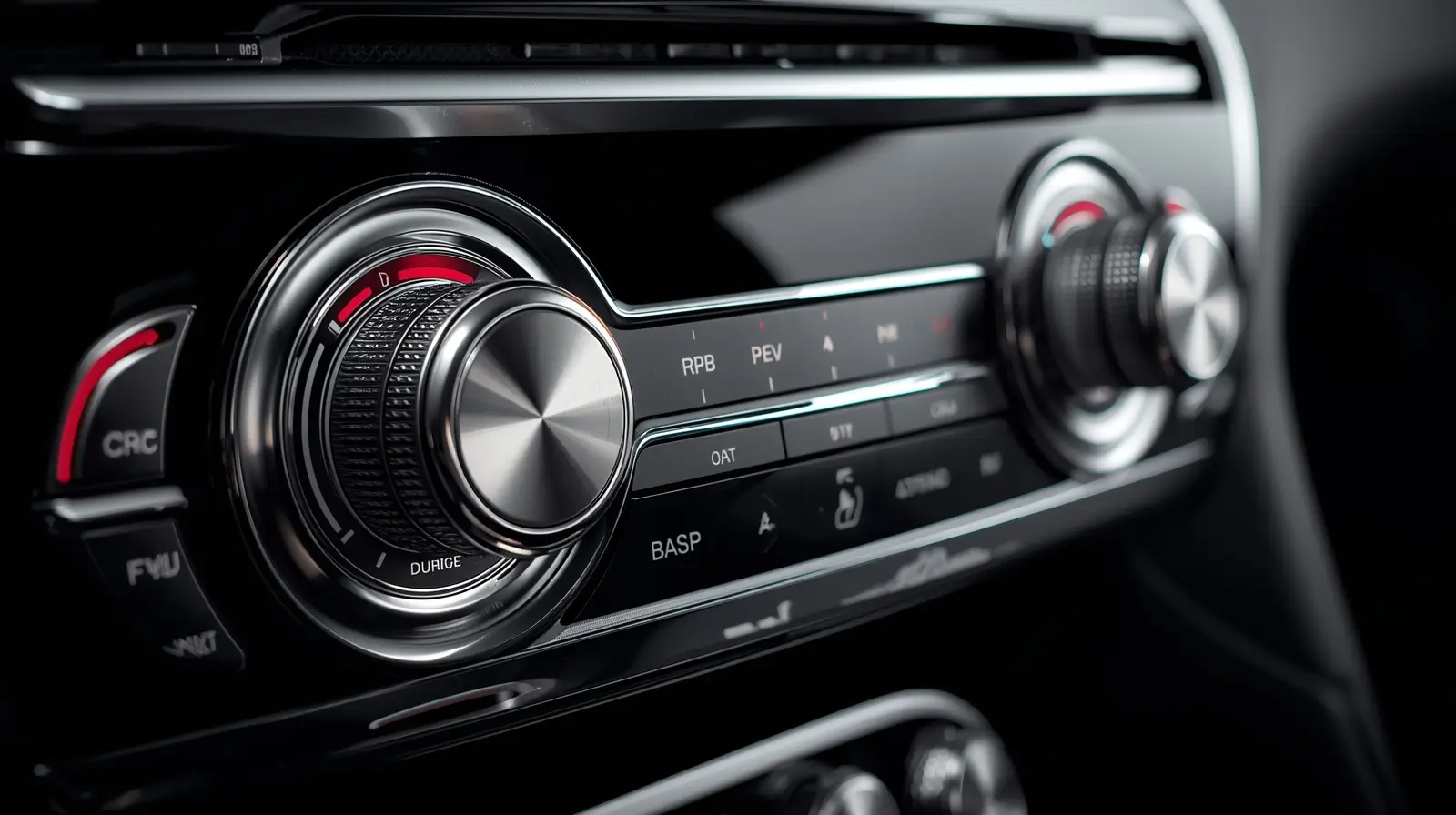
Adjusting bass and treble in your car doesn’t have to be complicated—you just need a methodical approach. Start with all settings at the neutral or “flat” position. This means bass, treble, and midrange should be set to 0 (or the middle mark, depending on your stereo’s display).
Next, play a song you know well—preferably one that represents the kind of music you listen to most. Listen carefully to how it sounds with flat settings. From there, make small adjustments, one control at a time.
Increase the bass slightly until the low-end feels rich but not overwhelming. Then, adjust the treble for clarity—add just enough to make vocals and high notes stand out without becoming sharp. If your stereo has a midrange control, fine-tune it to bring balance between bass and treble.
Once you’ve adjusted the settings, listen to a variety of tracks. This will help you identify if the changes work across different genres or if you need to tweak further. Patience is key—audio tuning is an art as much as a science.
Using Equalizers for Fine-Tuning
If your car stereo or audio app has an equalizer (EQ), you have more precise control over your sound. Unlike simple bass and treble knobs, EQs let you adjust specific frequency ranges. For example, you can boost bass around 60–100 Hz for depth without affecting the mid-bass around 200 Hz.
A typical EQ for balanced sound in a car might have a slight boost in the low bass range (60 Hz), a mild dip in the mid-bass (250 Hz) to avoid muddiness, a small lift in the upper mids (2–4 kHz) for vocal clarity, and a light boost in the high frequencies (10–12 kHz) for sparkle.
Modern EQ systems often come with presets like “Rock,” “Jazz,” or “Pop.” These can be a good starting point, but for the best results, tweak them manually. Remember, every car interior and every ear is different—what works for one driver might sound off to another.
Common Mistakes When Setting Bass and Treble
Overboosting Bass
One of the most common mistakes drivers make is cranking up the bass too high. While it can feel impressive at first, excessive bass can overpower vocals, distort at high volumes, and even damage your speakers. It can also cause unwanted rattles inside your car, especially in the doors and trunk area.
Instead of simply boosting bass, focus on achieving a tight, controlled low-end. This gives you impact without sacrificing clarity. A small subwoofer can also help handle deep bass without overloading your main speakers.
Ignoring Midrange
Many people focus so much on bass and treble that they forget the importance of midrange frequencies. The midrange is where most instruments and vocals live, so neglecting it can make your music sound hollow or disconnected.
If your sound feels “empty” even with good bass and treble, chances are your midrange is too low. Adjusting it upward will often make music sound warmer and more natural.
Setting Levels Too High
Another common issue is pushing all settings too high in an attempt to make the sound “better.” This often leads to distortion, ear fatigue, and a lack of balance. The best audio systems achieve quality through clarity, not just volume.
If you find yourself constantly maxing out settings, you might need better speakers or an amplifier instead of pushing your current system beyond its limits.
Best Equalizer Settings for Car Audio Systems
Preset EQ Options vs. Custom Settings
Most modern car stereos come with preset EQ modes like “Rock,” “Jazz,” or “Classical.” These can be convenient for quick changes, but they’re not tailored to your specific car or preferences. Presets often overemphasize certain frequencies, which can be great for one song but terrible for another.
Custom settings, on the other hand, allow you to shape the sound exactly how you like it. While they take more time to set up, they’ll give you better results in the long run.
Ideal EQ Curves for Balanced Sound
A well-balanced EQ curve for general listening might look like this:
- Slight boost at 60 Hz for deep bass impact
- Small cut at 250 Hz to reduce muddiness
- Mild lift at 2–4 kHz for vocal clarity
- Light boost at 10–12 kHz for brightness
This curve creates a pleasing, clear, and full sound without overemphasizing any single frequency range. Of course, you can modify it based on your music preferences—EDM lovers may want more low-end, while acoustic fans might prefer a flatter setting.
Tips for Getting the Most Out of Your Car Audio
Balancing Sound for Driver and Passengers
One challenge in car audio is that the driver and passengers often hear different things. The driver’s seat is closer to some speakers, which can cause an imbalance. Many modern stereos have a “driver focus” mode, but if yours doesn’t, you can still adjust balance and fade settings manually.
Move the balance slightly toward the passenger side and the fade toward the back seats until the sound feels more centered from the driver’s seat. This will create a more even experience for everyone in the car.
Maintaining Your Audio System
Even the best settings won’t sound good if your equipment isn’t in top shape. Regularly clean your speakers and check for dust or debris that might block sound. Avoid playing music at maximum volume for long periods, as this can wear out your speakers faster.
If you have an amplifier or subwoofer, check wiring connections periodically to prevent signal loss or distortion. Good maintenance ensures your audio stays crisp and powerful for years.
Troubleshooting Poor Sound Quality
Identifying the Problem
When your car audio doesn’t sound right, the first step is figuring out what’s causing the issue. Poor sound quality can come from several sources—wrong EQ settings, damaged speakers, faulty wiring, or even a bad music source file.
Start by playing a high-quality track (preferably lossless or 320kbps MP3) and setting your bass, mid, and treble to neutral. If the music still sounds muddy, distorted, or unbalanced, you can begin troubleshooting.
Check if the problem happens with all music or just certain songs. If it’s song-specific, the issue is likely with the recording quality. If it’s across the board, it’s more likely your system or settings. Also, listen to whether the distortion happens at all volumes or only at higher ones—if it’s the latter, your speakers may be overdriven.
Fixing Distorted Sound
Distortion often comes from pushing your speakers beyond their limits. If your bass is too high, the speaker cones can’t move fast enough to keep up, creating a “buzz” or “crackling” sound. Lower the bass and volume until the distortion disappears.
Sometimes, distortion can also be caused by loose wiring or a poor connection between your head unit and the speakers. Check your cables and ensure they’re secure and free from corrosion.
If your system has an amplifier, make sure the gain setting isn’t too high. Many people confuse gain with volume, but gain is actually a sensitivity control—it adjusts how much input signal the amp needs to reach full power. Too much gain can cause distortion even at moderate volumes.
Conclusion – Finding Your Perfect Sound
There’s no universal “perfect” bass and treble setting for cars, because every car, speaker system, and listener’s ears are different. What sounds amazing to one person might sound dull or overly bright to another. The key is to start with a balanced baseline and make gradual, careful adjustments.
Focus on clarity, not just power. Avoid overboosting frequencies and remember to give attention to the midrange—it’s the heart of your music. Use high-quality audio files, keep your equipment in good shape, and fine-tune settings for different genres if you listen to a wide range of music.
With the right approach, your daily drives can feel like a private concert—tailored to your taste and perfectly balanced for maximum enjoyment.
FAQs
1. What is the best bass and treble setting for all music types?
A balanced setting with bass and treble both slightly above the midpoint, and a small midrange boost, works well for most genres.
2. Should bass be higher than treble in a car?
Not necessarily. It depends on your music preference and car acoustics. For bass-heavy genres, yes; for acoustic or vocal-focused music, treble may be more important.
3. How do I get deeper bass without distortion?
Use a subwoofer, keep bass boosts moderate, and avoid maxing out volume. Also, check your amp gain settings.
4. Do factory presets work well for most drivers?
They’re a good starting point, but customizing your settings will always produce better results tailored to your ears and vehicle.
5. How often should I adjust my car audio settings?
Adjust whenever you change music genres, replace speakers, or notice sound quality changes. Regular fine-tuning keeps your audio optimal.