Introduction to Car Body Welding
Why Welding Matters in Auto Body Repair
Car body repair often involves working with thin sheet metal typically 18 to 22 gauge steel. This means you need a welder that provides precise heat control and smooth welds without burning through panels. A high-quality welder ensures your joints are strong, neat, and durable. Whether you’re replacing floor pans, fixing fenders, or fabricating custom parts, having the right tool saves time and prevents damage.
In automotive restoration, appearance matters just as much as strength. A smooth, clean weld makes for easier grinding, less filler, and a professional-looking finish once painted. That’s why even DIY enthusiasts prefer investing in a reliable machine that performs consistently.
Factors That Make a Good Car Body Welder
Not all welders are created equal. The best car body welders share a few key qualities:
- Precise Voltage Control: Essential for working on thin materials.
- Stable Arc Performance: Ensures cleaner, more uniform welds.
- Portability: You’ll often move around the vehicle, so compactness matters.
- Multi-Process Capabilities: Some welders can handle MIG, TIG, and Stick, offering more versatility.
- Gas or Gasless Options: Depending on your workspace and ventilation, this flexibility can be vital.
These features distinguish hobby-level welders from professional-grade machines that can handle both delicate sheet metal and thicker automotive parts.
Key Considerations Before Buying a Welder for Auto Body Work
Welding Type (MIG, TIG, or Stick)
Each welding type has its strengths.
- MIG (Metal Inert Gas) welding is the most popular for auto body work. It’s easy to learn and ideal for thin materials.
- TIG (Tungsten Inert Gas) welding gives cleaner, more precise welds perfect for aluminum and detailed work.
- Stick welding isn’t ideal for car panels but can be used for thicker components like frames or brackets.
If you’re new, start with a MIG welder, as it offers the best mix of control and convenience.
Power Requirements and Portability
Most car body work can be done with a 120V welder, which plugs into standard household outlets. However, for thicker materials, a dual-voltage (120V/240V) model gives flexibility. Portability also matters; you don’t want a bulky machine when moving around your garage.
Material Compatibility (Steel, Aluminum, etc.)
Most cars use mild steel, but some modern and performance vehicles include aluminum panels. Ensure your welder supports both materials, especially if you plan to work on newer cars or custom builds.
Duty Cycle and Performance
The duty cycle indicates how long a welder can run before needing to cool down. For example, a 30% duty cycle at 90 amps means it can weld for 3 minutes continuously before resting. A higher duty cycle means more productivity and less downtime crucial for professionals.
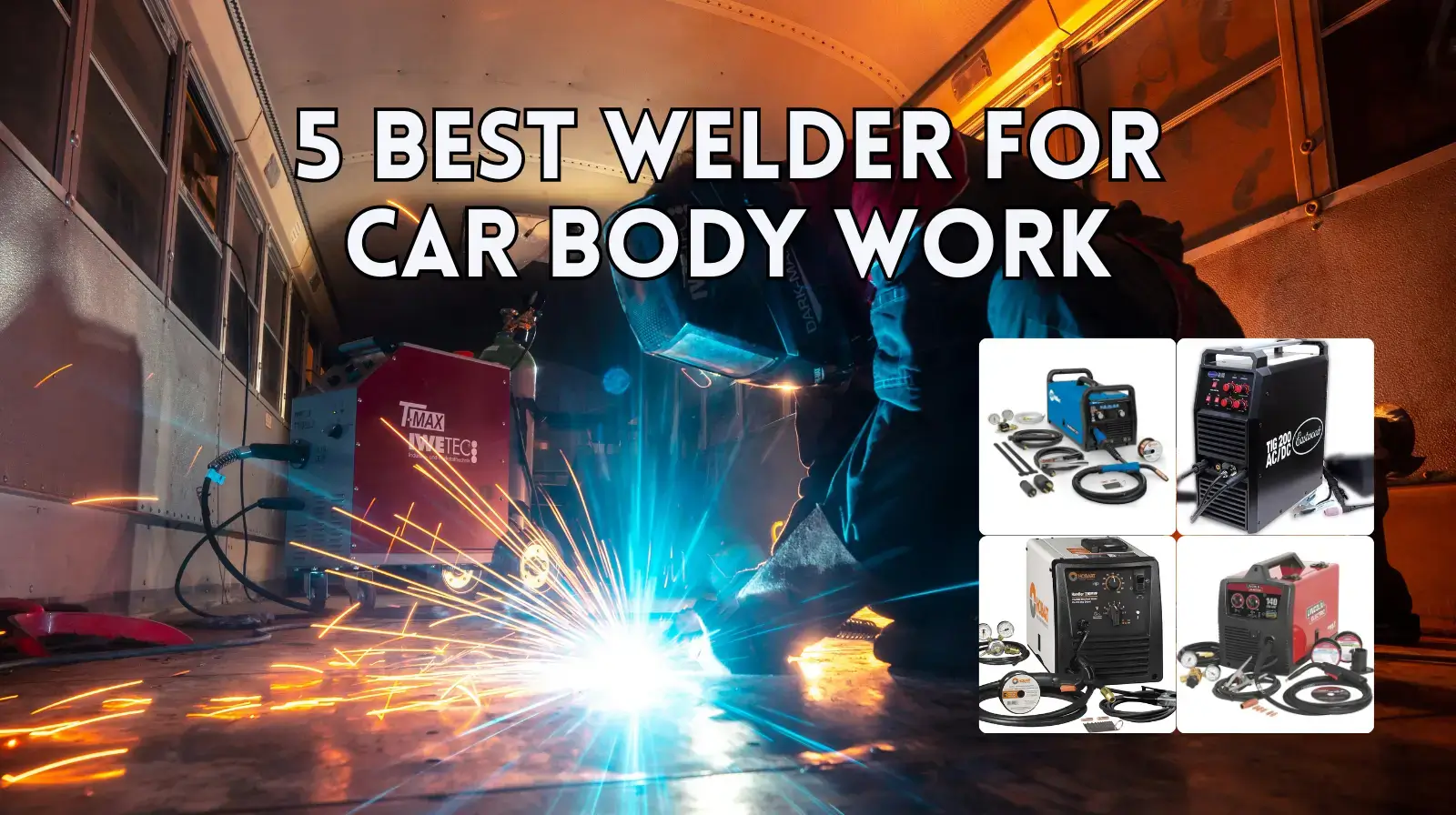
5 Best Welder for Car Body Work in 2025
When it comes to restoring, repairing, or customizing cars, welding plays a key role. Whether you’re patching up rusty panels or building a custom exhaust system, the right welder can make or break your project. The market is full of welders that claim to do it all, but not every machine is built for thin automotive sheet metal. In this guide, we’ll go through the 5 best welder for car body work, covering their pros, cons, and real-world performance so you can make a confident buying decision.
1. Lincoln Electric Power MIG 140C: Best Overall MIG Welder
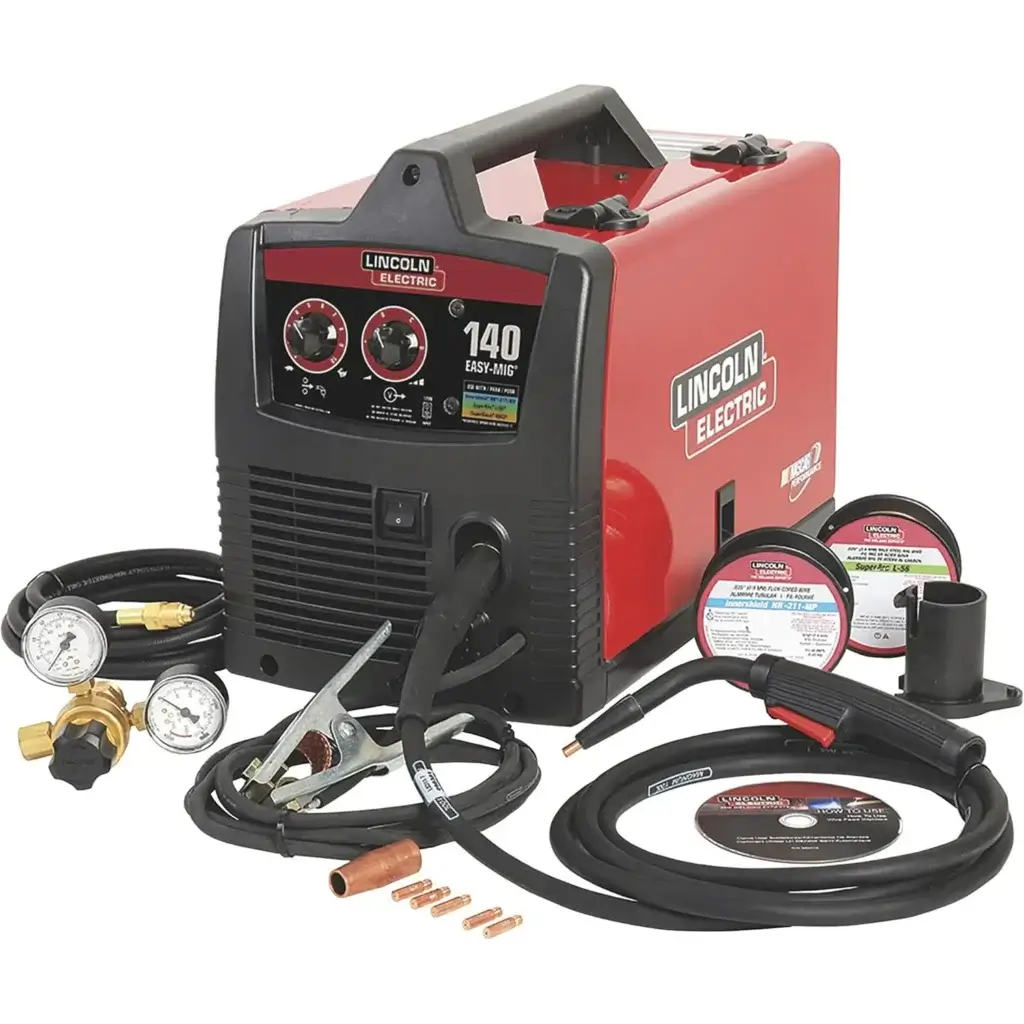
Image Credit: Amazon
Lincoln Electric has a long-standing reputation for building reliable, professional-grade welders. The Power MIG 140C is a standout for car body work, offering consistent power, smooth wire feeding, and excellent control over heat settings. It’s perfect for home garages and small shops that handle automotive repair.
Key Features:
- Input Power: 120V
- Output: Up to 140 Amps
- Processes: MIG and Flux-Cored
- Wire Feed Speed Control
- Adjustable Voltage Settings
- Compact Design (Weighs about 60 lbs)
Pros of Lincoln Electric Power MIG 140C
- Excellent Arc Stability: The welder produces smooth, clean welds even on thin sheet metal, reducing the chance of burn-through.
- User-Friendly Controls: Beginners can adjust settings easily, while pros appreciate the fine-tuned precision.
- Durable Build: The sturdy metal casing ensures long life and resistance to workshop wear.
- Versatile Performance: Works great for car panels, exhausts, and even small fabrication tasks.
- Reliable Wire Feed System: Provides consistent performance with minimal spatter.
Cons of Lincoln Electric Power MIG 140C
- Higher Price Point: Slightly more expensive than entry-level models, but worth the reliability.
- Limited to 120V Power: Can’t handle very thick materials beyond car body panels.
- No Spool Gun Support: Not ideal for extensive aluminum welding unless modified.
Despite its few drawbacks, this model is a top pick for car enthusiasts, hobbyists, and body shops looking for precision and dependability in MIG welding.
2. Hobart Handler 210 MVP: Best for Professionals
Image Credit: Amazon
The Hobart Handler 210 MVP is a powerhouse welder designed for both light and heavy-duty applications. Its dual-voltage design allows users to plug it into either 115V or 230V outlets, offering flexibility for a variety of automotive and fabrication tasks.
Key Features:
- Dual Voltage (115V/230V)
- Output: Up to 210 Amps
- MIG and Flux-Cored Welding Capabilities
- Seven Voltage Settings
- Durable Wire Feed System
This model strikes a balance between professional performance and user-friendliness, making it perfect for shops that handle both auto body repair and chassis fabrication.
Pros of Hobart Handler 210 MVP
- Dual-Voltage Power: Provides flexibility for different job types from thin car panels to thicker metal frames.
- Strong, Smooth Arc: Produces minimal spatter and professional-grade welds.
- Durability: Built from quality components that withstand heavy use.
- Ease of Setup: Plug-and-play setup with simple controls even beginners can get started fast.
- Excellent Warranty: Backed by Hobart’s 5/3/1 industrial warranty for peace of mind.
Cons of Hobart Handler 210 MVP
- Heavier Unit (79 lbs): Not ideal for frequent transport.
- Pricey for Hobbyists: Better suited for professionals or frequent users.
- Limited TIG Option: It’s MIG-only, so not suitable for fine TIG work on aluminum.
Overall, the Hobart Handler 210 MVP is the professional’s choice for those who want reliable performance, long lifespan, and clean results on automotive metal.
3. Eastwood TIG 200 AC/DC: Best TIG Welder for Car Panels
Image Credit: Amazon
When precision matters like welding thin aluminum or stainless steel car panels the Eastwood TIG 200 AC/DC stands out. It’s a favorite among auto restorers and fabricators who need tight control and smooth welds. TIG welding gives you the cleanest, most professional finish, and this model offers the right blend of power, accuracy, and affordability.
Key Features:
- Input Power: 120V / 240V Dual Voltage
- Output: Up to 200 Amps
- Processes: TIG and Stick
- AC/DC Capability for Aluminum and Steel
- High-Frequency Start for Cleaner Arcs
- Foot Pedal for Precise Heat Control
The Eastwood TIG 200 is known for its steady arc performance and intuitive interface, making it suitable for both skilled welders and those upgrading from a MIG setup.
Pros of Eastwood TIG 200 AC/DC
- Exceptional Precision: Perfect for thin automotive sheet metal where accuracy is critical.
- Dual Voltage: Works both in home garages (120V) and professional shops (240V).
- AC/DC Functionality: Allows you to weld both steel and aluminum effortlessly.
- Foot Pedal Control: Offers hands-free amperage adjustment, essential for detailed car panel work.
- Quiet and Clean Operation: Minimal spatter or smoke, which helps when working indoors.
Cons of Eastwood TIG 200 AC/DC
- Learning Curve: TIG welding takes more practice compared to MIG.
- Less Portable: Weighs over 60 lbs and needs a gas setup.
- Slower Process: TIG is time-consuming, so it’s not ideal for large projects or thick materials.
If your projects involve restorations, custom aluminum parts, or high-end detailing, the Eastwood TIG 200 is an investment that pays off with stunning results. It delivers show-quality welds that need little grinding or cleanup afterward.
4. Forney Easy Weld 261: Best Budget Welder for Beginners
Image Credit: Amazon
If you’re new to welding or just need a reliable, simple machine for light-duty car work, the Forney Easy Weld 261 is an excellent entry-level choice. This flux-core MIG welder doesn’t require shielding gas, making it ideal for home garages and outdoor repairs. It’s compact, lightweight, and very easy to use.
Key Features:
- Input Power: 120V
- Output: Up to 140 Amps
- Flux-Core Wire Feed (No Gas Required)
- Portable Design (19 lbs only!)
- Steel and Stainless Steel Compatible
This machine is designed with beginners in mind, focusing on simplicity, affordability, and reliability. It won’t handle thick metal or aluminum, but it’s great for body panels, small patches, and general auto maintenance.
Pros of Forney Easy Weld 261
- Extremely Lightweight: Easy to carry around the garage or driveway.
- No Gas Needed: Uses flux-core wire, so you don’t have to worry about gas cylinders or regulators.
- Simple Setup: Plug it in, load the wire, and you’re ready to go no complex settings.
- Affordable Price: Perfect for hobbyists and beginners on a budget.
- Durable Build: Despite its price, it’s built tough and can handle regular light-duty use.
Cons of Forney Easy Weld 261
- Limited Power: Struggles with metal thicker than 1/4 inch.
- More Spatter: Flux-core welding produces more cleanup compared to gas-shielded MIG.
- No Aluminum Support: Cannot weld aluminum or other non-ferrous metals.
In short, the Forney Easy Weld 261 is the best budget-friendly choice for beginners who want to learn welding or do simple car body patching at home. It offers outstanding value without overwhelming features.
5. Miller Electric Multimatic 215: Best Multi-Process Welder
Image Credit: Amazon
If you want one welder that can do it all, the Miller Multimatic 215 is a top-tier multi-process machine that handles MIG, TIG, and Stick welding. It’s perfect for serious hobbyists, restoration shops, and professional fabricators who work with a variety of materials and welding methods.
Key Features:
- Multi-Process: MIG, TIG, Stick
- Input Power: 120V / 240V
- Auto-Set Elite Technology for Easy Setup
- Lightweight (38 lbs) and Portable
- LCD Interface with Intuitive Controls
- Welds Steel, Stainless Steel, and Aluminum (with Spool Gun)
The Miller brand is trusted by professionals worldwide for its durability, performance, and cutting-edge technology. The Multimatic 215 delivers all of that in a sleek, compact package.
Pros of Miller Electric Multimatic 215
- Versatile Performance: Switch between MIG, TIG, and Stick modes effortlessly.
- Auto-Set Elite: Automatically adjusts parameters based on your wire and gas perfect for fast setup.
- Lightweight Yet Powerful: Portable enough for mobile use but strong enough for heavy work.
- High Build Quality: Premium components ensure long life and reliability.
- Smooth Arc and Clean Welds: Produces professional results across all materials.
Cons of Miller Electric Multimatic 215
- Expensive: One of the priciest options on the list, but you get what you pay for.
- TIG Accessories Sold Separately: Requires additional purchase for full TIG functionality.
- Complex for Beginners: The range of features may be overwhelming for those new to welding.
For anyone who wants the ultimate all-in-one welder, the Miller Multimatic 215 is hard to beat. It’s perfect for auto body shops, custom builders, and restoration enthusiasts who need flexibility and precision in one compact unit.
Comparison Table: Top 5 Welder for Car Body Work
| Model | Voltage | Best For |
|---|---|---|
| Lincoln Electric Power MIG 140C | 120V | All-round car body work |
| Hobart Handler 210 MVP | 115V/230V | Professionals |
| Eastwood TIG 200 AC/DC | 120V/240V | Precision welding |
| Forney Easy Weld 261 | 120V | Beginners |
| Miller Multimatic 215 | 120V/240V | Advanced users |
Tips for Welding Car Body Panels Like a Pro
Safety Tips and Gear You Must Have
Before striking your first arc, safety should be your top priority. Always wear:
- A high-quality welding helmet with auto-darkening features.
- Welding gloves and a long-sleeve flame-resistant jacket.
- Proper ventilation or a fume extractor to avoid inhaling metal fumes.
- Safety glasses even when grinding or brushing welds.
Keep a fire extinguisher nearby, as car body work often involves flammable materials like paint, fuel residue, and upholstery.
Welding Thin Sheet Metal Without Warping
Working with car panels means dealing with very thin metal. Excessive heat can easily warp panels, leading to poor fits and visible distortions. To avoid this:
- Use short welds instead of long beads.
- Allow the metal to cool between passes.
- Maintain consistent movement to distribute heat evenly.
- Use copper backing when possible to absorb heat.
Patience and precision are key remember, welding thin steel is more about finesse than force.
Common Mistakes to Avoid When Welding Car Panels
Even seasoned welders can make mistakes when working on car bodies, especially with thin sheet metal. These errors often lead to warped panels, weak joints, or extra hours of grinding and rework. Understanding and avoiding these pitfalls will save you time, effort, and frustration.
1. Using Too Much Heat
One of the biggest mistakes in car body welding is setting the heat too high. Thin automotive steel (around 18–22 gauge) doesn’t require intense heat. Excessive amperage or voltage can easily burn through or warp panels, creating uneven surfaces that are hard to fix later.
Tip: Start with the lowest setting recommended for your wire size and metal thickness, then slowly increase until you get good penetration without warping.
2. Long, Continuous Welds
While it might be tempting to run one long bead to finish quickly, that’s a recipe for disaster. Continuous welding builds up too much heat in one area, causing distortion and warping.
Tip: Use short tack welds about an inch apart, then go back and fill the gaps after the panel cools. This helps control heat buildup.
3. Skipping Proper Metal Preparation
Dirty, rusty, or painted surfaces cause poor weld penetration and weak joints. Always clean your work area thoroughly with a grinder, wire brush, or sandpaper before welding.
Tip: Use acetone or alcohol to remove grease and oil. Clean metal equals cleaner, stronger welds.
4. Using the Wrong Wire or Gas
For MIG welding car panels, .023 or .025-inch wire is ideal. Thicker wire (.030 or .035) makes it harder to control heat on thin steel. Similarly, using the wrong shielding gas (like CO₂ alone) can cause spatter and burn-through.
Tip: Use 75% Argon / 25% CO₂ for car body MIG welding, it gives smooth, stable arcs with minimal spatter.
5. Neglecting Fit-Up and Panel Alignment
If your panels don’t fit perfectly before welding, they definitely won’t fit after. Poor alignment creates tension points that can pull the metal out of shape once heat is applied.
Tip: Always clamp panels tightly using magnets or vise grips. Test-fit doors and fenders before fully welding to ensure alignment.
Avoiding these common errors separates professional-looking welds from amateur ones. A little patience and preparation go a long way toward flawless results.
Maintenance and Longevity of Your Welder
To get the best performance from your welder and extend its lifespan regular maintenance is key. Even the most advanced machines need proper care to stay in top shape, especially in dusty garages or workshops.
1. Clean the Machine Regularly
Dust and metal particles can build up inside the welder and interfere with cooling or electrical connections. Use compressed air to blow out dust every few weeks, especially from vents and the wire feed area.
2. Inspect Cables and Connections
Frayed cables or loose connections can cause inconsistent performance or even safety hazards. Check the ground clamp, torch leads, and power cord regularly for wear and tear. Replace any damaged parts immediately.
3. Keep Wire and Consumables Dry
Moisture can rust your welding wire or corrode tips and nozzles. Always store wire spools in a dry area and cover your welder when not in use. Replace worn contact tips and liners to ensure smooth wire feeding.
4. Monitor the Duty Cycle
Don’t push your welder beyond its rated duty cycle. If your machine has a 30% duty cycle at 90 amps, it means you can weld for three minutes, then rest for seven. Overheating shortens the life of internal components and may void your warranty.
5. Calibrate and Test Regularly
If your welder offers digital controls or settings, calibrate them periodically to maintain accuracy. Also, test the arc quality before each major job a flickering or inconsistent arc may signal maintenance is needed.
Taking care of your welder isn’t just about longevity; it’s about consistent performance and safety. A well-maintained machine ensures every weld you make is strong, clean, and reliable.
Conclusion
Welding car body panels is both an art and a science. Whether you’re a DIY hobbyist fixing up your first project car or a seasoned pro restoring classics, the right welder makes all the difference.
Let’s recap the five best welders for car body work:
- Lincoln Electric Power MIG 140C – The best all-around MIG for smooth, clean welds.
- Hobart Handler 210 MVP – The professional’s choice with dual voltage power.
- Eastwood TIG 200 AC/DC – Ideal for precision aluminum and steel work.
- Forney Easy Weld 261 – A budget-friendly option perfect for beginners.
- Miller Multimatic 215 – The ultimate all-in-one multi-process welder.
Each model offers unique strengths depending on your needs from portability to power to precision. MIG welders remain the top choice for most auto body applications due to their ease of use and versatility, while TIG is perfect for specialized or detailed work.
Investing in a quality welder saves time, reduces frustration, and ensures your repairs last for years. Remember, great welding isn’t about speed; it’s about control, consistency, and care.
FAQs
1. Which welder type is best for car body work?
MIG welders are generally best for car body work because they’re easy to use, produce clean welds on thin metal, and work quickly. TIG is excellent for precision work but takes more practice.
2. Can beginners use TIG welders for car repairs?
Yes, but TIG welding has a steeper learning curve. Beginners should start with MIG welding before moving on to TIG for detailed or aluminum work.
3. What gas is best for MIG welding car panels?
A 75% Argon and 25% CO₂ mix is ideal for car panels. It offers a smooth arc, minimal spatter, and cleaner welds compared to using pure CO₂.
4. How much should I spend on a good auto body welder?
For reliable quality, expect to spend between $400 and $1,500. Budget models like Forney are great for beginners, while advanced machines like Miller or Hobart suit professionals.
5. Are inverter welders better for automotive use?
Yes, inverter welders are lighter, more efficient, and offer smoother arc control than traditional transformer models making them perfect for precise car body work.