Introduction
Imagine being stuck on a remote road at night. Your phone’s dead, it’s freezing, and there’s no help in sight. Scary, right? Now picture the same scenario—except this time, you have a well-equipped car emergency kit with a first aid pack in your trunk. Suddenly, the situation feels a lot more manageable. That’s the power of being prepared.
A car emergency kit is like having a survival plan tucked behind your seat. It’s not just for road trips or off-the-grid adventurers—it’s for anyone who drives, whether it’s a five-minute commute or a weekend getaway. And when you pair that kit with a solid first aid pack? You’re not just equipped to fix flat tires or dead batteries—you’re ready to handle minor injuries and even help save a life.
This article is your go-to guide for building the ultimate car emergency kit that includes essential first aid tools. We’ll walk through everything you need, from jumper cables to antiseptic wipes, and break it down in a way that’s easy, practical, and super useful. Buckle up—safety just got a whole lot simpler.
What Is a Car Emergency Kit?
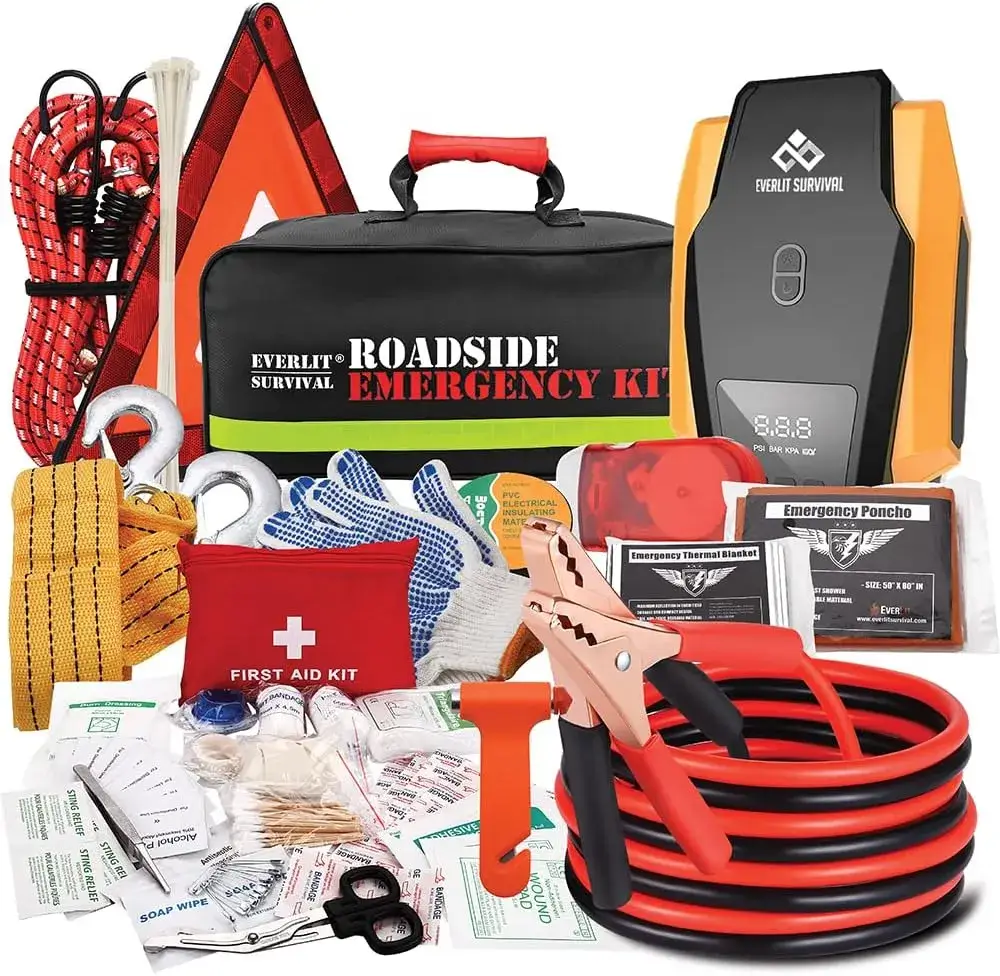
Image Source: Amazon
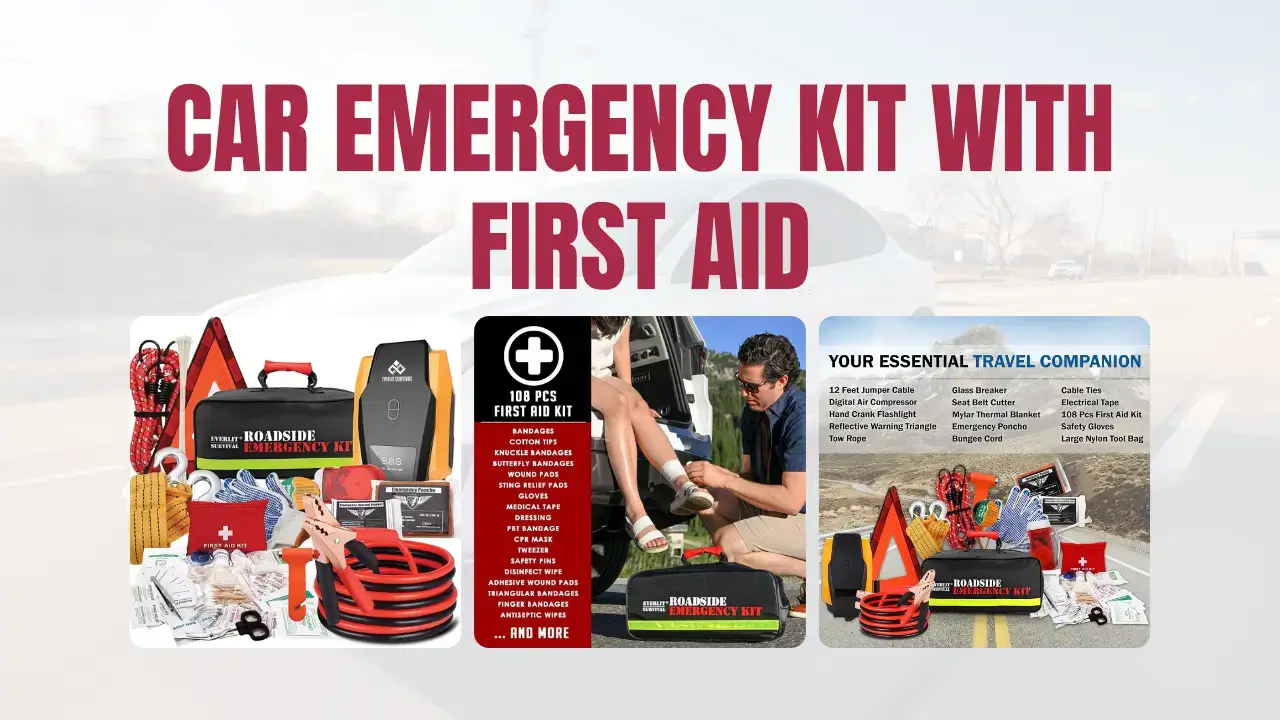
A car emergency kit is your roadside safety net. It’s a carefully packed bag or container filled with tools, gear, and supplies designed to help you handle unexpected situations on the road. Think of it as your backup plan when something goes wrong—because sooner or later, something probably will.
Picture this: your battery dies in the middle of nowhere. No biggie if you’ve got jumper cables. Or maybe your tire gives out in a snowstorm—good thing you packed that portable air compressor and thermal blanket. These are the kinds of challenges a car emergency kit is built for.
The idea is to have what you need to survive and stay safe until professional help arrives—or to fix the problem yourself. It’s not just about breakdowns either. A good kit helps during:
- Accidents
- Medical issues
- Bad weather
- Getting lost
- Long waits for a tow truck
The great thing is, building or buying a kit doesn’t have to be complicated. But it does have to be comprehensive, well-organized, and ready to go when things take a turn. Trust me, a little preparation today can make a massive difference tomorrow.
The Importance of a First Aid Kit in Your Vehicle
Every car should carry a first aid kit. Full stop. It’s one of those things you hope you never need, but you’ll be incredibly thankful for if the time comes. Whether it’s a scraped knee, a nosebleed, or something more serious like a deep cut or allergic reaction, having the right medical supplies on hand can be a literal lifesaver.
We often think of first aid kits as household items—but emergencies don’t wait for you to get home. Accidents happen at rest stops, during hikes, at construction zones, or even in your own driveway. And if you’re miles from a hospital or waiting on an ambulance, the first few minutes matter most. That’s where your car’s first aid kit becomes the MVP.
Here’s what makes it so important:
- Quick response time: You can start treatment immediately.
- Minor injuries don’t escalate: You avoid infection or worsening conditions.
- Peace of mind: Whether it’s your child, your passenger, or a stranger on the road, you’ll know you’re equipped to help.
The good news is, stocking a first aid kit doesn’t require a medical degree. With the right items and a little basic knowledge, you’ll be ready to handle cuts, sprains, headaches, burns, and more. We’ll dive into the must-have medical supplies in the next section, so keep reading.
Must-Have Items in a Car Emergency Kit
Building the ultimate car emergency kit starts with choosing the right items. Not just random tools tossed in a bag, but purpose-driven gear that addresses real roadside scenarios. Whether you’re dealing with a dead battery, lost GPS signal, or blizzard-like conditions, your kit should cover all the bases.
Here’s what every car emergency kit should include, broken down into categories:
Tools and Repair Items
Let’s start with the mechanical side of things. Cars are machines, and machines break. When they do, you’ll want these items within arm’s reach:
- Jumper Cables: An absolute must. Get at least 10 feet long and heavy-duty clamps.
- Tow Rope or Strap: For getting pulled out of ditches or towed short distances.
- Tire Repair Kit: Includes plugs, patches, and sometimes a sealant.
- Portable Air Compressor: Keeps your tires inflated wherever you are.
- Duct Tape: Temporary fixes for leaks, broken parts, or keeping things together.
- Screwdrivers and Wrenches: Compact toolsets can be a lifesaver in tight situations.
These tools won’t make you a mechanic overnight, but they’ll help you handle common problems and keep your vehicle safe until you can reach a repair shop.
Survival Essentials
Mechanical fixes are just one part. The other part? Staying safe and comfortable while you wait for help.
- Flashlight (and Extra Batteries): Don’t rely on your phone—get something powerful and weatherproof.
- Thermal Blanket: Keeps you warm if you’re stranded in the cold.
- Non-Perishable Snacks: Think protein bars or trail mix.
- Water Bottles or Purification Tablets: Hydration is critical.
- Multi-Tool: One device with pliers, knives, screwdrivers, and more.
These items aren’t luxury—they’re basic survival tools. Especially if you’re traveling through remote areas or during bad weather, they could mean the difference between discomfort and danger.
Communication and Navigation
Staying connected is key when something goes wrong. But batteries die, signals drop, and not everyone carries paper maps anymore.
- Phone Charger (with Car Adapter): Keep your phone alive, always.
- Paper Maps: GPS isn’t always reliable, especially in rural areas.
- Whistle or Signal Mirror: In case you need to call for help with no phone signal.
- Emergency Contact Card: Includes your name, emergency contacts, and medical info.
A well-rounded emergency kit goes beyond the mechanical. It keeps you visible, reachable, and oriented—even when tech fails.
Comprehensive First Aid Kit Essentials
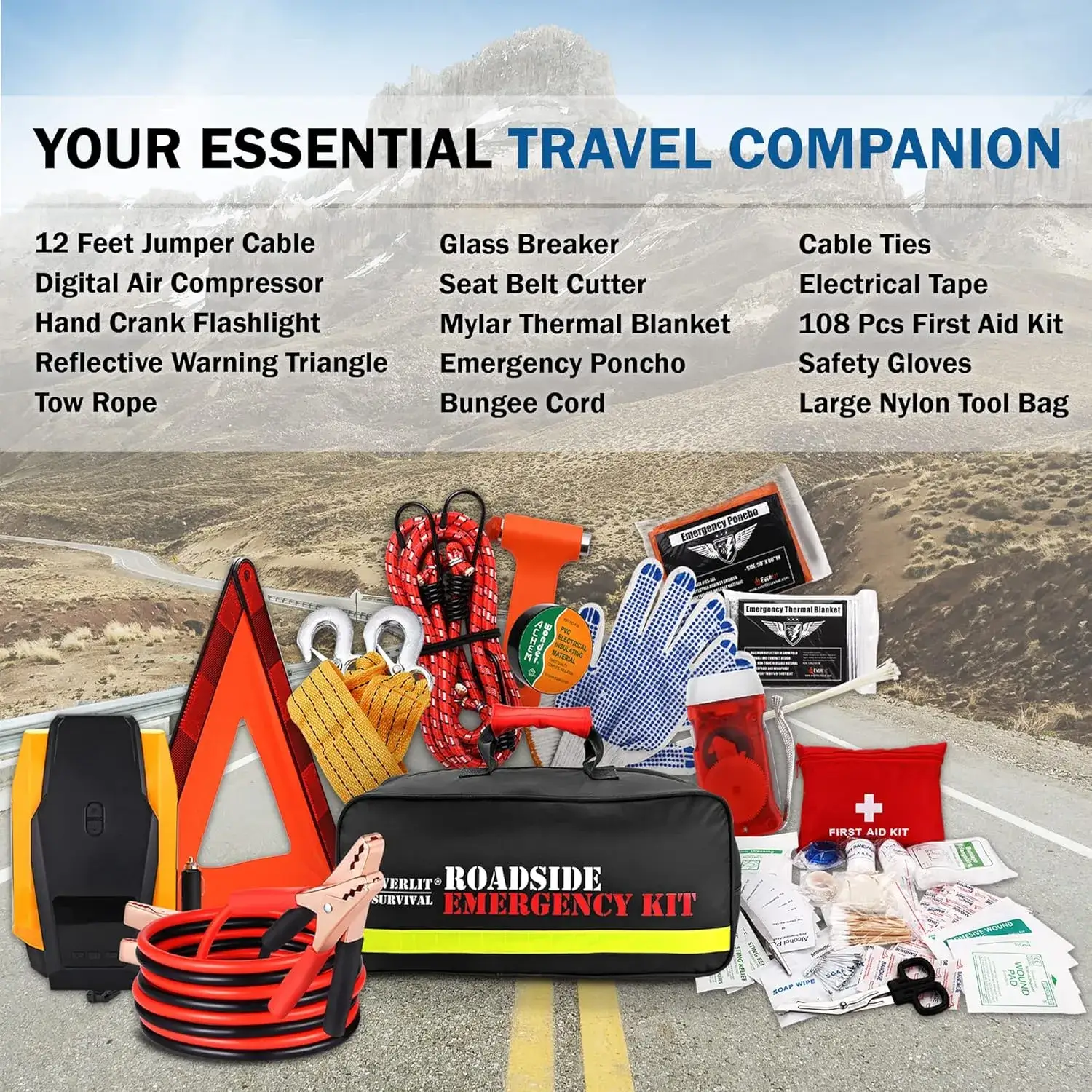
Image Source: Amazon
A proper car first aid kit is more than just a few band-aids tossed in a box. It’s a critical part of your vehicle’s safety setup—and when it’s fully stocked, it can handle everything from a blister to a full-blown injury. Whether you’re on a family road trip, commuting daily, or exploring rugged terrain, a first aid kit provides the tools to manage health issues on the go.
Let’s break down the must-have components into two categories: basic and advanced supplies.
Basic First Aid Items
These are the core essentials—the non-negotiables that every kit should include. Think of them as your first response tools:
- Adhesive Bandages (Multiple Sizes): For small cuts, scrapes, and blisters.
- Antiseptic Wipes & Alcohol Pads: To clean wounds and reduce infection risk.
- Gauze Pads & Adhesive Tape: For larger wounds that need pressure dressing.
- Scissors & Tweezers: For cutting gauze or removing splinters or debris.
- Nitrile Gloves (Non-Latex): Keeps you and the injured person safe from contamination.
- Cotton Balls or Swabs: Useful for applying ointments or cleaning.
- Instant Cold Pack: Reduces swelling or pain from minor injuries.
- Thermometer: Helps monitor for fever, especially with kids.
- Elastic Bandage (ACE Wrap): For sprains or support during minor muscle injuries.
These supplies help manage the majority of minor injuries you’ll likely encounter while traveling. Even if you’re not medically trained, you can use most of these items with a little bit of common sense.
Advanced First Aid Supplies
If you want to take your kit to the next level (which you should, especially if you travel often or go on long drives), consider these advanced items:
- Burn Cream or Gel: For minor burns from hot engines or spilled liquids.
- Hydrocortisone Cream: Reduces itching from insect bites or allergic reactions.
- Antibiotic Ointment (Neosporin): Helps prevent infections in cuts and wounds.
- CPR Mask or Barrier Device: Critical for safely providing mouth-to-mouth resuscitation.
- Pain Relievers (Aspirin, Ibuprofen, Acetaminophen): For headaches, sprains, or fevers.
- Allergy Medication (Antihistamines like Benadryl): Especially important if you or passengers have known allergies.
- Emergency Blanket (Mylar): Offers thermal insulation in cold climates.
- First Aid Manual or Instruction Card: Even a small guide can make a big difference in a stressful moment.
It’s also smart to include personal medications if you or a frequent passenger has a chronic condition—just make sure they’re rotated out before expiration.
By having a first aid kit with both basic and advanced items, you’re equipping yourself to respond effectively in any minor or moderate emergency. It’s not just about having the gear—it’s about having the right gear.
Seasonal Add-Ons for Your Emergency Kit
Road emergencies don’t take seasons off, but your gear should definitely adapt with the weather. Whether it’s blazing hot or dangerously cold, tailoring your car emergency kit to the season can make a serious difference in your safety and comfort.
Let’s take a look at what to include based on the time of year:
Winter-Specific Items
Winter driving brings its own challenges—icy roads, freezing temps, and reduced visibility. Add these items to your kit during the colder months:
- Ice Scraper & Snow Brush: Essential for visibility.
- Shovel (Folding or Compact): If you get snowed in or need to clear a path.
- Kitty Litter or Sand: Provides traction if your tires are stuck on ice.
- Hand Warmers: Compact and useful for staving off frostbite.
- Extra Warm Clothing: Include gloves, hats, scarves, and even socks.
- Windshield Washer Fluid (Winter Formula): Helps keep your windshield clear in freezing temps.
- Anti-Freeze Coolant: For vehicle protection.
A breakdown in the winter without these items can quickly turn dangerous. It’s about more than convenience—it’s survival.
Summer-Specific Items
Heat, long drives, and busy traffic define summer travel. These add-ons help you stay cool, hydrated, and protected:
- Extra Water Bottles: Dehydration happens fast in hot cars.
- Sunscreen: You’d be surprised how much sun you get through windows.
- Insect Repellent: For roadside stops or camping trips.
- Portable Fan (Battery-Powered or USB): Helps cool down your space.
- UV-Protective Emergency Blanket: Keeps heat out, doubles as sunshade.
- Electrolyte Packets: Great for staying hydrated in extreme heat.
Each season presents unique challenges, and tailoring your emergency kit accordingly makes it far more effective.
How to Pack and Organize Your Kit
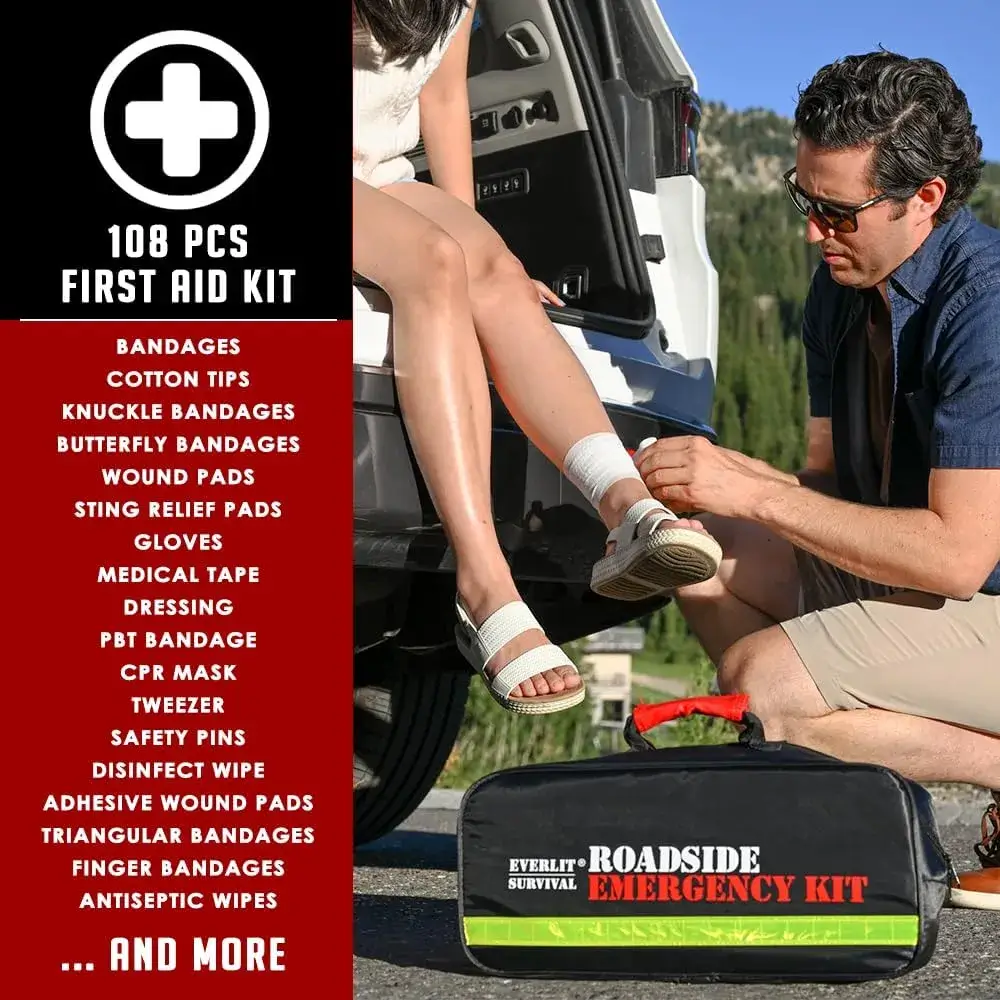
Image Source: Amazon
A kit full of useful tools is great—but if you can’t find what you need in a moment of panic, it’s pretty much useless. That’s why smart organization is key.
Here’s how to pack your kit like a pro:
Use a Durable, Compartmentalized Bag
- Choose something waterproof or water-resistant.
- Soft-sided bags are easier to squeeze into tight trunk spaces.
- Look for bags with multiple compartments or use small pouches to group items by category (e.g., tools, first aid, survival).
Label Clearly
- Use labels or color-coded bags for easy identification.
- You don’t want to be rummaging for a bandage in the dark—labels help speed things up.
Keep Heavy Items on the Bottom
- Jumper cables and tools should be packed beneath lighter items like bandages or snacks to avoid crushing them.
Consider Modular Kits
- Some people prefer to split their kits into two parts: a “car repair kit” and a “first aid/survival kit.” That way, if you’re helping someone else, you don’t have to dig through your whole setup.
Organization makes your kit fast, accessible, and intuitive. Practice finding the items quickly—because emergencies don’t wait.
Storing Your Emergency Kit in the Car
Now that your kit is packed, where do you put it? The goal is to keep it secure, protected, and accessible.
Best Storage Locations
- Trunk: Best for bulkier kits and tools.
- Under the Seats: Perfect for smaller first aid kits or seasonal items.
- Glove Compartment: Use for compact essentials like a flashlight, pocket knife, or medical info card.
Storage Tips
- Avoid places that get extremely hot or cold unless items are rated for extreme temps.
- Don’t just toss it in—you don’t want gear flying around in a collision.
- Secure your kit with straps, nets, or containers.
Out of sight doesn’t mean out of mind—check your kit’s location regularly to make sure it hasn’t shifted, opened, or gotten damaged.
Maintenance and Regular Check-ups
Think of your emergency kit like your vehicle—it needs regular maintenance to keep running smoothly. It’s easy to forget about that bag in your trunk once it’s packed, but supplies degrade, tools break, and your needs can change over time.
Here’s how to keep your kit in top shape:
Set a Reminder to Check Every 3–6 Months
- Mark your calendar or set a phone reminder.
- Regular checks help you stay on top of expired items and worn-out tools.
Replace Expired Medical Supplies
- First aid items like antiseptic wipes, ointments, and medications have shelf lives.
- Make a checklist to monitor what needs replacing and when.
Update Seasonal Gear
- Swap out summer items for winter ones (and vice versa) as seasons change.
- Store off-season items in a labeled box so the swap is quick and painless.
Test Tools Periodically
- Flashlights, air compressors, and portable fans should be tested to ensure functionality.
- Replace batteries and check cords for damage or fraying.
Personalize as Life Changes
- Have a baby? Add baby wipes and infant medication.
- Got a new pet? Include pet-specific gear.
- Health issues? Stock your kit with any new prescriptions or emergency supplies relevant to your condition.
Keeping your emergency kit up to date ensures it actually works when you need it. Don’t let it gather dust and turn into dead weight—treat it like part of your car’s vital safety system.
DIY vs. Pre-Made Emergency Kits
So should you build your own car emergency kit or just buy one that’s pre-assembled? Both options have their pros and cons, and the best choice depends on your preferences, experience, and budget.
DIY Emergency Kits
Pros:
- Customization: You pick exactly what goes into it.
- Higher quality: You can choose trusted brands.
- Better knowledge of contents: You’ll know where everything is and how to use it.
Cons:
- Time-consuming: Researching and buying individual items takes time.
- More expensive (sometimes): Higher quality = higher price tag.
- Easy to overlook key items if you’re inexperienced.
Great for: Enthusiasts, long-distance drivers, off-roaders, or anyone with specific medical or survival needs.
Pre-Made Kits
Pros:
- Convenient: Buy it, toss it in your trunk, done.
- Budget-friendly: Bundles usually cost less than buying everything separately.
- Decent for casual drivers or commuters.
Cons:
- Lower quality tools and supplies in many kits.
- Might miss essentials like seasonal gear or personal medications.
- You may not be familiar with the contents or how to use them.
Great for: New drivers, casual commuters, or those looking for a starter kit.
Best of Both Worlds?
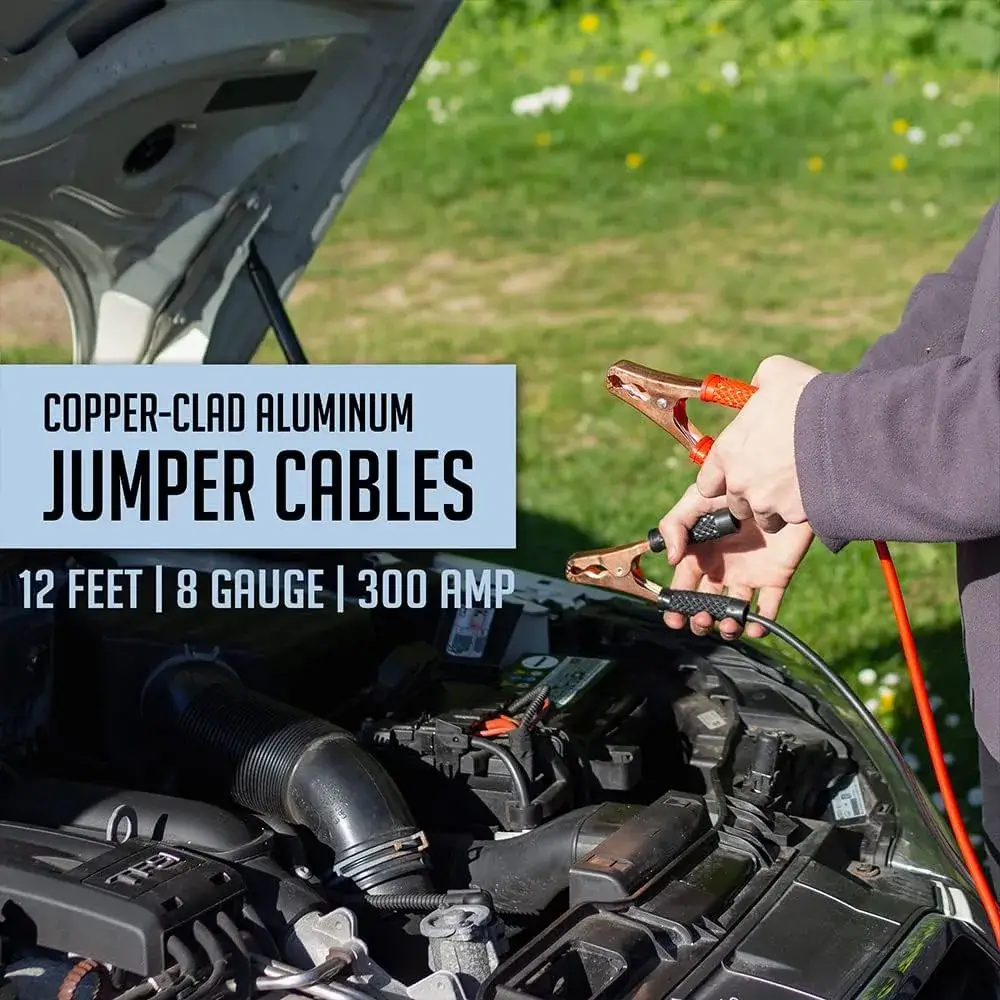
Image Source: Amazon
Many people start with a pre-made kit and then add their own upgrades. This hybrid approach saves time while still giving you the chance to personalize your gear.
Training and Knowledge: Knowing How to Use Your Kit
Having a fully stocked emergency and first aid kit is awesome—but it’s only half the battle. The other half? Knowing how to actually use it. In a crisis, panic can set in fast. The more familiar you are with your kit and basic emergency skills, the better you’ll handle any situation.
Learn the Basics of First Aid
- Take a first aid course through organizations like the Red Cross or St. John Ambulance.
- Learn how to perform CPR, stop bleeding, treat burns, and deal with sprains or fractures.
- Watch tutorials and refresh your knowledge annually.
Know Your Kit Inside and Out
- Unpack and repack it regularly.
- Practice using items like gauze wraps, CPR masks, or tire sealants.
- Read the instruction manuals for tools (portable compressors, radios, etc.).
Emergency Drills
- Practice scenarios with your family or kids. What would you do if the car breaks down in the middle of nowhere?
- Roleplay different types of emergencies—injury, extreme weather, or engine failure.
Keep a First Aid Manual or Emergency Handbook
- Even pros forget things when adrenaline kicks in.
- A guidebook can help you stay calm and follow steps clearly.
The confidence and calm that come with training are priceless in a real emergency. It turns you from a bystander into someone who can truly make a difference.
Real-Life Scenarios Where a Kit Can Save Lives
Still not convinced you need a car emergency kit? Here are a few true-to-life scenarios where having one turned a potential disaster into a manageable situation—or even saved a life.
Stranded in a Blizzard
A couple in Colorado got stuck in a snowstorm with no cell signal. Thanks to their emergency kit, they had a thermal blanket, snacks, water, and a flashlight. They stayed warm overnight and were able to signal a passing snowplow with their whistle the next morning.
Child Injury on a Road Trip
A family road-tripping through rural Arizona had no quick access to a hospital when their child cut his foot on a rock during a rest stop. Their first aid kit had everything needed: gauze, antiseptic, bandages, and even a cold pack. The quick care prevented infection and got them to a hospital safely hours later.
Overheated Vehicle in the Desert
In Nevada, a solo traveler’s car broke down in scorching heat. He used the water, portable fan, and emergency blanket in his kit to stay cool while waiting for roadside assistance. Without it, he could’ve been in serious danger from heatstroke.
These aren’t just “what-ifs.” They happen every day—and the difference between a nightmare and a story with a happy ending is often preparation.
Conclusion
A car emergency kit with first aid isn’t optional—it’s essential. Life on the road is unpredictable, and even the most cautious drivers face unexpected challenges. From flat tires to allergic reactions, roadside breakdowns to minor cuts, having the right tools at the right time changes everything.
Start with the basics: tools, survival gear, communication devices, and a well-stocked medical pack. Then expand it with seasonal essentials, personal medications, and custom touches based on your lifestyle. Most importantly, learn how to use it. A kit is only as good as the hands that wield it.
Don’t wait until something goes wrong. Build or buy your kit now. Trust me, your future self—and everyone in your car—will thank you.
FAQs
1. How often should I check my car emergency kit?
You should inspect your kit every 3–6 months. Check for expired items, damaged tools, and seasonal gear updates.
2. What’s the best container for storing a kit?
Use a waterproof, compartmentalized bag or box. Look for something durable, easy to carry, and with labeled sections for fast access.
3. Can I carry medications in a car emergency kit?
Yes, but make sure they’re in a sealed container, clearly labeled, and not expired. Rotate them regularly to maintain freshness.
4. Are pre-made kits good enough?
They’re a great start, but often need upgrades. Add personal medications, better-quality tools, and seasonal items for full protection.
5. How do I learn to use the first aid tools?
Take a basic first aid course through the Red Cross or local health organizations. Many online platforms also offer tutorials and resources.