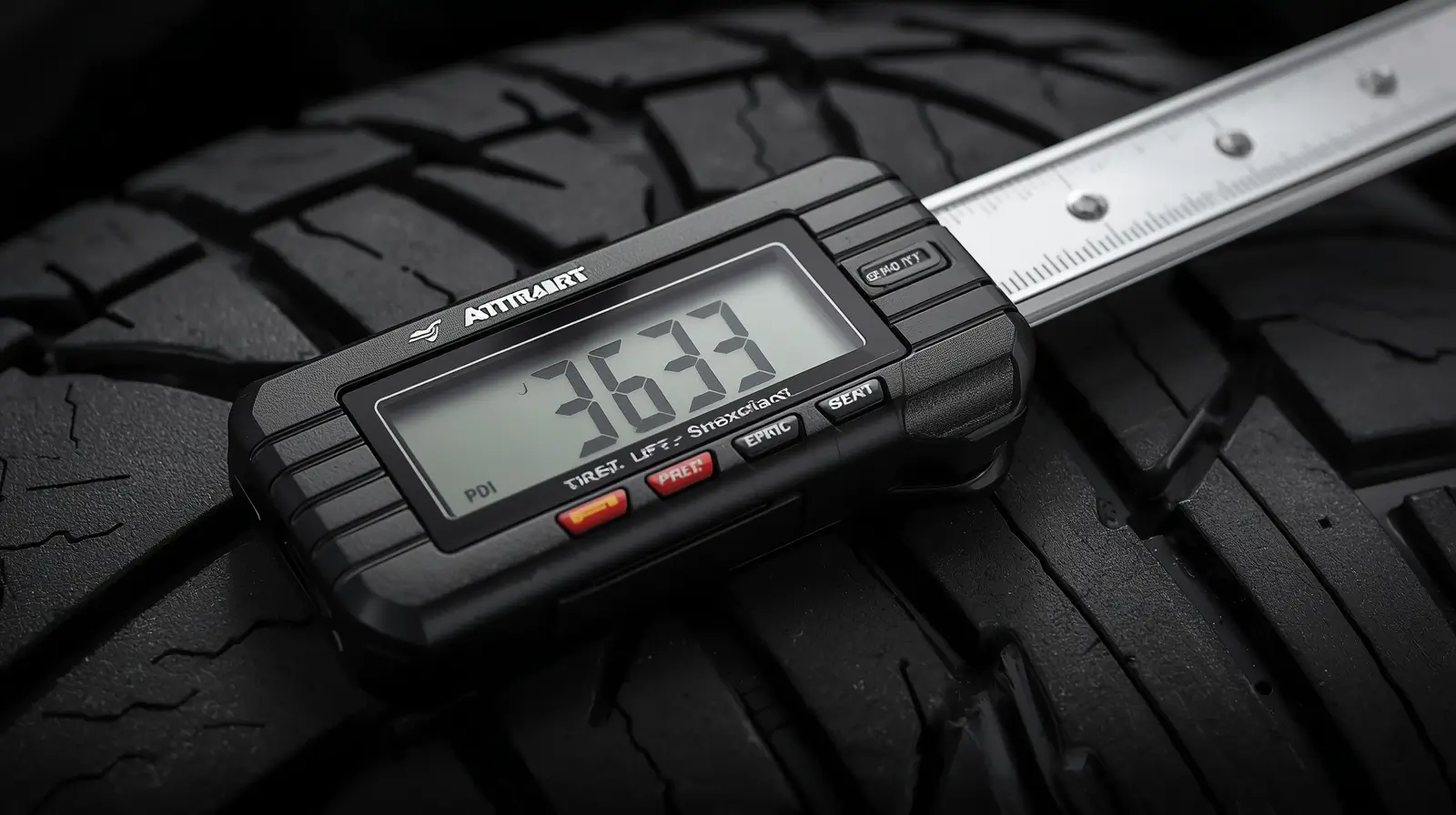
Introduction to Tire Tread Depth Measurement
Why Tire Tread Depth Matters for Safety
Your tires are the only point of contact between your vehicle and the road. That contact patch—often no larger than the size of a hand—is what keeps you safe during braking, cornering, and accelerating. Tread depth plays a critical role in this safety equation. The grooves in your tire aren’t just for aesthetics; they channel water away from the tire surface, provide grip in wet conditions, and enhance traction on loose surfaces like snow and gravel.
When your tread wears down, water dispersion efficiency decreases, dramatically increasing your risk of hydroplaning. In fact, studies show that tires with tread depths below 2/32 of an inch can take more than double the stopping distance on wet roads compared to new tires. This is not just about performance—it’s about avoiding accidents.
Beyond safety, tread depth impacts fuel efficiency. Worn tires often lead to reduced rolling resistance control, making your engine work harder. And if you think you’re saving money by stretching the life of your tires, think again—uneven wear can cause premature suspension damage, which is far more expensive to fix than replacing tires on time.
The Evolution from Manual to Digital Measurement Tools
Historically, checking tire tread depth was a simple but sometimes imprecise process. People used basic tools like a coin (the “penny test” in the U.S.), mechanical depth gauges, or even eyeballed the wear indicators molded into the tire. While these methods worked in a pinch, they lacked the accuracy needed for proper safety assessment.
Digital tire tread depth gauges represent the evolution of this practice. Instead of relying on manual readings, these modern devices use electronic sensors to measure depth with incredible precision—often down to hundredths of a millimeter. The results are displayed on a clear digital screen, eliminating guesswork and improving consistency across multiple measurements.
For mechanics, fleet operators, and even safety-conscious drivers, the digital upgrade has turned tire maintenance from a vague habit into a science-backed safety practice.

Digital Tire Tread Depth Gauge, Tire Tread Depth Gauge, 0-25.4 MM Inch Tyre Guage Digital with LCD Display Tread Checker Tire Tester, Tire Tread Depth Measuring Tool for Cars Trucks Vans SUV
Image Credit: Amazon
Understanding Digital Tire Tread Depth Gauges
What Is a Digital Tire Tread Depth Gauge?
A digital tire tread depth gauge is a small, handheld instrument designed to measure the depth of the grooves in a tire’s tread. Unlike manual gauges, which use sliding scales or needles, digital versions incorporate electronic sensors and microchips to detect and display precise measurements on a digital readout.
Most models are compact enough to fit in a glove box or toolbox, making them convenient for both home use and professional workshops. They’re typically battery-powered, with some even featuring auto-off functions to preserve energy. Many also include metric and imperial measurement options, catering to users worldwide.
In essence, a digital gauge is your tire’s “health monitor,” providing clear and reliable data so you can decide whether to keep driving, rotate the tires, or replace them entirely.
How Digital Gauges Work
The operation of a digital tire tread depth gauge is straightforward but technologically advanced. At its core, the device has a thin probe or pin that is inserted into the tire’s tread groove. When the probe reaches the base of the groove, the internal sensors detect the distance it traveled from the starting position to the groove bottom.
This measurement is then processed by a microcontroller, which instantly converts it into a readable number displayed on the LCD screen. Some gauges store readings in memory for later reference, while high-end versions can even connect to mobile apps for data logging.
Most models allow you to measure tread depth at multiple points across the tire’s surface—center, inner, and outer edges—helping you spot uneven wear patterns that may indicate misalignment, improper inflation, or suspension issues.
Key Features to Look for in a Digital Tire Tread Depth Gauge
Accuracy and Measurement Range
If you’re buying a digital gauge, precision is the top priority. Look for models that measure to at least ±0.01 inches (±0.1 mm) accuracy. A wide measurement range—typically from 0 to 25 mm (0 to 1 inch)—ensures compatibility with various tire types, from low-profile sports tires to deep-tread off-road tires.
Display Type and Readability
An easy-to-read LCD screen is essential. Backlit displays are ideal for use in dim garages or outdoor environments at night. Large, clear digits minimize the chance of misreading the measurement, which is especially helpful for quick inspections.
Build Quality and Durability
Since you’ll likely be using this tool in different weather conditions, choose a model with a sturdy, preferably water-resistant casing. Rubberized grips help prevent drops, while stainless steel probes resist corrosion and maintain measurement accuracy over time.

Digital Tire Tread Depth Gauge with 3 Modes: Fractional Inch, Decimal Inch and Millimeter, Tire Tread Depth Measuring Tool 0-1 Inch, Easy to Read Tread Depth Gauge for Cars, SUV, Motorcycles (Black)
Image Credit: Amazon
Benefits of Using a Digital Gauge Over Manual Methods
Speed and Ease of Use
Unlike manual tools that require careful reading of a scale, digital gauges give you instant results. Simply press the probe into the tread and read the number. This makes them ideal for frequent checks, especially for fleet vehicles.
Reduced Human Error
The elimination of manual reading reduces misinterpretation. You no longer have to squint at tiny markings or guess between lines—what you see on the screen is what you get.
Multi-Functionality in Modern Gauges
Many digital tread depth gauges now include additional features, such as tire pressure measurement, caliper functions for brake pad checks, or even built-in flashlights for nighttime inspections.
Step-by-Step Guide on Using a Digital Tire Tread Depth Gauge
Preparation Before Measuring
- Park your vehicle on a level surface.
- Turn off the engine and engage the parking brake.
- Ensure the tires are clean; dirt and stones in the grooves can affect accuracy.
Taking the Measurement Properly
- Turn on the gauge and ensure it’s set to the correct unit (mm or inches).
- Insert the probe into the tread groove, making sure it’s perpendicular to the tire surface.
- Press down until the probe reaches the base of the groove, then read the display.
Recording and Interpreting the Results
- New tires generally start with 8–12 mm of tread depth.
- If readings fall below 3 mm, performance in wet conditions declines significantly.
- Below 1.6 mm (2/32 inches) is the legal limit in most countries—replace your tires immediately.
Recommended Digital Tire Tread Depth Gauges in the Market
Top Picks for Professional Use
For professional mechanics and tire specialists, a digital tire tread depth gauge is more than a convenience—it’s a daily tool. High-end models like the Mitutoyo Digital Depth Gauge and the Accutire MS-4021B are built with industrial-grade sensors, offering pinpoint accuracy and robust construction that can withstand heavy shop use.
The Mitutoyo, for instance, uses stainless steel construction and a shock-resistant design, ensuring accurate readings even in demanding environments. It’s ideal for fleet inspections, where hundreds of tires may need to be measured in a single day.
Another top-tier choice is the Fowler Digital Depth Gauge, known for its large backlit display and smooth sliding mechanism. Professionals appreciate the calibration lock feature, which maintains accuracy even after prolonged use.
These gauges may come with a higher price tag, but for those whose livelihood depends on consistent, precise readings, they are well worth the investment.
Best Budget-Friendly Options
If you’re a casual car owner who checks tread depth every few months, you might not need a professional-grade tool. Affordable yet reliable options like the AstroAI Digital Tire Tread Depth Gauge or the Neiko 20743A offer excellent accuracy for under $20.
The AstroAI model, for example, has a simple push-button operation, dual-unit measurement (mm/inches), and an auto-off function to save battery life. It’s compact, lightweight, and perfect for glove box storage.
These budget options still deliver dependable measurements, making them a smart buy for drivers who want safety without spending extra.
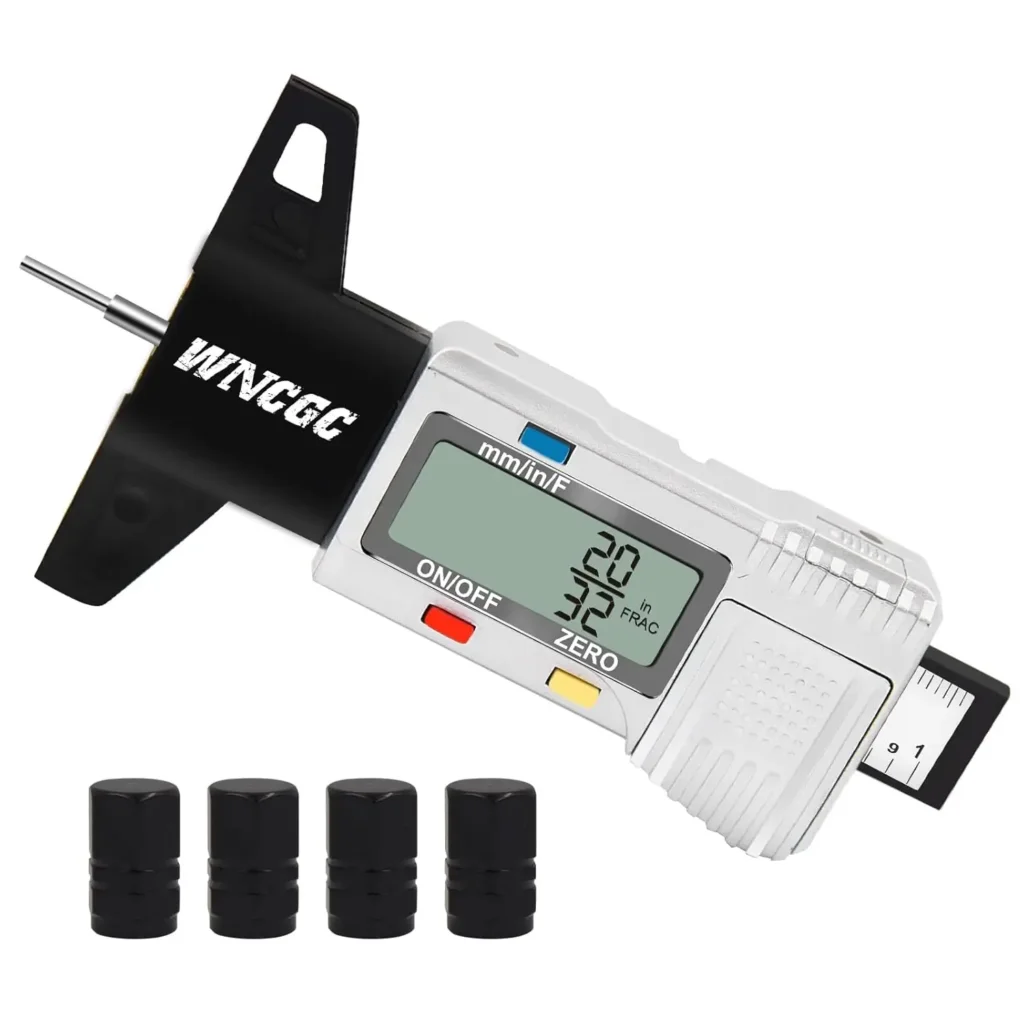
Digital Tire Tread Depth Gauge, Tire Tread Depth Gauge, 0-25.4 MM Inch Tyre Guage Digital with LCD Display Tread Checker Tire Tester, Tire Tread Depth Measuring Tool for Cars Trucks Vans SUV
Image Credit: Amazon
Maintenance and Care Tips for Longevity
Cleaning and Storage
A digital tire tread depth gauge might be tough, but it still benefits from proper care. Always wipe the probe clean after each use, especially if you’ve been checking tires in muddy or snowy conditions. Dirt and debris can interfere with the probe’s movement and reduce accuracy over time.
When storing, keep the gauge in its protective case (if included) to prevent dust and accidental drops. Avoid leaving it in extreme temperatures—especially in a hot car dashboard—since heat can damage the electronic components.
Battery Management
Most digital tread depth gauges run on small button-cell batteries. To maximize battery life:
- Turn off the device after use (if it doesn’t have an auto-off feature).
- Remove the battery if you won’t use the gauge for several months.
- Keep spare batteries in your toolbox so you’re never caught without a working gauge.
By following these simple care habits, you can extend your tool’s lifespan well beyond the manufacturer’s estimate.
Common Mistakes to Avoid When Measuring Tread Depth
Misplacement of the Gauge
A frequent error is placing the probe on top of the tread block instead of inside the groove. This gives a “false zero” reading, which can mislead you into thinking your tires are in better condition than they really are. Always insert the probe into the deepest part of the groove for accurate measurement.
Another mistake is measuring only one part of the tire. Tread wear is not always uniform—alignment issues, underinflation, or aggressive driving can cause uneven wear on the edges or center. Measuring multiple spots across the tire helps you catch these patterns early.
Ignoring Manufacturer Calibration
Some digital gauges require occasional calibration to maintain accuracy. Skipping this step can result in measurements that are slightly off, which over time could mean driving on unsafe tires without realizing it. Always follow the manufacturer’s calibration instructions, especially if you’ve dropped the device or used it heavily.
Legal Requirements for Minimum Tread Depth
USA Regulations
In most U.S. states, the legal minimum tread depth for passenger vehicles is 2/32 inches (about 1.6 mm). Some states have stricter rules for specific conditions—like higher minimums for winter tires. Driving with tires below the legal limit can result in fines, failed inspections, and, more importantly, a serious safety risk.
Many safety experts recommend replacing tires well before reaching the legal limit—ideally at 4/32 inches (3.2 mm) for wet weather driving and 5/32 inches (4 mm) for snow.
EU and UK Standards
In the UK and across most of the EU, the minimum legal tread depth is 1.6 mm across the central three-quarters of the tire. Anything less is a violation and can result in hefty penalties, including points on your driving license.
Interestingly, Scandinavian countries have even stricter rules during winter months—mandating 3 mm minimum tread depth for winter tires to ensure grip on icy roads.
Signs That It’s Time to Replace Your Tires
Visual Cues and Uneven Wear
One of the clearest indicators is the appearance of tread wear indicators (TWI), which are small raised bars molded into the grooves. If your tread is flush with these bars, your tires are worn out.
Uneven wear patterns—such as more wear on the inside or outside edge—often point to alignment or suspension problems. If you notice “feathering” (a sawtooth pattern) or “cupping” (scalloped dips), it’s not just the tread depth you need to worry about—you should also have your vehicle inspected for mechanical issues.
Changes in Driving Performance
If you’ve noticed your car sliding more easily in wet weather, taking longer to brake, or producing more road noise, it could be a sign your tread is too worn. In some cases, worn tires also reduce fuel efficiency, costing you more in the long run.
DIY Tire Maintenance Beyond Tread Depth Checks
Tire Rotation
Even with perfectly balanced tires, uneven tread wear is inevitable over time due to weight distribution and driving habits. Tire rotation—switching the position of your tires—helps even out this wear, extending the lifespan of your set.
The general rule is to rotate tires every 5,000 to 8,000 miles (8,000 to 13,000 km) or roughly every other oil change. For vehicles with symmetrical tires, the typical rotation pattern is front-to-back and side-to-side. However, for directional tires (which have a specific rotation direction), the swap is usually front-to-back only, without crossing sides.
Failing to rotate your tires can lead to early replacement needs, reduced fuel economy, and increased road noise. Using your digital tire tread depth gauge during each rotation helps you track wear progress and spot potential issues early—like a bad alignment or suspension wear.
Proper Inflation
Tire pressure plays a major role in tread wear and safety. Underinflated tires wear more on the outer edges, while overinflated tires wear faster in the center. Both situations reduce traction and increase the risk of a blowout.
Use a quality digital tire pressure gauge to check levels at least once a month and before long trips. Always refer to the manufacturer’s recommended pressure (often listed on a sticker inside the driver’s door frame). Proper inflation not only improves tire longevity but also enhances fuel efficiency and handling.
The Future of Tire Tread Measurement Technology
AI-Integrated Gauges
The next evolution of tread depth measurement will likely involve artificial intelligence. AI-powered gauges could analyze tread patterns, detect abnormal wear shapes, and even predict how many miles remain before replacement. By combining depth measurement with predictive analytics, drivers could get proactive maintenance alerts instead of reacting to problems.
For example, fleet managers could use AI-integrated systems to automatically flag vehicles at risk, scheduling tire changes before unsafe conditions develop.
Smartphone-Compatible Devices
Bluetooth-enabled tread depth gauges are already appearing on the market, allowing you to sync data directly to your smartphone. This means you could keep a detailed wear history for each tire, compare results over time, and even share data with your mechanic.
Some apps also provide visual wear diagrams, helping you understand exactly where your tires are wearing down most. Combined with cloud storage, these tools can serve as a digital logbook for your tire maintenance history.
Conclusion
A digital tire tread depth gauge is more than just a fancy tool—it’s a small investment that can save you from costly accidents, fines, and premature tire replacements. By giving you precise, instant readings, these devices remove guesswork from tire safety and empower you to make better maintenance decisions.
Whether you choose a professional-grade model or a budget-friendly option, the important thing is to use it regularly. Check your tread depth every few months (or more often if you drive in harsh conditions), rotate your tires as recommended, and keep them properly inflated.
With the advancements in AI and smartphone integration, tread depth measurement is becoming more intuitive and data-driven than ever. Staying ahead of the curve—literally and figuratively—will keep you safer on the road and help your tires last longer.
FAQs
1. Can I use the same gauge for car and motorcycle tires?
Yes, most digital tread depth gauges work for both cars and motorcycles, as long as the probe fits into the grooves.
2. How often should I check my tire tread depth?
For most drivers, every two to three months is ideal. If you drive long distances or in extreme weather, check more often.
3. Are digital gauges waterproof?
Not all models are. Some are splash-resistant, but it’s best to avoid prolonged exposure to water.
4. What is the most accurate gauge type?
High-quality digital gauges tend to be more accurate than manual ones, especially when calibrated properly.
5. How long do digital gauges typically last?
With proper care, a good digital gauge can last five years or more. Battery replacements are usually the only required maintenance.