
Introduction
When it comes to achieving powerful, distortion free sound in your car audio setup, one thing is often overlooked the battery terminal. You can have the best amplifiers, subwoofers, and wiring kits, but if your battery terminal connection is weak, your system won’t deliver its full potential.
Battery terminals act as the main gateway for electrical current to flow from your vehicle’s battery to your entire audio system. A high quality terminal ensures steady voltage, minimizes resistance, and keeps your sound system performing at its best. Cheap or corroded connectors can lead to voltage drops, power losses, or even electrical issues.
In this guide, we’ll explore the 7 best battery terminals for car audio you can buy in 2025. These are top rated, high conductivity options from trusted brands like Skar Audio, JL Audio, Kicker, and more. Whether you’re running a single amplifier or an entire competition setup, this list will help you find the right terminal for your power needs.
Let’s dive in and find the perfect terminal to supercharge your sound system.
Understanding Battery Terminals for Car Audio
Before upgrading, it’s essential to understand what a battery terminal does and why it’s so crucial.
A battery terminal is the main electrical connection between your car’s battery and the rest of your vehicle. In car audio setups, these terminals handle not only the vehicle’s electrical needs but also the extra current required by amplifiers, subwoofers, and processors.
When your system draws heavy power especially during bass hits the battery terminals play a major role in maintaining voltage stability. If your terminals are loose, corroded, or undersized, your audio equipment won’t get enough power. You’ll hear distortion, flickering lights, or even experience amplifier shutdowns.
Signs you need to upgrade your battery terminals:
- Your lights dim when the bass hits.
- Amplifiers frequently cut off or go into protection mode.
- Corrosion or rust appears on your battery posts.
- Wires feel loose even after tightening.
- Voltage drop occurs at higher volume levels.
Upgrading to high quality terminals ensures a secure, low resistance connection, improving sound quality, system stability, and battery life.
Key Features to Consider Before Buying
Not all battery terminals are created equal. Some are built for basic factory use, while others are engineered for high current audio systems. Here’s what you should look for before buying:
1. Material Quality
The best battery terminals are made from solid brass, copper, or gold plated alloy. These materials offer high conductivity and minimal resistance. Avoid cheap aluminum connectors they may corrode faster and conduct electricity less efficiently.
2. Gauge Compatibility
Your terminal should match the gauge (AWG) of your power wires. For car audio, most systems use 0, 2, 4, or 8 AWG cables. Look for terminals with multiple gauge ports if you plan to connect amplifiers, distribution blocks, or perform a “Big 3” upgrade.
3. Design and Clamping Style
A solid, secure clamping mechanism is vital. Some terminals use a screw lock design, while others use compression fittings. Choose one that ensures a tight grip on both the battery post and cable, even under heavy vibration.
4. Corrosion Resistance
Since car batteries are exposed to moisture and heat, terminals should be corrosion resistant. Look for gold or nickel plating, and use dielectric grease to extend the life of your connections.
5. Extra Ports for Multi-Wire Setups
If you’re running multiple amplifiers or extra accessories (like LED lights or a second battery), pick terminals with multiple output ports. This allows you to neatly connect multiple cables without splicing or overcrowding.
Choosing the right combination of these features ensures clean power delivery, better sound performance, and reduced system noise.
Benefits of Using Premium Battery Terminals for Car Audio
Upgrading your battery terminals might seem like a small detail, but it can make a massive difference in performance. Here are the top benefits:
1. Improved Power Flow
High quality terminals reduce resistance, allowing maximum voltage to reach your amplifiers and speakers. This results in cleaner sound and stronger bass response.
2. Reduced Voltage Drop
Poor terminals can lose voltage, which affects your amplifier’s output. Premium terminals maintain a consistent flow of electricity, helping your system perform at its peak.
3. Better Durability and Longevity
Solid brass or copper terminals resist corrosion and wear far better than stock connectors. That means less maintenance and fewer replacements over time.
4. Cleaner, Safer Wiring
Premium terminals often include protective covers that prevent accidental short circuits. They also provide organized cable routing, giving your engine bay a cleaner, professional look.
5. Enhanced Audio Performance
Because voltage remains stable, your amplifiers work more efficiently reducing distortion and improving overall clarity. In high powered systems, that can mean the difference between “good” and “amazing” sound.
So, while upgrading terminals might not seem exciting, it’s one of the smartest and most cost effective improvements you can make to your audio system.
The 7 Best Battery Terminals for Car Audio in 2025
Let’s explore the top 7 terminals available today chosen for their quality, performance, and customer reviews. These models are popular on Amazon, Sonic Electronix, and official brand stores.
1. COROTC Battery Terminals Set (0/4/8/10 AWG)
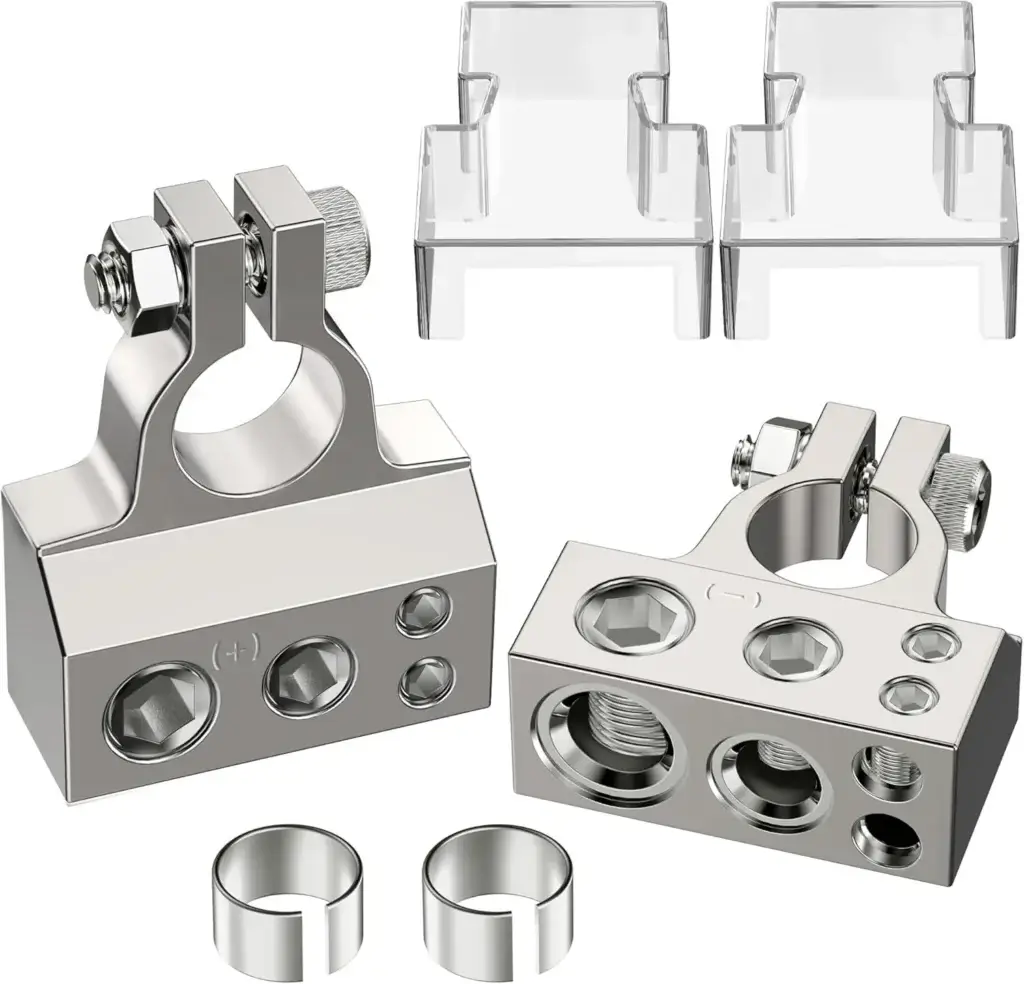
Battery Terminals, 0/4/8/10 Gauge AWG Positive Negative Battery Terminal Connectors, with 2 Clear Covers and Shims,Auto Car Audio Marine Boat Modification
Image Credit: Amazon
The COROTC terminal set is a solid choice for anyone building or upgrading a custom car audio setup. This kit includes both positive and negative terminals with multiple gauge ports perfect for connecting amplifiers, capacitors, and distribution blocks.
Key Features:
- Multiple gauge options: 0, 4, 8, 10 AWG
- Durable brass construction with corrosion resistant coating
- Transparent protective covers
- Easy installation with Allen screws
- Compatible with top post batteries
Why It’s Great:
The COROTC terminals are versatile, making them ideal for users who plan to expand their car audio system later. They also have a clean, professional look under the hood perfect for anyone who values both performance and aesthetics.
2. Skar Audio SK-BATTERMS1 Battery Terminals
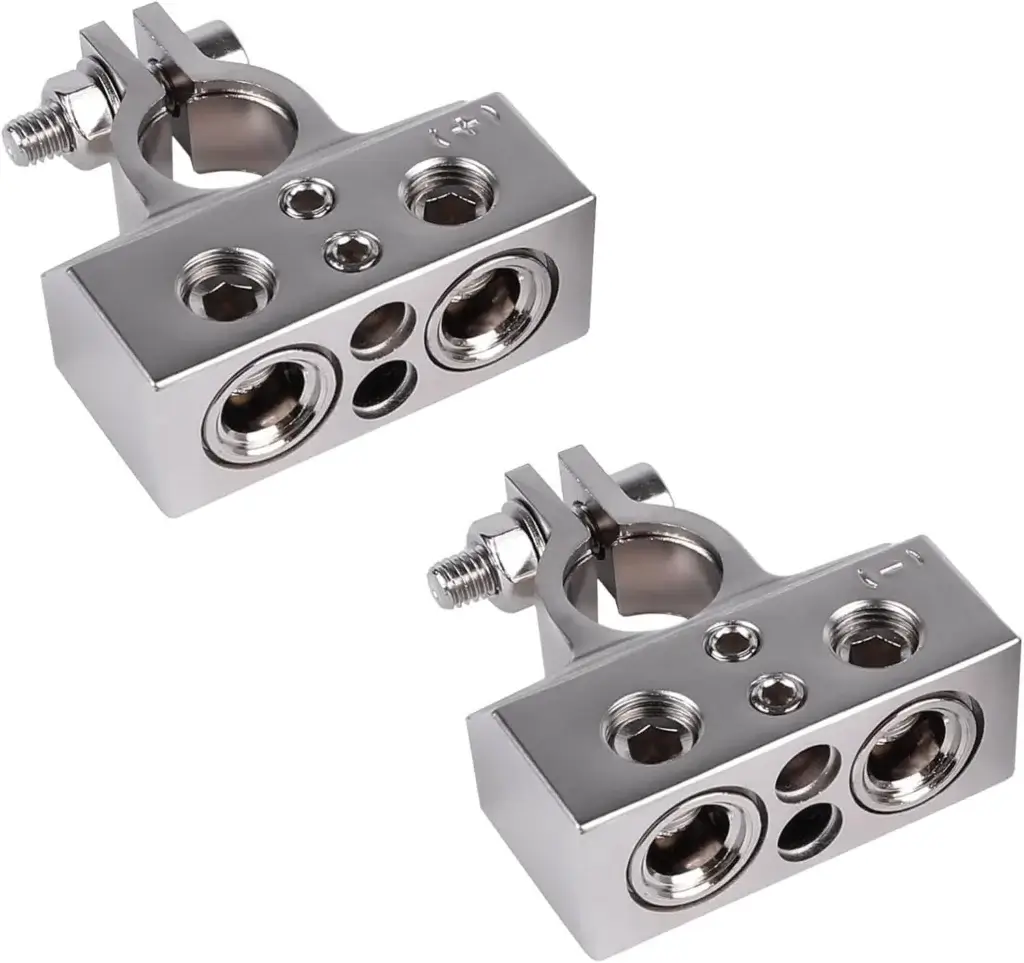
Skar Audio x2 0/4 Gauge and x2 8/10 Gauge (+/-) Top Post Heavy Duty Positive and Negative Battery Terminals (SK-BATTERMS1)
Image Credit: Amazon
If you’re serious about sound performance, Skar Audio is a name you already know. Their SK-BATTERMS1 battery terminal kit is built specifically for car audio enthusiasts who demand maximum current flow and flexibility.
Each terminal supports multiple wire gauges (0, 4, 8, and 10 AWG) with precision cut holes and hex screw locks for a secure fit. The solid brass design ensures optimal conductivity, while nickel plating prevents oxidation and corrosion two common enemies of clean power delivery.
Key Features:
- High conductivity solid brass build
- Multiple wire ports for system expansion
- Nickel plated finish for long term corrosion resistance
- Comes as a positive and negative pair
- Sleek, low profile design for compact spaces
Why It’s Great:
Skar Audio designed these terminals for powerful setups running multiple amplifiers. They make the installation cleaner and ensure a firm grip on every cable. The result? Less voltage drop, better power consistency, and cleaner sound even during heavy bass sessions.
3. Stinger SPT55301 PRO Series Battery Terminal
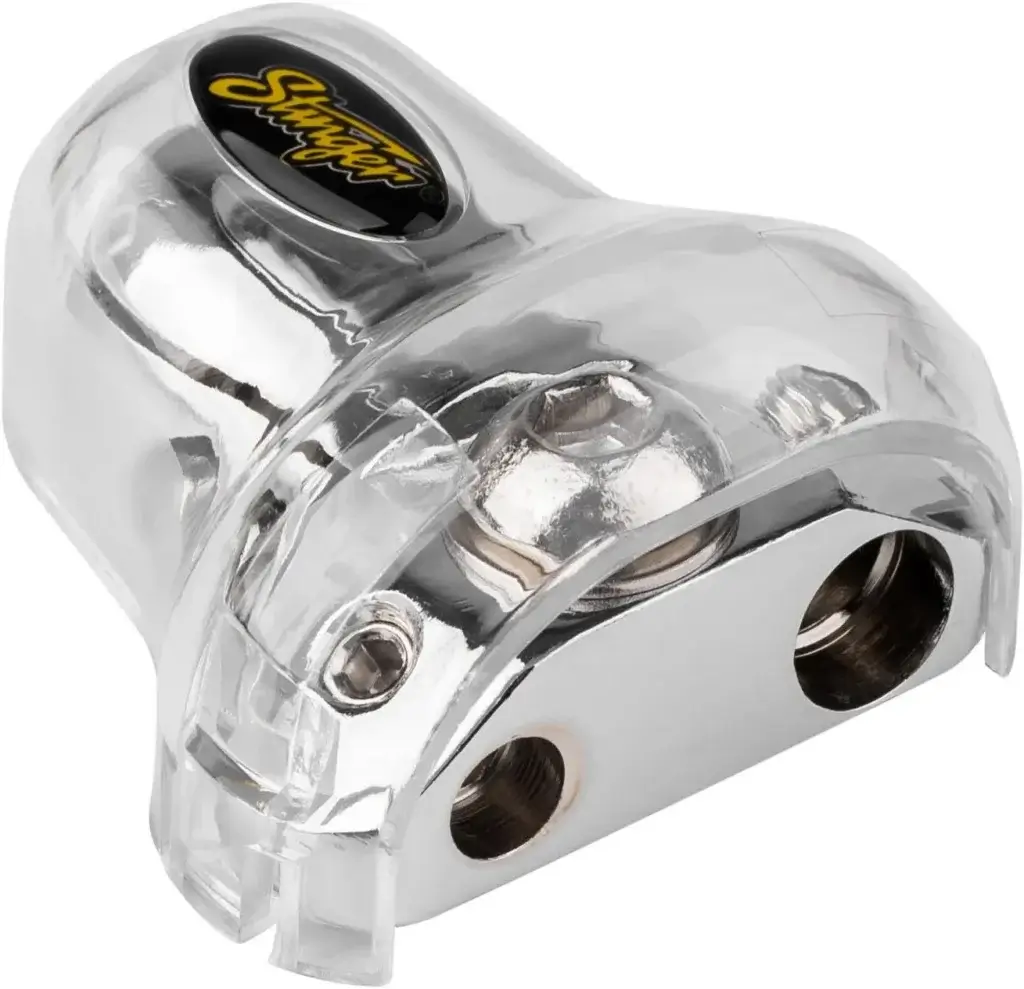
Stinger SPT55301 PRO Series Battery Terminal Works with Both Positive and Negative Terminals
Image Credit: Amazon
The Stinger SPT55301 is one of the most recognized terminals in the car audio world. It’s a professional grade connector built for enthusiasts who want both style and reliability. Stinger is known for making competition quality accessories, and this terminal continues that legacy.
Crafted from nickel plated brass, it offers excellent conductivity while preventing corrosion. The PRO Series terminal is flexible, accepting both positive and negative posts and allowing multiple wire configurations.
Key Features:
- Solid brass with nickel plating
- Supports multiple wire sizes (0, 4, 8 AWG)
- Flexible design fits both positive and negative posts
- Compact and stylish for neat installations
- Tight screw locking mechanism
Why It’s Great:
If you want a durable, competition ready connector that won’t loosen over time, this is a fantastic option. Many professional installers choose Stinger because of its long standing reputation for performance and reliability.
4. TONDA Battery Terminals
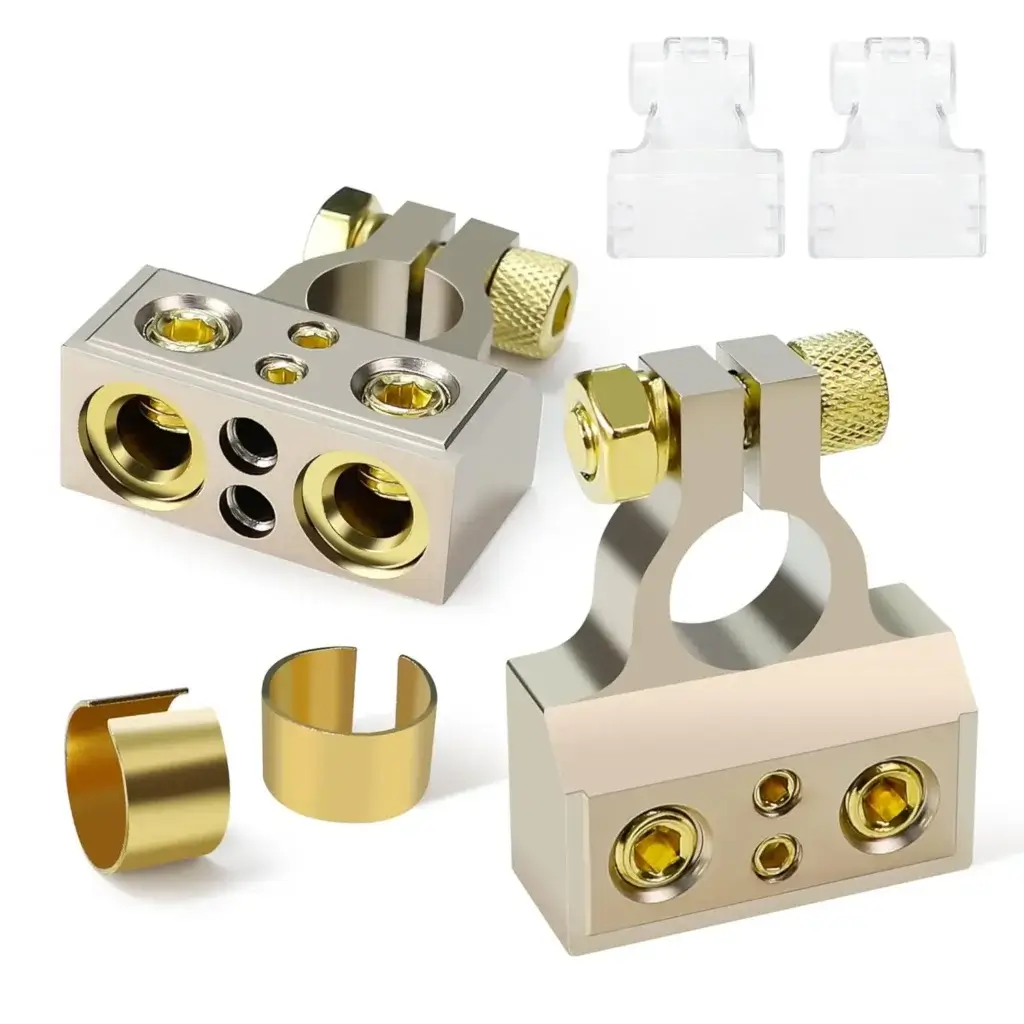
TONDA Battery Terminals, 0/4/8/10 Gauge Battery Terminal Connectors with Shims and Protective Covers, Car Cable Ends, 1 pair
Image Credit: Amazon
The TONDA Battery Terminals are a reliable and affordable option for anyone looking to upgrade their car’s electrical connection — especially in high-performance audio setups. Known for their sturdy build and universal compatibility, TONDA terminals are designed to improve current flow and ensure a stable power supply for amplifiers, subwoofers, and other audio components.
These terminals are made from heavy-duty brass alloy with a corrosion-resistant coating, ensuring long-lasting durability even in harsh weather conditions. The design includes multiple connection points, allowing you to hook up multiple cables securely — perfect for complex car audio installations.
Key Features:
- Heavy-duty brass alloy construction for high conductivity
- Corrosion-resistant coating for long-term durability
- Compatible with both positive and negative battery posts
- Multiple cable connection ports for flexible wiring setups
- Easy-to-install, universal fit design
Why It’s Great:
The TONDA Battery Terminals are a great blend of performance, affordability, and convenience. They deliver solid power transfer to your audio system, minimize voltage drops, and ensure a clean, professional look under the hood. Whether you’re upgrading your sound system or replacing worn-out stock terminals, TONDA provides excellent reliability for everyday and high-power audio use.
Key Features:
- Marine grade nickel plating for superior corrosion resistance
- Compact and lightweight design
- Accepts multiple wire gauges
- Durable construction ensures long lifespan
- Trusted JL Audio brand reliability
Why It’s Great:
TONDA Battery Terminals engineering quality shines here. The XD-BTS provides consistent current delivery even under extreme conditions, ensuring your amplifiers always receive stable voltage. Plus, its compact design makes it perfect for modern vehicles where space is limited.
5. Kicker BT4 (46BT4) Battery Terminal

Kicker 46BT4 BTPN3 Positive Or Negative Battery Terminal, 2-0/8GA 1-4/8GA Out
Image Credit: Amazon
The Kicker BT4 is an absolute powerhouse designed for high current car audio systems. Built from solid brass, it delivers exceptional conductivity, ensuring minimal power loss between your battery and amplifiers.
It includes multiple wire outputs: two 1/0–8 AWG and one 4–8 AWG connection points. That means you can easily connect several amplifiers or distribution blocks without messy wiring. The heavy duty clamping mechanism ensures a rock solid hold, even in vehicles with heavy vibration.
Key Features:
- Heavy duty solid brass construction
- Multiple wire ports (dual 1/0–8 AWG + single 4–8 AWG)
- Protective cover for safety
- Sleek matte finish
- Corrosion resistant
Why It’s Great:
The Kicker BT4 is ideal for those running multiple amplifiers or subwoofers. It allows flexible wiring while maintaining optimal power flow. Its tough construction and clean design make it a favorite among professional installers and car audio enthusiasts alike.
6. NVX XBTU2PK Terminal Pair
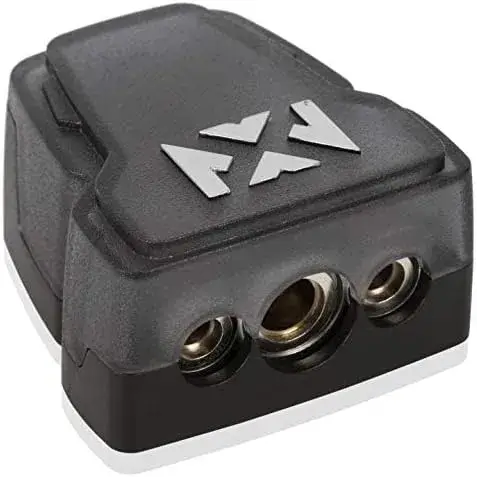
NVX XBTU Universal Battery Terminal (1/0, 2, and 4 Gauge Options)
Image Credit: Amazon
If you want a balance between affordability and premium quality, the NVX XBTU2PK is your go to choice. This pair of terminals (positive and negative) offers high performance with a stylish design.
Each terminal can handle up to 0/1 gauge input with dual 4 gauge outputs, making them ideal for multi amp setups. They are made from solid brass with a nickel plated finish to maximize conductivity and minimize resistance.
Key Features:
- Dual 4 gauge outputs + 0/1 gauge input
- Durable brass with nickel plating
- Protective covers for safety
- Tight screw lock connectors
- Positive and negative terminal set
Why It’s Great:
NVX has gained a strong reputation for producing professional quality audio accessories at an affordable price. The XBTU2PK is no exception it’s strong, clean looking, and ideal for powering large audio setups efficiently.
7. T-Spec V-BATT-TML Battery Terminal
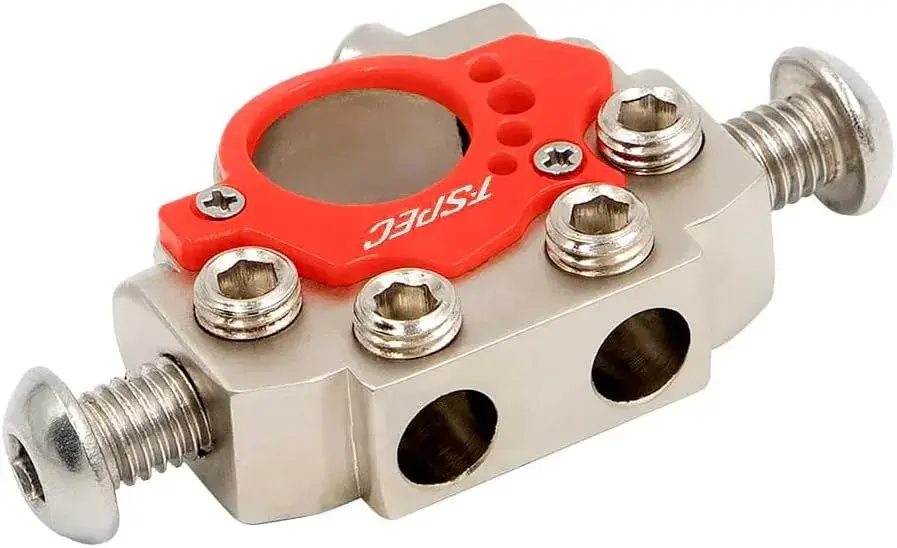
T-SPEC – Battery Terminal – 4 Position Pos/Neg, Battery Terminals (V-BATT-TML)
Image Credit: Amazon
The T-Spec V-BATT-TML is another premium pick for serious audio builders. It’s built with machined brass for superior strength and power transfer. Designed to handle high current loads, it’s perfect for competition level systems or those upgrading their entire electrical setup.
This terminal features four output ports, allowing multiple wires to be connected cleanly without stacking or modifying cables. It’s also corrosion resistant and includes protective covers for added safety.
Key Features:
- Four output ports for multiple wire connections
- Machined brass construction
- Nickel plated for corrosion resistance
- Accepts various wire gauges (0–8 AWG)
- Professional grade design
Why It’s Great:
T Spec’s attention to detail makes it stand out. This terminal can handle extreme audio builds, providing consistent, stable power distribution. It’s a must have for anyone running multiple amplifiers or looking to future proof their setup.
Comparison Table: Best Car Audio Battery Terminals (2025)
| Product | Material | Key Feature |
|---|---|---|
| COROTC Set | Brass | Affordable, easy install |
| Skar Audio SK-BATTERMS1 | Brass (Nickel plated) | High power handling |
| Stinger SPT55301 | Brass (Nickel plated) | Pro-grade build |
| JL Audio XD-BTS | Marine grade Nickel | Compact design |
| Kicker BT4 (46BT4) | Solid Brass | Dual large ports |
| NVX XBTU2PK | Brass (Nickel plated) | Great value |
| T-Spec V-BATT-TML | Machined Brass | 4 outputs |
How to Install Car Audio Battery Terminals Properly

Image Credit: Leonardo AI
Installing high quality battery terminals isn’t just about screwing them on and walking away. To get the best electrical performance and ensure safety, you need to follow a few important steps. Let’s go through a proper installation process so you can make the most of your new terminals.
Step 1: Gather the Necessary Tools
Before you start, make sure you have everything ready. You’ll need:
- A wrench or socket set (usually 10mm for battery clamps)
- A wire stripper/crimper for your cable ends
- Allen keys (for terminals with screw type locks)
- Dielectric grease (to prevent corrosion)
- Sandpaper or wire brush (to clean contact surfaces)
- Safety gloves and eye protection
Having the right tools nearby makes the process faster, safer, and more professional.
Step 2: Disconnect the Battery
Safety first always disconnect the negative terminal before touching anything else. Then, remove the positive terminal. This step prevents short circuits or electrical shocks while working.
Once both terminals are off, use a wire brush to clean the battery posts. Removing oxidation ensures better conductivity and a cleaner connection.
Step 3: Prepare the Wires
Cut your power and ground cables to the desired length. Strip about half an inch of insulation off the ends of each cable, making sure not to damage the copper strands.
If your terminal uses a compression or screw in design, insert the wire into the port and tighten the set screw firmly. Make sure there’s no exposed wire that could cause a short.
Step 4: Attach the New Terminals
Now, slide the new battery terminals onto the posts. Ensure that the positive terminal (usually red) goes on the battery’s positive post and the negative (black) goes on the negative post.
Tighten each terminal firmly with a wrench or Allen key. Avoid over tightening, as this can damage the post or strip the threads.
Step 5: Apply Dielectric Grease
Once tightened, apply a thin layer of dielectric grease around the post and clamp connection. This grease prevents moisture and acid fumes from corroding the terminals over time.
Step 6: Reconnect and Test
Reconnect the positive terminal first, followed by the negative. Start your car and check the voltage at the battery using a multimeter it should read between 12.4V and 12.8V when the engine is off, and 13.8V to 14.4V when running.
Play your audio system to confirm everything works smoothly without flickering lights or power drops.
Pro Tip:
If you’re installing terminals as part of a “Big 3” upgrade (battery to chassis, alternator to battery, and engine block to chassis), make sure to use high quality OFC (oxygen free copper) wire. It improves overall system performance and electrical efficiency.
Maintenance Tips for Battery Terminals
Even the best terminals can degrade over time if not properly maintained. Here’s how to keep your connections performing like new for years.
1. Clean Regularly
Once every few months, check for dirt, oil, or corrosion buildup around the terminals. Use a mixture of baking soda and water with a small brush to clean off any residue. Dry completely before reconnecting.
2. Inspect for Loose Connections
Vibration from driving can gradually loosen your clamps. Every few weeks, check that all screws and bolts are still snug. Loose terminals can cause voltage drops and intermittent power loss.
3. Watch for Corrosion
White or greenish buildup around terminals indicates corrosion. Clean it immediately using a wire brush and reapply dielectric grease. Corrosion reduces power flow and can damage your battery over time.
4. Protect from Heat and Moisture
Avoid routing your cables near hot engine components or where moisture can collect. If your setup is exposed, use protective covers or insulation sleeves.
5. Replace Worn Terminals
If the metal has pitted or corroded beyond repair, replace the terminal immediately. A damaged connector won’t deliver consistent current and could even short out your audio system.
Proper maintenance ensures your car audio system runs smoothly and delivers clean, powerful sound with no interruptions.
Common Mistakes to Avoid When Choosing Terminals
It’s easy to overlook certain details when buying or installing battery terminals. Here are common mistakes that can cost you time, money, and performance:
1. Choosing Cheap Materials
Low cost aluminum terminals might seem like a bargain, but they corrode quickly and cause voltage loss. Always go for brass, copper, or gold plated options for superior conductivity.
2. Ignoring Wire Gauge Compatibility
Your wires must fit snugly into the terminal ports. A mismatch between wire gauge and terminal size leads to loose connections and poor current flow. Always check compatibility with 0, 2, 4, or 8 AWG wires before purchase.
3. Skipping Corrosion Protection
Many people forget to use anti-corrosion spray or dielectric grease, leaving their terminals vulnerable. Without protection, oxidation will eventually affect your voltage and sound performance.
4. Over Tightening Clamps
Over tightening can crack the battery post or strip the screw threads. Tighten just enough for a solid grip no more, no less.
5. Cluttering the Connection
Trying to stack multiple ring terminals or wires under one clamp leads to messy and unsafe setups. Instead, buy terminals with multiple ports designed for multi amp systems.
Avoiding these pitfalls ensures your installation looks clean, functions perfectly, and lasts for years without issues.
Conclusion
A great car audio system starts with a solid electrical foundation and your battery terminals play a huge role in that. By investing in premium connectors like Kicker BT4, Skar Audio SK-BATTERMS1, or T-Spec V-BATT-TML, you’ll ensure your amplifiers receive steady power, your bass hits harder, and your wiring looks clean and professional.
Whether you’re building your first custom system or upgrading for competition level performance, don’t underestimate the importance of strong, corrosion free terminals. They might be small, but they have a huge impact on your sound quality and system reliability.
Keep them clean, install them right, and enjoy every beat of your music the way it was meant to be heard pure, powerful, and distortion free.
FAQs About Battery Terminals for Car Audio
1. Do better battery terminals really improve sound quality?
Yes. Upgraded terminals reduce resistance, ensuring stable voltage for your amplifiers. This results in cleaner sound, stronger bass, and fewer power drops especially at high volumes.
2. Can I use marine battery terminals for car audio?
Absolutely. Marine grade terminals are designed to resist corrosion, making them a durable option for car audio systems, especially in humid or coastal environments.
3. What’s the difference between brass and copper terminals?
Copper offers slightly better conductivity, but brass is stronger and more resistant to corrosion. Both are excellent choices for audio applications.
4. How often should I clean my battery terminals?
Ideally, inspect and clean them every 2–3 months, especially if you notice voltage drops or visible corrosion.
5. Can I install these terminals myself?
Yes. With basic tools and precautions, you can easily replace your battery terminals at home. Just remember to disconnect the negative cable first and follow proper safety procedures.