
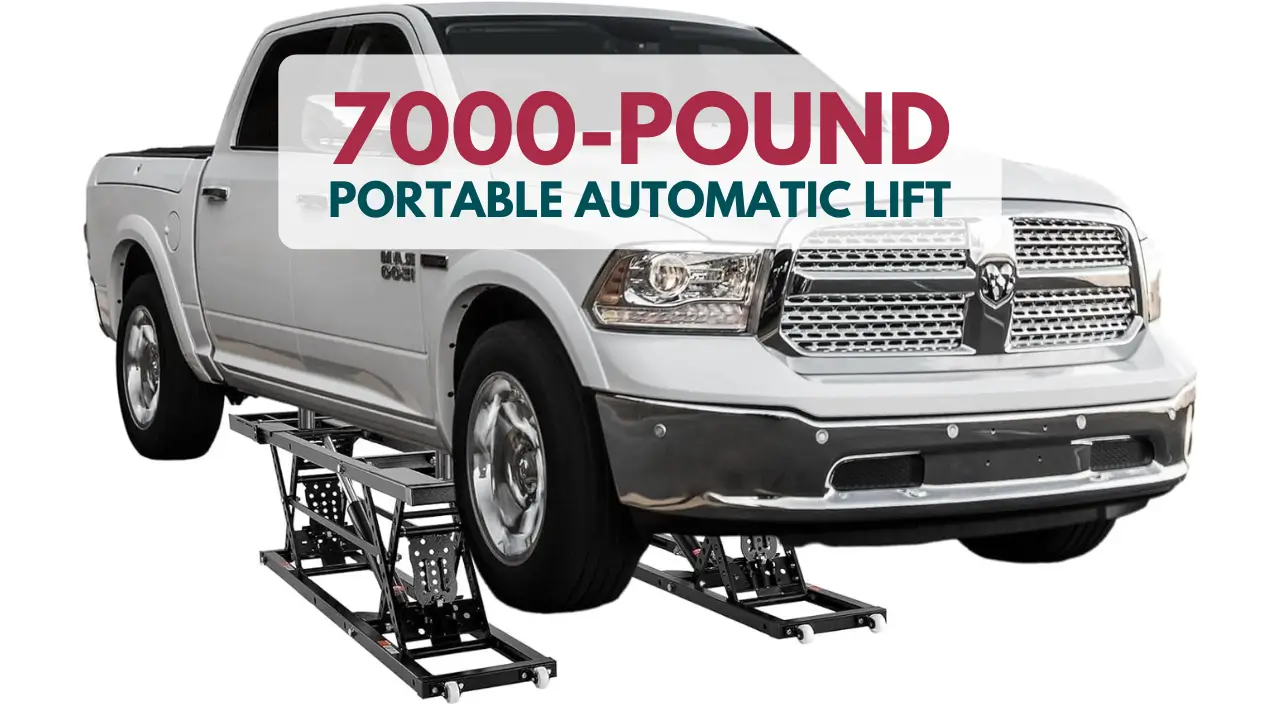
Let’s face it: if you’re a car enthusiast or just someone who likes to take care of your vehicle, you know how much of a pain it can be to crawl under your car using traditional jack stands or cheap lifts. They’re wobbly, time-consuming, and not always the safest option. So, what’s the ultimate gift you can give your four-wheeled friend (and yourself)? It’s the 7000-pound portable automatic lift—a true game-changer for garages big and small.
Think about it: a lift that can hold nearly any standard vehicle, operates with the push of a button, and is compact enough to be tucked away when you’re done. Sounds like something from the future, right? But it’s here, and it’s making life a whole lot easier for DIYers, mechanics, and weekend warriors.
This article dives deep into why the 7000-lb portable automatic lift is more than just a piece of equipment—it’s a lifestyle upgrade for anyone who loves working on their car. From safety features to use cases, and even what to look for before buying, we’re breaking it all down.
Introduction to Portable Car Lifts
What is a Portable Automatic Lift?
Let’s start with the basics. A portable automatic lift is exactly what it sounds like: a lightweight, easy-to-move lifting system that can hoist your car several feet into the air with minimal effort—usually through an electric or hydraulic mechanism. No need for cranking, pumping, or wrestling with outdated jacks. Just set it up, hit a button, and let the lift do the heavy lifting.
The beauty of these systems is in their design. They’re compact enough to store under a workbench but powerful enough to lift most SUVs, sedans, or light trucks. They’re not permanently bolted to your floor like traditional two-post or four-post lifts, which means you’re free to move them around or even take them on the go if needed.
And yes, the best ones are fully automatic, eliminating human error and saving you a ton of time and energy.
Why Your Car Deserves the Best Tool?
Cars are investments. Whether you drive a vintage Mustang or a new Tesla Model Y, regular maintenance is key to keeping it in top shape. But here’s the deal: no matter how expensive your toolkit is, if you’re relying on a $30 jack from a discount store, you’re putting yourself—and your car—at risk.
Your vehicle deserves a tool that offers:
- Safety first – A stable platform to prevent slippage or collapse.
- Efficiency – Spend more time fixing, less time lifting.
- Longevity – Use it again and again for years without wearing it out.
Plus, think about resale value. A well-maintained undercarriage can fetch you thousands more down the line. Having a good lift helps you keep your car clean, rust-free, and fully inspected.
Bottom line? If your car is your baby, this lift is like giving it a full-service spa day on demand.
The Power of a 7000-Pound Capacity
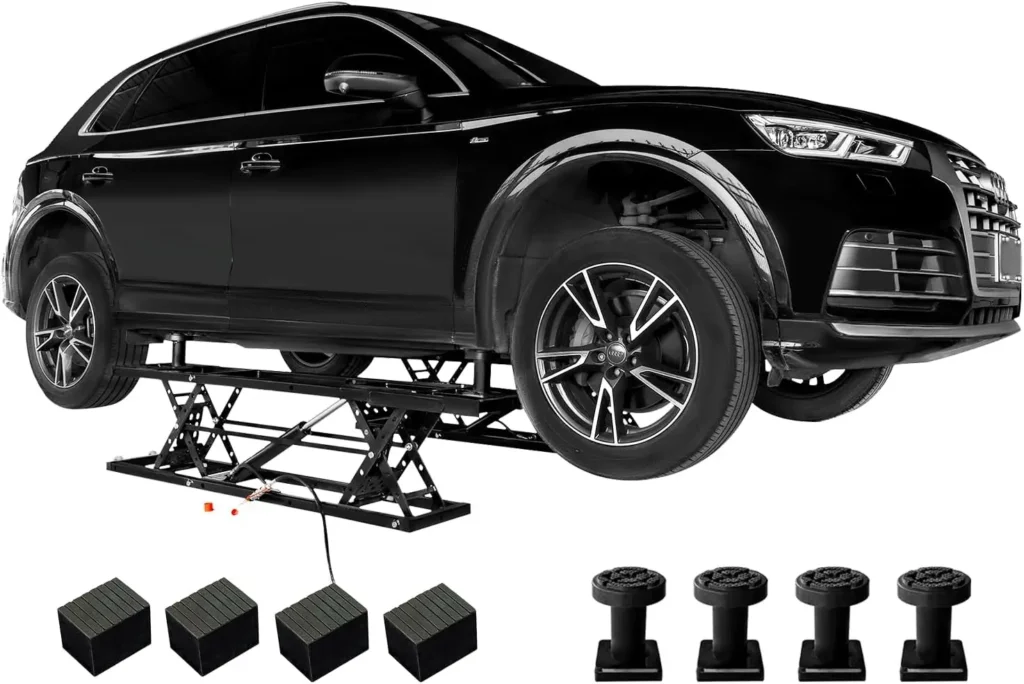
Image Source: Amazon
Why 7000 Pounds is the Sweet Spot for Most Vehicles
You might be wondering, “Why 7000 pounds?” Great question. This weight rating covers almost every daily driver on the road today. From sedans and SUVs to some light-duty trucks, a 7000-pound lift hits the sweet spot between versatility and practicality.
Here’s a quick comparison of average vehicle weights:
| Vehicle Type | Average Weight |
|---|---|
| Compact Cars | 2,800 – 3,200 lbs |
| Mid-size Sedans | 3,300 – 3,800 lbs |
| SUVs | 4,000 – 6,000 lbs |
| Light Trucks | 4,500 – 7,000 lbs |
As you can see, unless you’re working with a heavy-duty diesel or a large commercial van, 7000 lbs is more than enough for the job. It gives you that peace of mind knowing you’re covered no matter what you drive—or plan to work on in the future.
Suitable Vehicle Types for This Capacity
A lift of this caliber isn’t just limited to one or two car models. It’s a true all-rounder. Here’s a breakdown of vehicles it can easily handle:
- Standard sedans like Honda Accord, Toyota Camry, or Hyundai Elantra.
- Luxury cars including BMW 5 Series, Audi A6, and Mercedes-Benz E-Class.
- Small to mid-size SUVs like Ford Escape, Subaru Outback, or Toyota RAV4.
- Light pickup trucks such as Ford Ranger, Toyota Tacoma, and Chevy Colorado.
- Electric vehicles like Tesla Model 3/Y and Nissan Leaf.
This lift is for everyone—from the casual DIYer who likes to rotate their own tires to the mobile mechanic looking for a portable solution that doesn’t compromise on power.
Key Features of a 7000-Pound Portable Automatic Lift
Portability and Compact Storage
Let’s be real: most home garages don’t have space for a full-sized car lift. That’s what makes portability such a game-changer. A 7000-pound portable automatic lift folds down into a compact shape, often with wheels or carry handles. You can roll it away, stow it against the wall, or slide it under a workbench when it’s not in use.
Unlike traditional lifts that require drilling into concrete or permanent installation, this lift is completely mobile. Live in an apartment? No problem. Working out of a rented garage or doing mobile mechanic work? Even better. You can bring this lift with you wherever you go.
Here’s what makes it portable:
- Lightweight frame design (often made from high-strength aluminum or steel alloy).
- Integrated wheels or handles for easy transportation.
- No bulky columns or platforms—just the lift system itself and a compact power unit.
It’s the ideal setup for car lovers who want flexibility without sacrificing lifting power.
Fully Automatic Functionality
Automation is the future—and the present—of car maintenance. With a fully automatic lift, you’re not spending 10 minutes cranking or guessing if the car is level. Just plug in the unit, place the lifting arms, and push a button. Within seconds, your vehicle is up in the air, safely secured and ready for work.
This feature doesn’t just save time—it eliminates human error. There’s no uneven lifting or mechanical inconsistencies. Everything is smooth, controlled, and safe.
Key highlights include:
- Push-button operation
- Wireless remotes with some models
- Preset lift heights and lock points
- Hydraulic or electro-mechanical lifting systems
Automation ensures consistency, especially if you’re using the lift multiple times a week.
Safety Mechanisms and Locking Systems
Let’s talk safety—because lifting a 3-ton vehicle isn’t something to take lightly. The best portable lifts come equipped with robust safety mechanisms to give you complete peace of mind.
You’ll often find:
- Auto-locking arms that engage once the vehicle is in the air.
- Redundant locking bars or latches to prevent collapse if a system fails.
- Anti-sway technology to keep the lift stable on uneven surfaces.
- Built-in fail-safes that stop lifting if the weight exceeds the rated capacity.
If you’re doing serious work under your car—like replacing brake lines, working on the exhaust, or even detailing—you need that layer of confidence. With these safety systems in place, you’re free to focus on the job, not the risk.
Benefits of Owning a Portable Car Lift
Convenience of DIY Repairs and Maintenance
Ever tried changing your oil on your driveway in the middle of winter? It’s not fun. A portable car lift removes all the frustration of crawling around on the ground or guessing whether your jack is in the right spot. With your vehicle safely lifted and exposed, every job becomes simpler, quicker, and cleaner.
Imagine:
- Doing an oil change in 15 minutes flat.
- Inspecting your brake pads without pulling a wheel.
- Installing a new exhaust system without jerry-rigging blocks and jacks.
When you own a portable lift, you’re empowered. You don’t have to schedule appointments, pay ridiculous shop fees, or wait in line at the dealership. Your garage becomes your personal repair bay.
For car enthusiasts, this isn’t just about convenience—it’s about control. You set your schedule, your standards, and your savings.
Cost Savings Over Time
Sure, buying a lift may seem like a big upfront investment. But let’s break down the numbers. A single visit to the mechanic for a basic inspection can cost $100+. Add a brake job, tire rotation, oil change, or suspension work? You’re looking at hundreds—maybe thousands—a year.
With a portable lift:
- You save on labor costs by doing repairs yourself.
- You spot issues earlier, avoiding bigger repair bills later.
- You can help friends and family, which may turn into side income if you’re handy.
Here’s a quick cost-benefit breakdown:
| Service | Shop Cost (Avg) | DIY with Lift |
|---|---|---|
| Oil Change | $75 | $25 |
| Brake Pads | $300 | $100 |
| Tire Rotation | $50 | Free |
| Exhaust Fix | $500+ | $150 |
Over the course of a year, the lift practically pays for itself—sometimes two or three times over.
Enhanced Safety Compared to Jack Stands
Jack stands have their place, but they’re not foolproof. They rely heavily on human setup, and if they’re not positioned perfectly, you risk catastrophic failure. The portable automatic lift, on the other hand, distributes the weight evenly, locks securely in place, and usually features multiple redundancy systems.
It’s like the difference between balancing on a stool versus sitting in a full recliner—one wrong move on a jack stand and you’re in danger. With a lift, you’re solid, secure, and safe.
Some key reasons why it’s safer:
- Locking points and mechanical stops
- Even weight distribution
- Wider contact base than most jacks
- No sudden shifts or drops
If safety is your top concern (and it should be), this lift removes a huge amount of risk from working under your car.
Comparing Manual, Hydraulic, and Automatic Lifts
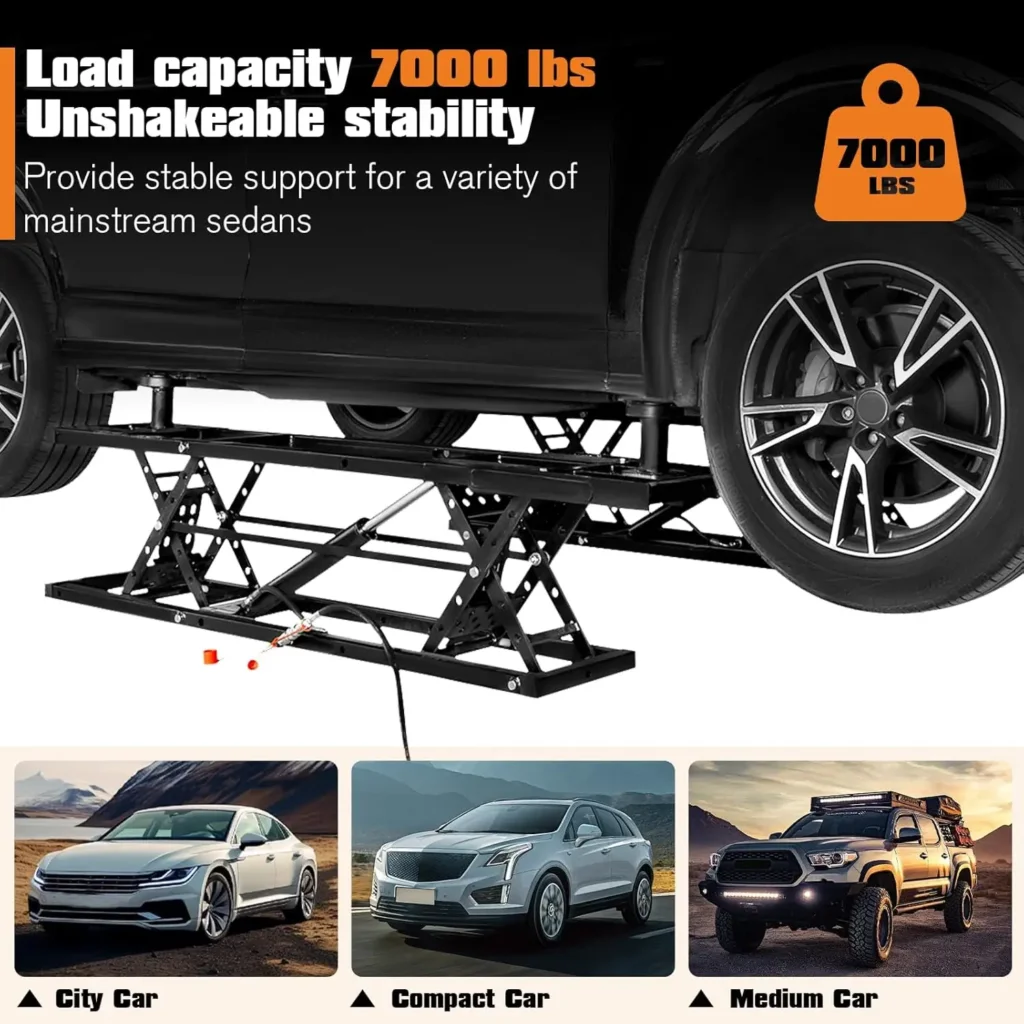
Image Source: Amazon
Which One Saves You Time and Energy?
Manual car lifts require human effort—lots of it. Cranking, pumping, lifting, leveling… it adds up quickly, especially if you’re working on multiple cars or doing back-to-back repairs.
Hydraulic lifts offer an upgrade, but they still require manual setup and occasional pumping. Plus, they often lack the consistency and ease-of-use of a fully automatic lift.
Automatic lifts? They win—every single time.
With an automatic lift, you’re looking at:
- Faster setup (1–2 minutes max)
- Minimal physical effort
- Repeatable results every single time
For busy folks or anyone working in a professional or semi-pro garage setting, time is money. An automatic system saves both.
Longevity and Durability of Automatic Lifts
You might think, “Doesn’t more automation mean more things that can break?” Valid concern—but today’s automatic lifts are engineered for rugged, daily use. Many are rated for 10,000+ lifting cycles and feature heavy-duty materials like aircraft-grade aluminum, hardened steel, and reinforced hydraulic cylinders.
Look for models that offer:
- Weather-resistant seals
- Rust-proof frames
- Replaceable parts like pumps, buttons, and hoses
- Warranty protection (some offer 2–5 years)
Invest in a quality model and you’ll likely never need to buy another one again.
Top Use Cases for a 7000-Pound Lift
Home Garage Maintenance
If you’re a car enthusiast or simply someone who loves saving money by doing your own car work, having a 7000-pound portable automatic lift in your garage is a total game-changer. Home garages are typically not designed to accommodate large two-post lifts or hydraulic monsters. But a compact, easy-to-store lift that can support nearly any passenger vehicle? Now we’re talking.
This lift enables you to perform just about any maintenance task:
- Oil changes
- Brake pad replacements
- Suspension checks
- Exhaust system repairs
- Transmission maintenance
- Undercarriage cleaning
Not only do you save time and money, but you also get the satisfaction of doing things yourself—and doing them right. The ability to lift the car in just a few seconds gives you an edge whether you’re troubleshooting, cleaning, or even detailing.
Plus, your garage remains a garage. When you’re done using the lift, it folds away or rolls to a corner, freeing up valuable space for other tools or your vehicle.
Road Trips and Emergency Use
Here’s something most people don’t think about: portability means mobility. If you often take road trips or travel with a trailer, having a portable automatic lift can be a lifesaver—literally.
Imagine breaking down in a remote area. Instead of waiting hours (or even days) for roadside assistance, you could lift the vehicle yourself and identify or fix the problem. This is especially useful for:
- Flat tires or tire rotations
- Checking for undercarriage damage after rough terrain
- Fixing a loose part
- Conducting quick fluid checks or hose replacements
Portable lifts are compact enough to fit in larger trunks, RVs, or pickup beds. Some models even come with 12V adapters that connect to your vehicle battery, making them fully functional in off-grid scenarios.
It’s the kind of insurance that pays for itself the first time you use it.
Small Auto Shop or Mobile Mechanics
If you’re running a small garage, or even operating as a freelance or mobile mechanic, this lift is one of the most versatile tools you can own. Traditional car lifts are not only expensive but also fixed in place, limiting where and how you work.
A 7000-pound portable lift allows you to:
- Perform professional-level repairs anywhere—driveways, parking lots, or at the client’s location
- Save space in tight workshops
- Serve more clients with faster job turnaround
- Take your setup on the road without renting a trailer or truck lift
Some mobile mechanics pair this lift with a portable toolbox and small compressor, turning any location into a fully functioning mini shop. It’s not just a tool; it’s a business enabler.
Important Specifications to Look For
Lifting Height and Time
Not all portable lifts are created equal. One of the first things to check is how high it can lift your car—and how long it takes to get there. For most undercarriage work, you’ll want at least 18 to 24 inches of lift clearance.
Quick lifting time is also a huge advantage. Most high-quality models can get your vehicle into position in under 60 seconds.
Here’s a good benchmark:
| Spec | Recommended Minimum |
|---|---|
| Max Lifting Height | 20 inches |
| Lifting Time | 30–60 seconds |
| Locking Positions | Multiple (for safety) |
| Descent Time | Under 30 seconds |
More expensive models offer variable height settings, which is handy for working on different vehicle types.
Construction Materials
If you’re lifting over 3 tons of metal, you want a lift that’s built to last. High-grade steel is the industry standard, but some lightweight models use aerospace-grade aluminum to balance weight and durability.
Key materials to look for:
- Powder-coated steel for rust resistance
- Heavy-duty pins and locking bars for security
- Reinforced lift arms with rubber padding to prevent frame damage
Avoid cheap plastic or low-gauge metal frames—they may look the part but won’t stand up to repeated use.
Power Requirements and Efficiency
Most automatic lifts are powered either by electricity or hydraulics, and some offer both. Depending on your garage setup, you’ll want to ensure compatibility with your power supply.
Typical power options:
- 120V plug-in for home use
- 12V DC for vehicle-powered lifting (mobile use)
- Hydraulic hand pump backup for emergencies
You should also look at efficiency. Does the lift draw minimal power? Can it work on solar backup? These features are essential for eco-conscious users or those who want reliability during blackouts.
Setup and How to Use It Safely
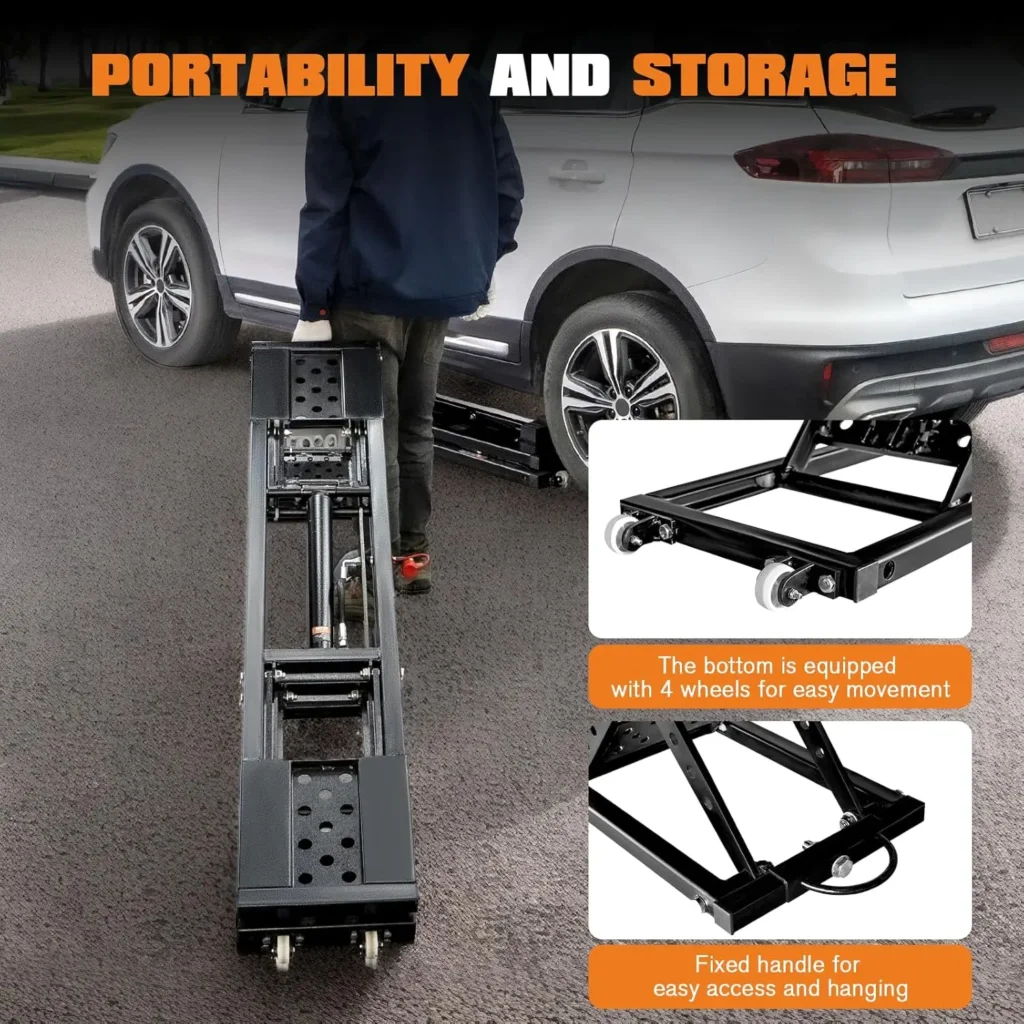
Image Source: Amazon
Step-by-Step Installation
Installing and using your portable lift isn’t rocket science—but following the right steps ensures both safety and performance. Here’s a simplified setup guide:
- Position the lift: On a flat, solid surface (avoid gravel or inclines).
- Align the lift pads: Place the arms where your car’s frame can safely rest.
- Connect power: Plug into a 120V outlet or vehicle battery.
- Double-check clearance: Ensure there’s room above and below the car.
- Lift the vehicle: Use the control unit or remote to begin lifting.
- Engage locking mechanism: Once at the desired height, activate the locks.
- Test stability: Gently shake the car—there should be zero movement.
- Get to work: With the car secure, proceed with your repair or inspection.
Always consult the manual. Some models may have specific load balancing or lock steps that differ slightly.
Safety Tips and Best Practices
Even with the best equipment, you should always follow safety protocols. These systems are safe—but only when used properly.
Here are essential safety tips:
- Never exceed the weight limit.
- Always use locking mechanisms.
- Don’t use on uneven ground or sloped surfaces.
- Wear gloves and safety goggles.
- Don’t rely solely on the lift when removing major components.
- Keep children and pets away during operation.
Lastly, make it a habit to inspect the lift before and after each use. Look for cracks, hydraulic leaks, or unusual sounds. A 5-minute inspection can prevent a major accident.
Maintenance and Longevity
How to Keep Your Lift Running Smoothly
Like any mechanical tool, a portable automatic lift needs regular maintenance to stay in top shape. Thankfully, these machines are built with durability in mind, so upkeep is fairly minimal—but that doesn’t mean you should ignore it.
Here’s a regular maintenance checklist to follow:
- Inspect hydraulic fluid levels every 2–3 months or after every 10–15 uses.
- Check for oil leaks, worn seals, or cracked hoses.
- Tighten bolts and locking pins periodically.
- Lubricate moving parts (especially the arms and joints) with machine oil.
- Clean the surface to prevent rust and debris buildup.
- Test the power unit and controls to ensure responsiveness and accuracy.
Some lifts even come with built-in maintenance indicators or service alerts to notify you when a check-up is due.
By spending 10 minutes a month on maintenance, you can easily extend the life of your lift by 5 to 10 years—and avoid costly repairs down the road.
Common Issues and How to Avoid Them
Even top-tier lifts can experience issues if not used properly. But most problems stem from either overloading the lift or skipping basic setup steps.
Here are a few common issues and their quick fixes:
| Issue | Cause | Fix |
|---|---|---|
| Uneven lifting | Poor vehicle positioning | Reposition lift arms evenly |
| Slow or jerky movement | Low hydraulic fluid | Top up fluid with manufacturer-approved oil |
| Power failure during use | Faulty connection or low voltage | Check power cord and source |
| Lift not locking at height | Locking mechanism misaligned | Inspect and realign with manufacturer’s guide |
| Leaking hydraulic fluid | Worn seals or overpressure | Replace seals; check fluid levels |
Pro tip: always keep a spare seal kit and hydraulic oil on hand. These are cheap and easy to replace when needed.
Customer Reviews and Testimonials
Real Experiences From Car Owners
Let’s hear from the people who matter most—actual users. Whether they’re DIY enthusiasts, part-time mechanics, or gearheads who just love their rides, their feedback speaks volumes.
Mark from Texas:
“I’ve owned my 7000-lb lift for over a year now, and I use it almost weekly. It’s a beast. I’ve worked on everything from my wife’s RAV4 to my Silverado. Super easy to use and hasn’t given me a single issue.”
Amanda in California:
“I was skeptical about getting one for my one-car garage, but it folds up so nicely and takes up barely any room. Worth every penny. I no longer dread oil changes!”
Sean the Mobile Mechanic:
“I run a small business fixing cars on-site, and this lift has been the backbone of my operation. It’s safe, efficient, and clients are impressed when they see it in action. 10/10.”
What Users Love Most About This Lift
From dozens of testimonials, a few standout features get mentioned again and again:
- Ease of use – Quick setup and smooth operation.
- Portability – Roll it anywhere, store it anywhere.
- Versatility – Can lift a wide range of vehicles.
- Durability – Built like a tank, yet surprisingly light.
- Safety – Locking mechanisms that work flawlessly.
Many users also say the lift paid for itself in just a few months of regular use. That’s not just a good product—it’s a great investment.
Pricing and Where to Buy
Getting the Best Value for Your Money
Prices for a 7000-lb portable automatic lift can range from $1,000 to $2,500, depending on features, brand, and materials. But remember, not all lifts are created equal. Cheaper models might lack essential safety features or durability, so choose wisely.
Here’s what to look for in terms of value:
- Warranty (preferably 2+ years)
- Customer support and replacement parts
- Online reviews and testimonials
- Add-on accessories (like ramps or remote controls)
Buying directly from the manufacturer or a certified dealer can sometimes save you 10–20% versus big-box retailers. Plus, you’ll often get better service and bundled deals.
Trusted Brands and Online Retailers
Here are some reliable brands to consider:
- QuickJack
- BendPak
- APlusLift
- Triumph Lifts
- Dannmar
Trusted places to shop:
- Amazon – Offers a wide range of brands with reviews and fast shipping.
- Home Depot / Lowe’s – Often carries mid-tier models with local delivery.
- Summit Racing / Northern Tool – Ideal for performance or specialty lifts.
- Official brand websites – Best for warranty and bundled deals.
Always check for seasonal sales (especially around Black Friday or Memorial Day), as you can snag some serious discounts during those windows.
Common Myths About Car Lifts Debunked
Are They Really Unsafe?
Some people avoid car lifts because they’ve heard horror stories—but the truth is, modern lifts are designed with multiple redundant safety systems. Failures are rare, and when they happen, they’re almost always due to improper use or ignoring basic setup procedures.
When used correctly, a 7000-lb automatic lift is far safer than your average jack or jack stand setup. It’s all about using the right tool the right way.
Do You Need a Professional Garage Setup?
Nope. That’s one of the biggest myths.
You don’t need:
- A concrete slab with bolts drilled into the floor
- A commercial garage
- Thousands of dollars in electrical upgrades
Most portable automatic lifts are designed for use in standard home garages or driveways. They run on regular household outlets and work great even in small spaces.
If you can park your car, you can lift it.
Environmental and Space Benefits
Saving Space in Your Garage
Garage space is a premium for most homeowners. A traditional lift eats up space 24/7, but a portable one? Not even close.
Once folded down, many of these lifts are less than 6 inches thick and can be rolled into a corner or slid under a workbench. You don’t have to sacrifice storage or parking space to own one.
Environmentally Friendly Maintenance at Home
Doing your own repairs means you’re not driving to and from a shop, not paying for extra plastic packaging, and you can dispose of oil, filters, and parts responsibly.
Over time, the environmental savings add up:
- Less transportation waste
- No power-hungry commercial lifts
- DIY oil changes with less packaging waste
It’s a smarter, greener way to take care of your vehicle—and the planet.
Ideal Gift for Car Enthusiasts
Why It’s the Perfect Surprise for Gearheads
You’ve probably bought someone a toolkit, a detailing kit, or even a tire inflator. But a 7000-lb portable lift? That’s next-level.
It’s the ultimate surprise for:
- Birthday gifts
- Father’s Day or Mother’s Day
- Graduation presents for automotive students
- Holiday gifts for your car-loving spouse
It’s not just a tool—it’s an experience. One that adds real value, makes car care easier, and shows that you really know their passion.
How It Adds Value to Any Car Owner’s Life
This lift isn’t a luxury—it’s an upgrade to daily life. Whether it’s saving money on routine maintenance, getting more done in your garage, or making life easier on road trips, the value is immediate and long-lasting.
For car owners who enjoy working with their hands, this isn’t just a purchase—it’s a lifestyle improvement. And for families, it’s added peace of mind knowing their vehicles are always well-maintained.
Final Verdict
Is the 7000-Pound Portable Automatic Lift Worth It?
In one word? Absolutely.
If you’re a car enthusiast, a weekend warrior, or even a first-time DIYer, a 7000-pound portable automatic lift will transform how you care for your vehicle. It combines safety, power, portability, and convenience in one package. From quick oil changes to major repairs, this lift lets you do it all—without the stress, back pain, or risk.
It pays for itself in saved labor, boosts your garage’s efficiency, and adds a professional edge to your DIY projects. Best of all? It’s a gift that keeps on giving, every time you need to lift your car.
FAQs
Can I Use This Lift on Gravel or Dirt?
It’s not recommended. You should use it on a flat, solid surface like concrete or asphalt. Uneven or loose ground can affect stability and safety.
How Often Should It Be Serviced?
A quick inspection before each use is ideal. Full servicing (checking fluid, bolts, and seals) should be done every 2–3 months or after about 15–20 uses.
Is It Compatible With Electric Vehicles?
Yes! Most EVs fall well within the 7000-lb weight capacity. Just be mindful of battery locations and follow lift-point guidelines in your EV’s manual.
Can One Person Operate It Easily?
Absolutely. The automatic design is meant for solo operation. Setup, lifting, and storage are all designed with one-person use in mind.
What Happens If There’s a Power Outage Mid-Lift?
Many lifts feature a manual hydraulic override system or backup battery. You’ll still be able to lower the vehicle safely without electricity.