Finding the best car detailing brushes for air vents is the difference between a cabin that looks clean and one that actually is clean. Dust settles deep between vent slats where no towel or vacuum nozzle can reach. A soft detailing brush lifts it out safely, without pushing grime further inside the dashboard.
In this guide we compare five brush sets that work well on air vents, explain which bristle types are safe on modern interiors, and show you a simple step-by-step vent cleaning routine. Every product below is a real listing on Amazon, and every claim about a brush comes from the maker’s own listing. We did not invent test results, prices, or ratings.
If you only have two minutes, here is the short version: buy a soft natural boar hair set for general vent and trim work, add a small synthetic brush for screens and piano-black trim, and keep a dedicated vent tool that never touches wheels or the engine bay. The rest of this guide explains which of the five sets below fits your car best.
Why Air Vents Need Their Own Brush
Car air vents are a dust trap by design. The slats are thin, closely spaced, and angled, so dust collects on both faces and in the pivot points where the slats meet the housing. A microfiber towel is too thick to slide between slats, and a vacuum crevice tool is too wide and too stiff. Wiping the face of the vent only moves the dust around, and spraying cleaner straight into the vent can send liquid down into the duct, where it can leave a musty smell.
A detailing brush solves the access problem. Fine, flexible bristles slip between slats, wrap around the edges, and flick dust out where a vacuum or a damp cloth can catch it. The brush also works on the parts around the vent: the buttons below it, the trim ring, and the seam where the dashboard meets the door.
There is one rule that matters more than brand or price: the brush that touches your vents should never touch anything dirty. Keep one set for the interior only. A brush that has cleaned wheels, door jambs, or the engine bay carries grit in its bristles, and that grit is exactly what scratches soft interior plastic and piano-black trim. Our guide to keeping your car clean inside covers the full weekly routine, and a portable car vacuum is the best partner for a vent brush because it catches the dust the brush frees.
Best Car Detailing Brushes for Air Vents at a Glance
Use this table to compare the five sets quickly. All five are sold on Amazon and are safe for interior use when clean, used dry or with a little cleaner on the bristles.
| Product | Bristles | Pieces | Best For |
|---|---|---|---|
| Detail Dudes Boar Hair Set | Natural boar hair | 3 | Best overall value |
| Chemical Guys All in the Details (ACC600) | Soft synthetic | 3 | Vents, buttons, and seams |
| Chemical Guys Boar’s Hair Brush (ACC_S90) | Natural boar hair | 1 | Single-brush simplicity |
| Carrand 93019 Vent, Dash, and Crevice Set | Synthetic | 3 | Budget vent-specific tools |
| Detail Factory TriGrip Ultra-Soft Set | Ultra-soft synthetic | 2 | Delicate screens and trim |
The 5 Best Car Detailing Brushes for Air Vents
1. Detail Dudes Boar Hair Car Detailing Brush Set (3-Piece) – Best Overall
The Detail Dudes set is our best overall pick because it covers the most jobs with the fewest compromises. You get three natural boar hair brushes with 2-inch bristles and metal-free, water-resistant handles, and the listing assigns each brush a job: one for exterior wet cleaning, one for fine dusting, and one for interior wet cleaning. For air vents, the fine dust brush is the star. Its densely packed boar hair is softer than most synthetics, so it lifts dust from vent slats, leather, screens, and piano-black trim without marking the surface.
- Three natural boar hair brushes with 2-inch bristles.
- Metal-free, water-resistant handles with no exposed metal parts.
The practical advantage is separation: with three brushes, you can dedicate one to the interior and keep it clean, which is the best habit for avoiding scratches. The downside is that this is a general-purpose set with no slim vent louver tool for the narrowest slats. Even so, for most owners this is the one set to buy first, and it pairs well with the microfiber cloth routine in our microfiber cleaning cloth guide.
Pros:
- Soft natural boar hair that is gentle on vents, leather, and screens.
- Three brushes let you keep one dedicated to the interior only.
Cons:
- No dedicated slim vent louver tool for the narrowest slats.
- Boar hair needs to dry fully between uses to avoid odours.

- Specialized Detail Brushes: This car detailing brush set has 3 soft brushes for vents, wheels, screens, buttons and trim…
- Scratch Free Boars Hair Detailing Brush: Softer than synthetics, each car detail brush lifts dirt and dust without scrat…
- Cleans Hard to Reach Spots: Each car interior brush has 2" bristles, slim enough for lug nuts, AC vents and cup holders….
2. Chemical Guys All in the Details Interior Detailing Brush Set (ACC600) – Best for Vents and Buttons
Chemical Guys built the All in the Details set (model ACC600) for exactly the problem the best car detailing brushes for air vents are made to solve: reaching tight, intricate areas inside cars, trucks, SUVs, and RVs. The set contains three soft synthetic brushes in different sizes, and the maker specifically names vents, dashboards, buttons, knobs, seams, and hard-to-reach crevices as the intended use. The synthetic bristles are gentle on delicate interior surfaces, and because they are synthetic they dry quickly and do not hold odours the way natural hair can after a wet clean.
- Three soft synthetic brushes in small, medium, and large sizes.
- Designed for vents, buttons, knobs, seams, and trim.
Where this set wins over a boar hair set is precision. The smallest brush is narrow enough to work a single vent slat or the gap around a single button, where dust is most visible on a dark dashboard. The trade-off is that synthetic bristles do not hold soapy water like boar hair, so this set suits dry dusting and light cleaning more than scrubbing heavy grime.
Pros:
- Purpose-built for vents, buttons, and seams, not adapted from another job.
- Three sizes cover single slats and broad dashboard areas.
Cons:
- Holds less soapy water than boar hair, so it is weaker on heavy grime.
- No storage case is included in the set.
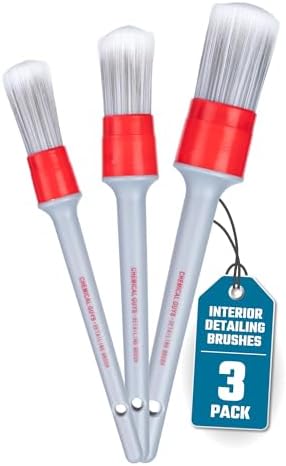
- Interior Car Detailing Brushes (ACC600) – Complete 3-piece detailing brush kit designed to clean vents, dashboards, butt…
- Soft Yet Durable Bristles – These car detail brushes feature gentle synthetic bristles that loosen dirt, dust, and debri…
- Versatile Detailing Tools – Perfect for cleaning vents, knobs, seams, and hard-to-reach crevices, this car interior clea…
3. Chemical Guys Boar’s Hair Detailing Brush (ACC_S90) – Best Single Brush
If you do not want a set, the Chemical Guys Boar’s Hair Detailing Brush (model ACC_S90) is the best single brush to buy. It is a compact brush with natural boar hair and scratch-resistant plastic parts, and the maker says the bristles are soft enough for paint while still flexing around badges, grille slats, wheel spokes, and vents. That flexibility matters on air vents: the bristles bend around the slat edges instead of skating across them, so they pick up dust from both faces of each slat in one stroke.
- Single compact brush with natural boar hair bristles.
- Scratch-resistant plastic ferrule and handle, with no metal parts.
A single brush is also the easiest option to keep clean, because there is only one tool to wash and dry. The limitation is obvious: one size cannot do everything. The head is too wide for the narrowest vent slats and too small for fast dashboard work, so most owners will eventually want a second, smaller brush.
Pros:
- Soft boar hair flexes around vent slats and picks up dust from both faces.
- One tool is easy to wash, dry, and store.
Cons:
- One size only, so very narrow slats and wide panels are both awkward.
- No dedicated storage or second brush for separating jobs.

- Natural Boars Hair Is Soft Enough for Paint: The car wash brush bristles flex around badges, grille slats and wheel spok…
- Gets Into the Places a Towel Cannot: This car cleaning brush reaches dirt along emblem edges, in grille mesh, lug recess…
- Use It Wet Or Dry, Inside Or Out: Use this wheel cleaner brush dry to brush dust out of vents and speaker grilles, or wo…
4. Carrand 93019 Vent, Dash, and Crevice Detail Brush Set – Best Budget Vent Tool
The Carrand 93019 set is the most vent-specific tool in this guide, and it is also the cheapest way to get one. The three-piece set includes a two-sided vent louver detailer, a dust and crevice brush, and a vent and seam detailer, so each tool has a distinct shape for a distinct gap. The vent louver tool is the one that earns this set its place: its thin profile slides between slats and wipes both faces at once, which is faster than working each slat with a round brush.
- Three-piece set: vent louver detailer, dust and crevice brush, seam detailer.
- Two-sided vent tool wipes both faces of a slat in one pass.
The compromise is bristle quality. The synthetic bristles are firm enough to dislodge dust and lint, but they are not as finely tipped as the boar hair or ultra-soft brushes above, so use a light touch on glossy plastic and touchscreens. For the price, that is a fair trade if you want a dedicated vent tool without paying for a premium set, and it pairs well with our best leather cleaner for cars guide.
Pros:
- Vent-specific shapes, including a two-sided louver tool.
- Low cost for a three-piece set.
Cons:
- Bristle tips are firmer than premium brushes, so use care on glossy trim.
- Not the best choice for touchscreens or piano-black panels.
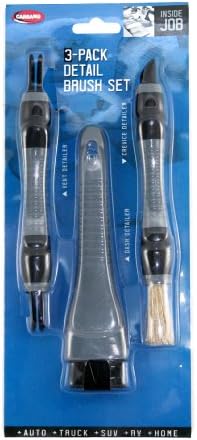
- 3-pack detailing set
- 2-sided vent louver detailer
- Dust and crevice brush
5. Detail Factory TriGrip Ultra-Soft Detailing Brush Set – Best Premium Soft Brush
The Detail Factory TriGrip set is the premium option, and it earns that position with its handle and its bristles. The set contains two brushes with an ergonomic triangular grip that is rubberised and balanced, which reduces hand fatigue during a long detailing session, and the ultra-soft synthetic bristles are metal-free, so there is nothing hard that can touch a screen or a gloss panel. The maker lists the set for exterior and interior panels, emblems, badges, gauges, and infotainment screens, which tells you how gentle the bristles are.
- Two brushes with ergonomic triangular rubberised grips.
- Ultra-soft synthetic bristles with metal-free construction.
For air vents, the TriGrip is the gentlest brush here, which makes it the right choice for cars with piano-black vent surrounds or touchscreens near the vents. The trade-off is cleaning power: ultra-soft bristles lift loose dust well but are weaker on a sticky film. It is also the most expensive per brush here, since you only get two. Buy it if your interior is full of delicate surfaces; otherwise the Detail Dudes set gives you more for less.
Pros:
- The softest bristles in this guide, safe for screens and gauge lenses.
- Comfortable triangular grip for longer cleaning sessions.
Cons:
- Only two brushes, so the cost per brush is the highest here.
- Too soft for scrubbing heavy, sticky grime on vents.

- ERGONOMIC triangular handle design
- BALANCED at the grip to minimize fatigue
- RUBBERIZED no-slip grip area
How to Choose the Best Car Detailing Brushes for Air Vents
The best car detailing brushes for air vents are not the stiffest or the biggest. They are the softest brush that still lifts dust, in the smallest size that reaches the slat, with a handle you can control.
Bristle type: boar hair vs synthetic
Natural boar hair is dense and flexible, holds soapy water well, and is the traditional choice for detail work. It is excellent for vents because the bristles bend around slats and lift dust without scratching. Ultra-soft synthetic bristles are finer still, dry faster, and suit screens and piano-black trim. Avoid stiff nylon and wire brushes on vents entirely: they belong on wheels and engine parts, never on interior plastic.
Brush size: small heads win on vents
A 16 to 24 mm head is the sweet spot for vent slats, buttons, and narrow trim, while a 30 to 40 mm head covers dashboards faster. A set with three sizes covers both jobs. If you buy a single brush, choose the smaller head: it actually fits the vent, which is the job you bought it for.
Handle and ferrule: metal-free matters
Look for a handle with no exposed metal and a ferrule that is plastic or rubber. A metal ferrule can scratch a vent surround the first time the brush slips. A textured or rubberised grip is worth paying for if you detail the whole car in one session.
How to Clean Car Air Vents Step by Step
The best car detailing brushes for air vents work best with a simple routine. Dry brushing, a vacuum, and a lightly dampened cloth do most of the work, and the whole job takes about ten minutes for a typical car.
- Turn the fan off and let the vents cool if the heater has been running.
- Hold a vacuum nozzle a few centimetres from the vent to catch dust as it comes free.
- Brush each slat from top to bottom with short, light strokes.
- Brush the vent surround, the pivot points, and the buttons below the vent.
- Wipe each slat with a microfiber cloth wrapped around one finger, barely damp.
- Vacuum the dashboard and footwell to catch any dust that fell during brushing.
Never spray cleaner directly into the vent. Spray it onto the brush bristles or the cloth instead, and use as little liquid as possible. If a vent smells musty after cleaning, the cause is usually moisture or dust inside the duct, not the slats, and that is a job for a cabin air filter change rather than more brushing. For the wider cabin routine, our guide on how to keep your car clean inside shows how vent cleaning fits into a weekly schedule.
Mistakes to Avoid When Cleaning Air Vents
Most vent damage comes from good intentions and the wrong tool. When you compare the best car detailing brushes for air vents, remember that softness matters more than stiffness. These are the mistakes we see most often.
- Using a stiff brush or a wire brush on vent slats, which scratches the plastic.
- Spraying cleaner or water straight into the vent, which can cause odours in the duct.
- Using the same brush for wheels and vents, which transfers grit to soft trim.
- Scrubbing piano-black vent surrounds with a dry, dirty brush.
- Forgetting the vent pivot points, where dust builds up and stiffens the slats.
The fix for almost every mistake on this list is the same: keep a dedicated interior brush, keep it clean and dry, and let the bristles do the work instead of pressing hard. A soft brush with light pressure removes more dust than a stiff brush with force.
Frequently Asked Questions
What is the best brush for cleaning car air vents?
When you compare the best car detailing brushes for air vents, look for a small, ultra-soft brush with a 16 to 24 mm head. Natural boar hair and ultra-soft synthetic bristles both work well, as long as the brush is clean and has no metal parts. The Chemical Guys ACC600 set is purpose-built for vents and buttons, while the Detail Dudes boar hair set is the best all-round value.
Can I use a toothbrush to clean car air vents?
A soft toothbrush can work in a pinch. Toothbrush bristles are short and stiff, so they can scratch soft plastic. A dedicated detailing brush has longer, softer bristles and a head shaped for the job.
Should I use a wet or dry brush on air vents?
Start dry. Dry brushing lifts loose dust without pushing it deeper. Use a barely damp brush or cloth only for a sticky film, and never spray liquid directly into the vent.
How often should I clean my car air vents?
Brush the vents every two to four weeks as part of a normal interior clean, and more often if you drive on dusty roads or carry pets. A quick two-minute brush during a weekly clean stops dust building up in the pivot points.
Are boar hair brushes safe for car interiors?
Yes, natural boar hair is one of the safest bristle materials for car interiors when the brush is clean. The best car detailing brushes for air vents often use boar hair because it is softer than most synthetics, flexes around trim, and is listed by makers for paint, leather, screens, and piano-black trim. Keep the brush dedicated to the interior and wash it after wet use so it does not carry grit.
What is the difference between a vent brush and a detailing brush?
A vent brush is a type of detailing brush with a slim profile made for slats and louvres, such as the two-sided tool in the Carrand 93019 set. A general detailing brush has a round head and works on many surfaces. Most owners are best served by a small detailing brush set.
Do I need a vacuum to clean air vents properly?
A vacuum is not strictly required, but it makes the job much better. Brushing frees dust, and without a vacuum much of it settles back onto the dashboard. A portable car vacuum with a crevice tool catches the dust at the source.
Final Verdict
The best car detailing brushes for air vents are the ones you will actually use: soft, small, and kept clean. Our best overall pick is the Detail Dudes Boar Hair Car Detailing Brush Set, because three soft boar hair brushes cover vents, trim, and screens for a fair price. If your vents are the main problem, add the Carrand 93019 vent set for its two-sided louver tool, and if your dashboard is full of piano-black trim and screens, the Detail Factory TriGrip set is the gentlest option here.
Whichever set you choose, remember the routine: brush dry first, vacuum as you go, wipe with a barely damp microfiber cloth, and never spray cleaner into the vent. Do that every few weeks and your vents will stay clean and your cabin air will smell fresher.
As an Amazon Associate, we earn from qualifying purchases made through links on this page, at no extra cost to you. Product details in this article come from the manufacturer’s own listings, and we have not invented ratings, review counts, or test results.