
Introduction
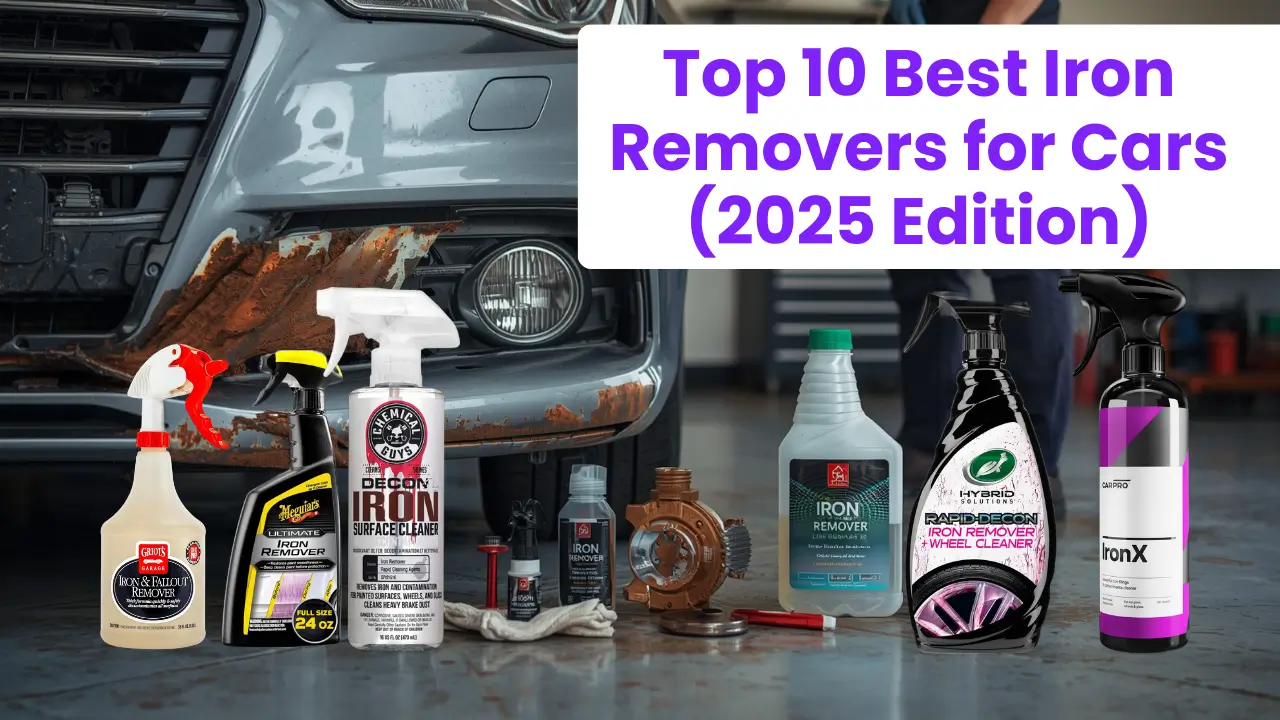
Owning a car is more than just driving it—it’s about maintaining its beauty and protecting it from elements that can harm the paint and wheels. One of the most overlooked threats to a car’s exterior is iron contamination. Tiny metal particles from brake dust, rail dust, and industrial fallout can embed themselves into your paint, slowly eating away at the clear coat and causing rust spots. That’s where iron removers come in.
Iron removers are specially formulated chemicals designed to dissolve these stubborn iron particles without damaging the paint or wheels. If you’ve ever seen a product turn purple when sprayed on your car, that’s the iron remover reacting with the iron deposits. This step is not just cosmetic; it’s vital for protecting your car’s longevity and keeping it looking brand new.
In this comprehensive guide, we’ll break down everything you need to know about the best iron removers for cars, how to use them, and which products stand out in 2025. Whether you’re a weekend warrior detailing your car in the driveway or someone who wants to protect an expensive ride, this article will give you the full roadmap to a cleaner, shinier, and healthier car exterior.
What is an Iron Remover for Cars?
Definition and Purpose
An iron remover is a chemical decontamination product designed to target and dissolve ferrous (iron-based) particles stuck to your vehicle’s paintwork and wheels. Unlike soap and water, which only remove surface dirt, iron removers dig deep into the pores of clear coat and wheel finishes to eliminate microscopic contaminants that can’t be seen with the naked eye.
How It Works Chemically
Most iron removers use a special active ingredient called thioglycolic acid (or similar compounds). When sprayed on a surface, it chemically reacts with embedded iron particles, breaking them down into a water-soluble form that can be rinsed away. This chemical reaction is what causes the signature “bleeding effect,” where the liquid turns purple or red as it reacts with iron. It’s like watching the dirt melt away before your eyes.
Difference Between Iron Remover and Regular Car Wash Products
Here’s the key difference: regular car shampoos and all-purpose cleaners focus on dirt, dust, and grime sitting on top of the paint. They don’t have the ability to dissolve metal contaminants. If you’ve ever washed your car and still noticed tiny orange specks or rough spots on the paint, that’s iron contamination. Only an iron remover can tackle that problem effectively.
Think of a regular car wash as sweeping your floor, while an iron remover is like using a magnet to pull out hidden nails and screws embedded in the carpet. Both are important, but they do completely different jobs.
Why Cars Need Iron Removers
Sources of Iron Contamination
Your car picks up iron contamination every time you drive. Some common sources include:
- Brake Dust: When you hit the brakes, tiny metal particles from your brake pads and rotors fly off and stick to your wheels and paint.
- Rail Dust: If you park near train tracks or live in industrial areas, airborne iron dust can settle on your car.
- Industrial Fallout: Factories, construction zones, and even polluted city air release microscopic metallic particles that can attach to your car’s surface.
Signs Your Car Needs Iron Decontamination
Not sure if your car needs it? Look for these telltale signs:
- Orange or brown rust-like spots on the paint (commonly called “rail dust spots”)
- Rough texture when you run your hand over the paint after washing
- Wheels that look stained or dull even after a thorough wash
Effects of Ignoring Iron Deposits
Leaving iron deposits untreated is like letting termites slowly eat away at a wooden house. Over time, these tiny particles can oxidize and rust, eating into your clear coat and leaving permanent marks. The longer you wait, the harder it becomes to restore your paint’s original smoothness and gloss. In extreme cases, embedded iron can even cause visible rust spots, forcing costly paint correction or even resprays.
Benefits of Using an Iron Remover
Protecting Paint from Corrosion
Iron particles don’t just sit on the surface—they burrow into the clear coat and begin oxidizing. This chemical reaction can spread beneath the paint, causing bubbling, flaking, and permanent rust damage. Regular use of an iron remover prevents this from happening by neutralizing these contaminants before they can cause harm.
Enhancing Shine and Smoothness
Ever wondered why professional detailing makes a car’s paint look so glassy and reflective? A big part of it is decontamination. Removing embedded iron leaves the paint smoother, which enhances the way light reflects off the surface. This not only boosts shine but also makes your car feel silky when you run your hand across it.
Prepping Surface for Waxing and Ceramic Coating
Applying wax, sealant, or ceramic coating on contaminated paint is like painting over rust—it won’t last. Iron removers ensure your car’s surface is squeaky clean, giving protective coatings a perfect base to bond with. This dramatically increases the durability and effectiveness of your paint protection products.
How to Choose the Best Iron Remover for Your Car
Key Factors to Consider
When shopping for an iron remover, here are some things to keep in mind:
- pH Balance: A pH-neutral formula is safer for both paint and wheels.
- Safety: Some products are harsher than others. Always check if it’s safe for clear coats, chrome, or ceramic coatings.
- Smell: Let’s be honest—most iron removers smell awful. Some brands do a better job masking the odor.
- Price: Premium doesn’t always mean better. Look for balance between cost and performance.
- Effectiveness: Some removers react faster and dissolve more iron than others.
Difference Between Wheel-Only and Paint-Safe Iron Removers
Not all iron removers are created equal. Some are designed specifically for wheels (where contamination is heaviest) and may be too strong for paint. Always double-check the label. A paint-safe remover can be used on wheels, but a wheel-only remover may damage clear coats.
Popular Forms: Spray, Gel, Liquid
- Spray: Easiest to use, covers large areas quickly.
- Gel: Thicker consistency, clings better to vertical surfaces.
- Liquid: More concentrated, great for deep cleaning but may require more control.
Choosing the right one depends on your detailing style and the specific problem areas you’re tackling.
Top 10 Best Iron Removers for Car (2025 Edition)
If you’re serious about keeping your car paint and wheels free from rust spots, brake dust, and industrial fallout, an iron remover is non-negotiable. Below are the 10 best iron removers in 2025, each reviewed in detail to help you find the right fit for your vehicle.
1. CarPro IronX – Best Overall Iron Remover for Cars
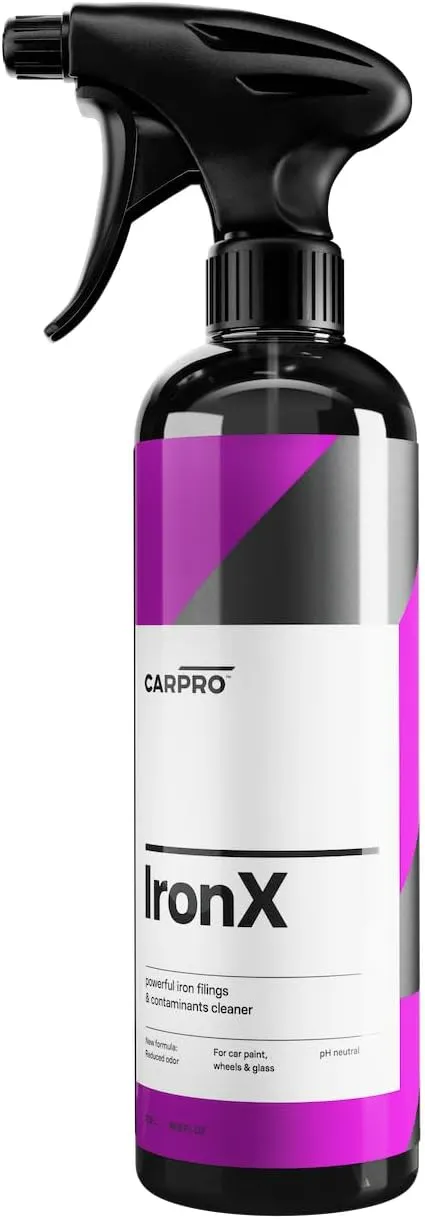
Image Credit: Amazon
CarPro IronX has become the benchmark in the detailing world for iron decontamination. Originally designed for professional detailers, it’s now widely used by enthusiasts who want professional-grade results at home.
This powerful iron remover works on both paint and wheels, dissolving embedded iron particles that regular washing or even clay bars can’t reach. Once sprayed, the product begins to react with ferrous particles, turning purple as it breaks them down—an instant visual confirmation that it’s working.
Why People Love It: It’s incredibly effective on both new and older vehicles. Whether you’re prepping for a ceramic coating or just want your car paint to feel smooth again, CarPro IronX delivers.
Pros:
- Safe on all finishes, including paint, glass, chrome, and even ceramic coatings
- Works faster than most competitors
- Trusted by detailing professionals worldwide
Cons:
- Strong sulfur smell (like rotten eggs)
- Slightly more expensive than budget alternatives
Best For: Car owners who want the most effective, all-around iron remover for both paint and wheels. Perfect if you’re prepping a car for polishing or ceramic coating.
2. Meguiar’s Ultimate Iron Remover – Best Iron Remover for Wheels
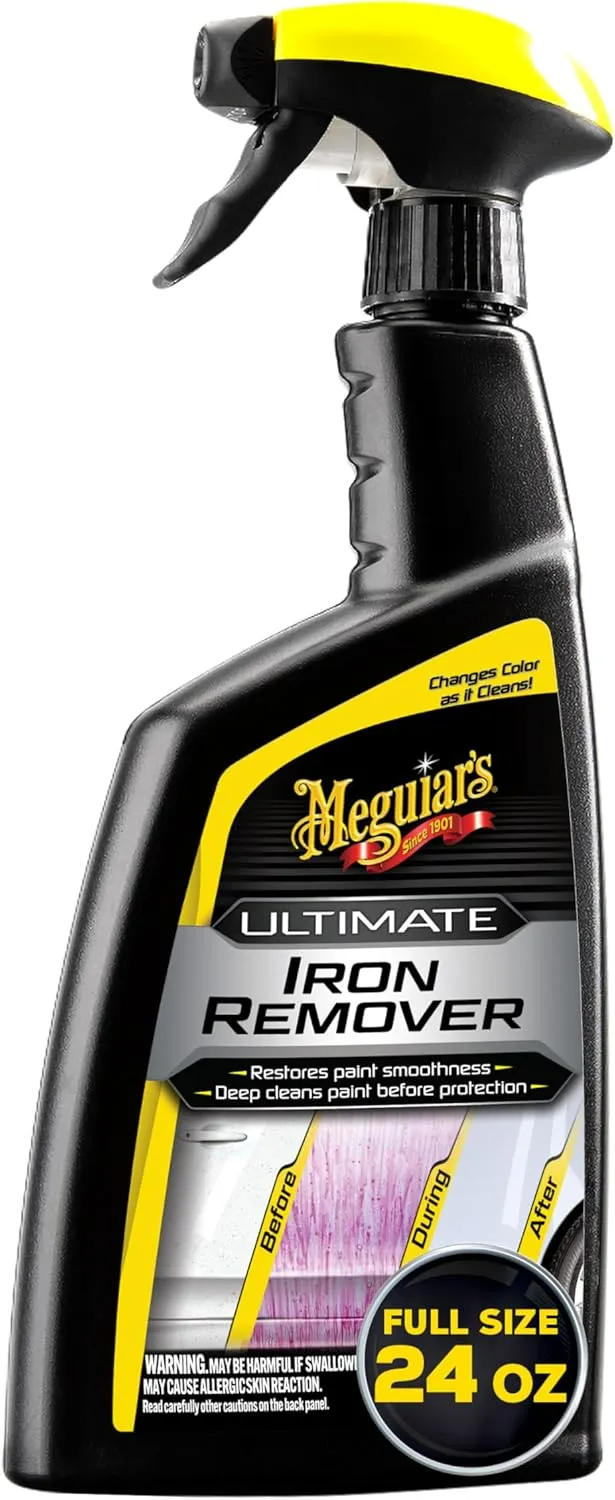
Image Credit: Amazon
Meguiar’s is one of the most recognizable names in car care, and their Meguiar’s Ultimate Iron Remover doubles as an iron remover, making it an affordable and accessible choice. It’s specifically formulated to attack stubborn brake dust that accumulates on wheels while remaining safe for all wheel finishes, including polished, painted, and chrome.
The foaming action sets this cleaner apart—it clings to vertical surfaces, ensuring better contact with contaminants. While it’s not as strong as CarPro IronX on paint, it’s fantastic for wheels, especially daily drivers exposed to heavy traffic and braking.
Why People Love It: It’s easy to find in local auto stores, budget-friendly, and effective on wheels. For someone who just wants clean, brake-dust-free wheels without going too deep into detailing, this product hits the sweet spot.
Pros:
- Affordable and widely available
- Foaming formula ensures full coverage
- Safe on all types of wheels
Cons:
- Less effective on paint surfaces
- Works slower on heavy contamination compared to premium removers
Best For: Car owners who want a simple, effective wheel cleaner with iron-removing power. Ideal for everyday commuters and family vehicles.
3. Griot’s Garage Iron & Fallout Remover – Safest Iron Remover for Paint
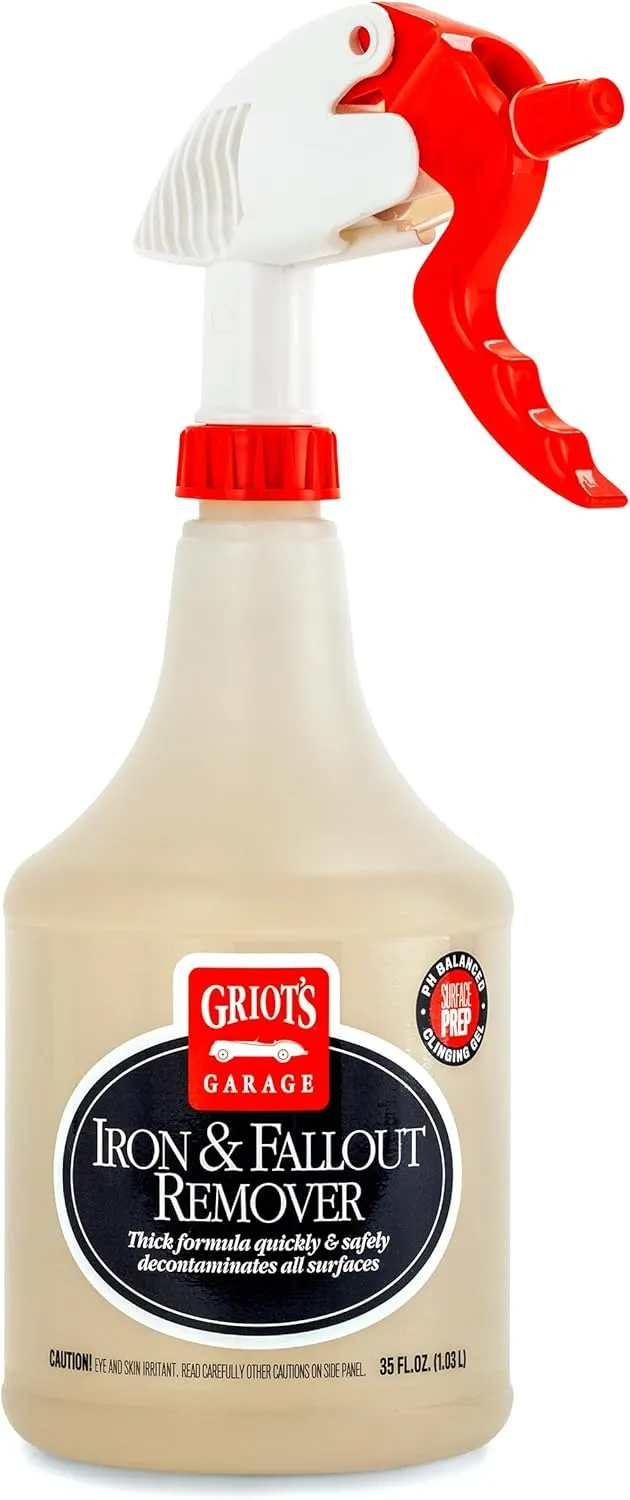
Image Credit: Amazon
If you’re looking for a product that balances strength and safety, Griot’s Garage Iron & Fallout Remover is a top contender. It’s pH-balanced, meaning it won’t damage clear coats, chrome, or protective coatings. This makes it perfect for high-end cars, ceramic-coated vehicles, and delicate paint finishes.
Its thicker formula clings better to paint and vertical panels, allowing more time for chemical reaction. Plus, while most iron removers smell terrible, Griot’s version has a noticeably milder odor, making it easier to work with, especially indoors or in a garage.
Why People Love It: Owners of luxury and exotic cars often choose Griot’s because it’s both gentle and effective. It may not be the fastest, but it’s one of the safest iron removers available.
Pros:
- Gentle pH-balanced formula
- Works on paint, wheels, and even glass
- Milder odor compared to other brands
Cons:
- Slower results on heavily contaminated vehicles
- Pricier than many alternatives
Best For: Owners of luxury, ceramic-coated, or garage-kept cars who value safety just as much as effectiveness.
4. Chemical Guys Decon Pro – Best DIY Iron Remover
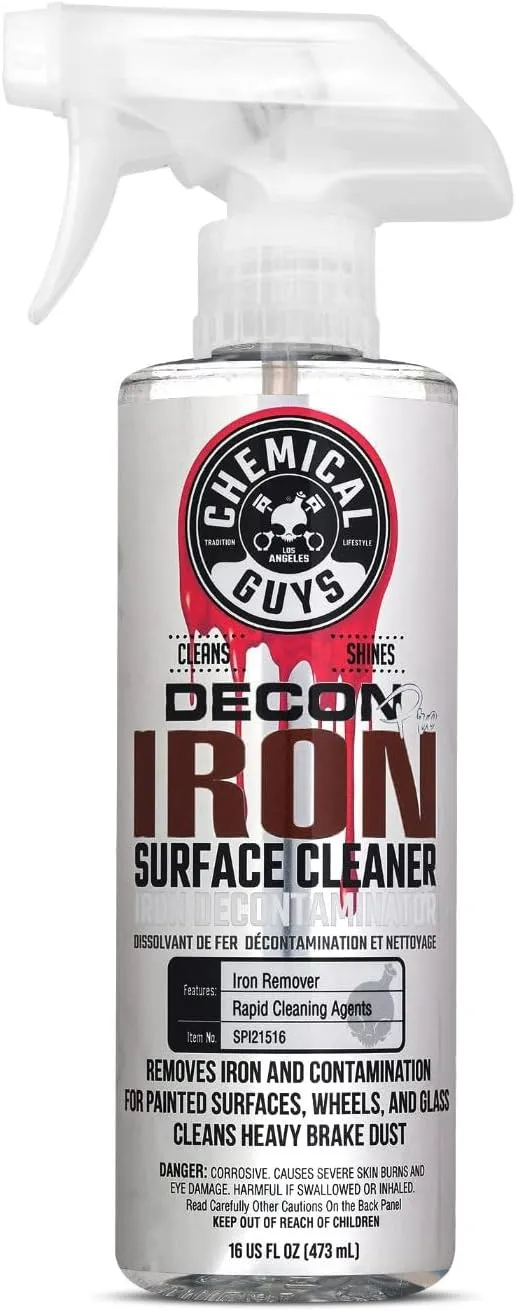
Image Credit: Amazon
Chemical Guys Decon Pro is a favorite among DIY detailers thanks to its strong performance and accessibility. This iron remover is formulated to tackle both paint and wheels, making it versatile for complete vehicle decontamination.
It reacts quickly with iron, producing that signature purple bleeding effect. It’s strong enough to handle tough fallout but still safe for clear coats, chrome, and glass. Many users like that it’s widely available both online and in auto shops, making it a convenient option.
Why People Love It: It strikes the perfect balance between professional strength and consumer accessibility. DIY enthusiasts appreciate how easy it is to use while still delivering visible results.
Pros:
- Fast-acting and effective
- Versatile use across paint, wheels, and glass
- Affordable and widely available
Cons:
- Can stain driveways or concrete if not rinsed properly
- Strong chemical odor
Best For: DIY car owners who want strong results without paying professional detailing prices.
5. Adam’s Iron Remover – Best Iron Remover for Beginners
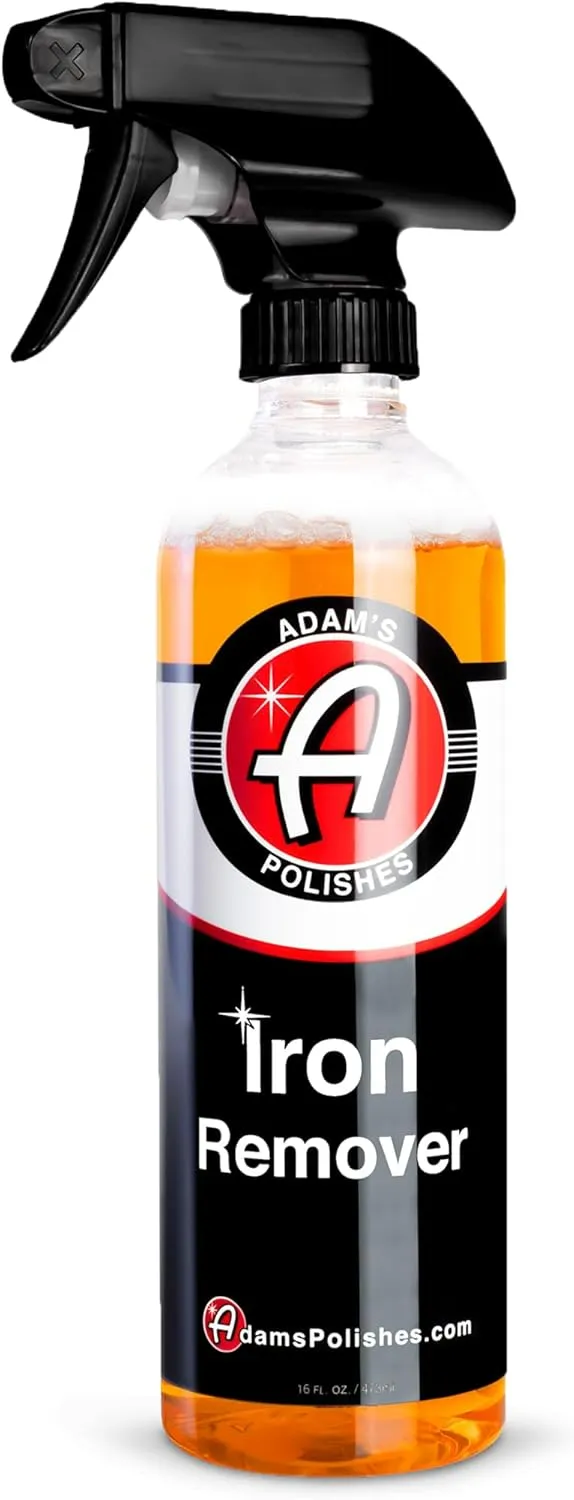
Image Credit: Amazon
Adam’s Iron Remover is known for its user-friendly design, making it ideal for beginners. It’s pH neutral, safe for all surfaces, and comes with a more tolerable scent compared to many competitors.
This product is especially effective for routine decontamination before applying wax or ceramic coatings. It works slower than some heavy-duty alternatives, but that’s actually an advantage for beginners, as it lowers the risk of accidental damage.
Why People Love It: Adam’s Iron Remover combines safety, effectiveness, and ease of use in one bottle. It’s a go-to product for people new to detailing who want something straightforward.
Pros:
- Safe, pH-balanced formula
- Pleasant scent compared to others
- Available in larger sizes for long-term use
Cons:
- Slower acting on heavy contamination
- May require reapplication for tough fallout
Best For: Beginners and casual car owners who want a safe and easy entry-level iron remover.
6. Sonax Fallout Cleaner – Best Iron Remover for European Cars
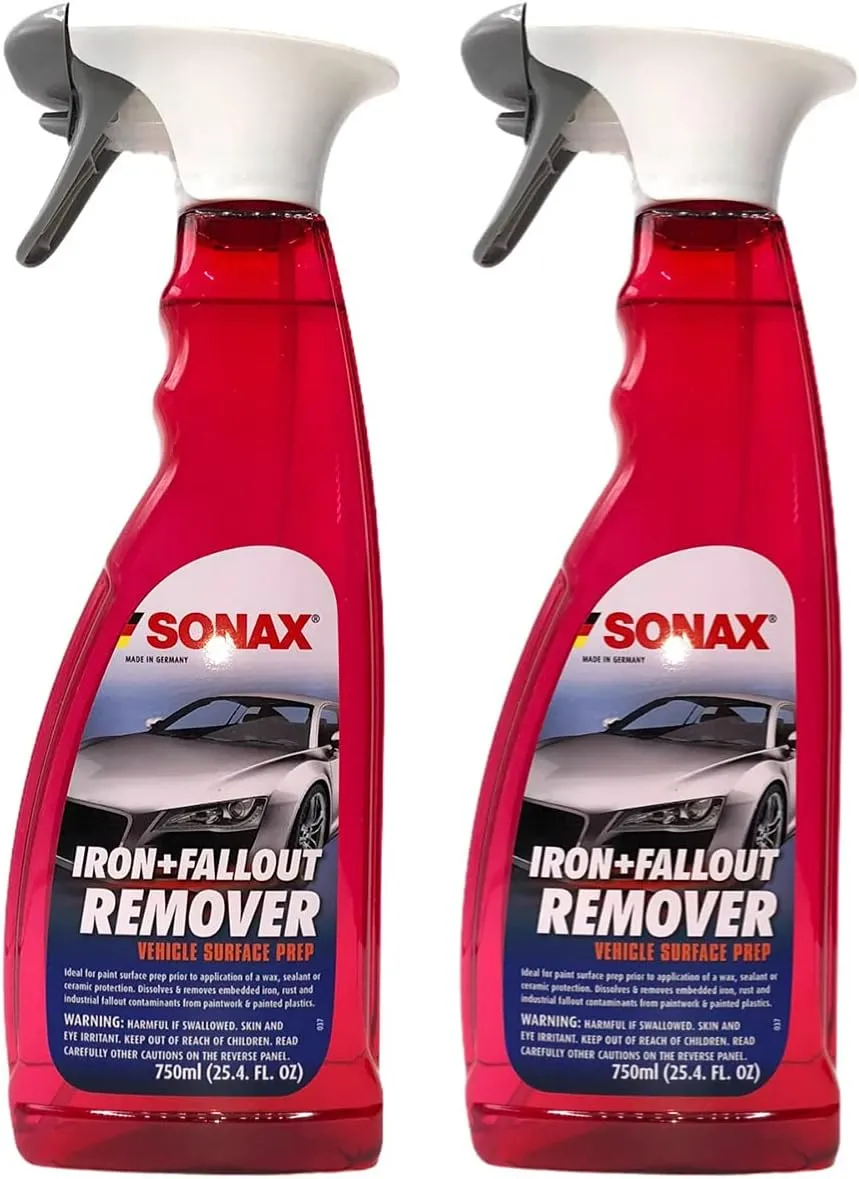
Image Credit: Amazon
Sonax Fallout Cleaner is a German-engineered product highly respected in the detailing community. Known for its strength and reliability, this iron remover is particularly effective on vehicles that suffer from heavy brake dust—something common with European cars that use performance-oriented braking systems.
The product is formulated as a thicker gel compared to many competitors, allowing it to cling better to vertical surfaces like painted panels and wheels. This longer dwell time ensures that the active ingredients have more time to react with iron contaminants, making the cleaning process more effective.
Why People Love It: Sonax delivers fast results and has a reputation for quality. Enthusiasts with performance vehicles, luxury cars, or sports sedans often swear by this product because of its ability to tackle the toughest brake dust and fallout.
Pros:
- Thick gel formula clings for better cleaning
- Extremely effective on performance wheels with heavy brake dust
- Works quickly, often within 3–5 minutes
Cons:
- Strong chemical odor, typical of iron removers
- More expensive than some competitors
Best For: Owners of European cars like BMW, Audi, and Mercedes, or anyone dealing with stubborn brake dust. Great for those who want a fast-acting, professional-level product.
7. Turtle Wax Hybrid Solutions Iron Remover – Best Budget Iron Remover
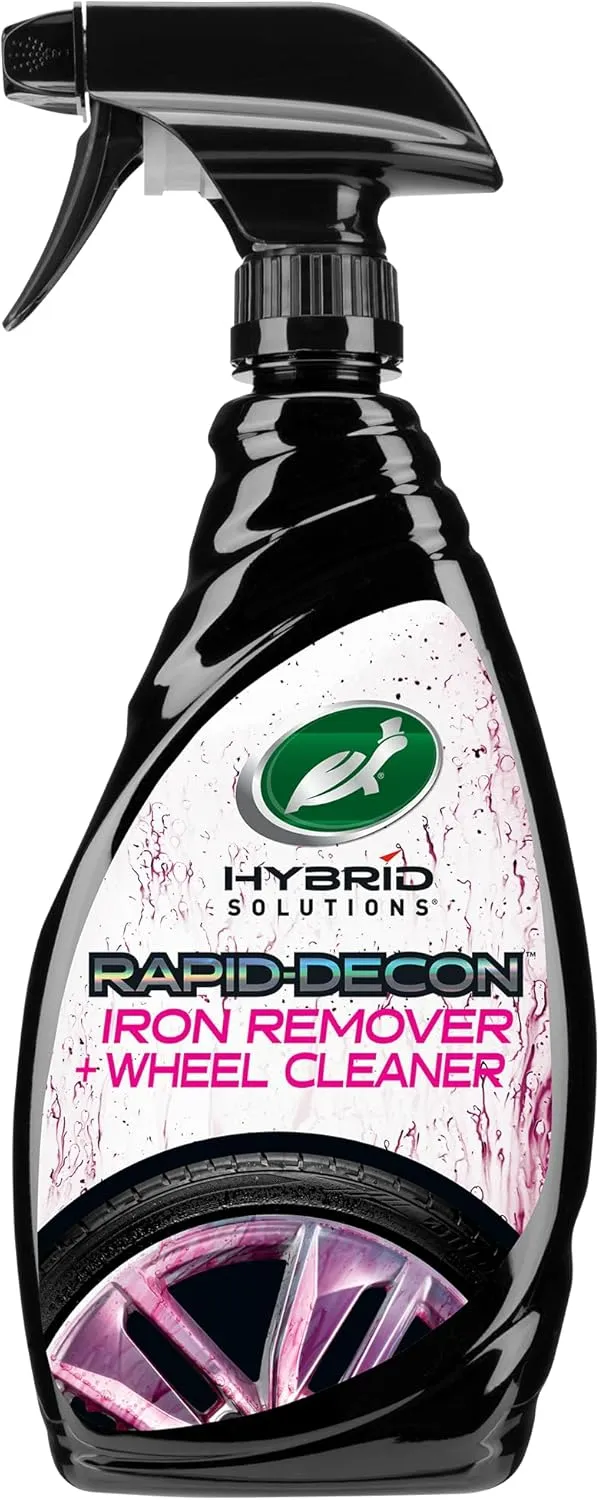
Image Credit: Amazon
Turtle Wax Hybrid Solutions Iron Remover is the perfect choice for car owners who want effective decontamination without spending a fortune. Turtle Wax has long been a household name, and this product proves that you don’t always need premium pricing for great results.
This spray is pH balanced, making it safe on paint, wheels, glass, and chrome. It doesn’t cling as long as gel-based removers, but it works well for light to medium contamination, which is perfect for daily drivers. Another benefit is its wide availability—you can find it in most auto stores and online retailers, making it a convenient option for anyone.
Why People Love It: It provides reliable results at an affordable price, making it accessible for everyday car owners who may not want to invest in high-end detailing brands.
Pros:
- Very affordable compared to premium products
- Safe on all exterior surfaces
- Easy to find in stores worldwide
Cons:
- Less effective on heavily contaminated vehicles
- Requires more frequent use compared to stronger options
Best For: Budget-conscious car owners who want reliable performance without breaking the bank. Perfect for everyday cars and light contamination.
8. Optimum Ferrex Iron Remover – Best Low-Odor Iron Remover
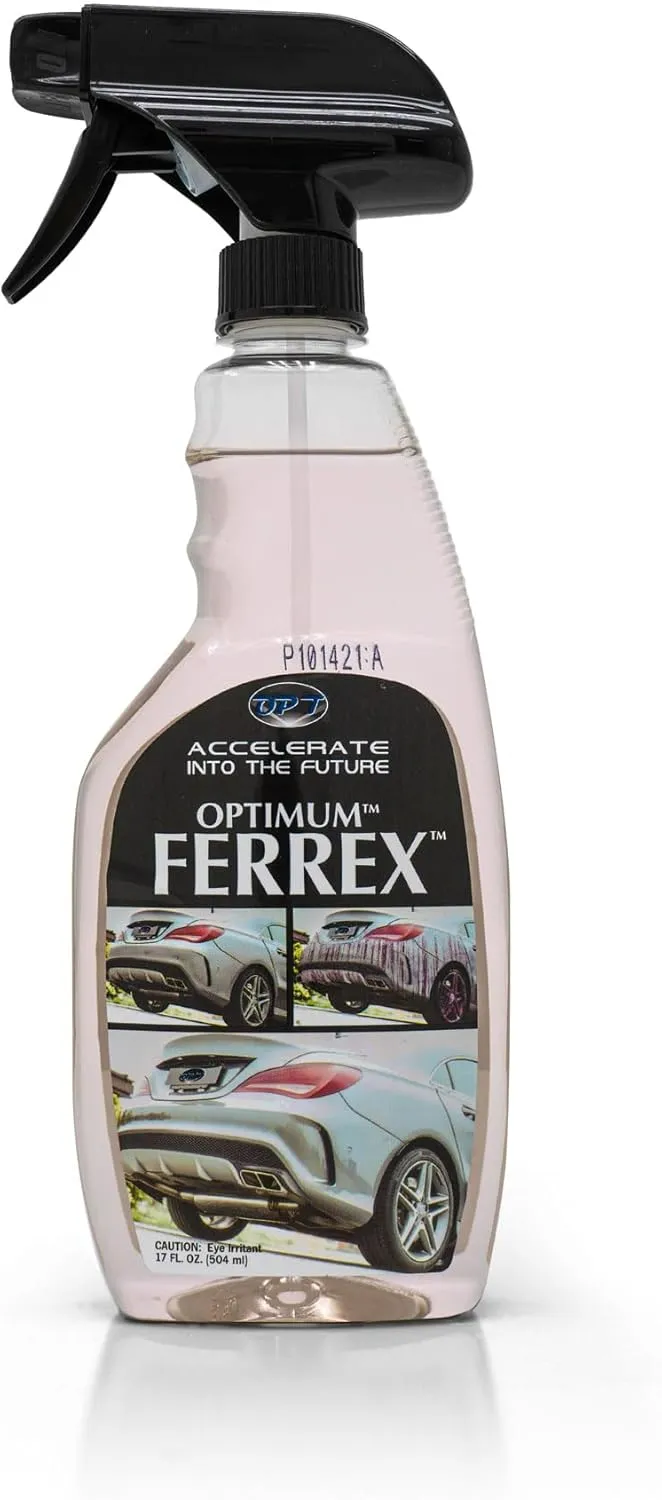
Image Credit: Amazon
Optimum Ferrex is a standout product for one simple reason: it’s one of the few low-odor iron removers available. Traditional fallout removers have a harsh sulfur smell, but Optimum has developed a formula that significantly reduces this issue while still maintaining strong cleaning power.
It’s safe on paint, wheels, chrome, and glass, making it versatile for full-vehicle decontamination. While it works a little slower than the strongest competitors, its gentleness and low-odor formula make it an excellent choice for regular maintenance, especially if you’re sensitive to chemical smells.
Why People Love It: It’s the go-to option for car owners who hate the smell of traditional fallout removers. It still delivers effective results, though you may need to give it a little more dwell time.
Pros:
- Low odor compared to competitors
- Safe for use on all exterior finishes
- Gentle enough for frequent use
Cons:
- Slower reaction time than heavy-duty products
- Pricier than budget-friendly options
Best For: Car owners with sensitive noses or those who regularly detail their vehicles indoors. Great for maintaining cars in residential settings.
9. Bilt Hamber Korrosol – Best Iron Remover for Heavy Contamination
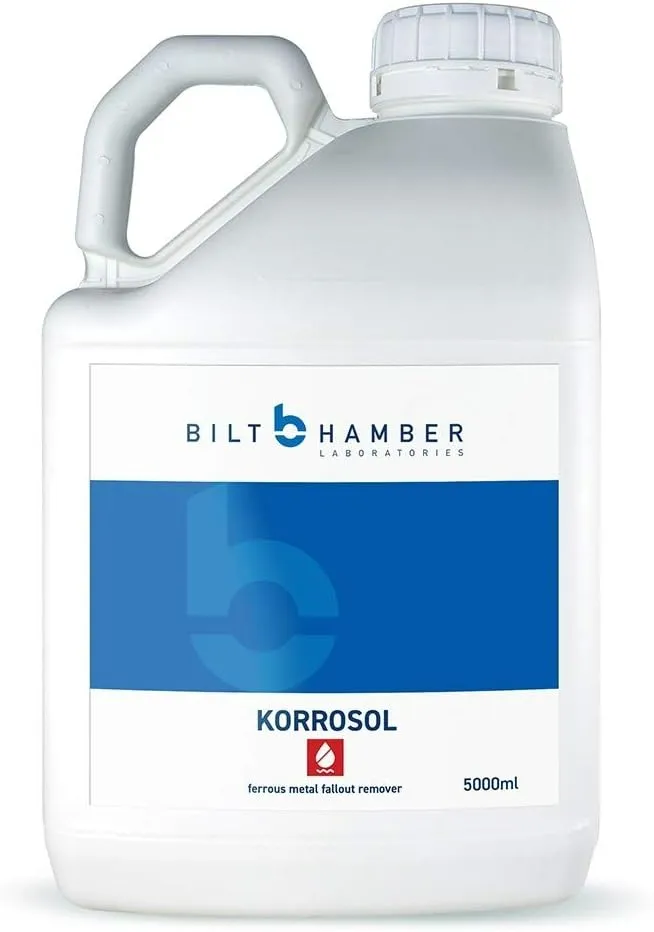
Image Credit: Amazon
Bilt Hamber Korrosol is widely regarded as one of the most powerful iron removers available. It’s especially popular in the UK and among professionals dealing with severe iron contamination. If your car hasn’t been decontaminated in years, this product will likely shock you with how much purple bleeding it produces.
Unlike some budget-friendly options, Korrosol works very quickly and penetrates deep into the paint to dissolve stubborn fallout. It’s safe for use on paint, wheels, and glass, but because of its strength, you’ll want to be careful not to let it dry on surfaces.
Why People Love It: It’s extremely effective, even on heavily contaminated vehicles. Many detailers consider it their “go-to” product when tackling neglected cars.
Pros:
- Industry-leading strength
- Fast and powerful reaction
- Works well even on older, contaminated vehicles
Cons:
- Very strong odor
- Can be harsh if left too long on delicate finishes
Best For: Professional detailers and car owners dealing with heavy iron buildup. Ideal for older cars or vehicles exposed to harsh environments.
10. Detail King Purple Power Iron Remover – Best Value for Performance

Image Credit: Amazon
Detail King Purple Power is a rising star in the detailing world. While it’s not as well-known as CarPro or Sonax, it delivers excellent results at a mid-range price, making it a fantastic value option.
The formula produces a strong purple bleeding effect, giving visible proof that it’s attacking iron contamination. It works well on both wheels and paint, making it versatile for full-car use. While the odor is strong, the performance makes up for it, especially considering the lower cost compared to premium products.
Why People Love It: It’s a hidden gem—offering professional-level performance at a price point accessible to everyday car owners.
Pros:
- Strong chemical reaction with iron
- Affordable mid-range price
- Works well on both paint and wheels
Cons:
- Not as widely available globally
- Strong odor compared to low-smell alternatives
Best For: Car owners looking for pro-level results without paying top-tier prices. A great balance of performance and affordability.
Step-by-Step Guide on How to Use an Iron Remover
Now that you know which products are the best, let’s talk about using them the right way. Applying an iron remover isn’t complicated, but doing it correctly makes a huge difference in results.
Preparation Before Application
Before spraying the product, you should:
- Wash your car thoroughly with car shampoo to remove dirt and grime.
- Park the car in a shaded area to prevent the product from drying too fast.
- Make sure the surface is cool to the touch—never apply iron remover on hot panels or wheels.
Correct Application Techniques
- Shake the bottle well before spraying.
- Spray evenly over the surface (paint or wheels), ensuring full coverage.
- Wait for 3–5 minutes as the product reacts. You’ll see purple streaks forming—that’s the iron dissolving.
- Agitate with a soft brush on wheels if necessary.
- Rinse thoroughly with high-pressure water to wash away the product and contaminants.
Common Mistakes to Avoid
- Don’t let the product dry on the surface—it may stain or damage clear coat.
- Avoid using it in direct sunlight.
- Don’t rely on iron remover as a substitute for regular washing; it’s a supplement, not a replacement.
- Always wear gloves to protect your skin, as these products can be harsh.
Using an iron remover once every few months will keep your car’s paint and wheels smooth, shiny, and contaminant-free.
Comparing Iron Remover vs. Clay Bar
Both iron removers and clay bars are part of the decontamination process, but they serve different purposes.
Which is Better for Deep Decontamination?
Iron removers work chemically, dissolving invisible metal particles embedded in paint and wheels. Clay bars, on the other hand, physically pull out bonded contaminants such as tree sap, tar, and overspray.
If you had to choose one, an iron remover is more effective for invisible threats like rust-causing fallout. However, a clay bar gives that glass-smooth feel by removing non-metallic contaminants.
When to Use Both for Maximum Results
The best detailing process often combines both. Start with an iron remover to chemically strip out metal particles, then follow up with a clay bar to remove anything left behind. This two-step decontamination ensures your paint is as clean and smooth as possible before polishing or applying protective coatings.
Think of it as dental care: iron remover is like using mouthwash to kill bacteria, while a clay bar is like flossing to get rid of stuck debris. Together, they give you the healthiest result.
DIY vs. Professional Iron Removal
Cost Comparison
- DIY: A bottle of iron remover typically costs $15–$25 and can last 3–5 uses.
- Professional: A detailing shop may charge $80–$150 for a full decontamination service.
Time and Effort Required
DIY requires about 30–45 minutes depending on contamination levels. Professionals, however, may combine it with claying, polishing, and waxing for a more thorough finish.
Long-Term Benefits
DIY is cost-effective for maintenance, but a professional detail once or twice a year ensures your car gets maximum care. Many enthusiasts prefer to do regular DIY iron removals and leave paint correction to professionals.
How Often Should You Use an Iron Remover?
Iron removers are powerful tools, but they’re not meant for every wash. Overusing them can be wasteful, and in some cases, it may even cause unnecessary stress to your paintwork. The frequency depends on how and where you drive, plus the environment your car lives in.
Frequency for Daily Drivers
If you commute daily in traffic, your car is constantly exposed to brake dust, road grime, and industrial fallout. For these cars, using an iron remover every 2–3 months is recommended. Wheels, in particular, may need more frequent treatment since they’re closer to brake dust sources.
Frequency for Show Cars and Garage-Kept Cars
If your car spends most of its time indoors and only comes out for weekend drives or shows, iron contamination builds up much slower. In such cases, using an iron remover every 6–12 months may be enough.
Seasonal Recommendations
- Before Winter: Apply iron remover before adding a layer of wax or ceramic coating for protection against road salt.
- After Winter: Use it again to remove salt, rail dust, and fallout picked up during harsh weather conditions.
- Summer: Depending on your driving, once during the season may help keep the paint fresh.
Regular monitoring is key—run your hand gently over your clean car’s paint. If it feels rough, it’s time for an iron removal session.
Safety Tips When Using Iron Removers
Iron removers are safe when used correctly, but they are still chemicals that need careful handling. Follow these safety tips to avoid accidents or damage.
Protective Gear and Ventilation
Always wear gloves to prevent skin irritation, and if you’re working in a garage, make sure the area is well-ventilated. Some iron removers have a strong sulfur-like smell that can be unpleasant indoors. Safety goggles are also a smart addition, especially when spraying around wheels where splash-back can occur.
Safe Use Around Pets and Children
Keep bottles tightly sealed and stored in a cool, dry place away from children and pets. Even small accidental contact can cause irritation or harm. Never spray near open food or drink areas.
Preventing Damage to Delicate Surfaces
- Avoid spraying iron remover on raw aluminum or unfinished metals, as it can stain.
- Be cautious around decals, vinyl wraps, and plastic trims. Most products are safe, but testing on a small area first is wise.
- Never leave the product to dry on paint, glass, or wheels—this can cause streaking or staining.
Treat iron remover like medicine for your car: highly effective but best used with care and responsibility.
Myths About Iron Removers
There are plenty of myths floating around about iron removers, and it’s time to separate fact from fiction.
Do Iron Removers Damage Clear Coat?
No. When used properly, iron removers are completely safe on clear coats. In fact, they protect the clear coat by removing contaminants that would otherwise eat through it. The only risk comes from misuse, such as letting the product dry or leaving it on for too long.
Are They Safe for Ceramic Coatings?
Yes. Iron removers are one of the best ways to maintain ceramic-coated cars. They safely dissolve contaminants that washing can’t remove, ensuring your coating lasts longer. In fact, many ceramic coating manufacturers recommend regular iron removal as part of the maintenance routine.
Is the Purple Bleeding Effect Necessary?
That dramatic purple reaction isn’t just for show—it’s a visual confirmation that the product is working. However, the absence of purple streaks doesn’t always mean the product isn’t effective. It may simply indicate your car has low iron contamination. Don’t assume it’s not working just because it doesn’t “bleed” heavily.
Budget-Friendly Alternatives to Iron Removers
If you’re on a budget, you may be tempted to look for household alternatives. While some can help, none work as effectively or safely as dedicated iron removers.
Household Items (Pros and Cons)
- Vinegar: Mildly acidic and can help with water spots, but it’s not strong enough to dissolve embedded iron.
- Lemon juice or citric acid: Can clean stains but may etch paint if not diluted properly.
- WD-40: Useful for removing tar and sticky residue, but not designed for iron contamination.
Using All-Purpose Cleaners Carefully
Some strong degreasers or APCs may remove surface-level dirt and grime, but they don’t chemically dissolve iron. Overusing them can also strip wax or sealants.
Why Real Iron Removers Are Worth the Investment
Iron removers are formulated specifically for ferrous contamination. They work faster, safer, and more effectively than any household product. Considering the cost of paint correction or wheel refinishing, spending $20 on a proper iron remover is a small price for peace of mind.
Maintaining a Car After Iron Removal
Once you’ve decontaminated your car, it’s important to maintain that smooth, clean surface.
Regular Washing Techniques
Wash your car weekly using a pH-neutral car shampoo and microfiber wash mitt. Avoid harsh detergents that strip protection layers. A proper wash routine reduces buildup, meaning you won’t need iron removers as often.
Adding Protective Layers (Wax, Sealant, Ceramic)
After decontamination, protect the paint with:
- Carnauba wax for a deep, warm shine (lasts 1–2 months).
- Paint sealant for stronger, longer protection (lasts 4–6 months).
- Ceramic coating for the ultimate defense (lasts 2–5 years).
A protected surface is less likely to trap iron, making future decontamination easier.
Extending the Effects of Iron Removal
- Use quick detailers or spray sealants between washes.
- Rinse wheels regularly to prevent heavy buildup.
- Avoid parking near train tracks or industrial zones when possible.
Iron removal is like hitting the reset button for your paint—keeping up with maintenance ensures your car stays cleaner, shinier, and better protected for longer.
Conclusion
Iron contamination is one of the hidden enemies of your car’s paint and wheels. Left untreated, it can cause rust spots, rough paint, and dull finishes. Thankfully, iron removers provide a simple, effective way to dissolve these contaminants and restore your car’s smooth, glossy look.
From budget-friendly options like Turtle Wax Hybrid Solutions to pro-grade choices like CarPro IronX and Bilt Hamber Korrosol, there’s a product for every car owner’s needs and budget. Used correctly, iron removers not only enhance appearance but also protect your car’s clear coat, wheels, and coatings.
Make iron removal part of your detailing routine, and your car will thank you with long-lasting shine, protection, and beauty.
FAQs
1. Can I use iron remover on glass and chrome?
Yes, most iron removers are safe on glass, chrome, and even plastic trims. Always rinse thoroughly afterward.
2. Why does iron remover smell so bad?
The rotten-egg odor comes from the active ingredient that reacts with iron. Some brands mask the smell better, but the odor is proof the product is working.
3. Can iron removers replace claying?
No. Iron removers dissolve metallic contaminants, while clay bars remove non-metallic ones. For the best results, use both.
4. How do I know if my car still has iron deposits?
Run your hand gently across the clean paint. If it feels rough or gritty, iron contamination is still present.
5. What’s the safest iron remover for a beginner?
Adam’s Iron Remover or Griot’s Garage Fallout Remover—both are gentle, pH balanced, and beginner-friendly.