Every driver knows the gap. It is the narrow slot between the front seats and the center console, and it seems to swallow anything small that slips out of your hand. Your phone slides down there at a red light. A key drops in while you are reaching for the door. Coins, cards, receipts, and crumbs all find their way into the same dark crack, and getting them back out usually means parking, opening the door, and digging around with your fingers at an awkward angle.
A car seat gap filler is a small, simple accessory made to block that slot. It sits in the gap and stops small items from falling through in the first place. This guide explains what a car seat gap filler is used for, the main types you will see, how the sizing works, and the limits of what these fillers can do. It also covers the safety side, because the gap is not just an annoyance. Reaching into it while you are driving is a real distraction, and that matters more than any lost coin.

What Is a Car Seat Gap Filler?
A plain definition
A car seat gap filler is a strip or wedge of material that fills the space between a front seat and the center console. Some versions are soft foam. Some are molded plastic. Some are fabric pieces with a small pocket on top. They all do the same basic job. They cover the opening so small items land on top of the filler, or stay on the seat, instead of dropping down beside the seat where your hand barely fits.
Why the gap exists in the first place
The gap is not a design mistake. Front seats sit on rails so they can slide forward and back, and there has to be room for that movement. The seat belt buckle also needs space to sit beside the seat and move a little. The console is fixed in place, so the space between the moving seat and the fixed console changes slightly as you adjust your seat. That open slot is the side effect, and it happens to be just wide enough to catch a phone.
What falls into the gap most often
Phones are the classic case, because they are flat, smooth, and heavy enough to slide. Keys and key fobs drop in too, along with coins, bank cards, parking tickets, pens, and food. Crumbs and small bits of snack food collect down there over time, which is one reason the area beside the seat gets dirty even in a car that looks clean on top. Once something is down there, the seat rails and the tight space make it hard to reach, and some items slide under the seat entirely.
The Main Types of Car Seat Gap Fillers
Foam strips
Foam fillers are soft strips that you push down into the gap. Because foam squeezes, one strip can fit a range of gap widths, and it tends to move with the seat a little as the seat slides. Foam is the softest option, so it will not scratch the console or the seat trim. It is used mainly as a simple blocker. It stops drops, and that is about it. Over time foam can compress and sit lower in the gap, so it may need to be pulled back up or replaced after heavy use.
Molded plastic wedges
Plastic wedges are firmer pieces shaped to sit in the slot and stay put. They hold their shape better than foam and give a flat, stable surface on top. Some have a cutout or a notch so the seat belt buckle can pass through or sit in its normal place. A firm wedge works well in a car where the gap width stays the same, which is true for most drivers who rarely move their seat. The trade off is fit. A wedge that is too wide for your gap can push against the seat or the console, and one that is too narrow can slide down like the items it was meant to stop.
Fabric fillers with storage pockets
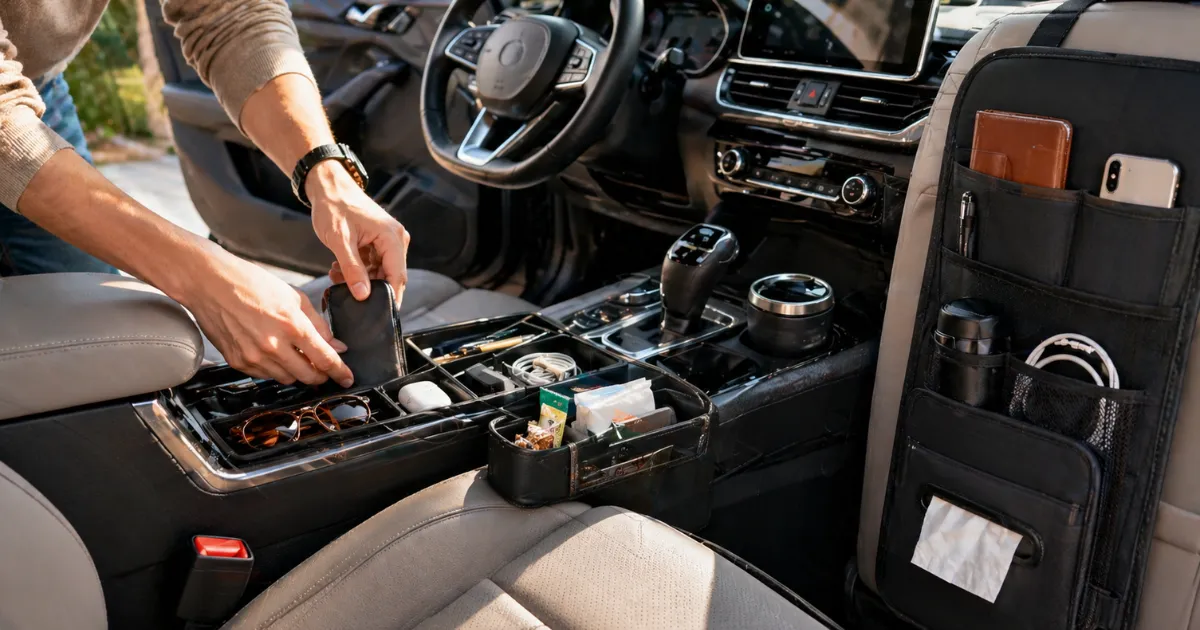
Fabric fillers wrap a soft core in cloth and add a pocket or a small tray section on top. The pocket gives you a spot for a phone, a pair of sunglasses, or a charging cable, right where your hand naturally rests. This type is used both to block the gap and to add a little reachable storage. The pocket is small by design, and it is meant for light items only. A fabric filler also tends to look softer and less visible than a plastic wedge, which some drivers prefer.
What a Gap Filler Is Used For: The Main Benefits
Fewer lost items
The main job is simple prevention. When the slot is covered, a dropped phone stays on the seat or lands on the filler where you can see it and pick it up easily. Keys, cards, and coins stay within reach instead of sliding under the seat. Anyone who has spent ten minutes in a parking lot fishing under a seat with a phone flashlight knows how much small frustration this removes from daily driving.
Less distracted reaching while driving
This is the benefit that matters most. When something drops into the gap while the car is moving, the natural reaction is to reach for it. That means one hand off the wheel, eyes off the road, and your body twisted sideways, all at the worst possible time. A gap filler lowers the chance of that moment happening, because items do not disappear into the slot. Still, be clear about the rule. If something does drop while you are driving, leave it. Only fish for dropped items when you are parked, with the car stopped and your full attention free. No phone or coin is worth reaching for in traffic.
A cleaner cabin
A covered gap also stays cleaner. Crumbs and dust still land on top of the filler, but they sit where you can see them and wipe them off, instead of collecting in a dark slot you cannot reach. It is a small difference, but it adds up over months of daily driving. If you are working on the cabin in general, it also pairs well with a tidy seat area. For example, our guide on how to install seat covers without wrinkles covers how to keep the seat surface smooth and clean, which works with a gap filler to keep the whole front row looking neat.
How Sizing and Fit Work
Measure the gap width first
Gap width varies a lot between cars. Some gaps are barely a finger wide. Others are wide enough for a phone to slide down on its side. Before you buy, measure the gap at a few points along the seat, because the width can change from front to back. A filler that matches the widest point will usually work for the whole gap, while one sized only for the narrow end may leave the wide end open.
Seat movement on rails
Front seats slide on rails, and the gap changes as the seat moves. A filler that is too long or too rigid can bind or push against the console when the seat slides forward. Foam strips handle this best, because they compress and move with the seat. A firm wedge needs a little slack, or it may shift out of place when you adjust the seat.
Seat belt buckle clearance
The seat belt buckle sits right beside the seat, and it needs to stay reachable and free to move. A filler that covers the buckle or makes it hard to grab is a bad fit. Some wedges have a cutout for the buckle. If yours does not, leave enough space beside the buckle, or trim a foam strip so the buckle stays clear. Never force a filler over the buckle or wedge it in so tight that the buckle cannot move.

What a Gap Filler Can Not Do
It is not storage for heavy items
A gap filler is not a shelf. It is a thin strip or wedge, and it is not made to hold heavy items like a wallet full of coins, a large phone with a thick case, or a bottle. Heavy items can push the filler down into the gap or tip it over. Keep the top of the filler clear, and use the pocket on a fabric filler only for light items.
It is not a safety device
A gap filler does not make the car safer. It does not hold the seat, the belt, or the airbag in place. It is a comfort and convenience accessory. Do not expect it to stop anything in a crash, and do not use it to hold items that should be secured elsewhere.
Watch the seat airbag and sensor area
Some cars have side airbags built into the seat, and some have sensors in the seat that detect whether someone is sitting there. A filler that presses hard against the seat side could interfere with those systems. Keep the filler in the gap itself, not wedged up against the seat side where the airbag or sensor sits. If you are unsure, check your car manual for where the side airbag deploys.
It must not block seat movement
A filler that stops the seat from sliding on its rails is a bad fit. The seat needs to move freely, both for comfort and for safety. If the filler binds or the seat sticks, remove it and try a softer or shorter version.
Simple Care for a Gap Filler
Gap fillers need almost no care. Wipe a plastic wedge with a damp cloth when it gets dusty. Shake out a foam strip and let it air dry if it gets wet. Wash a fabric filler by hand with mild soap and let it dry fully before you put it back. Check the fit every few months, because foam can compress and plastic can shift. If a filler starts to sit low in the gap or slide down on its own, it is time to replace it.
Frequently Asked Questions
Does a car seat gap filler fit every car?
No. Gap widths vary, so measure your gap first and check the filler size before you buy. Foam strips fit the widest range of cars, because they compress to match the gap.
Will a gap filler stop my phone from falling?
It will stop most drops. A phone that slips from your hand will land on the filler or stay on the seat, instead of sliding down beside the seat. It will not catch a phone that bounces off the seat or flies from the dashboard.
Can a gap filler damage my seat or console?
A soft foam filler will not scratch anything. A firm plastic wedge can scuff the console if it is forced in too tight, so check the fit and leave a little slack. If you see marks, switch to a softer filler.
Does it interfere with the seat belt?
It should not. The buckle needs to stay reachable and free to move. Choose a filler with a cutout for the buckle, or leave space beside it. Never cover the buckle or wedge a filler over it.
How do I clean a gap filler?
Wipe plastic with a damp cloth. Shake out foam and let it air dry. Wash fabric by hand with mild soap and dry it fully before you put it back.
Will it work if my seat moves a lot?
Foam strips handle seat movement best, because they compress and move with the seat. A firm wedge may shift when the seat slides, so check the fit after you adjust the seat.
Can I use a gap filler in the back seat?
You can, if the back seat has a gap beside the console or between the seats. Measure the gap first, because back seat gaps are often wider or shaped differently from the front.
Is a gap filler worth buying?
For most drivers, yes. It is a cheap accessory that stops a common annoyance, and it can reduce distracted reaching while driving. If you rarely drop things and your gap is narrow, you may not need one.
Conclusion
A car seat gap filler is a small accessory that solves a small problem, but that problem happens every day. It stops phones, keys, and coins from vanishing beside the seat, it keeps the cabin a little cleaner, and it lowers the chance of a distracted reach while you are driving. Measure the gap, pick a type that fits how you use the car, and keep the buckle and the seat movement clear. That is all it takes to close the gap for good.