
When it comes to protecting your car, most people think about alarms, GPS tracking, or even steering wheel locks. But what about your wheels? They’re some of the most targeted parts of a vehicle, especially if you’ve invested in expensive rims or high-performance tires. That’s where wheel locks come into play. These small, seemingly simple devices can be the ultimate line of defense against wheel theft—and let’s be real, who wants to wake up to find their car sitting on bricks?
This guide will walk you through everything you need to know about wheel locks—from what they are and how they work, to the best types and how to choose the right ones. Whether you’re a car enthusiast or just someone who wants to protect their daily driver, this guide will help you understand why wheel locks are a no-brainer in today’s world. Let’s dive in.
Introduction to Wheel Locks
What Are Wheel Locks?
If you’ve ever worried about your car’s rims or wheels being stolen while parked overnight, wheel locks might just be your new best friend. At their core, wheel locks are specially designed lug nuts or clamps that require a unique key to remove. Unlike standard lug nuts, which can be removed with a simple wrench, wheel locks add an extra layer of security to your wheels, making it much more difficult for thieves to take off with them.
Each wheel lock set typically comes with four locks (one for each wheel) and a matching key. The key fits into the lock’s unique pattern, allowing only the rightful owner to remove them. These patterns are nearly impossible to replicate without specialized equipment. Wheel locks may look just like regular nuts at a glance, but they pack a serious security punch.
Modern wheel locks come in various designs to match your wheels and aesthetics. Whether you’re rolling with stock wheels or have invested in high-end aftermarket rims, wheel locks are a simple, affordable, and effective way to secure your investment.
Why Wheel Locks Are Essential for Car Owners
Wheel theft isn’t just a city problem—it can happen anywhere. Thieves target vehicles for their rims and tires because they’re valuable and easy to resell. If your car is parked in a public area, driveway, or even in your garage, it can be vulnerable without protection.
Wheel locks serve as both a deterrent and a defensive measure. They let would-be thieves know they’re in for a tough time. Most criminals want quick jobs—anything that adds difficulty or time is likely to send them searching for an easier target.
Beyond security, wheel locks offer peace of mind. You can leave your vehicle parked overnight without constantly worrying. It’s also worth noting that some insurance companies offer discounts or benefits for using anti-theft devices, including wheel locks.
Types of Wheel Locks
Lug Nut Locks
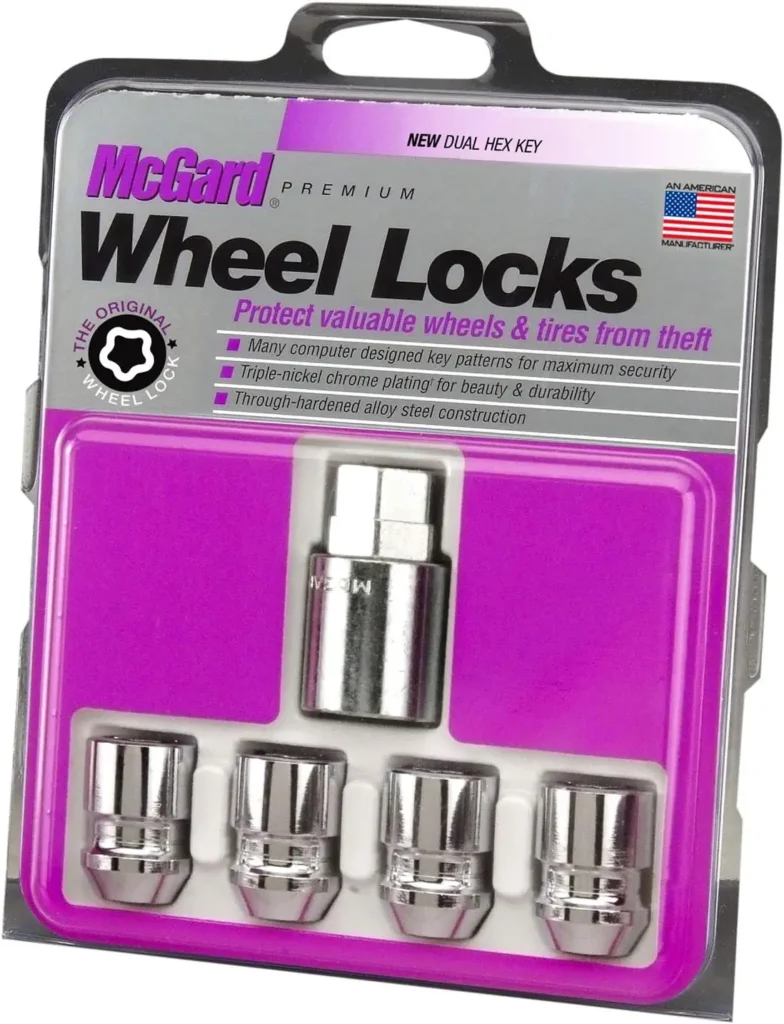
McGard 24157 Chrome Wheel Lock Set, Cone Seat, M12x1.5 Thread, 13/16 Key Hex
Image Credit: Amazon
Lug nut locks are the most common type of wheel lock you’ll encounter. These replace one of the standard lug nuts on each wheel with a uniquely patterned, keyed lug nut. To the untrained eye, they look almost identical to regular nuts—but the difference lies in their intricate design that requires a specific key to remove.
There are thousands of unique patterns for lug nut locks, making it nearly impossible for a thief to carry a master key for all types. This is what makes them particularly effective for everyday drivers. They’re affordable, easy to install, and provide a high level of security.
These locks come in various styles, including chrome and black finishes, so they blend well with different wheel designs. Most car owners opt for them because they strike a perfect balance between cost and effectiveness. Whether you’re rolling on factory wheels or flashy customs, lug nut locks offer an accessible solution to a serious problem.
Clamp Style Wheel Locks
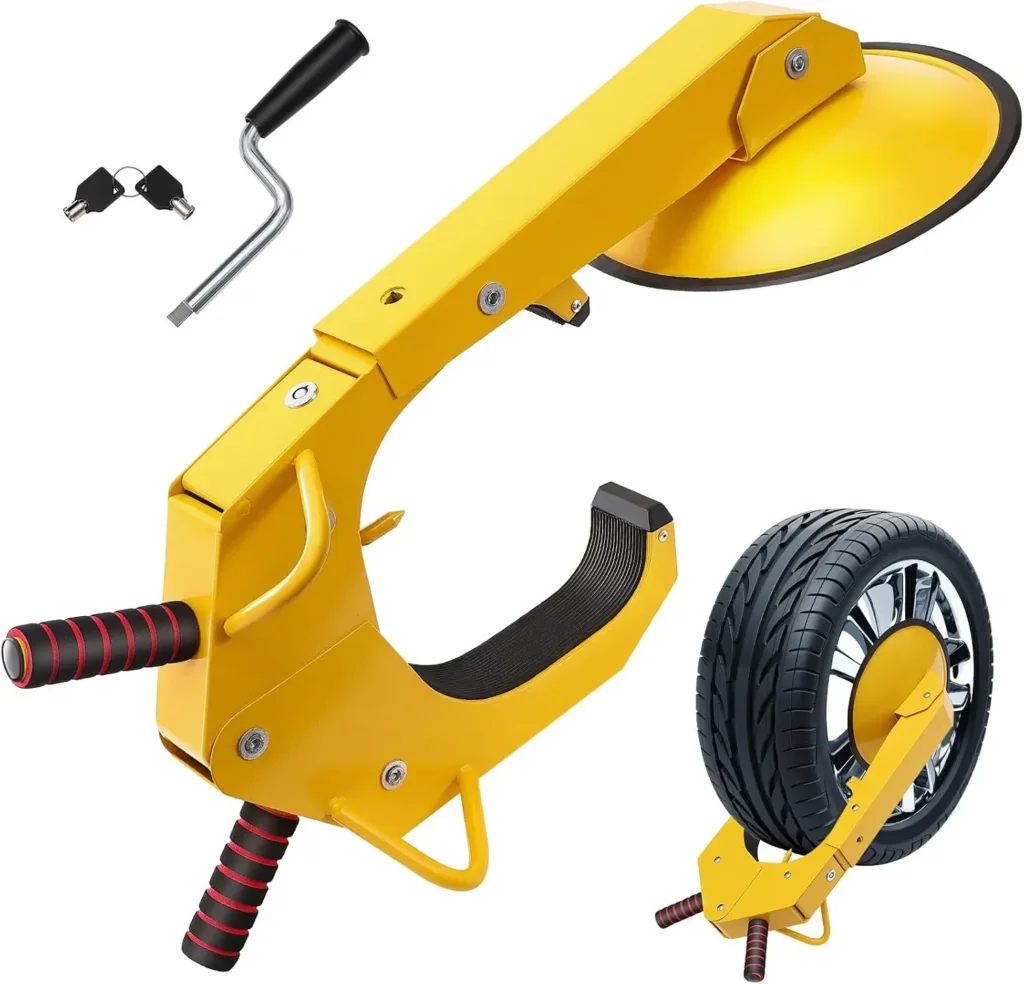
VEVOR Wheel Lock Clamp, 1 Pack Trailer Wheel Lock, Heavy-Duty Anti Theft Tire Lock, Adjustable Tire Boot Lock, Trailer Wheel Locks for RV Trailers, Cars, Trucks, SUVs
Image Credit: Amazon
If you’ve ever seen those big yellow clamps placed on cars for illegal parking, you’ve seen clamp-style wheel locks. But they’re not just for law enforcement—car owners use them too. These heavy-duty locks wrap around the tire and wheel, physically preventing the car from moving or the wheel from being removed.
Clamp locks are especially useful for RVs, trailers, and cars left unattended for long periods. They offer visual deterrence—their large and brightly colored design lets any thief know that the vehicle is secured.
While clamp locks are bulkier and take longer to install than lug nut locks, they offer a higher degree of physical security. The downside? They’re not exactly convenient for daily use. But if you’re leaving your car at the airport for a week or storing a vehicle for the winter, a clamp lock is a solid choice.
Hubcap Locks

MCGARD 24012 Cone Seat – Under Hub Cap Wheel Locks (M12 x 1.5 Thread Size) – Set of 4, Silver
Image Credit: Amazon
Though less common today, hubcap locks still serve a purpose for older vehicles or those with custom hubcaps. These locks prevent thieves from popping off your hubcaps and stealing them, which used to be a big issue in the ’90s and early 2000s.
Hubcap locks are small devices that latch onto the wheel and require a special key to release. They’re not designed to protect the whole wheel or tire—just the hubcaps. So if you’re riding with rare or high-end hubcaps, it’s worth considering.
While not the most modern option, they fill a niche in wheel protection for those with specific needs.
How Wheel Locks Work
The Mechanism Behind Wheel Locks
Wheel locks might look simple, but the engineering behind them is actually pretty clever. These devices use an internally or externally patterned head that matches a key tool—kind of like a puzzle piece. Only the correct key can grip the lock securely enough to turn and remove it.
When installed, the wheel lock sits flush against the wheel just like a normal lug nut. But unlike traditional nuts, wheel locks have a unique spline or groove design that makes them impossible to unscrew without the matching key. This means that even if a thief has every tool in the box, they won’t be able to crack your wheel lock without that specific pattern.
Most locks are made from hardened steel to resist cutting, drilling, or hammering. Some high-end models also feature spinning sleeves that make it nearly impossible for locking pliers or wrenches to get a grip.
Compatibility with Different Car Models
Wheel locks aren’t a one-size-fits-all product. Different vehicles use different bolt patterns, thread sizes, and seating types (cone, flat, or ball seat). So, choosing the right wheel lock involves knowing your car’s specifications.
Most wheel lock manufacturers provide a compatibility guide or allow you to input your vehicle’s make and model to find the right fit. Some brands even offer OEM-specific wheel locks designed to match your factory lug nuts exactly in terms of appearance and performance.
It’s crucial to make sure the lock fits snugly and doesn’t interfere with your wheels or braking system. Improper fitment can cause wheel vibration, misalignment, or even damage your rims over time.
Benefits of Using Wheel Locks
Theft Deterrence
The biggest reason people install wheel locks is to prevent wheel theft—and they work. Thieves are opportunists. They’re not usually looking to spend 20 extra minutes trying to figure out how to remove a specialized lock. The mere presence of wheel locks can be enough to make them move on to an easier target.
This is especially true if you have expensive rims or custom wheels. These can be resold for hundreds or even thousands of dollars on the black market. Wheel locks act as an invisible guard dog—protecting your investment quietly but effectively.
Peace of Mind
Knowing your wheels are secured is a huge relief, especially if you park in unfamiliar or high-risk areas. Wheel locks provide peace of mind that’s hard to put a price on. Whether you’re at work, at home, or traveling, you don’t have to constantly worry about waking up to find your car on cinder blocks.
Many drivers, particularly those with luxury or sports cars, consider wheel locks a must-have for peace of mind alone. They allow you to focus on the road ahead rather than worrying about what’s happening in the parking lot.
Insurance Benefits
Some insurance providers recognize wheel locks as a valid anti-theft device. While not all will give you a direct discount, many may factor them in when assessing your vehicle’s risk profile. This could mean lower premiums or better terms if you ever need to file a theft-related claim.
If you’re leasing or financing your car, wheel locks can also be a smart move to avoid penalties or charges in the event of wheel damage or theft. It’s a proactive measure that pays off in more ways than one.
Drawbacks of Wheel Locks
Potential Inconveniences
While wheel locks are undeniably helpful, they’re not without their downsides. One of the most common complaints? The hassle of keeping track of the key. Lose it, and you could find yourself stranded, especially during a flat tire emergency.
They can also make tire rotation or replacement a bit more cumbersome. Every time a mechanic needs to remove your wheels, they’ll need the wheel lock key. Forget to bring it along, and your quick service trip just got delayed.
In cold weather, wheel locks can also freeze up or corrode if not properly maintained. While most are built tough, poor weather conditions and lack of lubrication can lead to problems down the line.
What Happens If You Lose the Key?
This is the nightmare scenario: you need to remove a tire but can’t find the wheel lock key. Fortunately, it’s not the end of the world. Most lock manufacturers offer replacement keys—but you’ll need the code that came with your lock set, or the lock’s serial number, to order one.
If you don’t have the code, a dealership or tire shop may be able to remove the lock, but it’s not guaranteed and could cost you. In the worst-case scenario, they might have to drill it out, which could damage the rim or stud.
To avoid this issue, always store the key in a consistent, accessible place—like the glovebox or spare tire compartment. Some people even tape it to the inside of their trunk lid as a backup.
How to Choose the Right Wheel Lock for Your Car
Key Factors to Consider
Choosing the right wheel lock isn’t just about picking the first set you find online. It’s about ensuring your wheels are truly protected without causing inconvenience or damage. There are a few critical factors you should always consider before making a purchase.
1. Vehicle Compatibility:
Every car has a unique set of specifications—bolt pattern, thread size, and seat type. If your wheel lock doesn’t match these specs, you’re not only risking poor performance but potentially damaging your wheels. Always check your car’s manual or consult with your tire dealer before buying.
2. Locking Mechanism:
Not all wheel locks are created equal. Some use spline-style keys, others use patterned sockets. Look for a set with a deep, complex pattern that makes it difficult for thieves to copy or force open.
3. Durability and Material:
Go for hardened steel or treated alloys that resist drilling, rust, and breaking. Cheaper locks might look tough, but under pressure, they can crack or strip easily.
4. Ease of Use:
The lock should be easy enough for you (or a mechanic) to remove but impossible for a thief without the right key. Make sure the key is ergonomic and fits snugly in the lock pattern.
5. Aesthetic Match:
If you’ve got stylish rims, you don’t want an ugly, out-of-place lug nut ruining the look. Many manufacturers offer black or chrome finishes to blend in seamlessly with your wheel design.
In short, don’t rush the decision. Spend a little more on a trusted brand that suits your specific car—it’s a small price to pay for securing something so valuable.
Best Brands in the Market
There are several reputable brands in the wheel lock industry, but a few have consistently stood out for quality, innovation, and reliability. Here are some of the best ones to consider:
1. McGard:
McGard 24157 Chrome Wheel Lock Set, Cone Seat, M12x1.5 Thread, 13/16 Key Hex
Image Credit: Amazon
McGard is often the gold standard when it comes to wheel locks. Their products feature high-end steel construction, a precise thread match, and extensive design combinations. They also offer replacement key services and anti-theft guarantees.
- Pros:
- Exceptional build quality
- Wide range of unique key patterns
- Excellent customer support with key replacement service
- Trusted by OEM manufacturers
- Cost:
- Typically ranges between $25 to $60 depending on the set and vehicle type
2. Gorilla Automotive:
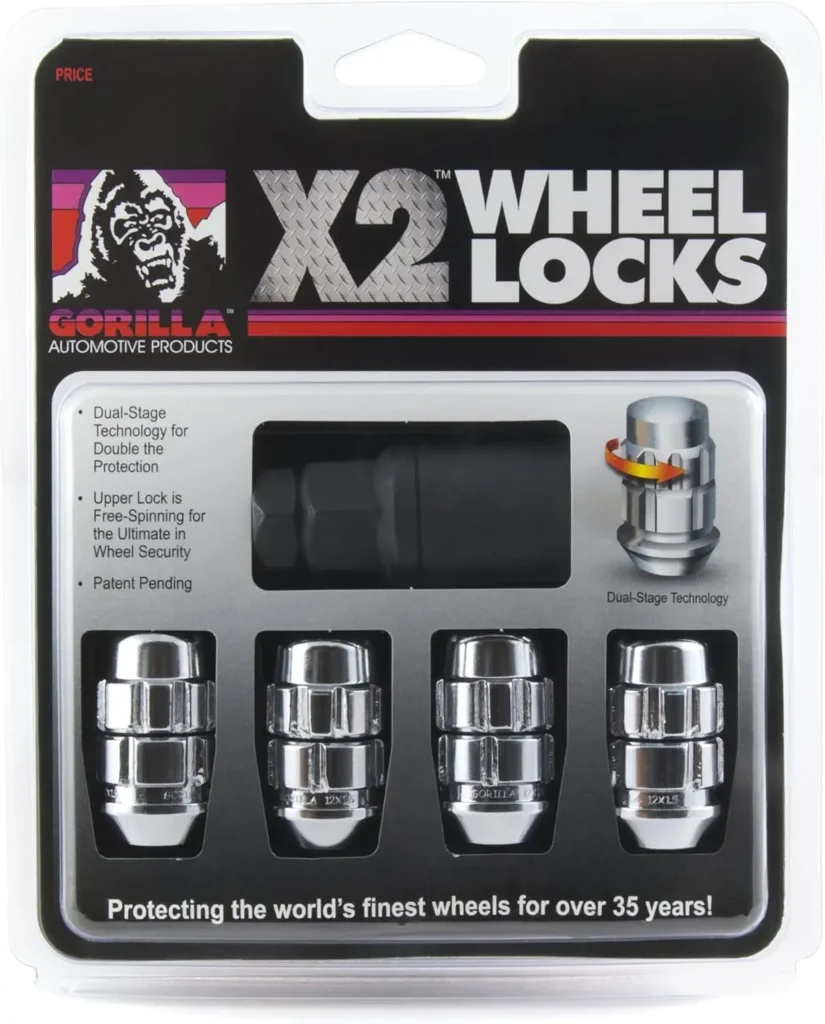
Gorilla Automotive (71631X) 12mm x 1.50 Thread Size Acorn Chrome X2 Wheel Lock, (Pack of 4)
Image Credit: Amazon
Another heavy hitter in the market, Gorilla Automotive offers locks with precision threading and a triple chrome plating process that enhances durability and corrosion resistance.
- Pros:
- High-strength construction
- Triple chrome plating resists rust
- Easy-to-use key design
- Long track record of reliability
- Cost:
- Usually priced from $20 to $50, depending on the finish and thread specs
3. Trimax:
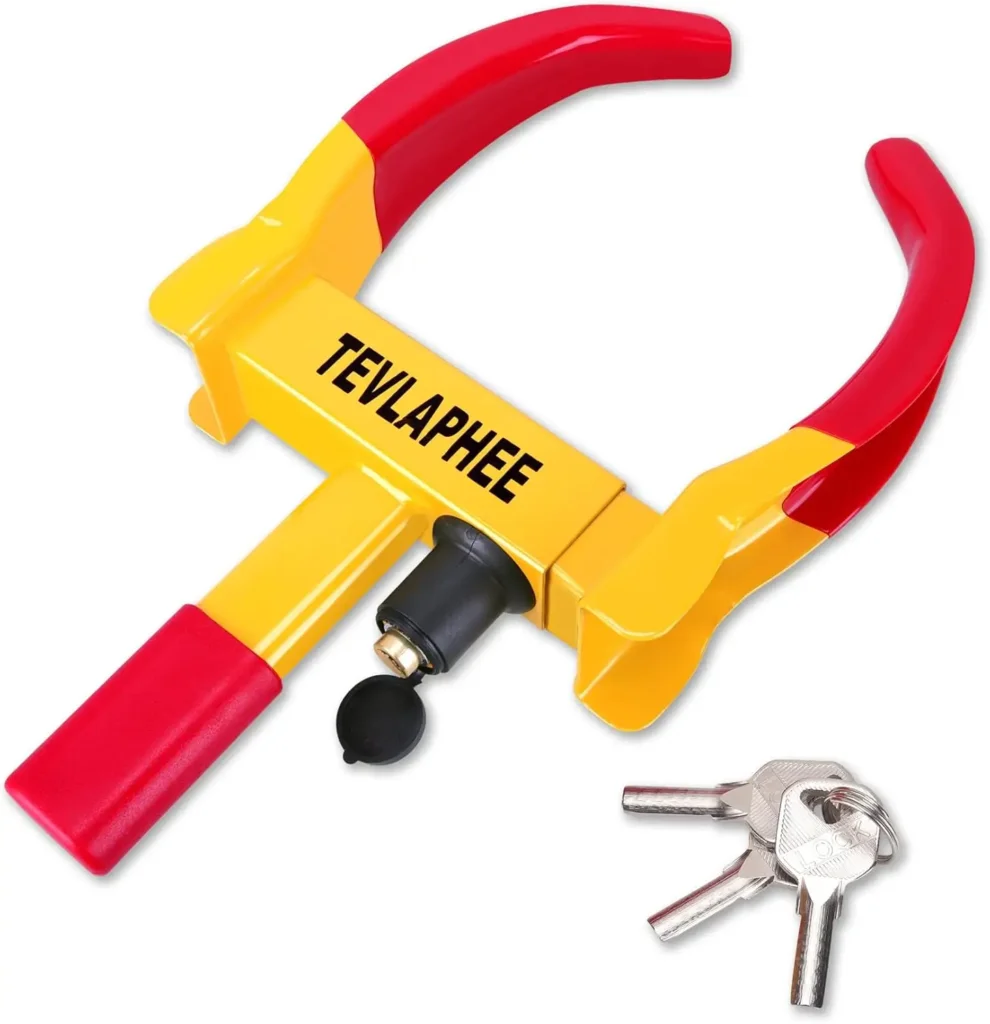
Trimax TCL75 – Trailer Wheel Lock – Fits 7″-11.25″ Tires – Wheel Boot Lock for Trailer, Car, Truck, Boat, ATV, Camper, and More
Image Credit: Amazon
Known more in the RV and trailer world, Trimax makes heavy-duty clamp-style locks. If you’re looking to secure a parked vehicle long-term, their products are worth a look.
- Pros:
- Visible deterrent with robust design
- Ideal for RVs, trailers, and trucks
- Simple yet effective locking system
- Weather-resistant finish
- Cost:
- Typically ranges between $40 to $90, especially for larger wheel clamp locks
4. DPAccessories:
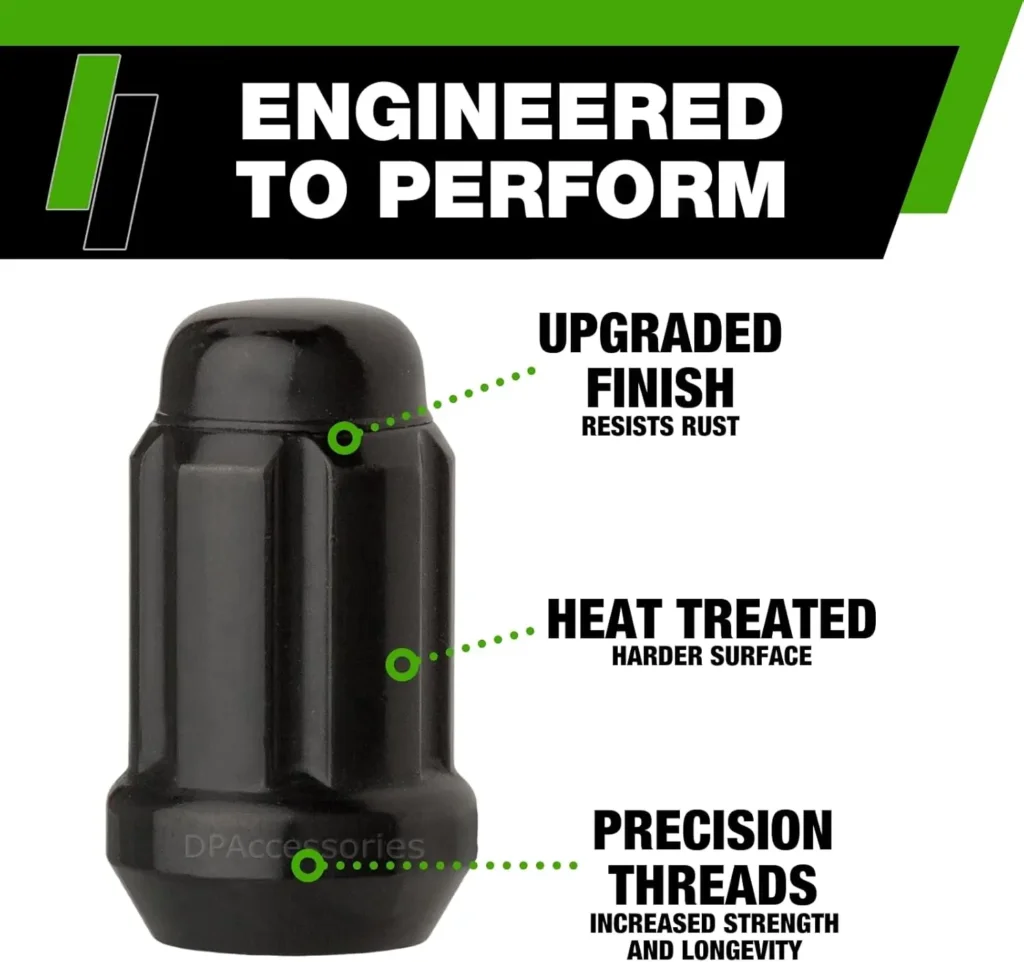
DPAccessories Chrome 1/2-20 Lug Nut Locks | Bulge Acorn | 36mm (1.4″) Tall | 19mm (3/4″) & 21mm (13/16″) Hex | Set of 4 Locks / 1 Key | LCB3L2HC-CH04LK4
Image Credit: Amazon
Perfect for everyday drivers, DPAccessories provides wheel locks that balance price, performance, and style. Their colored lug nuts also make them a favorite among car enthusiasts.
- Pros:
- Affordable and stylish
- Wide color and finish variety
- Good fit for daily drivers
- Decent protection at lower price
- Cost:
- Most sets cost between $15 to $35, making them a budget-friendly option
5. VEVOR:
VEVOR Wheel Lock Clamp, 1 Pack Trailer Wheel Lock, Heavy-Duty Anti Theft Tire Lock, Adjustable Tire Boot Lock, Trailer Wheel Locks for RV Trailers, Cars, Trucks, SUVs
Image Credit: Amazon
VEVOR Wheel Lock Clamp:
VEVOR is known for producing industrial-grade equipment at budget-friendly prices, and their wheel lock clamps are no exception. Designed to immobilize your wheel entirely, this clamp provides a strong visual and physical deterrent for thieves. With heavy-duty steel construction and an anti-rust coating, it’s ideal for long-term outdoor use.
- Pros:
- Bright yellow and red colors serve as an effective visual warning
- Heavy-duty build can withstand sawing and prying attempts
- Adjustable fit to accommodate a wide range of tire sizes
- Weather-resistant materials suitable for year-round protection
- Comes with protective soft coating to prevent rim damage
- Cost:
- Typically priced between $35 to $65, depending on size and model variant
Installation of Wheel Locks
Step-by-Step Guide
Installing wheel locks is easier than most people think—and you don’t have to be a mechanic to do it. Here’s a step-by-step guide to get you started:
1. Gather Your Tools:
You’ll need your wheel lock set, the key that came with it, a tire iron or torque wrench, and possibly a jack if you want to rotate tires while you’re at it.
2. Loosen the Existing Lug Nut:
Use your tire iron to loosen (not fully remove) one lug nut on each wheel. Don’t jack up the car just yet—do this while it’s still on the ground for better stability.
3. Replace with the Locking Lug Nut:
Now, take out the regular lug nut and screw in the locking lug nut in its place. Use the provided key tool to tighten it securely.
4. Torque to Specification:
If you have a torque wrench, tighten the wheel lock to the manufacturer’s recommended torque specs. This ensures it’s neither too loose (which can cause vibration) nor too tight (which can damage the stud).
5. Repeat for Each Wheel:
Do this for all four wheels. Usually, you’ll only replace one lug nut per wheel with a lock, but always follow the instructions included in your lock set.
6. Store the Key Safely:
Keep the lock key in your glovebox, trunk, or a magnetic box under your car. Just don’t leave it at home!
Installing wheel locks takes about 15–30 minutes and gives you lasting protection—definitely time well spent.
DIY vs. Professional Installation
While installing wheel locks is a straightforward process, not everyone feels comfortable working on their car. Here’s how DIY compares to professional installation.
DIY Pros:
- Cost-effective: No need to pay for labor.
- Quick: You can do it at home in under half an hour.
- Convenient: No need to schedule a shop visit.
DIY Cons:
- Risk of improper installation: If you don’t torque them correctly, it might lead to vibration or even damage.
- Tool limitations: You need a decent wrench and possibly a jack.
Professional Pros:
- Expertise: Mechanics know how to install wheel locks properly and safely.
- Inspection bonus: They might spot other tire or wheel issues while installing the locks.
- Time-saving: Great if you’re already in for a tire rotation or new rims.
Professional Cons:
- Cost: You’ll pay for both parts and labor.
- Scheduling: You’ll need to make an appointment and possibly wait.
In the end, if you’re confident and careful, DIY is a great choice. But if you’re unsure, spending a little extra on professional help can give you peace of mind.
Maintenance and Care Tips
Keeping Your Lock and Key Safe
The wheel lock is only as good as your ability to remove it when necessary. That’s why caring for the lock and especially the key is crucial.
1. Store the Key Smartly:
Avoid throwing the key in your glovebox loose—it can get lost easily. Use a small bag or container to keep it safe. Better yet, secure it in the spare tire compartment or tape it inside your trunk.
2. Keep a Spare:
Some manufacturers allow you to order a second key using the unique code that comes with your wheel lock set. Store the backup at home in a secure place. This saves you from disaster if your main key gets lost.
3. Clean Regularly:
Dirt and grime can accumulate on wheel locks, especially in winter. Every month or so, remove them, wipe them down with a clean rag, and apply a light coat of anti-seize or rust preventative spray.
4. Check Tightness:
Over time, wheel locks can loosen—especially after tire rotations or pothole impacts. Re-torque your locks to spec after any service, or check them periodically just to be safe.
5. Inspect for Damage:
Look for stripped threads, rust, or dents. Damaged wheel locks can fail under pressure or be easier to tamper with. Replace them at the first sign of wear.
Preventing Rust and Wear
Rust is the number one enemy of any metal part on your vehicle, and wheel locks are no exception. Here’s how to prevent rust from forming and wearing out your wheel locks prematurely:
- Use Anti-Seize Compound: Apply a small amount of anti-seize lubricant to the threads during installation. This prevents moisture from settling and makes future removal easier.
- Wash Wheels Regularly: Salt, dirt, and moisture build up quickly—especially in snowy or coastal areas. Washing your wheels every couple of weeks can go a long way in rust prevention.
- Avoid Over-tightening: Using too much force can strip the threads or warp the lock. Always use a torque wrench to get the right tension.
- Choose Quality Materials: High-quality wheel locks are made from treated or stainless steel that naturally resists rust. Don’t go cheap on this component—your wheels depend on it.
Common Myths About Wheel Locks
Are They Really That Effective?
Let’s be honest—nothing is 100% theft-proof. But saying wheel locks are useless is like saying car alarms don’t stop car theft. The truth is, they’re not about being invincible; they’re about being a deterrent.
Most wheel thieves are looking for quick hits. They’ll scout for unprotected cars and avoid anything that requires extra effort, time, or special tools. A quality wheel lock is enough of a hurdle to make them think twice and move on.
Yes, a professional thief with the right tools and plenty of time could theoretically bypass a wheel lock—but that’s a rare situation. For the average criminal, wheel locks are a major buzzkill.
Do They Damage Your Wheels?
Some drivers worry that wheel locks might harm their rims or affect the balance of their wheels. This is usually a concern only when using low-quality or poorly fitted locks.
When installed correctly and matched properly to your vehicle’s specs, wheel locks are just as safe as standard lug nuts. They won’t strip your studs, warp your wheels, or throw off your tire balance.
Problems usually arise when people buy generic sets without checking seat type or thread size. Always choose locks that match your wheel specs and torque them to the recommended level.
Also, avoid power tools when tightening or loosening locks—hand tools give you better control and prevent accidental damage.
Continuing with Step 3: Writing content for headings 11–15 (Cost of Wheel Locks through Expert Tips and Recommendations), each with 300–350+ words.
Cost of Wheel Locks
Price Range Overview
When it comes to wheel locks, you don’t have to break the bank to keep your wheels safe. These anti-theft devices are surprisingly affordable, especially considering the value they protect. That said, the price can vary significantly based on the brand, type, and material.
Standard lug nut wheel locks typically range from $20 to $50 for a set of four locks and a key. These are ideal for everyday drivers who want basic protection without compromising on quality. Top brands like McGard or Gorilla Automotive offer excellent mid-range options that last for years.
Clamp-style locks, often used for RVs, trailers, or long-term parking, are heavier-duty and more expensive. You’ll usually pay $60 to $120 for a single clamp lock, depending on its build and features.
High-security or custom-fit locks—like those made by OEMs for luxury or sports cars—can cost $80 to $150 or more. These are typically engineered for specific wheel designs, with added features like spinning sleeves or tamper-resistant grooves.
Don’t forget to factor in potential extra costs, such as:
- Replacement keys ($10–$25)
- Professional installation ($25–$50)
- Anti-seize lubricant or protective coatings
So, what’s the total investment? For most drivers, securing all four wheels with a quality set of locks can be done for under $75. That’s a small price to pay when you consider that replacing a stolen set of wheels can cost thousands.
Is the Investment Worth It?
Absolutely—wheel locks are one of the best bang-for-your-buck upgrades you can add to your vehicle. Think of it this way: would you leave your phone or laptop unattended without any security? Your wheels are worth even more, and they’re exposed 24/7.
The peace of mind alone is worth the cost. You get to sleep at night knowing your wheels are locked down. Plus, many people report lower insurance premiums or better claim responses when they can prove their vehicle had security measures in place.
There’s also the psychological advantage. Just seeing wheel locks can stop a thief in their tracks. They know it’s not going to be a five-minute job. That mental barrier often makes all the difference.
Sure, they come with minor inconveniences—like storing the key or remembering to bring it to the shop—but those are small trade-offs for the protection you gain.
So yes, wheel locks are not just worth it—they’re essential.
Are Wheel Locks Enough to Prevent Theft?
Additional Security Measures to Consider
While wheel locks are a great first line of defense, it’s important to understand that no single security measure is foolproof. Smart car owners layer their defenses to make theft as inconvenient and time-consuming as possible.
Here are a few extra measures to consider alongside wheel locks:
- Alarm Systems:
Many modern vehicles come equipped with alarm systems that trigger if the car is lifted or jostled. If your car doesn’t have one, consider investing in a good aftermarket system. - Surveillance Cameras:
Parking under a camera—whether it’s a doorbell cam, public CCTV, or a home security system—adds another layer of deterrence. Thieves don’t like to be watched. - Wheel Clamps for Long-Term Parking:
If you plan on leaving your vehicle parked for days or weeks, a wheel clamp adds another visible layer of protection. These are especially useful for trailers and RVs. - Motion-Sensing Lights:
Parking in a dark spot? Motion-sensing floodlights are a great way to scare off potential thieves who rely on shadows for cover. - Etching Your VIN on the Wheels:
This makes it harder for thieves to resell stolen wheels and helps law enforcement identify them.
Think of wheel locks as the front door lock on your house. It’s essential, but you wouldn’t rely on just that—you’d add deadbolts, cameras, and maybe even a guard dog. The same idea applies to vehicle protection.
Layering Your Car’s Security
The concept of layered security isn’t new—it’s what banks, military bases, and even your smartphone use to stay safe. The more barriers you put between a thief and your valuables, the less likely they are to succeed.
Here’s a good example of a layered setup for your vehicle:
- Primary Layer: Wheel locks on each tire
- Secondary Layer: Car alarm system with vibration sensors
- Tertiary Layer: Security cameras in your parking area
- Bonus Layer: Visible deterrents like wheel clamps or signs warning of surveillance
Each layer doesn’t just physically block theft—it increases the time, effort, and risk involved for the criminal. And that’s often enough to make them skip your ride entirely.
So, while wheel locks are a powerful deterrent, they’re best used as part of a comprehensive vehicle security strategy.
Real-Life Stories: Wheel Locks in Action
Success Stories
Ask anyone who’s had their rims saved by wheel locks, and they’ll tell you: these things really work.
One common thread in real-life stories is that thieves tried to steal the wheels but gave up when they encountered the locks. A Toyota Supra owner in Los Angeles shared his story in a car forum, noting that after parking overnight on the street, he returned to find three of his wheel bolts loosened—but the wheel lock was untouched. No damage, no theft—just a near miss.
Another success story comes from a family who regularly parks their SUV in a high-theft area of Chicago. After getting their neighbor’s wheels stolen, they installed McGard locks. Six months later, someone attempted to jack the car—only to abandon the attempt once they saw the locks.
These aren’t just anecdotes; they’re proof that wheel locks work in the real world. They’re not theoretical deterrents—they’ve actively stopped crimes.
Lessons Learned from Theft Attempts
Not every story ends perfectly, though. Some drivers learned hard lessons that emphasize the importance of using wheel locks correctly.
A Honda Civic owner once had his wheels stolen because he only installed two locks—on the front wheels. Thinking the back wheels weren’t at risk, he left them vulnerable. The thieves took both rear tires.
Others have shared stories of losing their wheel lock key—right when they had a flat tire on a road trip. The lesson? Always keep your key in a secure, consistent place and consider ordering a spare.
Some even discovered that their wheel locks were installed improperly—either over-tightened or cross-threaded—which made removal a nightmare during service appointments.
What’s the takeaway? Wheel locks are highly effective—but only when installed properly, used on all wheels, and paired with smart habits like key storage and regular inspection.
Expert Tips and Recommendations
From Mechanics
Mechanics deal with wheel locks all the time, and they’ve seen the good, the bad, and the ugly. Here’s what the pros recommend:
- Always torque to spec: Over-tightening is a common mistake. It damages the lock and the stud and can lead to vibration issues.
- Bring the key to every appointment: You’d be shocked how many people forget their lock key when getting tires rotated. Save yourself time and hassle by making it a habit.
- Avoid cheap sets: Cheap wheel locks strip easily and don’t hold up to corrosion. Stick with brands like McGard, Gorilla, or OEM options.
- Use anti-seize: A dab of anti-seize compound during installation can save you hours of frustration down the line.
From Car Security Experts
Security experts approach the problem from a criminal psychology standpoint. Their insights are just as valuable:
- Visible deterrents matter: Most thieves decide within seconds whether to target a vehicle. Wheel locks, visible cameras, or even warning decals can make your car seem too risky.
- Change your parking routine: Don’t park in the same spot or direction every time. Predictability makes you an easy target.
- Monitor your neighborhood: If wheel theft is on the rise locally, take extra precautions. Join community forums or apps that report suspicious activity.
Their bottom line? Thieves don’t like resistance. Your goal is to make your car more trouble than it’s worth.
Conclusion
In a world where vehicle theft is becoming more sophisticated and frequent, wheel locks offer a simple, affordable, and effective way to add an extra layer of protection. Whether you drive a modest sedan, a tricked-out muscle car, or a luxury SUV, the risk of wheel theft is real—and often expensive. Wheel locks act like silent security guards for your tires and rims, always on duty whether you’re at work, home, or out on the road.
What makes wheel locks so compelling is their balance between simplicity and effectiveness. They’re easy to install, require minimal maintenance, and do not interfere with your daily driving experience. At the same time, they pose a significant challenge to anyone trying to steal your wheels. They’re not magic, and they won’t stop a professional thief with endless tools and time. But for the average crook looking for a quick payday? Wheel locks scream, “Move along.”
More importantly, wheel locks aren’t just about theft prevention—they’re about peace of mind. Knowing your wheels are protected every time you park allows you to enjoy your car without the added stress. Plus, they may save you money through insurance perks and by avoiding the hefty costs of replacing stolen wheels.
As with any security measure, they work best when used as part of a layered approach. Combine them with visible deterrents, alarm systems, proper lighting, and a smart parking strategy, and you’ve created a fortress on four wheels.
So, if you’re on the fence about whether to get wheel locks, take this as your sign. They’re affordable, effective, and essential for anyone who values their vehicle. Protect your ride—and your wallet—by locking down your wheels before someone else tries to take them.
FAQs
1. Do all cars need wheel locks?
Technically, no—but they’re highly recommended. While some economy cars may not attract wheel thieves, vehicles with custom rims, alloy wheels, or performance tires are prime targets. Even stock wheels can be worth hundreds on the resale market. So regardless of the make or model, if you want to protect your investment, wheel locks are a wise choice.
2. Can thieves break wheel locks?
Yes, with the right tools and enough time, a determined thief could break almost anything—including wheel locks. But the point of wheel locks is to deter the average thief by adding time, effort, and risk. Most criminals don’t carry specialized tools for every lock type and are looking for an easy score. Wheel locks significantly reduce your chances of being targeted.
3. What should I do if I lose my wheel lock key?
First, check if you still have the lock’s serial number or the original packaging—it often includes a key code. With that, you can contact the manufacturer for a replacement. No code? Visit your dealership or a tire shop; they may be able to remove the lock using specialized tools. Pro tip: order a backup key when you first buy your locks and store it somewhere safe at home.
4. Are wheel locks a one-time purchase?
Yes, for the most part. Once installed, wheel locks don’t need frequent replacement. However, like any part exposed to the elements, they can wear out over time, especially if not maintained. Inspect them periodically for signs of rust or stripping, and replace them if you notice damage. Keep your lock key clean and lubricated for smooth performance.
5. Will dealerships install wheel locks for me?
Absolutely. Most dealerships offer wheel lock installation as an optional upgrade—sometimes even as part of a new car purchase. They’ll ensure the correct fitment, torque the locks properly, and even register the key code for future use. If you’re unsure about installing them yourself, this is a great way to get professional help without hassle.