
Introduction
Choosing the right set of tires for your vehicle isn’t just a technical decision it’s about your safety, your comfort, and even your wallet. Tires are the only part of your car that actually touch the road, and that connection determines how well you brake, corner, and accelerate. When the temperatures drop and the roads get slippery, the debate between winter tires and all season tires becomes a hot topic among drivers.
If you’ve ever found yourself wondering whether you should invest in a set of winter tires or stick with all-seasons, you’re not alone. Each tire type has its strengths and weaknesses, and the right choice depends heavily on where you live and how you drive. In this article, we’ll explore the major differences between winter and all-season tires breaking down everything from performance and durability to cost and comfort so you can make an informed decision the next time you’re due for a tire change.
Understanding Tire Types
Not all tires are created equal. While they may all look round and black, their internal construction, tread design, and rubber composition vary dramatically. These differences determine how a tire performs in various weather conditions whether it’s the blazing heat of summer, the pouring rain of spring, or the icy chill of winter.
Broadly speaking, tires are categorized based on seasonal performance: summer, winter, and all-season. Summer tires are optimized for dry and wet warm-weather performance but lose grip below 7°C (45°F). Winter tires, on the other hand, are specially made to perform when the temperature drops below that threshold. All-season tires attempt to bridge the gap, offering balanced performance throughout the year but with compromises on both ends.
Understanding how these tires differ is crucial, especially if you live in a region with distinct seasons. Let’s break down what makes each tire type unique.
What Are Winter Tires?

- Three Peak Mountain Snowflake certified
- Can be pinned with TSMI #11 studs, where permitted, for extra traction in severe ice and snow
- Wide block in the center of the tread provides improved snow and ice traction
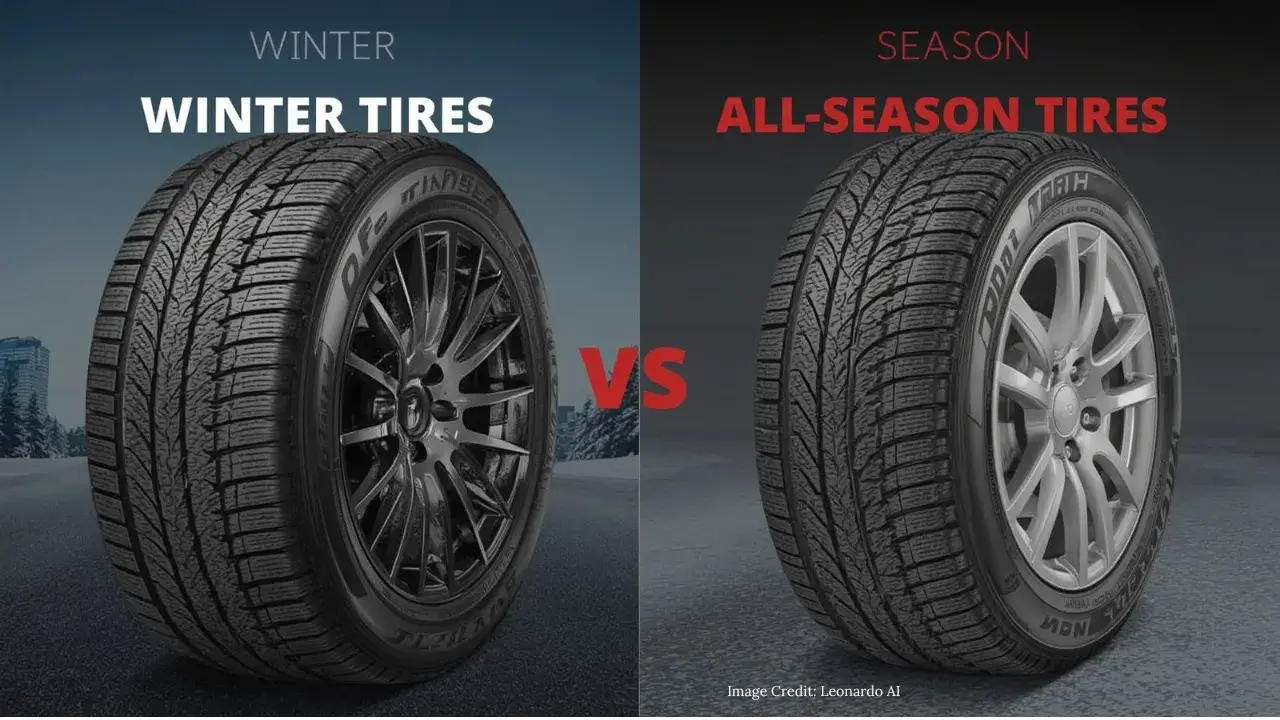
Winter tires, often referred to as snow tires, are purpose-built for cold-weather driving. Unlike all-season tires, they’re engineered with a softer rubber compound that remains flexible even in freezing temperatures. This flexibility allows the tire to maintain better contact with the road surface, resulting in superior traction and handling.
The tread pattern of winter tires is another standout feature. Deep grooves, biting edges, and sipes (tiny cuts in the tread blocks) work together to grip snow, ice, and slush. Some winter tires even have studs small metal pins embedded in the tread to dig into icy surfaces for added control.
Beyond traction, winter tires also excel in braking. Studies show that a vehicle equipped with winter tires can stop up to 30–40% shorter on snowy or icy roads than one with all-season tires. That difference can literally mean the difference between a close call and a collision.
In short, winter tires are your best bet if you regularly face temperatures below 7°C (45°F), or if your region experiences consistent snowfall or ice-covered roads.
What Are All-Season Tires?

- Size: 225/65R17, Tire Only – Wheel/Rim Not Included. We offer a complimentary Road Hazard Warranty for each of our tires…
- True All-Terrain Capability: An all-terrain tire specifically engineered for SUVs ensuring comfortable on-road driving e…
- Large Shoulder Blocks: Unique shoulder and tread blocks with optimized siping enhance handling and stability. Meticulous…
All-season tires are designed for versatility. They’re meant to provide reliable performance across a variety of weather conditions dry, wet, and light snow. Their rubber compound is engineered to remain moderately flexible in both warm and cool temperatures, though not as extreme as winter or summer tires.
These tires usually have a symmetrical tread pattern designed to balance traction, fuel efficiency, and comfort. While they can handle light snow and cool temperatures, they start to lose effectiveness once the mercury dips below freezing. Their tread compound hardens, reducing grip and extending braking distances.
That said, all-season tires shine in mild to moderate climates where temperatures rarely stay below freezing for long periods. If you live somewhere that only sees the occasional snowfall or where winter is more wet than icy, all-season tires might be all you need.
However, remember that “all-season” doesn’t mean “all-weather.” They’re a compromise solution a jack of all trades but a master of none.
Performance in Different Temperatures
Temperature plays a critical role in how well your tires grip the road. Think of your tires as athletes each one trained for specific weather conditions. A winter tire performs like a seasoned skier on a snowy slope, while an all-season tire is more like a casual jogger good at many things but not exceptional in any extreme.
Winter tires are made from a special rubber compound that remains soft and pliable even in freezing temperatures. This flexibility allows the tread to conform to the uneven texture of icy or snowy roads, maximizing traction. On the flip side, when you use them in warmer weather, that same softness can become a disadvantage the tires can feel “mushy,” wear out faster, and reduce handling precision.
All-season tires, in contrast, are designed with a harder compound that can withstand heat and moderate cold. They maintain decent performance across a wide temperature range, but when temperatures drop below 7°C (45°F), the rubber starts to stiffen. This stiffness reduces grip, making braking distances longer and cornering less stable.
If you live in an area where winters are mild and snow is rare, all-season tires will perform adequately. But if your winter includes icy mornings, snow-covered roads, or prolonged cold spells, winter tires are the safer and smarter option.
Traction and Handling on Snow and Ice
When it comes to snow and ice, traction is everything. Imagine trying to walk across an icy driveway in regular sneakers versus snow boots the difference is night and day. The same principle applies to tires.
Winter tires feature deep, aggressive tread patterns with numerous sipes that act like claws, biting into the snow for maximum traction. These sipes channel away slush and grip onto microscopic irregularities in ice, helping your car accelerate, brake, and corner with confidence. All-season tires, meanwhile, have fewer and shallower grooves, which simply can’t provide the same level of grip.
Studies from automotive safety organizations consistently show that vehicles equipped with winter tires outperform those with all-seasons in snowy and icy conditions. On average, braking distances on ice can be reduced by up to 25–30% when using winter tires. That’s the difference between stopping safely at an intersection and sliding through it.
Even in light snow, winter tires deliver more control. They allow for smoother acceleration, more predictable steering, and significantly better braking response. If your region gets regular snowfall or icy mornings, all-season tires just won’t cut it for optimal safety.
Wet and Dry Road Performance
Let’s not forget about rainy days and slushy roads conditions that challenge even the best tires. Both winter and all-season tires handle wet surfaces differently, thanks to their tread designs and rubber compounds.
All-season tires are optimized for wet traction in moderate climates. Their tread features channels that effectively evacuate water, reducing the risk of hydroplaning. They perform admirably on both wet and dry roads, offering balanced grip and responsive handling in spring and fall seasons.
Winter tires, on the other hand, are engineered to manage the mix of snow, slush, and cold rain that comes with winter. Their deeper grooves and open tread patterns push water and slush away from the tire’s contact patch. However, in warm wet conditions, winter tires can feel less stable, as their softer rubber and deeper treads can slightly reduce road contact and precision.
In dry conditions above 7°C (45°F), all-season tires have a clear edge they provide sharper handling and better braking on asphalt. But as temperatures drop or the roads become slick with ice or slush, winter tires take the lead in both traction and safety.
Tread Life and Durability
Tread life is where the debate between winter and all-season tires becomes a bit more complicated. While both tire types can last several years, their longevity depends heavily on how and when they’re used.
Winter tires, due to their softer rubber compounds, tend to wear out faster when used in warm weather. The extra grip they provide in cold conditions comes at the cost of durability under higher temperatures. Using winter tires year-round can cut their lifespan by half and result in uneven tread wear.
All-season tires, on the other hand, are built with a harder rubber compound that’s more resistant to wear. They typically last longer often between 50,000 to 70,000 miles making them a practical choice for drivers in mild climates. However, in freezing temperatures, the rubber hardens and can crack over time, reducing both traction and longevity.
To maximize tread life, it’s best to use each tire type in its intended season. Rotate them regularly, maintain proper air pressure, and store your unused tires correctly in a cool, dry environment. Doing so can extend their life and save you money in the long run.
Fuel Efficiency and Rolling Resistance
Fuel economy isn’t always the first thing drivers think about when choosing tires, but it’s an important factor. The type of tires you run can impact your vehicle’s rolling resistance essentially how much energy it takes for your tires to roll.
All-season tires generally have lower rolling resistance thanks to their harder compound and shallower tread depth. This means your engine doesn’t have to work as hard, translating into better fuel economy. For long-distance commuters or highway drivers, this can result in noticeable fuel savings over time.
Winter tires, by contrast, have deeper tread blocks and softer rubber, which increase rolling resistance. While this provides superior grip in cold and slippery conditions, it also means your vehicle may consume slightly more fuel during winter months. The difference isn’t huge, but it’s worth noting if you’re trying to maximize efficiency.
To balance safety and savings, many drivers switch between tire sets seasonally. Using winter tires only during cold months and swapping back to all-seasons in spring helps preserve both tire life and fuel efficiency.
Comfort and Noise Levels
Comfort and noise might seem like minor details when choosing between winter and all-season tires, but anyone who spends hours on the road knows how big of a difference they can make. Tire noise and ride comfort depend on tread design, rubber composition, and how well the tires absorb road imperfections.
All-season tires generally offer a smoother and quieter ride. Their tread design is optimized for comfort, with fewer and shallower grooves that minimize the amount of air trapped between the tread blocks. This reduces the “hum” or “whir” sound that can come from aggressive treads. Additionally, their harder rubber compound tends to handle well on dry roads, providing consistent steering response and reduced vibration.
Winter tires, on the other hand, often produce more road noise. Their deep treads and sipes create additional air movement, which leads to that distinctive “whining” sound when driving on pavement. Some studded winter tires can be even noisier due to the metal studs making contact with the road surface. However, that extra noise comes with a trade-off enhanced safety and control on ice and snow.
Comfort-wise, winter tires can feel a bit softer or “bouncy” compared to all-seasons, especially at higher speeds on dry roads. This is due to their flexible rubber compound and deeper tread depth. However, when you’re navigating snow-covered streets, that same flexibility absorbs bumps and gives a more stable, cushioned ride.
Ultimately, if quietness and a smooth driving experience matter most to you and your winters are mild then all-season tires might be your go-to. But if you value grip and control over silence when roads get treacherous, winter tires are the clear choice.
Cost Comparison
Let’s be honest budget is always a deciding factor. While safety is priceless, it’s still important to understand how the financial side plays out between winter and all-season tires.
All-season tires are often more affordable upfront since they serve as a one-set solution. You can use them year-round, saving the hassle (and cost) of seasonal tire changes or storage. The average cost for a set of all-season tires ranges from $400 to $800, depending on brand and vehicle type.
Winter tires, on the other hand, usually cost about the same per set but require you to buy two sets of tires overall one for winter, one for the rest of the year. Additionally, you’ll need to factor in the cost of swapping them each season (usually $50–$100 per change) and storage if you don’t have space at home. Over time, though, the cost tends to balance out because you’re dividing mileage between two sets.
Here’s a quick breakdown for clarity:
| Expense Type | All-Season Tires | Winter Tires |
|---|---|---|
| Initial Cost | $400–$800 | $400–$800 |
| Tire Change/Storage | None | $100–$200/year |
| Average Lifespan | 50,000–70,000 miles | 30,000–40,000 miles |
| Seasonal Usability | Year-round | Winter only |
| Long-term Value | Moderate | High (if properly rotated) |
While winter tires may appear more expensive at first, they can actually save you money in the long run by reducing wear on your all-seasons and lowering accident risks in winter conditions. Think of them as an investment in safety and peace of mind.
Climate and Driving Habits Matter
One of the most overlooked aspects of tire selection is your local climate and driving style. Tires that perform perfectly for someone in California might be completely unsuitable for a driver in Michigan.
If you live in an area with mild winters where temperatures rarely dip below freezing and snowfall is light then all-season tires are typically sufficient. They’ll give you solid traction in rain, decent performance in light snow, and smooth handling on dry roads. For example, cities like Atlanta, Dallas, or San Francisco are perfect candidates for all-season tires.
However, if you’re located in regions with harsh winters, such as the northern U.S., Canada, or northern Europe, winter tires are practically a necessity. They’re designed to handle snow, black ice, and prolonged cold weather with confidence. Driving through icy streets on all-season tires in these areas isn’t just risky it can be downright dangerous.
Driving habits also play a key role. If you frequently travel long distances, drive at high speeds, or live in rural areas with unplowed roads, the benefits of winter tires far outweigh the cost. City drivers who encounter mostly plowed and salted streets might find all-season tires sufficient, especially if their local climate is moderate.
In short: match your tires to your environment and your lifestyle. Your safety and your car’s performance depend on it.
Legal Requirements and Safety Standards
Here’s something many drivers overlook depending on where you live, winter tires might not just be a recommendation; they could be a legal requirement.
In several regions across North America and Europe, authorities mandate winter tires during certain months. For example, in Quebec, Canada, all passenger vehicles must have winter tires between December 1st and March 15th. Some European countries, like Finland and Norway, enforce similar rules, while others require them only when driving in snowy or icy conditions.
When buying tires, you’ll also notice certain markings on the sidewalls. Two key symbols to look for are:
- M+S (Mud and Snow): Indicates the tire meets basic standards for traction in light mud and snow.
- 3PMSF (Three-Peak Mountain Snowflake): This symbol certifies that the tire has passed rigorous snow-traction testing and is officially rated for severe snow conditions.
While all-season tires often carry the M+S symbol, only true winter tires have the 3PMSF marking. If you live where snow and ice are common, this is the badge of safety you want to see.
Failure to follow tire laws can lead to fines, but more importantly, non-compliance could void your insurance coverage in case of a winter accident. So always check your local regulations it’s not just about performance; it’s about legal protection and peace of mind.
Maintenance Tips for Both Tire Types

- Enjoy peaceful drives: optimized pitch design guarantees a quiet ride ,enhancing your driving experience. Size: 175/70R1…
- Premium Quality Backed by 5-Year Warranty: Rigorously tested and protected by 5-Year Limited Manufacturer’s Warranty. 50…
- All-season Performance: M+S Rated for year-round versatility, delivering dependable traction in rain, light snow, and va…
Regardless of whether you choose winter tires or all-season tires, maintenance is the key to maximizing their performance and lifespan. Even the best tire in the world will underperform if it’s neglected. Think of tire maintenance like regular exercise for your car it keeps everything running smoothly, safely, and efficiently.
1. Regular Tire Pressure Checks:
Tire pressure fluctuates with temperature changes. In colder months, pressure tends to drop about 1 PSI for every 10°F decrease in temperature. Underinflated tires can lead to poor handling, reduced fuel efficiency, and faster tread wear. Always check your tire pressure at least once a month, and more frequently when the seasons change. Refer to your vehicle’s manual for the correct PSI rating.
2. Tire Rotation:
Rotating your tires ensures that they wear evenly. Front tires tend to wear faster because they handle both steering and braking loads. Most manufacturers recommend rotating tires every 5,000 to 8,000 miles. Regular rotation extends tire life and maintains consistent performance across all four wheels.
3. Wheel Alignment and Balancing:
Misaligned wheels cause uneven wear and can lead to vibration or pulling to one side. Have your alignment checked if you notice irregular tread wear or if your steering wheel doesn’t sit straight. Balancing helps prevent vibrations at higher speeds and reduces stress on your suspension.
4. Cleaning and Storage:
If you use winter tires seasonally, proper storage is vital. Clean them thoroughly with mild soap and water to remove road salt, grime, and brake dust, all of which can damage rubber over time. Store them in a cool, dry place away from direct sunlight, preferably in airtight tire bags or stacked flat on a clean surface.
5. Inspect for Damage:
Before every winter or summer season, inspect your tires for cracks, bulges, or punctures. Check tread depth with a simple coin test if the tread is worn below 4/32″ for winter tires or 2/32″ for all-season tires, it’s time for a replacement.
By following these maintenance steps, you not only extend the life of your tires but also ensure your vehicle performs safely and efficiently no matter the weather.
Expert Recommendations and Real-World Scenarios
The tire industry is full of opinions, but one thing experts unanimously agree on is this: use the right tire for the right season.
Let’s take a closer look at what professionals and real-world drivers say about the debate between winter and all-season tires.
According to the Tire and Rubber Association of Canada, vehicles equipped with winter tires are involved in 38% fewer collisions than those using all-season tires in snowy or icy conditions. This isn’t just marketing hype; it’s a proven safety statistic. Automotive experts recommend winter tires for any region where temperatures regularly fall below 7°C (45°F), regardless of snowfall levels.
However, in cities with mild winters such as Portland, Washington, D.C., or London drivers often report satisfaction with all-season tires. They provide good year-round performance without the inconvenience of seasonal swaps. Fleet operators, for instance, often use high-quality all-season tires to minimize maintenance downtime while maintaining reasonable safety margins.
Another key factor experts highlight is driver awareness. Even the best winter tires can’t save you if you drive aggressively in snow or ice. Conversely, a cautious driver using all-season tires in mild conditions can remain perfectly safe. The combination of proper tire choice, regular maintenance, and responsible driving habits is what truly makes the difference.
In short: if you live in a snowy or icy region, invest in winter tires they’re worth every penny. If your winters are mild, a premium set of all-seasons can deliver a great balance of comfort, performance, and convenience.
Conclusion
Choosing between winter tires and all-season tires ultimately depends on one thing your climate and driving conditions. There’s no universal answer because both have their strengths.
Winter tires are engineered for freezing temperatures, icy roads, and snowy weather. Their flexible rubber compounds and deep tread patterns give you unmatched grip, shorter braking distances, and superior control when it matters most. They’re your best defense against winter’s unpredictability.
All-season tires, on the other hand, are built for versatility. They perform admirably in a wide range of conditions dry, wet, and light snow making them ideal for drivers in areas with mild winters. They save money, time, and space since you don’t have to swap or store them seasonally.
If you frequently face harsh winter conditions, there’s simply no substitute for dedicated winter tires. But if you enjoy relatively stable weather year-round, all-season tires are a smart, practical choice. Whatever you decide, remember that regular maintenance, proper inflation, and safe driving habits are what truly keep you on the road no matter what the forecast says.
FAQs
1. Can I use winter tires all year round?
Technically, yes but it’s not recommended. Winter tires wear out quickly in warm weather due to their soft rubber compounds. Using them in summer can reduce performance and shorten their lifespan. It’s best to switch back to all-season or summer tires when temperatures rise consistently above 7°C (45°F).
2. Are all-season tires safe in snow?
All-season tires can handle light snow and slush but struggle in deep snow or on ice. If your region gets heavy snowfall or freezing temperatures, winter tires provide significantly better traction and safety.
3. How often should I replace my tires?
Most tires last between 4 to 6 years, depending on driving habits and maintenance. Always check tread depth and sidewall condition regularly worn or cracked tires should be replaced immediately.
4. What does the snowflake symbol on tires mean?
The Three-Peak Mountain Snowflake (3PMSF) symbol indicates that the tire meets strict industry standards for snow traction. Only winter tires carry this certification it’s a sign of true winter performance.
5. Is it worth having two sets of tires?
Yes, if you live in a region with extreme temperature shifts or harsh winters. Having a dedicated set of winter tires and another for the rest of the year ensures safety, extends tread life, and optimizes performance in all conditions.