The check engine light comes on during an ordinary drive, and most of us have the same reaction. We stare at it, hope it goes away on its own, and start guessing. Is it a loose gas cap or something serious? That small orange light is really a message from your car’s computer, and an OBD2 scanner is the tool that reads that message in plain words. This guide explains what OBD2 is, what a scanner actually reads, what the codes mean, and just as important, what a scanner cannot do. No selling, no product talk. Just a clear picture of how the tool works so you can make a calmer decision the next time that light shows up.

What Is OBD2 in Plain Words?
OBD stands for On-Board Diagnostics. The 2 means it is the second generation of that system. OBD2 is a standard set of rules that tells carmakers how a car’s computer should watch itself, record problems, and share that information through one common plug.
Modern cars are full of sensors. Sensors watch the engine, the exhaust, the fuel system, and many other parts. The car’s main computer, often called the ECU, listens to those sensors all the time. When a reading falls outside the normal range, the computer stores a note about it. If the problem matters enough, it also turns on the check engine light.
Table of Contents
The small port under your dashboard
Every OBD2 car has the same style of connector. On most cars it sits under the dashboard on the driver side, near the steering column, roughly above where your left knee rests. It is a flat plug with 16 pins. On US cars, this port has been required since 1996, so if your car was built for the US market in 1996 or later, the port is there. The scanner plugs into that port, draws a little power from the car, and starts a conversation with the computer.
Why one standard matters
Before OBD2, every brand had its own plug and its own way of reporting problems, which meant a shop needed different tools for different cars. The standard changed that. One basic scanner can plug into almost any car sold in the US from 1996 onward and read the core engine and emissions information. That is why a small handheld tool can work on a family sedan, a pickup, and an SUV alike.
So, What Does an OBD2 Scanner Actually Do?
At the simplest level, the scanner asks the car’s computer a few direct questions. What went wrong? What was happening when it went wrong? What are the sensors seeing right now? The computer answers with data, and the scanner shows that data on a screen or in an app. Here are the main things it reads.
Diagnostic trouble codes
The best known job is reading diagnostic trouble codes, usually shortened to DTCs. When the computer spots a problem, it saves a short code that points to the system involved. The scanner pulls those stored codes and shows them to you, often with a short plain language description next to each one. This is the information behind the check engine light. The light tells you something is wrong. The code tells you where the computer thinks the trouble is.
Freeze frame data
When a code is set, the computer also takes a snapshot of conditions at that exact moment. This is called freeze frame data. It can include engine speed, vehicle speed, engine temperature, and fuel related readings from the second the fault happened. That snapshot helps a lot, because a problem that shows up only at highway speed looks different from one that appears while idling in a driveway.
Live sensor data
Many scanners can also show live data, a stream of readings while the engine runs. You can watch coolant temperature climb as the engine warms up, see oxygen sensor readings move up and down, or check engine speed and throttle position in real time. Watching live data is a bit like listening to a heartbeat instead of reading a single note in a chart. It shows how the car behaves, not just what it recorded earlier.
Readiness monitors
Your car’s computer runs self tests on the emissions system. These tests are called readiness monitors. Each monitor needs certain driving conditions before it completes. A scanner can show whether each monitor has run and passed, or has not run yet. This matters before an emissions inspection, because a car with incomplete monitors may not be ready for testing, even if no warning light is on.
Battery and system voltage
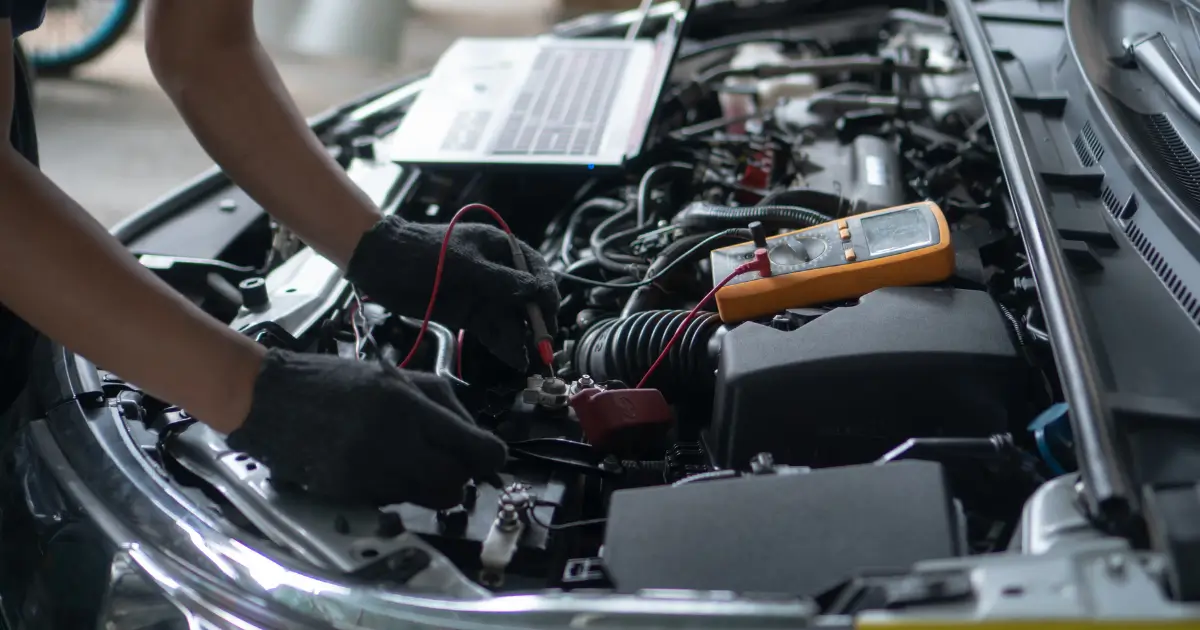
Many scanners also report battery voltage, either through the port or as a built in test. A weak battery can cause strange electrical behavior and confusing warnings, so a quick voltage reading is a handy piece of the puzzle. Not every scanner offers this, but it is common on mid level tools.
The Three Types of Scanners, in General Terms
Scanners come in a few broad types. The differences are mostly about how much information they show and how they display it.
A simple code reader
This is the most basic type. It is a small handheld unit with a short cable and a small screen. It reads codes, shows a brief description, and can clear codes. That is about all it does, and for many drivers that is enough to answer the first question: what is the light trying to tell me?
A Bluetooth adapter with an app
This type is a small plug with no screen of its own. It stays in the OBD2 port and sends the car’s data to a phone or tablet app over Bluetooth or Wi-Fi. The app does the displaying, so you get bigger graphs of live data and a layout that is easy to scroll. The quality of the experience depends a lot on the app you use.
A full scan tool
At the top end are full scan tools, the kind many repair shops use. These can talk to more systems in the car than the basic tools, run active tests, and show deep live data. They cost far more and are built for people who repair cars often. For a typical owner who just wants to understand a warning light, this level of tool is usually more than the job calls for.
What the Codes Actually Mean
OBD2 codes follow a pattern. Each code is one letter followed by four numbers, and each part carries meaning.
The first letter tells you the system
The letter points to the area of the car. P stands for powertrain, which covers the engine and transmission. B stands for body, which includes things like airbags and power seats. C stands for chassis, which covers items such as anti lock brakes and steering. U stands for network, which deals with communication between the car’s computers. Most codes a typical driver sees start with P, because the check engine light is mainly about the engine and emissions.
The numbers narrow it down
The first number after the letter tells you whether the code is a standard code shared by all brands or a code defined by the maker of your car. The remaining numbers narrow the fault to a specific system and then to a specific condition. A code might point to a sensor reading that is too low, a circuit that is open, or a system that is running lean. Think of the code as an address. It tells you the neighborhood and the street, but you still have to find the exact house.
A code is a starting point, not a verdict
This is the part many people miss. A code names the system that reported a problem, not always the part that failed. For example, a code about an oxygen sensor signal can be caused by the sensor itself, by damaged wiring, or by an exhaust leak ahead of the sensor. Replacing the part named in the description without checking further is a common way to waste money. Good mechanics treat the code as the first clue and then test from there.
What an OBD2 Scanner Cannot Do
Knowing the limits of the tool is just as important as knowing its strengths.
It does not fix anything
A scanner reads information. It cannot repair a part, adjust a worn component, or solve a mechanical problem. If a sensor has failed or a hose has cracked, that part still needs real repair. The scanner simply helps you find where to look.
It cannot read every system on every car
The standard OBD2 data covers the engine and emissions systems on all cars. But systems like airbags, anti lock brakes, and some transmission functions often use maker specific data. A basic scanner may not see those systems at all, and even a good scanner may read only some brands in depth. So a clean scan does not promise that every system in the car is healthy. It means the standard systems reported no stored problems.
It cannot tell you the exact failed part every time
As explained above, a code points to a circuit or a condition. Several different faults can set the same code. The scanner also cannot feel a worn bearing, hear a failing pump, or smell burning oil. Some problems leave no code at all, especially early ones. Your eyes, ears, and nose still matter.
When to Use a Scanner, and When to Go Straight to a Mechanic
A scanner is most helpful as a first step. The light comes on, the car drives normally, and you want to know what you are dealing with before you call a shop. Reading the code turns a mystery into a specific topic you can look up or describe to a mechanic. It also helps you check whether the same code returns after a simple fix, like tightening a loose gas cap and driving for a few days.
Signs you should skip the scanning and get help
Some situations call for a mechanic right away, scanner or not. Go straight to a professional if the check engine light is flashing, because a flashing light usually signals a serious misfire that can damage the catalytic converter. The same goes if the car loses power, stalls, overheats, makes loud new noises, or shows a red oil pressure or temperature warning. Also head to a shop if several warning lights come on at once, or if the car simply does not feel safe to drive. In those cases, the safest move is to stop driving and get the car looked at.
A middle path many drivers use
Plenty of owners scan the car first, write the code down, and then hand that information to their mechanic. It does not replace the shop’s diagnosis, but it makes the conversation clearer and helps you understand the repair you are paying for.
A Short, Honest Note About Clearing Codes
Most scanners can erase stored codes, which also turns off the check engine light. That feature has a proper use: after a repair, clearing the code lets you confirm the fix by seeing whether the code stays away. But clearing a code without fixing the cause is a bad idea, for a few honest reasons.
First, the problem is still there. The light will almost always return once the computer runs its tests again. Second, clearing codes wipes the freeze frame data and resets the readiness monitors, which throws away useful clues and can make the car fail an emissions test because its monitors show as not ready. Third, if the car is under warranty or heading to a shop, that stored data helps the technician. So treat the clear button as the last step after a repair, not as a way to make the light go away.
Frequently Asked Questions
1. Does every car have an OBD2 port?
Every car sold in the US from 1996 onward has one, because the standard was required from that year. On most cars you will find it under the dashboard on the driver side, near the steering column. A few models hide it behind a small cover or place it near the center console, so a quick look with a flashlight usually finds it.
2. Can an OBD2 scanner drain my car battery?
A scanner draws a small amount of power while it is plugged in and the car is on, which is not a concern during normal use. Leaving an adapter plugged in for weeks while the car sits unused can slowly drain the battery on some cars, so it is good practice to unplug it when you are done.
3. Will a scanner tell me exactly which part to replace?
Not exactly. It tells you which system reported a problem and what condition the computer saw. Sometimes that points straight at a failed part, but often a few different causes can set the same code. The code is best used as a starting point for checking, testing, or a conversation with a mechanic.
4. Why did my check engine light turn off by itself?
The computer keeps testing as you drive. If the fault does not happen again over several trips, the computer may turn the light off on its own. The code is often still stored in memory for a while, so a scanner can still show what happened earlier.
5. Can I use one scanner on different car brands?
Yes, for the standard engine and emissions data. That is the whole point of the OBD2 standard. One basic scanner works across brands for code reading. Deeper access to systems like airbags or anti lock brakes varies by brand and by tool.
6. What does it mean if my car has no codes but still runs badly?
It means the computer has not recorded a fault that crosses its limits. Some problems, like a worn mechanical part or a weak fuel pump in its early stages, may not set a code right away. If the car runs poorly and the scan is clean, that is a good reason to let a mechanic inspect it in person.
7. Is it safe to drive with the check engine light on?
A steady light with a car that drives normally usually means you can drive gently to a safe place and look into it soon. A flashing light is different. A flashing light warns of a serious problem, and you should slow down, avoid hard acceleration, and get the car checked as soon as possible.
8. Should I clear a code before an emissions test?
No. Clearing codes resets the readiness monitors, and testing stations usually require those monitors to be complete. A car with freshly cleared codes will often be turned away and told to return after more driving. It is better to fix the cause, then drive normally until the monitors run again.
Conclusion: Understanding What Your Car Is Telling You
An OBD2 scanner is best understood as a translator. Your car’s computer watches hundreds of readings, notices when something drifts out of line, and saves that finding as a code. The scanner turns the code, the freeze frame snapshot, and the live sensor data into information you can actually use. It works through one standard port that has been under the dashboard of US cars since 1996, and it comes in forms ranging from a simple code reader to the full scan tools that shops rely on.
Just remember the honest limits. The tool reports, it does not repair. It sees the standard systems well and the maker specific systems only partly. And a code points to where a problem showed up, which is the beginning of a diagnosis rather than the end of one. Used that way, a quick scan replaces guessing with facts, and that makes every next step, whether it is tightening a gas cap or visiting a trusted mechanic, a much easier decision.