A long road trip is wonderful until it is not. A dead battery at a rest stop, a flat tire on a two-lane highway at dusk, a child with a scraped knee and no bandage in the car — these are small problems that turn into long, expensive delays when you have nothing with you. The best car safety kits for long road trips solve that in advance: one bag, packed once, that holds the tools and supplies for the most common roadside problems.
This guide compares five kits that cover the full range — from a compact first-aid hardcase to a complete roadside bag with jumper cables, an air inflator, and a 108-piece first aid kit. We explain what each kit actually contains, who it fits, and what it leaves out, so you can buy once and drive with confidence instead of assembling a kit from loose parts the night before a trip.
Best Car Safety Kits for Long Road Trips at a Glance
| Kit | Pieces | Jumper cables | Best for |
|---|---|---|---|
| Everlit Survival Car Emergency Kit | 100+ items | 12-ft, 300A | Most road trips |
| Lifeline AAA Premium Road Kit 4330AAA | 76 pieces | 10-ft, 8-gauge | Maximum coverage |
| Lifeline 4390 Emergency Road Safety Kit | Check listing | Yes | Mid-range buyers |
| VCANENERGY Car Emergency Safety Kit Bag | Check listing | Yes | Value buyers |
| General Medi 120-Piece Hardcase First Aid Kit | 120 pieces | No | First-aid companion |
Here are the best car safety kits for long road trips we compared, with the contents and trade-offs of each one spelled out so you can match the kit to your route, your car, and your family.
1. Everlit Survival Car Emergency Kit — Best Overall
Best for: most long road trips — the most complete single bag in this guide.
The Everlit Survival Car Emergency Kit is the closest thing to a complete roadside solution in one bag. It includes a digital tire inflator rated 0–150 PSI, 12-foot 300-amp jumper cables, and a 108-piece first aid kit, plus the smaller essentials — flashlight, reflective triangle, rain poncho, emergency blanket, and basic tools — that turn a breakdown from a crisis into an inconvenience. The bag itself is organized with labelled compartments, so you can find the jumper cables in the dark instead of emptying the whole bag onto the shoulder.
What sets it apart is that the three expensive items — inflator, cables, and first aid — are all included and all usable. Many kits include one good item and two token ones; Everlit’s inflator actually tops up a low tire, the cables are long enough to reach between two cars parked nose to nose, and the first aid kit covers scrapes, burns, and minor injuries rather than just a handful of bandages. The bag is bulky, so it suits a sedan or SUV trunk better than a tiny hatchback, but for a multi-day highway trip it is the kit to buy first.
- Pros: digital inflator, 12-ft 300A jumper cables, and 108-piece first aid in one bag; organized compartments; reflective triangle and emergency blanket included.
- Cons: bulky for very small trunks; heavier than a basic kit; check the listing for the exact piece count, which varies by bundle.

- The Road Guardian- The portable roadside assistance kit is designed and hand picked by a group of experienced veterans a…
- Top-Notch Digital Auto Tire Inflator- lightweight and compact air compressor can inflate your standard vehicles tire in …
- Copper-Clad Aluminum 12 Feet 8 Gauge Jumper Cable- A durable battery starter cable is a must-have for your trip. Unlike …
2. Lifeline AAA Premium Road Kit 4330AAA — Best Premium Kit
Best for: drivers who want the most trusted name and the most complete coverage.
The Lifeline AAA Premium Road Kit carries the AAA name, and the contents live up to it: 76 pieces including 10-foot 8-gauge jumper cables, a 34-piece first aid kit, a flashlight, a reflective triangle, a rain poncho, and a set of basic tools. The cables are the right gauge for a real jump start — 8-gauge copper-clad wire that can carry the current a dead battery needs — and the bag is built to survive years in a trunk without the zippers failing.
At $80–100, it is the most expensive kit in this guide, and the premium is for reliability rather than extras: every item is the kind you can actually use, and the kit is assembled by a brand that has been in roadside assistance for decades. It does not include a tire inflator, so pair it with a separate portable inflator if you drive far from towns. For a family car that does several long trips a year, it is the buy-once choice.
- Pros: trusted AAA branding; proper 8-gauge jumper cables; 34-piece first aid kit; durable bag and zippers.
- Cons: highest price in this guide; no tire inflator included; heavier than the budget kits.
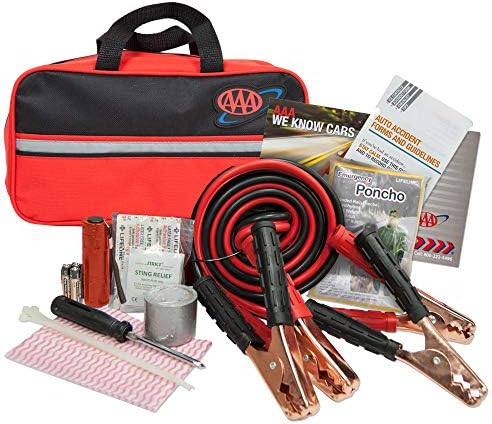
- Flashlight with batteries
- Keep in your car
- 8 gauge heavy duty booster cable
3. Lifeline 4390 Emergency Road Safety Kit — Best Mid-Range Kit
Best for: drivers who want the Lifeline name at a lower price than the AAA Premium kit.
The Lifeline 4390 is the step-down from the AAA Premium kit, and it keeps the same idea: jumper cables, a first aid kit, a flashlight, and the reflective gear, in a compact bag that fits a smaller trunk. It is the right choice if the AAA Premium kit feels like overkill for your driving — a car that mostly does day trips with one or two long drives a year — but you still want a kit from a brand with a real roadside reputation.
Because Lifeline sells several similar kits, check the listing carefully for the exact contents of the 4390 before buying: the piece count and cable length vary by bundle, and the value of the kit is in the cables and first aid, not in the number of pieces printed on the box. If the listing confirms proper jumper cables and a real first aid kit, it is a solid mid-range buy that will serve for years.
- Pros: Lifeline build quality at a mid-range price; compact bag; covers the core roadside needs.
- Cons: fewer pieces than the AAA Premium kit; contents vary by bundle, so verify the listing; no tire inflator.

- 45 Pieces of First Aid
- AAA car care guide
- Endorsed by AAA 4. The most trusted name in travel
4. VCANENERGY Car Emergency Safety Kit Bag — Best Value Kit
Best for: budget buyers and second cars that need basic roadside cover.
The VCANENERGY kit is a compact bag that covers the basics — jumper cables, a flashlight, a first aid pouch, a reflective triangle, and a few tools — at a price well below the premium kits. It is the right kit for a car that rarely leaves town but still needs something in the trunk, or for a second family car that does the occasional long drive. The bag is small enough to fit beside the spare tire without taking over the trunk.
The trade-off is depth: the cables are shorter and lighter gauge than the Lifeline’s, the first aid pouch is smaller, and there is no inflator. That is a fair trade at this price, but it means this kit is a starting point rather than a complete solution — add a separate tire inflator and a proper first aid kit if you plan a multi-day highway trip. Check the listing for the exact contents, which vary by seller.
- Pros: low price; compact bag that fits any trunk; covers the core essentials.
- Cons: lighter-gauge, shorter jumper cables; small first aid pouch; no tire inflator; contents vary by listing.

- Complete Roadside Emergency Kit: This all-in-one car emergency kit includes 170 essential items, featuring 12 ft 8 Gauge…
- Digital Auto Tire Inflator : Car emergency kits for vehicles with compact digital tire inflator quickly fills car tires …
- Completed 138 Pieces First Aid Kit: This complete first aid kit provides basic wound care for road trips and home use. I…
5. General Medi 120-Piece Hardcase First Aid Kit — Best First-Aid Companion
Best for: adding serious first aid to any roadside kit, or as a standalone kit for family trips.
The General Medi 120-piece hardcase kit is not a full roadside kit — it has no jumper cables and no tools — but it is the best first aid companion in this guide, and first aid is the part of a roadside kit you are most likely to actually use. The hardcase protects the contents from being crushed in the trunk, and 120 pieces cover bandages, gauze, burn care, antiseptic wipes, tweezers, scissors, and a cold pack, sized for cuts, scrapes, and minor burns rather than just a single bandage.
Buy this kit in one of two ways: on its own, if your car already has jumper cables and a flashlight, or alongside a roadside bag like the VCANENERGY kit, where it upgrades a thin first aid pouch into a real medical kit. For a family road trip with children, it is the most useful item in this guide per dollar. Check the contents on the listing and add any family-specific medication separately — no pre-packed kit can know what your family needs.
- Pros: 120 pieces in a crush-proof hardcase; covers bandages, burn care, and wound care; compact and easy to store.
- Cons: no jumper cables or tools — it is a first aid kit, not a roadside kit; no family medication included.
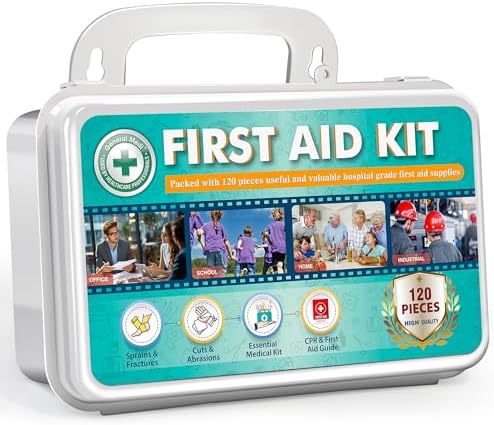
- Security and Reliability – All of our first aid products carry certificate of conformity to ensure conformance to global…
- Contents – Packed with 120 useful and valuable hospital grade first aid supplies – See the product images and the produc…
- Quality – The box is hard case, compact and easy to carry, holds all the basic first aid supplies (120 pieces total). It…
How to Choose the Best Car Safety Kits for Long Road Trips
Choosing among the best car safety kits for long road trips starts with your route, not the box. A day trip near town needs far less than a three-day highway drive through areas with no cell signal, and a winter mountain route needs different gear again. Match the kit to the trip and you will never overpay or under-pack.
Jumper cables: gauge and length matter most
Jumper cables are the most-used item in any roadside kit, and they are also the most commonly faked. A proper cable is 8-gauge or thicker (lower number means thicker wire) and at least 10 feet long, so it can reach between two cars parked nose to nose. Thin, short cables look the same in a photo but cannot carry enough current to start a dead battery, especially in cold weather. The Everlit’s 12-foot 300-amp cables and the Lifeline AAA Premium’s 10-foot 8-gauge cables both pass this test; a kit whose listing hides the gauge and length probably fails it.
First aid: count the useful pieces, not the total
A kit that claims “120 pieces” may contain 100 bandages and almost nothing else. What matters is variety: assorted bandage sizes, gauze pads, adhesive tape, antiseptic wipes, burn gel or burn dressings, tweezers, scissors, and gloves. The General Medi 120-piece hardcase earns its place in this guide because its contents are varied and the case keeps them usable. If your kit’s first aid pouch is mostly bandages, add a small supplementary kit — first aid is the part you will reach for most often, and a scraped knee at a rest stop should not require a pharmacy run.
Visibility and light
A breakdown at night is dangerous because other drivers cannot see you, not because the car is broken. A reflective triangle, a reflective vest, and a working flashlight are the three items that keep you safe while you wait, and they are cheap to include. Check that the kit’s flashlight uses batteries you can actually buy, or better, that it is rechargeable from the car’s USB port. A dead flashlight is worse than no flashlight, because it gives false confidence.
Tools and storage
The best car safety kits for long road trips include a basic tool set — pliers, a screwdriver, a utility knife, duct tape — that covers the small fixes that get you moving again, like a loose battery terminal or a hose clamp. The bag matters too: labelled compartments mean you can find the jumper cables without emptying everything onto the road, and a bag that fits beside the spare tire will actually stay in the car instead of being left in the garage. Before buying, measure your trunk space and check the bag’s dimensions on the listing.
What Every Long Road Trip Kit Should Contain
Use this checklist to audit any of the best car safety kits for long road trips, including one you already own. If your kit is missing more than two items, it is time to add them before the next long drive.
- Jumper cables — 8-gauge or thicker, at least 10 feet long.
- Tire inflator or sealant — a portable inflator, or at least a can of tire sealant and a working spare.
- First aid kit — bandages, gauze, antiseptic, burn care, tweezers, scissors, gloves.
- Flashlight — working batteries or USB rechargeable, plus spare batteries.
- Reflective triangle and vest — so other drivers see you at night.
- Basic tools — pliers, screwdriver, utility knife, duct tape, zip ties.
- Warmth and water — an emergency blanket and a bottle of water, especially for winter or desert routes.
- Phone charger — a car charger or power bank, so a dead phone never strands you.
If you want a deeper look at each category, our guides to a roadside emergency kit for cars, a car emergency kit with first aid, and an all-in-one car emergency kit each break down the contents in more detail. For the tire side specifically, see our guide to a car emergency kit with air compressor.
Common Mistakes to Avoid
- Buying for price alone. The cheapest kit usually has the thinnest cables and the smallest first aid pouch. The most common mistake when shopping for the best car safety kits for long road trips is choosing by piece count instead of by cable gauge and first aid variety.
- Never checking the kit. Batteries die, bandages expire, and inflator seals dry out. Open the kit twice a year, replace dead batteries, and check expiry dates.
- Burying the kit under luggage. A kit under three suitcases is useless on the roadside. Keep it on top or in a side compartment you can reach in seconds.
- Forgetting winter gear. A summer kit will not help on a snowy mountain pass. For cold-weather routes, add a blanket, gloves, and a small shovel — see our guide to car emergency kits for winter.
- Not knowing how to use it. Practice jump-starting once in your driveway, and read the first aid kit’s instructions before you need them. A kit you cannot use is decoration.
Frequently Asked Questions
What are the best car safety kits for long road trips?
For most drivers, the Everlit Survival Car Emergency Kit is the best all-round choice because it includes a digital tire inflator, 12-foot 300-amp jumper cables, and a 108-piece first aid kit in one organized bag. The Lifeline AAA Premium Road Kit is the best premium option, and the General Medi 120-piece hardcase is the best first-aid add-on.
Which of the best car safety kits for long road trips should I buy for winter driving?
Start with the Everlit or Lifeline AAA Premium kit, then add winter-specific gear: an emergency blanket, warm gloves, a small shovel, and extra water. The kit’s jumper cables matter most in winter, because cold weather is when batteries fail. Our guide to car emergency kits for winter covers the seasonal additions in detail.
Do I need a separate first aid kit, or is the one in a roadside kit enough?
It depends on the kit. The first aid kits inside the best car safety kits for long road trips are usable as supplied — the Everlit’s 108-piece kit and the Lifeline AAA Premium’s 34-piece kit both cover the basics. The first aid pouch in a budget kit is usually too thin, so add a dedicated kit like the General Medi 120-piece hardcase if you travel with children. See our guide to a car emergency kit with first aid for what to look for.
How often should I check my car safety kit?
Twice a year is enough for most drivers: once in spring and once before winter. Replace dead flashlight batteries, check bandage and medication expiry dates, and make sure the jumper cables are not corroded. After any use — even a single bandage — restock immediately so the kit is complete for the next trip.
Will a safety kit fit in a small car?
Yes, if you choose the right one. The VCANENERGY bag and the General Medi hardcase are both compact enough for a small trunk or under a seat. The Everlit and Lifeline AAA Premium bags are larger and suit sedans and SUVs better. Measure your available space and compare it with the bag dimensions on the listing before buying.
Are jumper cables or a jump starter better for road trips?
Jumper cables are cheaper and never run out of charge, but they need a second car. A portable jump starter works alone but must be kept charged. For a long road trip, cables are the safer default because they always work; a jump starter is a useful extra if you drive alone in remote areas. See our guide to a car emergency kit with jumper cables for the cable details.
Do the items in a safety kit expire?
Yes. Bandages, antiseptic wipes, burn gel, and any medication have expiry dates, and flashlight batteries lose charge over time. Tire sealant also expires. Check the dates twice a year and replace anything past its date — an expired bandage is better than nothing, but an expired antiseptic wipe may not work when you need it.
Final Verdict
Our pick among the best car safety kits for long road trips is the Everlit Survival Car Emergency Kit. It is the only kit in this guide that includes a working tire inflator, proper 12-foot 300-amp jumper cables, and a genuinely useful 108-piece first aid kit in one organized bag, which means one purchase covers the three problems you are most likely to face. If you want the most trusted name and the most durable bag, the Lifeline AAA Premium Road Kit is the premium alternative — just add a separate inflator. And whatever roadside kit you choose, the General Medi 120-piece hardcase is the cheapest meaningful upgrade you can make to it. Buy the kit before the trip, not during it, and check it twice a year.
As an Amazon Associate, Car Accessories Reviews earns from qualifying purchases made through links on this page, at no extra cost to you. Prices change over time, so please check the current price on Amazon before buying.