A trailer wheel lock is one of the most practical accessories you can buy to help protect your trailer from theft. Whether you own a small utility trailer, a boat trailer, a cargo trailer, or a recreational vehicle (RV), leaving it unattended can create security concerns. A trailer may hold expensive equipment, camping supplies, tools, or other valuable items, and replacing the entire unit can be costly. A suitable wheel lock adds a visible physical barrier that makes moving the trailer more difficult and may encourage a thief to look for an easier target.
However, not every trailer wheel lock offers the same level of protection. Some models use adjustable arms that grip the tire, while others cover much of the wheel or work alongside a wheel chock. Choosing the right design requires more than finding a product with a strong appearance. You need to consider your tire dimensions, wheel design, parking conditions, weather exposure, and how frequently you move your trailer. In this guide, you’ll learn how trailer wheel locks work, which features matter most, and how to select a suitable option for your needs.
What Is a Trailer Wheel Lock?
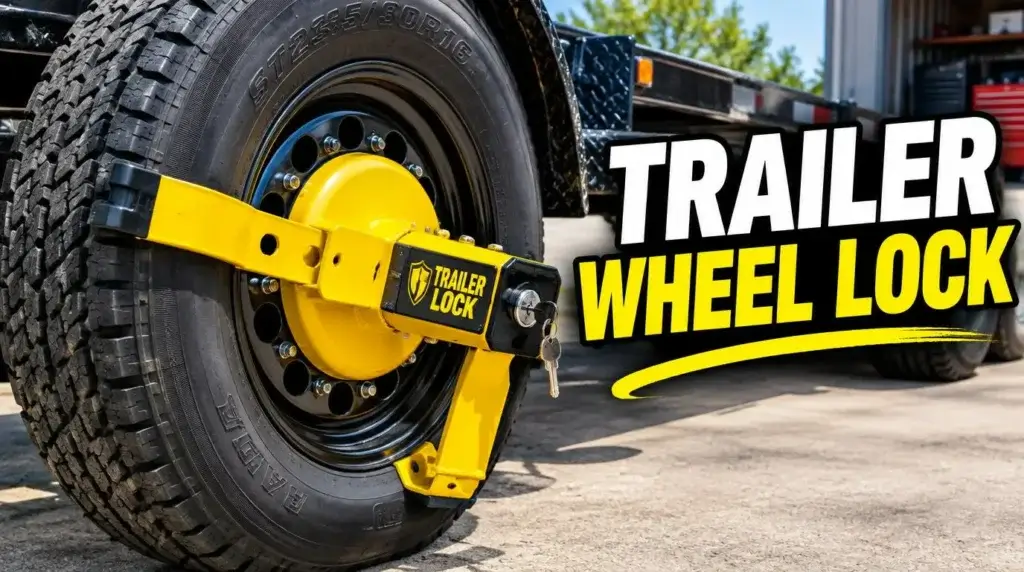
Image Credit: AI Generated
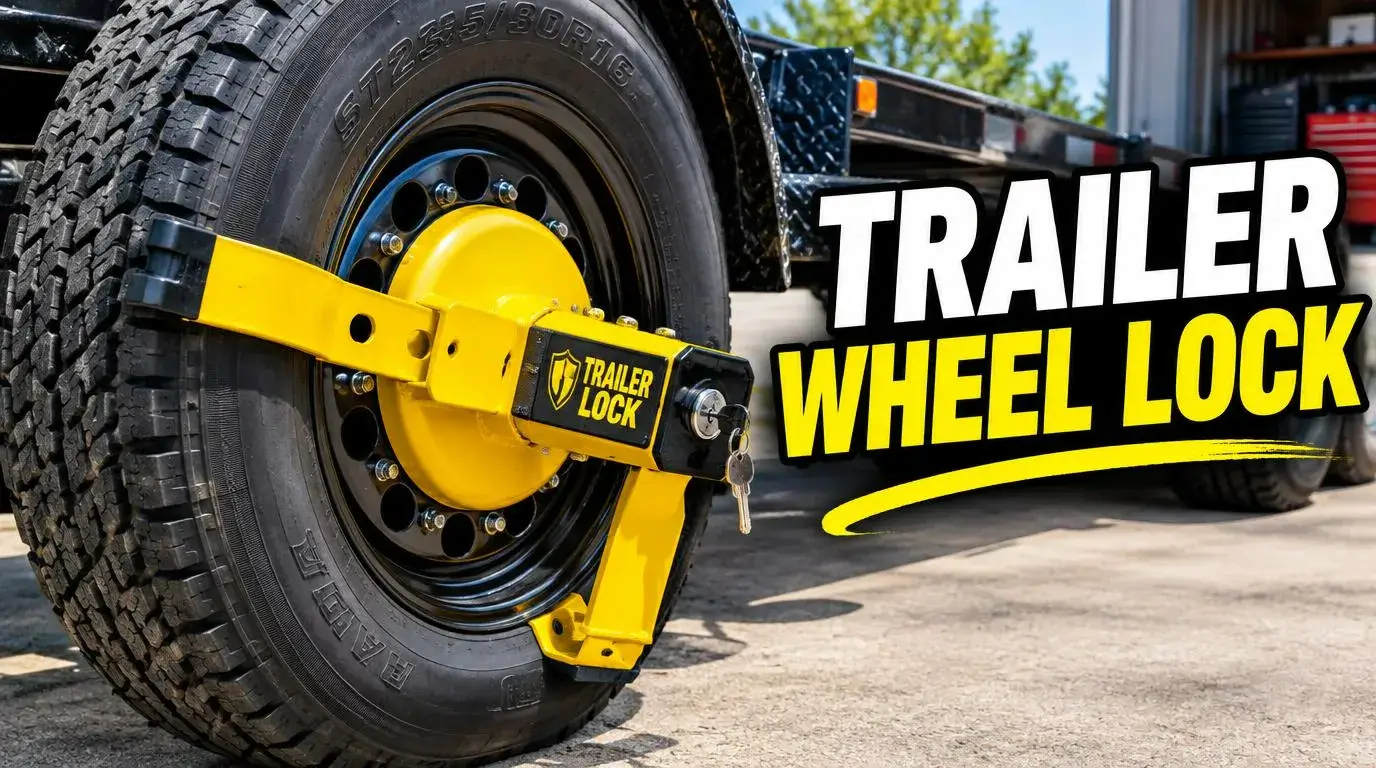
A trailer wheel lock is a mechanical security device designed to prevent or discourage a trailer wheel from rotating normally. Most models attach around the tire or through a suitable part of the wheel, using a locking mechanism that requires a key or another authorized release method. Once installed correctly, the device makes it more difficult to tow or roll the trailer away without removing the lock. Some designs also cover wheel fasteners, adding another layer of protection against unauthorized wheel removal.
Think of a wheel lock as a physical barrier between a potential thief and your property. It doesn’t make theft impossible, but it adds time, effort, and visibility to an attempted theft. That extra difficulty can be particularly useful when your trailer sits in a driveway, storage yard, campsite, or parking area for extended periods.
Trailer wheel locks come in different shapes and sizes, so checking compatibility is essential. For example, the CURT Adjustable Trailer Wheel Lock is designed to fit a range of wheel and tire sizes, with rubber-coated arms intended to protect the wheel’s finish. Its published specifications list tire widths of 7¼ to 12⅞ inches and lengths of 7¾ to 10¾ inches, illustrating why checking the manufacturer’s measurements matters before purchasing.
Why Do You Need a Trailer Wheel Lock?
Trailers can be easier to move than many owners expect, particularly when they are parked separately from a tow vehicle. A small utility trailer may be rolled away or attached to another vehicle if it lacks appropriate security. Larger trailers, including campers and equipment haulers, can also become theft targets because they may contain valuable cargo or have a high replacement cost. A wheel lock creates an additional obstacle by restricting the movement of the wheel.
The need for a lock depends partly on where and how you store your trailer. If you keep it inside a locked garage, your existing security measures may already reduce the risk. If it remains outside overnight or sits in an open storage area for weeks, a visible wheel clamp can provide an additional deterrent. Owners who regularly travel with boat trailers or campers may also appreciate having a portable lock that can be fitted whenever they stop for an extended period.
Another important consideration is peace of mind. You shouldn’t have to wonder constantly whether someone could easily move your trailer while you’re away. A suitable lock, combined with sensible parking choices and other security measures, can help you feel more confident about leaving your equipment unattended. For higher-value trailers, the manufacturer’s security guidance recommends considering multiple protective devices rather than relying on a single lock.
Benefits of Using a Wheel Lock
A good trailer wheel lock offers several practical advantages. First, it can physically restrict wheel movement, making unauthorized towing more difficult. Second, many models are highly visible, which can discourage opportunistic theft before an attempt begins. Third, a portable design can be used in different locations without requiring permanent modifications to your trailer.
Convenience is another benefit. Many adjustable clamps can be fitted and removed with a key and a small amount of effort once you’ve learned the process. Protective coatings can also help prevent scratches to compatible wheel finishes, while corrosion-resistant finishes may improve durability during outdoor use. Some manufacturers include two keys, allowing you to keep a spare in a secure location.
Still, a wheel lock is only one part of a sensible security plan. It cannot guarantee that a trailer will never be stolen, and some designs offer less protection than others. Pairing a wheel clamp with a suitable coupling lock and secure parking can make your trailer more difficult to take.
Types of Trailer Wheel Locks
Understanding the main types of trailer wheel locks will help you compare products more effectively. Although the names sometimes overlap, most designs fall into a few practical categories based on how they attach to the wheel and restrict movement. The best choice depends on your trailer’s wheel dimensions, available clearance, storage conditions, and desired level of security.
Clamp Style Wheel Locks

- ✅ Universal Fit: The trailer tire lock can be adjusted to fit tires between 7.1’’ and 10.6’’ in diameter with 9-hole pos…
- ✅ High Quality: The car tire lock is made of durable heavy-duty steel. It features a crescent-shaped lock cylinder that …
- ✅ Easy Installation: You can easily secure your trailer boot wheel lock in just one minute. Just open the trailer wheel …
Clamp-style wheel locks use adjustable metal arms or jaws to grip the outside of a tire. After positioning the device, you secure its locking mechanism so the clamp cannot be removed without the appropriate key. Many designs are compact enough to carry in a vehicle or storage compartment, making them useful for owners who travel frequently with their trailers.
One advantage of this design is adjustability. Depending on the model, the arms may accommodate several tire widths and diameters, allowing one lock to work with different compatible trailers. Rubber or PVC-coated contact points can help protect the wheel’s finish from scratches. For example, CURT lists rubber-coated arms and a corrosion-resistant powder-coated finish among the features of its adjustable model.
Before buying a clamp-style lock, check its full fitting range rather than relying on a description such as “universal.” An adjustable lock still has limits, and wheel arches, fenders, or nearby suspension components may interfere with installation. A well-fitting clamp should sit securely without excessive movement or pressure on unsuitable parts of the wheel.
Wheel Boot Locks

- ✅Heavy-Duty Trailer Lock: This trailer wheel lock clamp is made of heavy-duty steel to create a strong physical barrier …
- ✅Dual-Lock Security: This wheel lock combines an adjustable locking arm with a 12-inch wheel cover disc to help secure t…
- ✅Adjustable Fit: This adjustable tire boot lock is designed to fit a range of common tire and rim sizes, helping secure …
A wheel boot lock uses a larger, more conspicuous structure that surrounds part of the wheel and tire. Some designs cover a significant portion of the wheel face, while others use heavy arms and a protective plate to prevent the wheel from turning freely. Their substantial appearance makes them easy to notice, which can be helpful when you want to show that a trailer is secured.
Wheel boots are often considered for trailers that remain parked in one location for longer periods. Depending on the design, the device may also restrict access to wheel fasteners. However, not every wheel boot offers the same coverage, so inspect product photographs and technical specifications before making a decision.
Size and handling deserve attention here. A large boot may provide a more imposing physical barrier, but it can also be heavier and more awkward to store. Check whether the device fits your wheel material and tire dimensions, and confirm that its locking mechanism is protected against dirt and moisture. Choose a model that you can install correctly every time rather than one that is so inconvenient you stop using it.
Wheel Chock Locks

- Key Lock Feature: Securely locks wheel chocks in place
- Hand Control: Easy to use hand control for installation
- Modern Style: Sleek and modern design complements any vehicle
A wheel chock is a wedge placed against a tire to help prevent unwanted rolling. A locking wheel chock adds a locking mechanism or security feature to that basic design, depending on the product. Some systems are designed specifically for parked trailers and may be used as part of a broader anti-theft setup.
It’s important to distinguish a standard wheel chock from a security lock. An ordinary chock can help prevent movement on a suitable surface, but it does not necessarily provide meaningful protection against theft. If your goal is to prevent someone from towing your trailer away, choose a product explicitly designed for security rather than assuming any rubber or plastic chock will do the job.
Wheel chocks can still be useful alongside a wheel clamp, particularly when you need to stabilize a parked trailer. Follow the trailer manufacturer’s parking and stabilization instructions, and never rely on an ordinary chock as a substitute for proper trailer supports or other required safety equipment. CURT lists wheel chock locks among its specialty towing security products.
How to Choose the Right Trailer Wheel Lock
Choosing a trailer wheel lock becomes easier when you start with your trailer instead of the product catalog. First, identify the type of trailer you own and how you usually park it. A small landscaping trailer used every weekday has different practical needs from a large camper stored for several months. A boat trailer may also face different environmental conditions because of frequent exposure to moisture.
Next, measure the tire and inspect the wheel. Record the tire’s overall size, width, and any other dimensions requested by the lock manufacturer. Check whether the wheel is steel or alloy, and look for restrictions involving the rim shape or openings. If the lock needs space around the wheel, verify that the fender, mudguard, and nearby components won’t obstruct it.
Then consider how you will use the device. If you frequently stop at different locations, a relatively portable model with a straightforward locking mechanism may be the most convenient. If the trailer stays outside for long periods, prioritize durable construction, weather protection, and a suitable security rating where independently verified ratings are available.
Finally, compare the full cost rather than focusing only on the initial price. A well-built product with replacement-key support, a useful warranty, and a suitable fit may offer better long-term value than a cheaper lock that rusts quickly or is difficult to operate. Before ordering, review the manufacturer’s current specifications and return policy to make sure the lock is appropriate for your trailer.
Important Features to Look For
Material quality is one of the first things to examine. Hardened or otherwise robust steel construction can provide a stronger physical barrier than a flimsy device, although material alone does not establish how secure a complete lock will be. Look for a reputable manufacturer that clearly explains the construction, locking mechanism, fitment limits, and intended application. Be cautious about claims such as “unbreakable” or “100% theft-proof,” because no mechanical lock can promise absolute protection.
Weather resistance is equally important if you park outdoors. Rain, road grime, humidity, and temperature changes can affect exposed metal parts and locking cylinders. Powder-coated finishes and protected lock mechanisms may help reduce corrosion, but maintenance is still necessary. If your trailer regularly encounters salty or wet environments, choose a model whose manufacturer specifically addresses those conditions.
The design should also be easy to use correctly. Adjustable arms, protective contact points, clear fitting instructions, and included spare keys can all improve the ownership experience. The CURT adjustable model, for example, includes a T-tool for adjustments, two keys, a dust cap, and a powder-coated finish. These are concrete features to compare when evaluating similar products.
| Feature | Why it matters | What to check |
|---|---|---|
| Fit and adjustability | Helps ensure the lock fits securely | Approved tire width, diameter, and wheel clearance |
| Construction | Affects durability and resistance to tampering | Material, design, and manufacturer specifications |
| Protective coating | Helps protect the wheel finish | Rubber or PVC-coated contact points |
| Weather resistance | Important for outdoor storage | Corrosion-resistant finish and protected cylinder |
| Key management | Helps avoid access problems | Spare keys and replacement-key availability |
| Warranty | Offers support if covered defects occur | Coverage period, exclusions, and claim process |
| Portability | Matters for frequent travelers | Weight, storage size, and ease of installation |
Trailer Wheel Lock vs. Hitch Lock
A trailer wheel lock and a hitch or coupler lock protect different parts of your trailer. A wheel lock restricts wheel movement, while a coupler lock prevents or complicates unauthorized connection to a tow vehicle. Neither automatically replaces the other because each addresses a different point of attack.
For example, imagine leaving a utility trailer parked outside your home for a week. A coupler lock helps prevent someone from connecting the trailer to a compatible hitch, but the trailer may still be vulnerable to other ways of moving it. A wheel clamp adds a separate barrier by restricting the wheel’s movement. When used together, these devices can make unauthorized removal more complicated.
The right combination depends on your circumstances. A coupler lock may be especially convenient during short stops or when you regularly disconnect the trailer. A wheel clamp can be valuable during longer periods of parking. For a high-value trailer, consider both, alongside secure parking or an appropriate ground anchor where permitted. AL-KO recommends matching security devices to the trailer’s coupling and parking situation rather than choosing a single solution for every scenario.
| Security device | Main purpose | Best suited for |
|---|---|---|
| Trailer wheel lock | Restricts wheel movement | Unattended or long-term parking |
| Coupler lock | Prevents or complicates unauthorized hitching | Detached trailers and routine stops |
| Wheel chock | Helps prevent rolling | Safe parking and stabilization |
| Ground anchor and suitable chain | Connects the trailer to a fixed point | Secure storage areas with an appropriate anchor |
How to Install a Trailer Wheel Lock
Before installation, park your trailer on a suitable, stable surface and follow its manufacturer’s parking instructions. If it is attached to a tow vehicle, secure the vehicle and trailer according to the owner’s manual before disconnecting anything. Keep your hands clear of pinch points, and never place yourself under an unsupported trailer.
Read the wheel lock’s instructions and confirm that it matches the wheel and tire. Open or adjust the clamp as directed, position it at the specified point, and make sure it does not interfere with the fender, brake components, suspension, or other parts. Tighten or secure the device using its intended mechanism. Do not force the arms beyond their adjustment range or use improvised tools that could damage the lock or wheel.
Once the lock is in position, engage the locking mechanism and check that it is properly seated. Test the device according to the manufacturer’s instructions to confirm that it cannot simply be lifted or pulled off through normal handling. If the lock shifts excessively, contacts a prohibited component, or does not close correctly, remove it and reassess compatibility rather than assuming it is secure.
Finally, keep the key in a safe and accessible place, preferably with a spare stored separately. Before towing the trailer, remove the wheel lock completely and store it securely. Driving with a wheel clamp installed can cause serious damage and create a road hazard. A quick visual check before departure can prevent an expensive mistake.
Common Trailer Wheel Lock Mistakes to Avoid
One of the biggest mistakes is buying a lock based on appearance alone. A large, heavy product may look secure, but if it does not fit your tire properly, it may not provide the protection you expect. Always check the manufacturer’s approved dimensions, wheel compatibility, and installation requirements. If the product description does not provide enough information, ask the manufacturer or seller for clarification before purchasing.
Another common mistake is relying on a wheel lock as your only security measure. A wheel clamp is useful, but it cannot eliminate every method of trailer theft. For example, a trailer may be vulnerable if the coupling remains unprotected or the storage area is poorly secured. Adding a suitable coupler lock, parking in a well-lit location, and using an appropriate ground anchor can improve your overall security. The exact combination should reflect your trailer’s value and storage conditions.
Neglecting maintenance can also reduce the usefulness of your lock. Dirt and moisture can interfere with moving parts, while corrosion may make the key difficult to turn. Avoid forcing a stuck key or applying an unapproved lubricant, as either action could damage the mechanism. Follow the manufacturer’s maintenance instructions and inspect the lock periodically, especially after prolonged outdoor storage.
Finally, don’t forget to remove the device before moving your trailer. Make checking the wheel lock part of your regular departure routine, just as you would check the tires, lights, hitch connection, and safety chains. Store the lock securely after removal so it does not bounce around inside your vehicle or become damaged during transit.
How to Maintain Your Trailer Wheel Lock
Regular maintenance helps your trailer wheel lock remain functional and ready for use. Start by inspecting the body, arms, contact pads, and locking cylinder for visible damage. Look for excessive rust, bent parts, cracked protective coatings, or anything that prevents the device from closing correctly. If you notice structural damage, stop using the lock until you have confirmed that it remains safe and suitable for use.
Cleaning is particularly important when the lock is exposed to mud, dust, road salt, or moisture. Wipe away surface dirt with a suitable cloth and cleaning product recommended by the manufacturer. Allow the device to dry as directed before placing it in storage. If the lock includes a dust cap, use it as intended to help keep debris and moisture away from the cylinder.
Lubrication requirements vary between products. Some locking mechanisms may benefit from a manufacturer-approved lubricant, while others require a different maintenance method. Check the instructions instead of applying household oils or chemicals at random. A product that works well on one lock may not be suitable for another.
Key management deserves attention, too. Keep the original keys in a secure place and store the spare separately so you are not left without access if one goes missing. Record the key code or product identification information if the manufacturer provides it and recommends keeping a record. A few minutes of maintenance every so often can save you from discovering a problem when you’re preparing to leave for a trip.
Are Trailer Wheel Locks Worth the Money?
For many trailer owners, a trailer wheel lock is a worthwhile investment because it adds a visible and physical obstacle to unauthorized movement. The potential value becomes more apparent when you consider the cost of replacing a trailer, recovering stolen equipment, or dealing with interrupted work and travel plans. Even a relatively simple security device may offer practical benefits if it fits correctly and is used consistently.
However, the most expensive lock is not automatically the best option for every owner. A small utility trailer parked in a secured garage may need a different solution from a valuable camper stored in an exposed lot. The ideal choice balances the trailer’s value, the theft risk in your parking area, the product’s construction, and your willingness to use it every time you leave the trailer unattended.
Think about the total security setup rather than treating the purchase as an isolated decision. A suitable wheel clamp, a compatible coupler lock, secure parking, and a properly installed anchor can work together to reduce opportunities for theft. You should also review your insurance requirements, because some policies specify particular security devices or conditions for unattended trailers.
If you frequently leave your trailer outdoors, start by comparing a few models that match your tire dimensions and parking habits. Read the fitting instructions, check warranty coverage, and compare the actual security features rather than relying on marketing language. A reliable lock that you can install correctly and use consistently is generally more useful than an impressive-looking device that does not suit your trailer.
Best Vent Mount Phone Holder for Car: Top Picks 2026
Conclusion
A trailer wheel lock is a practical way to make your trailer more difficult to move without authorization. Whether you own a boat trailer, utility trailer, cargo trailer, or RV, choosing the right device starts with understanding your security needs and checking the compatibility of the lock with your tires and wheels.
Clamp-style locks are worth considering for their portability and adjustable designs, while larger wheel boots may suit owners looking for a more substantial visible barrier. Wheel chock locks can also play a role in an appropriate security setup, provided you choose a product specifically intended for that purpose. Remember that wheel locks and coupler locks protect different parts of your trailer, so combining them may offer better protection than relying on either device alone.
Before buying, compare construction quality, weather resistance, key management, warranty coverage, and manufacturer specifications. Install the device correctly, maintain it regularly, and remove it before towing. With the right equipment and sensible parking habits, you can reduce theft opportunities and enjoy greater confidence whenever you leave your trailer unattended.
Frequently Asked Questions
1. What is the best trailer wheel lock?
The best trailer wheel lock is one that fits your tire and wheel correctly, uses a dependable locking mechanism, and offers suitable durability for your parking conditions. Adjustable clamps may suit owners who need portability, while larger wheel boots can provide a more conspicuous barrier. Compare manufacturer specifications, installation requirements, and warranty terms before choosing a model.
2. Do trailer wheel locks prevent theft?
Trailer wheel locks help deter theft by restricting wheel movement and making unauthorized removal more difficult. However, no mechanical lock can guarantee complete protection. For better security, consider combining a wheel lock with a compatible coupler lock, secure parking, and an appropriate ground anchor where possible.
3. Will a universal trailer wheel lock fit any trailer?
No. A universal or adjustable wheel lock fits only the tire and wheel dimensions within its specified range. Fender clearance, wheel shape, and the available installation space can also affect compatibility. Always check the manufacturer’s measurements and approved applications before ordering.
4. Can I leave a trailer wheel lock outside in the rain?
Some trailer wheel locks are designed for outdoor use and have protective finishes or covered locking cylinders. However, their ability to withstand prolonged exposure varies by model. Check the manufacturer’s weather-resistance guidance, clean away dirt and moisture, and perform regular maintenance to help prevent corrosion.
5. Is a trailer wheel lock better than a hitch lock?
Neither is universally better because each protects a different part of the trailer. A wheel lock restricts wheel movement, while a hitch or coupler lock helps prevent unauthorized connection to a tow vehicle. Using both can provide an additional layer of protection, especially when a valuable trailer is parked unattended for extended periods.