Introduction
When winter hits hard, your car battery becomes the first victim of freezing temperatures. Anyone who has ever turned the key (or pushed the start button) on a cold January morning only to hear slow cranking or worse, nothing at all knows exactly how frustrating and stressful winter starts can be. Cold weather thickens your engine oil, slows chemical reactions inside your battery, and drains power faster than you realize. This is exactly why choosing the right battery becomes essential, not optional, if you live in areas where the temperature drops below freezing.
The purpose of this guide is simple: to help you choose a battery that won’t leave you stranded when winter is at its worst. With so many brands boasting high cold-cranking amps and “extreme weather performance,” it’s hard to know what actually works and what’s just marketing fluff. This article breaks everything down in a clear, conversational, and easy-to-understand way. You’ll not only discover which batteries truly perform best in freezing climates, but also why they outperform others.
This isn’t just a list of seven batteries thrown together randomly. Each product has been evaluated based on cold-cranking amps, reliability in harsh conditions, real-world user experience, lifespan, and overall value. Whether you drive a small sedan, a truck, an SUV, or a heavy-duty vehicle, you’ll find the right match here.
And don’t worry this article goes beyond simple recommendations. You’ll also learn how cold affects battery chemistry, what features to prioritize, how to extend your battery’s lifespan during winter, and how to spot early signs of battery failure before you end up stranded in a parking lot with a dead engine.
By the time you finish reading, you’ll feel confident choosing a winter-ready battery that fits your vehicle, your climate, and your budget. Let’s dive into why cold weather is so brutal on car batteries so you fully understand what makes one battery survive winter better than another.
How Cold Weather Affects Car Batteries
Cold weather does more than make your fingers numb it weakens your car battery from the inside out. You might think batteries fail randomly, but winter temperatures actually cause predictable chemical slowdowns that reduce a battery’s power by up to 60%. Inside every car battery is a delicate chemical process that relies on temperature to keep electrical flow steady. When temperatures drop below freezing, those reactions slow to a crawl, meaning your battery simply cannot produce the energy needed to start your engine with its usual strength.
To make matters worse, your engine demands more power in winter, not less. Cold temperatures thicken your engine oil, making the engine harder to turn over. So you get stuck in an annoying loop: the battery is producing less power while the engine is demanding more. This is why many batteries seem to “die suddenly” during winter even if they worked perfectly fine a week before.
Another winter enemy is parasitic drain. Modern vehicles have alarms, sensors, infotainment systems, and modules that draw small amounts of current even when the car is off. In summer, your battery can handle this easily. In winter, these tiny drains can push an already stressed battery over the edge, especially if it’s more than three years old. You may also notice slower cranking, dim headlights, or electronics that flicker clear signals that your battery is struggling against the cold.
If you live in extremely cold areas like Minnesota, North Dakota, Canada, or Alaska, winter temperatures can drop low enough to freeze the liquid inside a battery that has already lost charge. A fully charged battery does not freeze easily, but a weak or partially discharged one can freeze overnight. A frozen battery is not just useless it’s dangerous. It can crack the casing, leak acid, and cause permanent internal damage.
Understanding these winter challenges helps explain why choosing a high-quality cold-weather battery with strong cold-cranking amps (CCA) and solid internal construction is absolutely essential.
Key Features to Look for in a Cold-Weather Battery
Choosing a winter-ready battery isn’t just about picking the highest-priced model or the most popular brand. You need to know exactly which features determine real performance in freezing temperatures. The most important factor is Cold Cranking Amps (CCA). This number measures how much starting power the battery can deliver at 0°F (–18°C). The higher the CCA, the better your battery can handle harsh winter starts. A typical battery might have 500 CCA, but for extreme winters, 650–900 CCA is recommended.
Next up is Reserve Capacity (RC), which tells you how long your battery can run critical functions if your alternator stops working. In cold climates, RC matters because engines often take longer to start, and accessories like heaters, defrosters, heated seats, and lights all draw energy. A battery with a strong RC rating ensures you aren’t draining everything just trying to warm up the cabin.
You also need to compare battery types. AGM (Absorbent Glass Mat) batteries are the top choice for winter. They deliver higher starting power, recharge faster, resist vibration, and perform far better in freezing temperatures than standard flooded batteries. Lithium batteries can be powerful, but many struggle in extremely low temps unless equipped with built-in heaters something most people don’t want to deal with. Flooded batteries are cheaper but often unreliable in harsh winter climates.
Build quality matters too. Look for batteries with reinforced cases, solid internal plates, and vibration-resistant construction. Cold weather often goes hand-in-hand with bumpy, icy roads, and cheap batteries can break down internally from repeated impact.
Finally, consider warranty and brand reputation. A strong warranty reflects confidence in performance and durability. Brands like Odyssey, Optima, DieHard, and NorthStar consistently top winter performance tests and offer warranties designed to match their quality.
When you understand these key features, it becomes much easier to choose a battery that won’t fail you on the coldest morning of the year.
Overview Table: 7 Best Car Batteries for Cold Weather (2025 Edition)
| Battery Model | CCA Rating | Best For |
|---|---|---|
| Optima RedTop | 720 CCA | Best Overall |
| Odyssey Extreme 65-PC1750T | 950 CCA | Heavy-duty trucks & freezing climates |
| DieHard Platinum AGM | 750 CCA | Best value |
| ACDelco Gold AGM | 760 CCA | GM vehicles |
| NorthStar Ultra High Performance | 900 CCA | Premium extreme-cold reliability |
| XS Power D3400 | 900 CCA | Vehicles with high electronics demand |
| Interstate MTX AGM | 700 CCA | Budget-friendly winter durability |
This comparison gives a quick view of how each battery performs, but the details matter so let’s dig deeper into each one.
1. Optima RedTop AGM Battery — Best Overall Cold-Weather Battery

- BATTERY SPECS: 12-Volt, 720 Cold Cranking Amps, Size: 9.38″ Long x 6.75″ Wide x 7.69″ Tall, Weight: 31.7 pounds, SAE Pos…
- RESERVE CAPACITY of 90 minutes for constant performance. Faster charging capabilities.
- SPIRALCELL TECHNOLOGY: Spircalcell Technology with 99.99% pure lead delivers more power and consistently outperforms con…
The Optima RedTop AGM battery has long been considered the gold standard when it comes to reliable starting power in freezing temperatures. Its unique SpiralCell technology sets it apart from traditional flat-plate designs, giving it an incredible advantage in cold climates. These spiral-wound cells are extremely efficient at delivering quick bursts of energy, which is exactly what your engine needs on a freezing morning when oil thickens and everything moves slower. With a powerful 720 CCA, the RedTop ensures your vehicle starts strong, even when the temperature dips well below zero.
What makes this battery stand out is its toughness. Winter roads are unforgiving filled with potholes, ice ruts, and constant vibrations that can shake inferior batteries to pieces. The Optima RedTop’s rugged, shock-resistant casing prevents internal damage, allowing the battery to last significantly longer than cheaper alternatives. It’s also completely maintenance-free, thanks to its sealed AGM design, which eliminates the need for checking water levels or dealing with corrosion.
Another reason drivers love the Optima RedTop is its fast recharge rate. Winter often requires more electrical power heaters, defrosters, lights, and wipers all demand constant energy. While weak batteries struggle to keep up, the RedTop rebounds quickly after each start, ensuring reliable performance day after day. Whether you drive a sedan, SUV, or light-duty truck, it offers consistent, no-nonsense starting power you can depend on.
Pros
- Extremely reliable cold starts
- SpiralCell technology boosts performance and durability
- Fast recharge rate for winter driving
- Completely maintenance-free sealed design
- Superior vibration resistance
Cons
- More expensive than standard batteries
- Not ideal for deep cycling or heavy accessory use
- Limited fitment options in some vehicle models
2 Odyssey Extreme Series 65-PC1750T — Best for Heavy-Duty Vehicles

- Voltage: 12v – PHCA: 1750
- Cold Cranking Amps (CCA): 930 – HCA: 1350
- Reserve Capacity in Minutes: 135
If you drive a diesel truck, SUV, off-road vehicle, or anything that demands serious power in winter, the Odyssey Extreme Series 65-PC1750T is hands down one of the best batteries you can buy. This heavyweight performer delivers a monstrous 950 CCA, giving you enough starting power to handle even the coldest mornings. What makes this battery so special is its pure lead plate construction, which offers better conductivity, higher output, and longer life than standard AGM batteries. Pure lead plates also allow more plates to be packed inside the battery, increasing surface area and boosting power delivery.
For heavy-duty vehicles, starting power isn’t the only concern you also need a battery that can handle deep cycling. Whether you’re using a winch, plow, auxiliary lighting, or aftermarket electronics, the Odyssey Extreme keeps powering through without losing performance. Winter is especially tough on diesel engines, and weaker batteries often leave drivers stranded with slow cranking. The Odyssey Extreme eliminates that fear by delivering immediate, forceful starts every time.
Durability is another major win. The battery is designed to withstand harsh conditions, vibration, and extreme temperatures. Its robust construction means you can drive confidently on icy roads, rough job sites, or off-road trails without worrying about internal damage. It also boasts an incredibly long lifespan sometimes up to 10 years with proper care, making it one of the most cost-effective premium batteries over time.
Pros
- Massive 950 CCA for the coldest climates
- Pure lead plates for exceptional performance
- Deep-cycle capability for demanding accessories
- Long 8–10 year lifespan
- Fastest recharge rate in its class
Cons
- Higher upfront cost
- Heavier than typical AGM batteries
- Limited availability in local shops
3. DieHard Platinum AGM — Best Value for Winter Reliability

- ✅Batter dimensions: 10.75″ L x 6.81″ W x 8.98″ H, Terminal: Tapered terminal (Left negative (-), Right positive (+)). ✅P…
- With a 70AH capacity and 710 cold cranking amps (CCA). Provides reliable performance and long service life, Up to 2 time…
- Heat / Cold Resistance: The materials used in the construction of AGM batteries (such as glass fiber mats and specialize…
The DieHard Platinum AGM remains one of the best value-for-money winter batteries on the market. With a strong 750 CCA, it delivers more than enough cranking power for most cars, crossovers, and SUVs. What separates this battery from many mid-range options is how consistently it performs in cold weather. Its AGM construction allows the battery to maintain voltage stability and handle winter electrical loads like heaters, defrosters, and lights without dropping power.
This battery is known for its durable internal structure. Winter driving is tough on vehicles, and constant vibration can dramatically shorten a battery’s life. The DieHard Platinum uses tightly packed plates and reinforced casing materials to minimize internal movement, meaning it lasts longer and performs more reliably over the years. It’s a fantastic choice for everyday drivers who want premium performance without paying premium prices.
Drivers also appreciate the DieHard Platinum’s fast recharge rate. Winter drains batteries quickly, especially if you make multiple short trips that don’t give your alternator much time to refill the battery. Fortunately, this battery recovers faster than traditional models, helping reduce wear and ensuring consistent starts even during long cold spells. For many people, this makes it the perfect balance of affordability, reliability, and winter performance.
Pros
- Excellent performance-to-price ratio
- Strong 750 CCA for cold-weather starts
- AGM design offers long life and fast recharge
- Durable, vibration-resistant construction
- Great for daily drivers and family vehicles
Cons
- May not fit certain European or specialty vehicles
- Not as powerful as premium AGM models
- Warranty terms vary by retailer
4. ACDelco Gold AGM — Best for GM Vehicles

- High density negative paste, improves performance and increases battery life
- Enhanced life alloy or Silver Calcium stamped alloy increases cycle life and improves performance
- Calcium lead positive grid, maximizes conductivity and allows for low resistance
The ACDelco Gold AGM battery is one of the most trusted and well-matched power sources for GM vehicles, including Chevrolet, GMC, Cadillac, and Buick models. While it works flawlessly in many non-GM vehicles as well, it shines brightest when paired with GM electrical systems which are specifically optimized for ACDelco’s charging profiles. Delivering a strong 760 CCA, this battery ensures reliable starts, even during frigid mornings when temperatures plunge below freezing. It’s engineered to provide consistent current flow, allowing your vehicle to turn over smoothly without hesitation.
What makes the ACDelco Gold AGM particularly winter-friendly is its high-density negative paste and durable grid design. These enhance conductivity and extend the battery’s life, especially in cold climates where battery chemistry can slow dramatically. The AGM construction means it recharges quickly and resists the type of deep discharge that kills traditional batteries in winter. Drivers who rely heavily on electronics heated seats, infotainment systems, LED lights, and remote start will appreciate the stable power this battery delivers.
The sealed design ensures a leak-proof and maintenance-free experience, eliminating concerns about corrosion or acid spills. It also performs exceptionally well under vibration, making it ideal for rough winter road conditions, potholes, and uneven icy surfaces. With an impressive track record for reliability and long service life, ACDelco Gold AGM is one of the safest choices you can make before winter arrives.
Pros
- Optimized for GM vehicles
- Consistent strong cranking power
- Excellent resistance to temperature changes
- Long service life
- Reliable for vehicles with heavy electronics
Cons
- Best performance is in GM vehicles
- Slightly higher price than basic AGM brands
- Not ideal for extreme power-demand systems
5. NorthStar Ultra High Performance AGM — Best Premium Battery
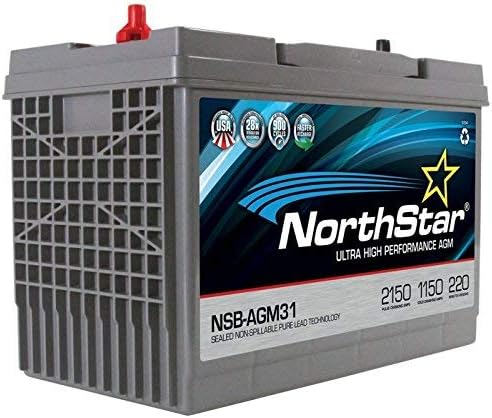
If your goal is to buy the absolute best cold-weather battery available no compromises, no shortcuts the NorthStar Ultra High Performance AGM is the one to beat. This powerhouse is built with high-purity lead plates that offer exceptional conductivity, incredible durability, and one of the fastest recharge rates you’ll find in any automotive battery. With approximately 900 CCA, it delivers brutal cold-starting power that makes sub-zero temperatures feel irrelevant. Even at –20°F or below, the NorthStar kicks your engine alive with a confidence unmatched by most competitors.
NorthStar batteries are engineered for drivers who demand maximum reliability. Whether you live in Northern Canada, the Midwest, or high-altitude snowy regions, this battery won’t leave you stranded. Its internal construction is incredibly robust, protecting against vibration, plate separation, and electrolyte stratification all common failure points for traditional batteries exposed to severe winter conditions.
The battery’s longevity is another major advantage. Many users report getting up to 8–10 years of life when maintained properly. This long-term durability offsets the higher price tag, making it a smart investment for those who prefer to buy quality once instead of replacing cheaper batteries every few years. It’s also excellent for vehicles with high electrical demands LED bars, audio systems, winches, snow plow attachments, and more.
With its unmatched performance, the NorthStar Ultra High Performance AGM stands tall as one of the best premium batteries ever built for winter driving.
Pros
- Outstanding cold-weather performance
- Very long lifespan (up to 10 years)
- Pure lead construction for superior conductivity
- Rapid recharge rate
- Handles heavy electrical loads effortlessly
Cons
- Premium price tag
- Heavier than most AGMs
- Availability may be limited in some regions
6. XS Power D3400 AGM: Best for High-Demand Electronics
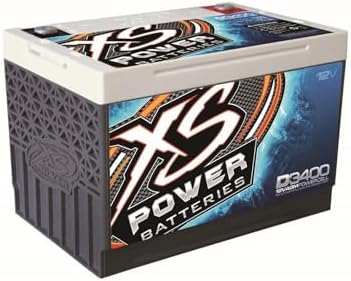
- 12 Volt Battery With Ca: 1000, Ah: 65
- Absorbed Glass Mat (Electrolyte Is Suspended In Fiberglass)
- Spill Proof, Sealed, Valve Regulated And Vibration Resistant
The XS Power D3400 is a battery built for drivers who push their vehicles’ electrical systems to the limit without sacrificing cold-start performance. Known for dominating the car audio and off-road world, the D3400 offers an impressive 900 CCA, making it one of the strongest winter performers available. If your vehicle has upgraded speakers, amplifiers, LED lighting, winches, aftermarket navigation, or auxiliary heaters, this battery provides the stable, high-current output these systems need especially in cold weather.
Where many batteries fail under heavy loads, the XS Power D3400 thrives. Its low internal resistance allows it to deliver steady power even when multiple electronics are running simultaneously. This is crucial in winter, when your electrical demand skyrockets due to heaters, defrosters, heated mirrors, and wipers. The D3400 maintains voltage stability through all of it, ensuring your car starts reliably every time.
Its heavy-duty AGM construction makes it spill-proof, vibration-resistant, and incredibly durable. The battery’s reinforced casing and thick internal plates prevent damage from rough winter roads, potholes, and off-road terrain. Many off-road drivers and car audio enthusiasts trust XS Power because it offers reliable, long-lasting performance even in the toughest environments.
With a fast recharge rate and long lifespan, the D3400 is an excellent choice for anyone who needs maximum power output without sacrificing winter reliability.
Pros
- Excellent for vehicles with many aftermarket electronics
- Strong 900 CCA for extreme cold
- Low internal resistance for stable performance
- Fast recharge and long life
- Heavy-duty construction
Cons
- Higher price due to premium build
- Overkill for basic commuter cars
- Can be difficult to install in tight battery compartments
7. Interstate MTX AGM: Best Budget-Friendly Winter Battery
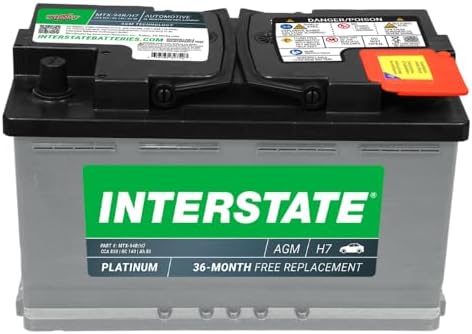
- AUTOMOTIVE PURE LEAD AGM: Download the Compatibility Guide below under Product Guides & Documents to learn more and veri…
- PREMIUM BATTERY PERFORMANCE: Interstate’s MTX absorbed glass-mat (AGM) battery will meet or exceed your car’s starting r…
- 2X-3X MORE BATTERY LIFE: Expected service life is 2X more than a conventional lead alloy AGM battery, and 3X longer life…
The Interstate MTX AGM is the perfect balance of affordability and cold-weather reliability. With 700 CCA, it’s strong enough for most everyday vehicles, and its AGM design ensures stable winter performance. Interstate batteries are known for reliability, durability, and excellent warranties making this one a great choice for drivers who want dependable winter starting power without spending premium prices.
Pros
- Affordable yet strong cold-start performance
- Good 700 CCA for winter
- Reliable brand with excellent customer support
- Great for everyday vehicles
- Spill-proof AGM design
Cons
- Not as powerful as high-end AGMs
- Doesn’t last as long as premium pure-lead models
- May struggle with heavy aftermarket electrical loads
AGM vs. Lithium vs. Flooded Batteries for Cold Weather
Understanding the differences between AGM, lithium, and flooded car batteries is essential when choosing the right option for winter. Each type performs differently in cold temperatures, and picking the wrong one can leave you stranded on icy mornings. AGM (Absorbent Glass Mat) batteries are the clear winner when it comes to cold-weather performance. They have low internal resistance, allowing them to deliver strong cranking amps even when temperatures drop. AGM batteries also recharge faster and tolerate deep cycling better than traditional flooded batteries. Their sealed design prevents leaks and eliminates maintenance, which is especially important in winter when corrosion can accelerate.
Lithium batteries, on the other hand, are powerful but tricky in extreme cold. While they’re incredibly lightweight and have long lifespans, they don’t perform well when temperatures fall below freezing unless they come with built-in battery heaters. Many lithium batteries temporarily lose capacity or refuse to deliver full power until they warm up. This makes them less practical for winter climates unless you have a specialized setup or are willing to pay significantly more for heated lithium models. For most drivers, lithium is better suited for warm climates, racing environments, or performance applications not deep winter starts.
Flooded lead-acid batteries, the most traditional type, are the least reliable in cold weather. They have higher internal resistance and struggle to provide strong starting power in freezing temperatures. Their fluid can also freeze if the battery is weak or partially discharged, which can cause permanent damage. While flooded batteries are cheaper upfront, their cold-weather performance and lifespan are significantly inferior. They often fail sooner during winter, meaning the money saved initially is lost when forced to buy a replacement sooner.
When it comes to winter driving, AGM batteries offer the best blend of power, reliability, and cold-weather endurance. They are the safest, most efficient, and most dependable option for handling freezing mornings.
How to Maintain Your Battery in Winter
Taking care of your battery during winter is the difference between a car that starts every morning and a car that leaves you stranded when you need it most. Cold weather drains battery power rapidly, so adopting a few simple practices can dramatically extend your battery’s life and keep your vehicle running smoothly. One of the most important habits is keeping your battery fully charged. A fully charged battery resists freezing far better than a weak one. If you make short trips throughout the day like running errands or driving a few blocks your alternator may not have enough time to fully recharge the battery. Using a smart battery maintainer overnight can help keep your battery at peak charge.
Cleaning your battery terminals is also essential. Corrosion builds up more quickly in winter due to moisture and road salt. Dirty terminals create resistance, which weakens starting power and can even prevent your car from starting. A simple wire brush and a baking-soda-and-water mixture can remove corrosion and restore strong electrical flow.
Another helpful tip is minimizing electrical load before starting the engine. Many drivers leave heaters, defrosters, lights, and wipers switched on when they shut off the car. The next morning, all these components instantly drain energy the moment you turn the key. Turning off everything before shutting the vehicle down ensures that all battery power goes toward starting the engine when it’s most needed.
If your vehicle sits outdoors overnight, parking in a garage even an unheated one can make a big difference. Garages block wind and help keep temperatures a few degrees warmer, which is often enough to ensure reliable starts. For extremely cold climates, a block heater can help keep your engine warm, reducing strain on the battery.
Regular battery testing is another important habit. Most auto shops will test your battery for free and provide a health report. Getting your battery checked before winter hits can save you from a mid-season failure. With these winter maintenance habits, you can significantly improve your battery’s reliability and lifespan.
Signs Your Battery Will Fail Soon (Especially in Winter)
Winter tends to expose weak batteries faster than any other season. Even if your battery seems “fine” in warmer weather, once temperatures drop, hidden issues rise to the surface. Recognizing early warning signs can save you from getting stranded in a cold parking lot, late for work, or stuck trying to jump-start your vehicle in freezing temperatures. The most obvious red flag is slow engine cranking. If your engine turns over sluggishly or hesitates before starting, this is a clear signal that your battery is struggling to supply enough power. In winter, slow cranking often means your battery’s internal chemical reactions have weakened, and it may be nearing the end of its life.
Another warning sign is dim headlights, especially when starting the car. If you notice that your dashboard lights flicker, or your headlights momentarily dim when turning the key, your battery may not hold a strong charge. Electronics rely heavily on consistent voltage, and any drop especially during a winter morning suggests your battery is failing.
You should also listen for clicking sounds when trying to start the car. Repeated clicking usually indicates insufficient voltage reaching the starter motor. Sometimes, this can be caused by corrosion or loose connections, but more often, it’s a sign of a weak battery that can no longer deliver enough power under load.
Check your battery case as well. If you notice swelling, bulging, or a warped shape, it means the battery has been exposed to extreme temperatures or internal pressure has built up. This is dangerous and requires immediate replacement. Cold weather can also amplify leaks or cracks in older batteries, leading to acid buildup around the terminals.
Finally, pay attention to your battery age. Most car batteries last between 3–5 years, but cold climates can shorten their lifespan significantly. If your battery is older than three years and you’re experiencing even small symptoms like dim lights or slow starts, it’s wise to get it tested before winter leaves you stranded.
Ignoring these signs can turn a small inconvenience into a big problem but being proactive helps ensure your battery won’t let you down when you need it most.
Installation Tips for Extreme Cold Climates
Installing a battery in winter requires more care than simply swapping it out and tightening the terminals. Cold weather makes electrical systems more sensitive, and any small mistake like loose connections or dirty terminals can lead to immediate startup problems. Before installing a new battery, make sure the vehicle is turned off, and always wear gloves to protect your hands from both cold and battery acid. It’s also wise to keep your new battery indoors before installation. A cold battery can have reduced voltage; allowing it to warm to room temperature ensures peak performance once it’s installed.
Start by removing the old battery safely. Disconnect the negative terminal first to prevent accidental arcing, then remove the positive terminal. Once the old battery is out, take a moment to inspect the battery tray and hold-down hardware. Winter corrosion can weaken these components, causing loose fits or electrical contact issues. Clean the tray and terminals using a wire brush or a corrosion-removal spray. A clean connection is essential for strong winter starts.
When installing the new battery, connect the positive terminal first, then the negative. This reduces the risk of short circuits. Make sure the hold-down bracket is secure but not overly tight. Batteries expand and contract with temperature changes, so they need slight room to adapt without shifting.
Apply a thin layer of dielectric grease on the terminals to protect against corrosion, which tends to worsen during winter due to moisture and road salt. If your vehicle is equipped with battery insulation or a thermal blanket, reinstall it properly it helps maintain stable battery temperature in freezing conditions.
After installation, start your vehicle and let it run for several minutes to allow the alternator to fully charge the new battery. If your car has modern start-stop technology or sensitive electronics, you may need to reset certain systems or let the vehicle’s computer recalibrate.
Proper installation ensures your battery performs at its best even during extreme cold spells, reducing the risk of starting problems and extending the battery’s lifespan.
Final Buying Guide: Which Battery Should You Choose?
With so many strong winter battery options available, choosing the right one depends on your vehicle type, your climate, and your budget. If you live in a region with mild winters and simply want dependable cold-weather performance at a fair price, the Interstate MTX AGM or DieHard Platinum AGM are excellent choices. They offer solid CCA ratings, strong durability, and reliable everyday performance without costing a fortune.
For drivers living in areas that experience severe or prolonged cold places where temperatures often drop below zero the Optima RedTop stands out as the best overall option. It provides consistent high-power starts and exceptional reliability. If you drive a heavy-duty truck, diesel, or a vehicle equipped with multiple power-demanding accessories, the Odyssey Extreme 65-PC1750T or XS Power D3400 will serve you well. Both deliver extreme cold-cranking amps and fast recharge rates, making them ideal for demanding winter conditions.
If you’re the type who prefers premium quality and long-term durability, or if you live in some of the coldest regions like Canada or Alaska, the NorthStar Ultra High Performance AGM is a top-tier investment. Its performance, longevity, and resilience in sub-zero temperatures make it one of the finest winter batteries on the market.
GM vehicle owners who want a perfect OEM-compatible choice should consider the ACDelco Gold AGM. Its design and chemistry work especially well with GM vehicles’ electrical systems, offering dependable cold-weather performance and long life.
Ultimately, the best battery for cold weather is the one that meets your vehicle’s needs while fitting your budget. Paying attention to features like CCA, reserve capacity, build quality, and battery type will ensure you pick a model that won’t leave you stranded when winter is at its harshest. A strong winter battery is more than a convenience it’s peace of mind.
Conclusion
Choosing the right car battery for winter is one of the smartest decisions a driver can make. Cold weather can quickly expose weaknesses in old, worn, or low-quality batteries, often at the worst possible times. By selecting a battery designed to handle freezing temperatures, extreme electrical loads, and harsh driving conditions, you ensure your vehicle starts reliably every single day. From the budget-friendly Interstate MTX AGM to premium powerhouses like the NorthStar Ultra High Performance AGM, there’s a winter-ready battery for every type of driver and every climate. With proper care, regular maintenance, and the right battery, you can conquer even the harshest winter conditions with confidence.
FAQs
1. How often should I replace my car battery in cold climates?
Most batteries last 3–5 years, but cold weather can shorten lifespan. It’s best to test your battery annually, especially before winter.
2. What CCA rating is recommended for winter?
For freezing climates, choose a battery with at least 650 CCA. Extremely cold regions may require 800–950 CCA.
3. Does idling help recharge the battery in winter?
Idling helps slightly, but driving is more effective. Short idle times won’t fully recharge a weak battery.
4. Can a battery freeze during winter?
Yes, weak or partially charged batteries can freeze in extremely cold temperatures, causing permanent damage.
5. Should I disconnect my battery if I don’t drive often in winter?
If the vehicle sits for long periods, using a battery maintainer is better than disconnecting it. It keeps your battery fully charged and protected.