Introduction: The Heart of Your Vehicle’s Electrical System
When we turn the key or push the start button, we often take for granted the intricate dance of components that brings our vehicle to life. At the core of this process, providing the initial spark and powering a multitude of electrical systems, is the car battery. Understanding how many volts is a car battery and how it functions is crucial for every vehicle owner. It’s not just about starting your engine; it’s about powering everything from your headlights and radio to the complex computer systems that manage modern vehicles. In this article, we’ll delve into the standard voltage, explore its evolution, discuss variations, and equip you with the knowledge to recognize and address common battery issues, ensuring reliable driving.
Standard Car Battery Voltage: The 12-Volt System
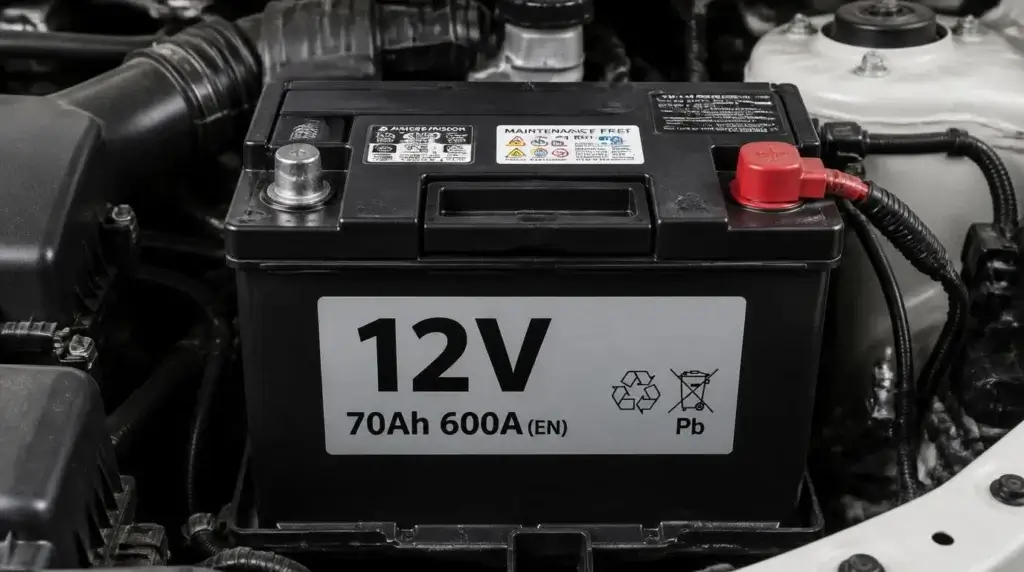
Image Credit: AI Generated
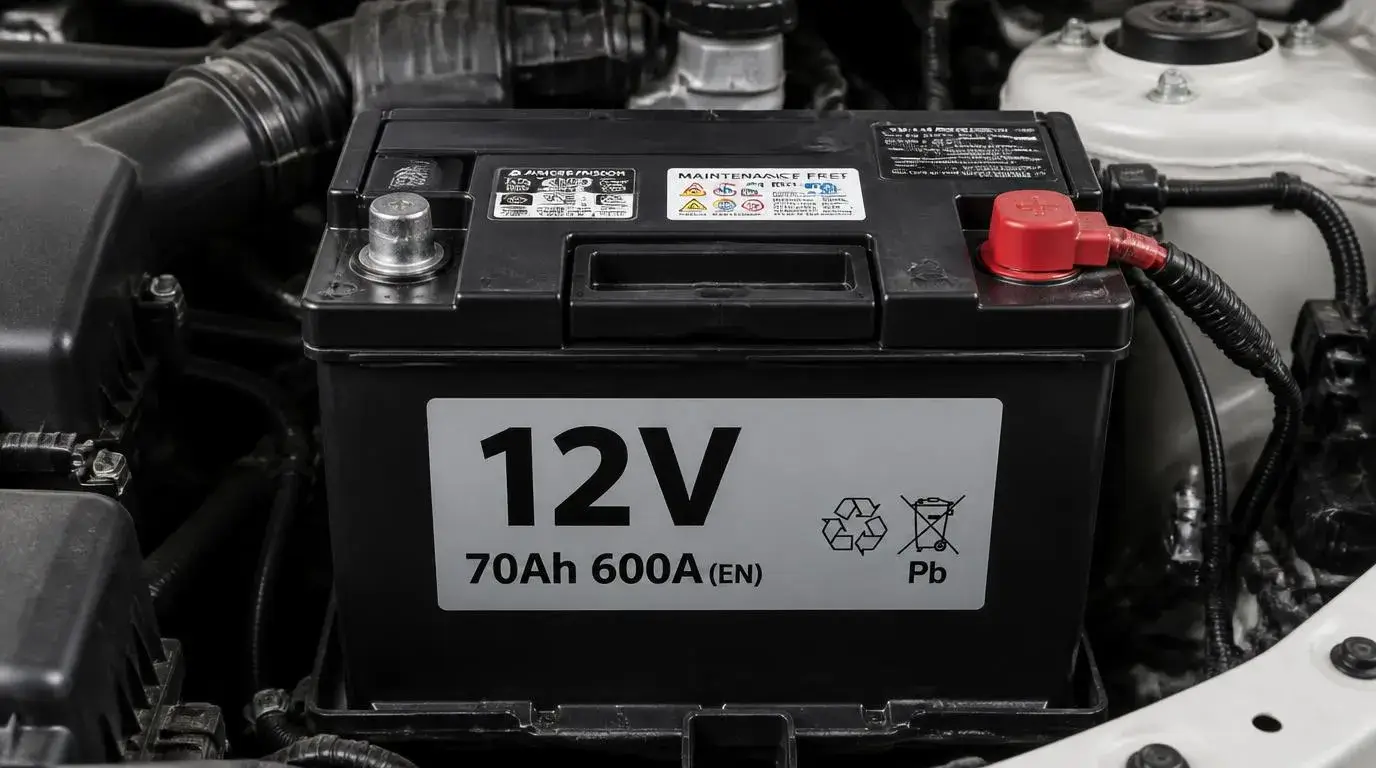
For the vast majority of conventional internal combustion engine (ICE) vehicles on the road today, the standard car battery operates within a 12-volt system. This has been the industry standard for decades, providing a reliable and efficient power source. While we refer to it as a “12-volt” battery, its actual voltage can vary depending on its state of charge and whether the engine is running.
A fully charged 12-volt car battery, when the engine is off and the battery has rested for a while, should typically measure around 12.6 to 12.8 volts. This voltage indicates that the battery’s six cells are each producing approximately 2.1 to 2.13 volts.
When the engine is running, the alternator takes over, recharging the battery and supplying power to the vehicle’s electrical components. In this scenario, the voltage across the battery terminals will typically be higher, usually between 13.7 and 14.7 volts. This higher voltage ensures that the battery is being charged effectively. If the voltage drops below 12.4 volts when the engine is off, it suggests the battery is not fully charged and may need attention.
Here’s a quick breakdown of what typical readings mean for a 12-volt battery:
- 12.6 – 12.8 volts: Fully charged and healthy.
- 12.4 – 12.6 volts: Good charge, but not 100%.
- 12.0 – 12.4 volts: Partially discharged, potentially needing a charge.
- Below 12.0 volts: Significantly discharged, likely unable to start the vehicle, and may indicate a problem.

- BATTERY SPECS: 12-Volt, 720 Cold Cranking Amps, Size: 9.38″ Long x 6.75″ Wide x 7.69″ Tall, Weight: 31.7 pounds, SAE Pos…
- RESERVE CAPACITY of 90 minutes for constant performance. Faster charging capabilities.
- SPIRALCELL TECHNOLOGY: SPIRALCELL TECHNOLOGY with 99.99% pure lead delivers more power and consistently outperforms conv…
Why 12 Volts? A Look at Automotive Evolution and Design
The adoption of the 12-volt system as the automotive standard wasn’t an overnight decision; it was a gradual evolution driven by technological advancements and practical considerations. Early automobiles, dating back to the early 20th century, often used 6-volt electrical systems.
The Shift from 6 Volts to 12 Volts
The transition from 6-volt to 12-volt systems primarily occurred in the 1950s. As vehicles became more sophisticated, they began incorporating a growing number of electrical accessories, such as:
- More powerful headlights
- Heaters and air conditioning
- Power windows and seats
- Radios and other entertainment systems
- More complex ignition systems
The 6-volt systems struggled to adequately power these increasing demands. Higher current was required to deliver the necessary power at 6 volts, leading to several issues:
- Thicker Wiring: To handle the higher current, thicker and heavier wiring was needed, adding to vehicle weight and cost.
- Voltage Drop: Longer wires and higher current draw resulted in significant voltage drops, meaning less power reached distant components.
- Starter Motor Efficiency: Starter motors, in particular, became less efficient with 6-volt systems as engines grew larger and required more cranking power.
The move to 12 volts effectively doubled the voltage, which meant that for the same amount of power, the current required was halved. This brought several significant advantages:
- Reduced Current Draw: Less current meant thinner, lighter, and more cost-effective wiring could be used throughout the vehicle.
- Minimized Voltage Drop: With lower current, voltage drop over distances became less of an issue, ensuring more consistent power delivery to all components.
- Improved Starter Performance: 12-volt systems provided a more robust and reliable power source for starter motors, making it easier to crank larger and higher-compression engines.
- Enhanced Accessory Performance: Electrical accessories operated more efficiently and effectively with the increased voltage.
The 12-volt system struck an optimal balance between power delivery, safety, and manufacturing costs, solidifying its place as the industry standard for conventional vehicles.
Beyond the Standard: Variations in Car Battery Voltage (e.g., EVs)
While the 12-volt system remains dominant for starting and accessory power in traditional internal combustion engine (ICE) vehicles, the automotive landscape is evolving rapidly, particularly with the rise of hybrid and electric vehicles (EVs). These advanced vehicles often incorporate much higher voltage systems for their primary propulsion, alongside a traditional 12-volt system for accessories.
Hybrid Electric Vehicles (HEVs)
Hybrid vehicles, which combine an ICE with an electric motor, typically feature two distinct battery systems:
- High-Voltage Battery: This is the large battery pack that powers the electric motor, providing propulsion assistance or enabling all-electric driving for short distances. These high-voltage batteries can range from 100 volts to over 300 volts, depending on the make and model. For example, some Toyota hybrids operate around 200-250 volts, while others might be higher.
- 12-Volt Auxiliary Battery: Hybrids still incorporate a standard 12-volt battery. This smaller battery serves the same purpose as in a conventional car: starting the ICE (if applicable), powering the vehicle’s computer systems, lights, radio, and other low-voltage accessories. The high-voltage battery system typically charges the 12-volt battery through a DC-DC converter.
Electric Vehicles (EVs)
Electric vehicles rely solely on electric motors for propulsion, meaning their primary battery packs operate at significantly higher voltages. EV battery packs are composed of hundreds or thousands of individual cells linked together to achieve very high voltages and capacities.
- High-Voltage Propulsion Battery: EV battery voltages commonly range from 400 volts to 800 volts, and some manufacturers are even exploring 1000-volt systems for future models. Higher voltages allow for faster charging, greater efficiency, and more power delivery to the electric motors. For example, the Porsche Taycan and Hyundai Ioniq 5 utilize 800-volt architectures.
- 12-Volt Auxiliary Battery: Similar to hybrids, EVs also include a standard 12-volt battery. This battery powers the vehicle’s low-voltage electronics, infotainment system, lights, and sometimes serves as a backup power source for critical safety systems. It’s also responsible for “booting up” the high-voltage system when the vehicle is turned on. The main high-voltage battery charges the 12-volt battery via a DC-DC converter.
Other Specialized Applications
Beyond mainstream vehicles, other specialized applications might use different voltages:
- Heavy-Duty Trucks and Equipment: Some heavy-duty trucks, construction equipment, and marine vessels might utilize 24-volt systems for increased power to operate larger starter motors, winches, and auxiliary equipment. These systems typically use two 12-volt batteries connected in series.
- Golf Carts and Recreational Vehicles: Depending on their power requirements, golf carts and some RVs can use various battery configurations, often combining multiple 6-volt or 8-volt batteries to achieve 36-volt or 48-volt systems.
The trend in automotive technology, particularly for propulsion, is towards higher voltages to meet the demands for greater power, faster charging, and improved efficiency in the electric era. However, the venerable 12-volt system continues to play a vital role in powering the auxiliary functions and electronics of nearly all vehicles, regardless of their primary power source.
Recognizing Symptoms of Low Car Battery Voltage
A car battery with low voltage can cause a range of issues, from minor annoyances to complete vehicle immobilization. Recognizing these symptoms early can help prevent being stranded and allow for timely maintenance or replacement.
Here are the most common signs that your car battery’s voltage might be too low:
- Slow Engine Crank: This is often the most obvious and common symptom. When you try to start your car, the engine turns over slowly, sluggishly, or with difficulty. It might sound like a “rrrr-rrrr-rrrr” instead of a quick “vroom.” This indicates there isn’t enough power to spin the starter motor at its optimal speed.
- Clicking Sound When Starting: If you hear a rapid clicking sound when you turn the key but the engine doesn’t crank, it’s a strong indicator of a severely discharged battery. The battery has just enough power to activate the starter solenoid (which makes the clicking sound) but not enough to engage the starter motor itself.
- Dim Headlights and Interior Lights: Before starting the car, or even when the engine is off but accessories are on, dim headlights, interior dome lights, or dashboard lights are a clear sign of low voltage. The lights might brighten slightly once the engine is running and the alternator is providing power.
- Warning Lights on the Dashboard: Many modern vehicles have a battery warning light (often shaped like a battery icon) that illuminates if there’s an issue with the charging system or if the battery voltage drops below a certain threshold. Other warning lights, such as the check engine light, can also sometimes be triggered by low voltage, as various sensors and modules require stable power to operate correctly.
- Malfunctioning Electrical Components: Because the battery powers all electrical systems, low voltage can affect various components. You might notice:
- Power windows rolling up or down very slowly.
- The radio or infotainment system acting erratically, resetting, or not turning on.
- Power locks failing to operate.
- Intermittent issues with power steering (in electric power steering systems).
- Backfiring or Misfiring: In some cases, a weak battery can lead to an inconsistent spark from the ignition system, causing the engine to misfire or even backfire, particularly during startup or under load.
- No Start/Dead Battery: The most extreme symptom is a complete failure to start the vehicle. You turn the key, and nothing happens – no lights, no clicking, just silence. This means the battery is entirely drained or has a catastrophic internal failure.
- Corrosion on Battery Terminals: While not a direct symptom of low voltage, excessive corrosion (a fuzzy, white or bluish-green substance) on the battery terminals can impede the flow of electricity, effectively reducing the available voltage to the vehicle’s systems. This can lead to all the symptoms listed above.
- Swollen Battery Case: In extreme cases, a battery that has been severely overcharged or has internal issues can swell or bulge. This is a dangerous sign and indicates the battery needs immediate replacement.
If you notice any of these symptoms, it’s wise to test your battery’s voltage and consider a professional inspection to determine the root cause. Ignoring these signs can lead to unexpected breakdowns and potentially more costly repairs.

- DROP STOP: Provides 100% Gap Coverage in front of, surrounding & behind seat belt catch. Drop Stop attaches to the seat …
- AS SEEN ON SHARK TANK: Drop Stop gap filler for car blocks that annoying yet ever so dangerous crevice between your car/…
- ORIGINAL AND PATENTED SEAT GAP FILLER: Drop Stop will never fall apart and lasts a lifetime. High Grade Neoprene casing …
How to Accurately Test Your Car Battery Voltage
Testing your car battery’s voltage is a simple yet crucial diagnostic step that can help you understand its health and prevent unexpected breakdowns. You’ll need a multimeter (also known as a volt-ohm meter or VOM) for this task.
Tools You’ll Need:
- Digital Multimeter: Ensure it has a DC voltage (VDC) setting.
- Safety Glasses and Gloves: Always recommended when working with car batteries.
- Wire Brush (optional): For cleaning corroded terminals.
Step-by-Step Guide to Testing Battery Voltage:
- Ensure the Vehicle is Off and Cooled Down: The most accurate reading is obtained when the battery has been at rest for at least a few hours (ideally overnight) and the engine is off. This allows the surface charge to dissipate, giving you a true reading of the battery’s state of charge. Make sure all accessories (lights, radio, etc.) are turned off.
- Locate Your Car Battery: Typically found under the hood, but in some vehicles, it might be in the trunk or under a rear seat.
- Inspect Battery Terminals: Check for any visible corrosion (a fuzzy, white, or bluish-green substance) on the terminals. If present, carefully clean it off with a wire brush before testing, as corrosion can interfere with accurate readings. Ensure the terminal connections are tight.
- Set Your Multimeter:
- Turn the dial to the DC voltage setting (VDC).
- Select a range that can accommodate 12-15 volts, typically 20 VDC on most multimeters.
- Connect the Multimeter Leads:
- Connect the red (positive) lead of the multimeter to the positive (+) terminal of the car battery. This terminal is usually marked with a plus sign and is often larger.
- Connect the black (negative) lead of the multimeter to the negative (-) terminal of the car battery. This terminal is usually marked with a minus sign.
- Ensure the leads make good, firm contact with the metal terminals.
- Read the Voltage: Observe the reading on your multimeter’s display. This reading represents your battery’s static or “resting” voltage.
Interpreting Your Readings (Engine Off):
As discussed earlier, here’s what the typical readings indicate for a 12-volt battery:
Voltage Reading (Engine Off)Battery Health/State of ChargeAction Required12.6 – 12.8 voltsFully charged, good health.Good to go!12.4 – 12.6 voltsGood charge, but not 100%.Monitor, consider a top-off charge.12.0 – 12.4 voltsPartially discharged.Needs charging soon.Below 12.0 voltsSignificantly discharged.Needs immediate charging, may not start vehicle.Below 10.0 voltsSeverely discharged, potentially damaged.Likely needs replacement.
Testing Voltage with the Engine Running (Charging System Check):
To check if your alternator is properly charging the battery, you can perform a second test with the engine running:
- Start your car.
- With the engine idling, repeat steps 4 and 5 above, connecting the multimeter leads to the battery terminals.
- Read the voltage.
Interpreting Your Readings (Engine Running):
- 13.7 – 14.7 volts: This is the ideal range, indicating your alternator is functioning correctly and charging the battery.
- Below 13.7 volts: Could indicate a failing alternator or a problem with the charging system. The battery is not receiving enough charge.
- Above 14.7 volts: Could indicate an overcharging alternator, which can damage the battery over time.
Load Test (Advanced):
While a simple voltage test gives a good indication, a “load test” provides a more comprehensive assessment of the battery’s ability to maintain voltage under a heavy electrical load (like starting the engine). This typically requires a specialized battery load tester, which applies a controlled load and measures the voltage drop. Most auto parts stores can perform a free load test for you.
Regularly testing your battery’s voltage can help you catch problems before they leave you stranded and ensure your vehicle’s electrical system is always performing optimally.
Conclusion: Maintaining Optimal Battery Health for Reliable Driving
Understanding how many volts is a car battery is more than just knowing a number; it’s about comprehending a fundamental aspect of your vehicle’s operation. We’ve explored the ubiquitous 12-volt system that powers most conventional cars, tracing its evolution from simpler 6-volt predecessors to meet the increasing electrical demands of modern vehicles. We also ventured beyond the standard, noting the much higher voltage systems found in hybrid and electric vehicles, which are critical for propulsion, while still relying on a 12-volt auxiliary battery for essential functions.
Recognizing the symptoms of low battery voltage from a sluggish engine crank and dim lights to warning indicators and a complete no-start situation is crucial for proactive maintenance. Equipped with a simple multimeter, we can accurately test our battery’s resting voltage and even assess the alternator’s charging performance, giving us valuable insights into our vehicle’s electrical health.
Maintaining optimal battery health is key to reliable driving. This includes:
- Regular Voltage Checks: Periodically test your battery, especially before long trips or during extreme weather.
- Keeping Terminals Clean: Prevent corrosion to ensure proper electrical flow.
- Securing the Battery: A properly mounted battery avoids internal damage from vibrations.
- Avoiding Short Trips: Frequent short drives may not allow the alternator enough time to fully recharge the battery.
- Using a Battery Maintainer: If your vehicle sits unused for extended periods, a trickle charger or battery maintainer can prevent deep discharge.
- Professional Inspections: Have your battery and charging system professionally checked during routine service.
By understanding the importance of battery voltage and taking simple preventative measures, we can extend the life of our car batteries, avoid unexpected breakdowns, and ensure our vehicles are always ready for the road ahead.
Frequently Asked Questions (FAQ)
Q1: What is the ideal voltage for a fully charged car battery?
A: For a standard 12-volt car battery, a fully charged reading when the engine is off and the battery has rested for a few hours should be between 12.6 and 12.8 volts.
Q2: What voltage indicates a dead car battery?
A: A car battery is considered significantly discharged or “dead” if its resting voltage drops below 12.0 volts. At this point, it likely won’t be able to start your car. If the voltage is below 10.0 volts, the battery may be permanently damaged and require replacement.
Q3: Why does my car battery read higher than 12 volts when the engine is running?
A: When your engine is running, the alternator is active, and its job is to recharge the battery and power the vehicle’s electrical systems. The alternator typically outputs between 13.7 and 14.7 volts to ensure the battery receives a sufficient charge.
Q4: Can a low voltage battery damage my car’s electronics?
A: Yes, consistently low voltage or frequent voltage fluctuations can stress and potentially damage sensitive electronic components in your car, such as the engine control unit (ECU), infotainment system, and various sensors. These systems require a stable power supply to function correctly.
Q5: How often should I check my car battery’s voltage?
A: It’s a good practice to check your car battery’s voltage at least twice a year, ideally before the onset of extreme hot or cold weather, as these conditions significantly impact battery performance. You should also check it if you notice any symptoms of a weak battery.
Q6: Do electric vehicles (EVs) have 12-volt batteries?
A: Yes, most electric vehicles (EVs) still include a standard 12-volt auxiliary battery in addition to their large, high-voltage propulsion battery pack. The 12-volt battery powers the vehicle’s low-voltage accessories, lights, infotainment, and is often responsible for “booting up” the high-voltage system. The main high-voltage battery charges the 12-volt battery via a DC-DC converter.
Q7: What is the voltage of an EV’s main battery?
A: The main propulsion battery packs in electric vehicles typically operate at much higher voltages, commonly ranging from 400 volts to 800 volts, with some newer systems even exploring 1000 volts. This higher voltage allows for greater power delivery and faster charging.