How Often Should You Replace a Car Battery?
If you’re wondering how often to replace car battery, the general answer is every three to five years. However, that isn’t a strict expiration date. Battery life depends on climate, driving habits, vehicle design, maintenance, vibration, and the condition of the charging system.
AAA notes that car batteries have a finite lifespan and commonly last about three to five years. In particularly hot climates, battery life can be shorter because high temperatures accelerate battery degradation.
That means you shouldn’t wait for your battery to completely fail before thinking about replacement. A battery can appear to work normally one day and then struggle to start the engine the next.
A smarter approach is to treat the three-year mark as a testing milestone. Once your battery reaches about three years old, have it tested regularly, especially if you drive in extreme temperatures or frequently take short trips. AAA specifically recommends annual battery testing after the third year.
Image Credit: AI Generated
Average Car Battery Lifespan
Most conventional automotive batteries are designed to provide several years of dependable starting power. AAA’s current guidance generally places typical battery life around three to five years, while another recent AAA guide notes that some batteries can last three to six years depending on circumstances.
Several conditions can move your battery toward either end of that range.
For example, a vehicle driven regularly in moderate conditions may get several years of service. On the other hand, a vehicle exposed to intense heat, frequent short trips, long periods of inactivity, or electrical problems may need a battery much sooner.
Battery type matters, too. Some vehicles use AGM batteries, particularly vehicles with demanding electrical systems or stop-start technology. Your replacement should match the battery type specified by the vehicle manufacturer rather than simply choosing the cheapest battery that physically fits.
Why Battery Age Matters
Car batteries don’t suddenly become old on their final day. Their performance gradually declines.
Inside a traditional lead-acid battery, chemical reactions provide electrical energy for starting the engine. Over time, the battery loses some of its ability to store and deliver that energy. Eventually, it may still show voltage but lack enough starting power when the engine demands it.
That’s why age should be considered together with performance.
A four-year-old battery that starts the vehicle strongly every morning may continue working for some time. However, a four-year-old battery that is already producing slow cranking, needs frequent charging, or has failed a professional load test is a different story.
When a Three-Year-Old Battery Needs Testing
At three years, don’t automatically throw away a battery that is working well. Instead, test it.
A battery test can provide a better picture of its condition than simply checking whether the headlights turn on. Testing can help identify a battery that is losing starting capacity before it leaves you stranded.
It’s also important to check the charging system. A battery that repeatedly goes flat may not be the real problem. A weak alternator, electrical drain, poor connection, or charging-system fault can produce similar symptoms.
In other words, don’t replace the battery blindly.
A professional inspection can determine whether the battery, alternator, starter, cables, or another electrical component is responsible.
AAA’s car battery guide is a useful additional resource for understanding battery lifespan, testing, ratings, and replacement considerations.
7 Warning Signs Your Car Battery Needs Replacement
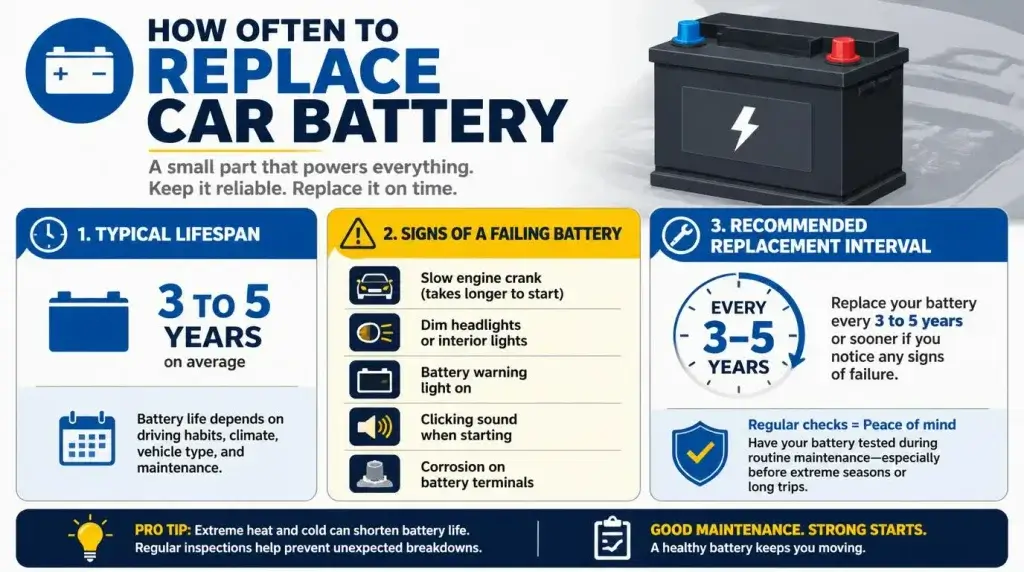
Image Credit: AI Generated
Knowing how often to replace car battery is useful, but age isn’t the only clue. Your vehicle can give you warning signs that the battery is becoming weak.
AAA identifies several common symptoms, including slow cranking, clicking sounds, dim lights, electrical problems, warning lights, repeated jump-starts, unusual odors, and a swollen battery case.
Here are seven of the most important signs to watch.
1. Slow Engine Cranking
One of the clearest warning signs is a noticeably slow engine crank.
When you turn the key or press the start button, the engine should crank relatively quickly. If it sounds slower than usual or takes longer to start, the battery may not be providing enough starting power.
Don’t ignore a gradual change.
Many drivers get used to a vehicle taking an extra second or two to start. Then one morning, the battery doesn’t have enough power to start the engine at all.
Slow cranking can have other causes, including starter problems or poor electrical connections, so testing is the best way to identify the real issue.
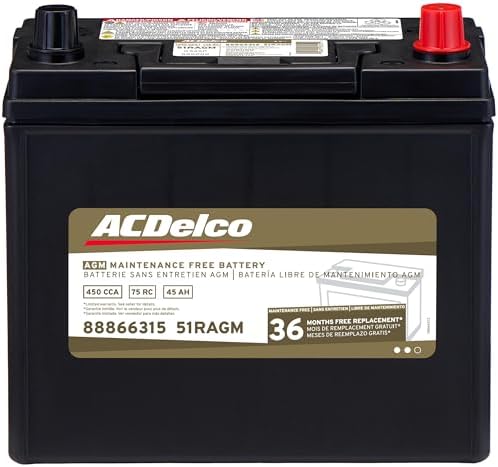
- Some ACDelco Gold parts may have formerly appeared as ACDelco Professional
- Premium aftermarket replacement part
- Manufactured to meet specifications for fit, form, and function for General Motors vehicles as well as most makes and mo…
2. Clicking When Starting
A repeated clicking sound when you try to start the vehicle can indicate insufficient electrical power.
A single click can have several possible causes, including a starter or relay issue. Rapid clicking is often associated with inadequate battery power or a poor electrical connection.
Before replacing the battery, inspect the battery terminals and cables. Loose or corroded connections can prevent electricity from flowing properly.
If the terminals are clean and secure but the problem continues, have the battery and starting system tested.
3. Dim or Flickering Lights
Your vehicle’s electrical system can also provide clues.
Dim headlights, flickering interior lights, or electrical accessories that behave strangely may indicate battery or charging-system problems. AAA specifically identifies dim or flickering lights as a warning sign that shouldn’t be ignored.
However, there’s an important distinction: modern vehicles depend heavily on the alternator once the engine is running. Therefore, unusual lighting problems don’t automatically mean the battery itself is bad.
A proper electrical-system test can help separate a weak battery from an alternator or wiring issue.
4. Frequent Jump-Starts
If you’ve needed multiple jump-starts recently, that’s a major red flag.
A jump-start can temporarily provide enough energy to get the engine running, but it doesn’t necessarily solve the underlying problem. If the battery repeatedly loses enough charge that the vehicle won’t start, its ability to hold a charge may be declining.
AAA also warns that frequent jump-starts can indicate either a worn battery or another electrical-system problem, such as an alternator fault.
Don’t make jump-starting your regular morning routine. Test the system instead.
5. Battery Warning Light
If the battery-shaped warning light appears on your dashboard, pay attention.
This light doesn’t always mean the battery itself has failed. It can indicate a problem with the charging system, which may involve the alternator, battery, wiring, or another component.
Driving for an extended period with a charging-system warning can leave you with a vehicle that eventually won’t start or may stop running.

- Vehicle battery is a 12V 60Ah AGM (Maintenance Free) Battery.Dimensions: 9.53 inches x 6.89 inches x 7.48 inches. . Term…
- Start and stop function: Group 47 AGM battery can be used for cars with start-stop function, Which can save you 10% of g…
- Fast charging: Our battery charging time is 40% faster than sla battery. This stems from new materials are used on batte…
6. Corrosion, Cracks, or Bulging
Open the hood and take a quick visual look at the battery.
White, blue, or greenish corrosion around the terminals can interfere with electrical connections. A cracked, leaking, or swollen battery case is more serious and can indicate damage or overheating.
AAA recommends replacing visibly damaged batteries rather than continuing to use them.
Never handle a damaged battery casually. If you’re unsure what you’re seeing, ask a qualified technician to inspect it.
7. Rotten-Egg Smell
A strong sulfur or rotten-egg smell around the battery is another warning sign.
This can indicate a damaged or unstable battery and shouldn’t be ignored. AAA lists unusual sulfuric odors among the signs that a battery may need replacement.
If you notice this smell along with swelling, leakage, or excessive heat, avoid experimenting with the battery. Have the vehicle inspected.
What Affects Car Battery Life?
Understanding how often to replace car battery becomes much easier when you understand what makes batteries wear out faster.
Two vehicles can have batteries of the same age but completely different levels of health. One may have years of useful life remaining, while another may be close to failure.
Extreme Heat and Cold
Temperature is one of the biggest factors affecting battery life.
Heat accelerates the chemical processes inside a battery and can increase degradation. AAA explains that batteries operating in hot climates often have shorter lifespans than those in cooler regions.
Cold weather creates a different challenge. Low temperatures can reduce available battery performance while making the engine harder to crank.
For drivers in hot regions, including parts of South Asia, heat management is especially important. Parking in shade when practical, maintaining proper battery installation, and checking battery health can help reduce unpleasant surprises.
Short Trips and Infrequent Driving
Your driving pattern matters more than you might expect.
Very short trips may not give the alternator enough time to replace the energy used during starting. If that pattern happens repeatedly, the battery may remain undercharged.
The opposite problem can occur when a vehicle sits unused for long periods. Batteries naturally discharge over time, even when the vehicle isn’t being driven. AAA identifies both frequent short trips and extended periods of inactivity as factors that can reduce battery life.
If you rarely drive, consider following the vehicle manufacturer’s recommendations for battery maintenance or using an appropriate maintenance charger when suitable.
Vibration and Poor Installation
A battery shouldn’t be bouncing around underneath the hood.
Excessive vibration can damage internal battery components. That’s why the battery hold-down hardware needs to be secure.
AAA notes that loose or missing hold-down hardware can significantly shorten battery life by allowing excessive movement.
During routine maintenance, make sure the battery is properly secured and the cables are firmly connected.
Charging-System Problems
Sometimes the battery gets blamed for a problem caused by another component.
The alternator is responsible for supplying electrical power while the engine is running and helping recharge the battery. If the charging system undercharges or overcharges the battery, battery life can be reduced.
AAA specifically notes that persistent undercharging or overcharging can accelerate battery aging.
Electrical drains can also cause trouble. Leaving lights on, using accessories while the engine is off, or having a faulty electrical component can discharge a battery.
If a relatively new battery keeps dying, don’t assume you simply bought a bad battery. Ask for a complete starting and charging-system inspection.
How to Test and Choose a Replacement Battery
Once you’ve determined that replacement is necessary, choosing the right battery is just as important as knowing how often to replace car battery.
A battery isn’t a universal component. Different vehicles require different physical dimensions, terminal configurations, battery technologies, and electrical specifications.
Battery Testing vs. Voltage Testing
A basic voltage reading can tell you something about a battery’s state of charge, but it doesn’t tell the whole story.
A battery can show an acceptable voltage reading and still have reduced starting capacity. That’s why professional battery testing is useful, particularly for an older battery that is beginning to show symptoms.
If your vehicle is difficult to start, ask for both a battery test and charging-system check.
This approach helps prevent unnecessary replacement and can identify problems elsewhere in the vehicle.
Choosing the Correct Battery Type
Always check your owner’s manual or the manufacturer’s battery specification before buying a replacement.
AAA recommends replacing a battery with the same type as the original factory-installed battery because vehicle charging systems are designed around specific battery technologies.
Depending on the vehicle, you may encounter:
- Conventional flooded lead-acid batteries
- Enhanced flooded batteries
- AGM batteries
- Other specialized battery technologies
Modern vehicles with start-stop systems and higher electrical demands may require a particular battery type.
Don’t choose based only on price.
A battery that physically fits but doesn’t meet the vehicle’s specifications can create problems.
Understanding CCA, Ah, and Group Size
Three specifications deserve particular attention.
Group size describes the battery’s physical dimensions, terminal arrangement, and hold-down configuration. Choosing the correct group size helps ensure proper installation.
Cold cranking amps (CCA) measure starting power under a standardized cold-weather test. Your vehicle manufacturer specifies the appropriate requirement.
Amp-hours (Ah) are used by some manufacturers to describe battery capacity.
AAA recommends meeting the vehicle manufacturer’s CCA or Ah requirements and paying close attention to battery fit and configuration.
Here’s a simple way to think about it:
- Group size: Will it physically fit?
- Battery type: Is it compatible with the vehicle?
- CCA: Does it provide sufficient starting power?
- Ah: Does it meet the required capacity specification?
- Terminal position: Are the connections correctly positioned?
When you’re unsure, check the owner’s manual or ask a qualified technician.
It’s also smart to consider warranty coverage and battery freshness. AAA recommends purchasing from a high-volume seller so the replacement battery hasn’t spent an excessive amount of time sitting in storage.
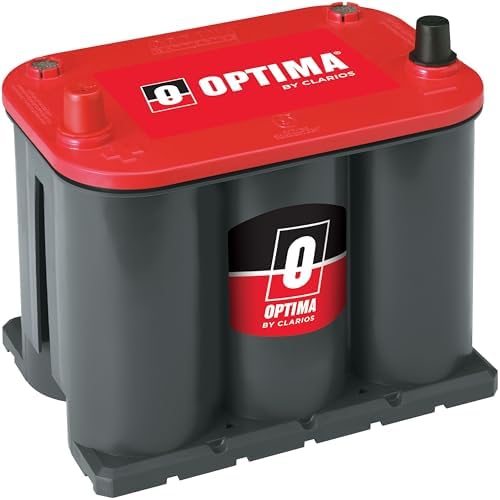
- BATTERY SPECS: 12-Volt, 720 Cold Cranking Amps, Size: 9.38″ Long x 6.75″ Wide x 7.69″ Tall, Weight: 31.7 pounds, SAE Pos…
- RESERVE CAPACITY of 90 minutes for constant performance. Faster charging capabilities.
- SPIRALCELL TECHNOLOGY: SPIRALCELL TECHNOLOGY with 99.99% pure lead delivers more power and consistently outperforms conv…
Should You Replace a Battery Before It Fails?
Sometimes preventive replacement makes sense.
If your battery is five years old, regularly struggles to start, or has failed a battery test, waiting for complete failure may save a little money today but create a much bigger inconvenience tomorrow.
On the other hand, replacing a healthy two-year-old battery simply because you are worried about failure usually isn’t necessary.
The best strategy is age plus symptoms plus testing.
Think of it as a three-part check:
- How old is the battery?
- Is the vehicle showing warning signs?
- Does the battery pass a proper test?
If all three point toward failure, replacement is the sensible choice.
Conclusion
So, how often to replace car battery? For most drivers, every three to five years is a useful general guideline, but the right replacement time depends on the battery’s condition, climate, driving habits, and vehicle charging system.
Don’t rely on the calendar alone.
Watch for slow engine cranking, clicking sounds, dim lights, repeated jump-starts, warning lights, corrosion, swelling, and unusual smells. Once the battery reaches about three years old, regular testing becomes a smart preventive habit.
Most importantly, choose a replacement that matches your vehicle’s required battery type, size, terminal configuration, and electrical specifications.
A little preventive attention can save you from the classic worst-case scenario: turning the key or pressing the start button and hearing absolutely nothing.
Frequently Asked Questions
How often should you replace a car battery?
Most car batteries typically last around three to five years, although some may last longer or fail sooner. Climate, driving habits, maintenance, vibration, and charging-system condition all affect lifespan.
Should I replace my car battery after three years?
Not necessarily. Three years is a good point to begin regular testing rather than an automatic replacement date. AAA recommends annual battery testing after the third year.
How do I know if my car battery is dying?
Common signs include slow engine cranking, clicking when starting, dim or flickering lights, frequent jump-starts, battery warning lights, corrosion, swelling, cracks, and a rotten-egg smell.
Can a car battery last five years?
Yes. Some batteries can last five years or longer under favorable conditions. However, reaching five years means the battery is in an age range where failure risk deserves serious attention. Testing is a better guide than age alone.
Can hot weather shorten car battery life?
Yes. High temperatures can accelerate battery degradation. AAA notes that batteries in hot climates often have shorter lifespans than batteries in cooler climates.
Can short trips damage a car battery?
Frequent short trips can contribute to battery problems because the alternator may not have enough time to replace the energy used during starting. Repeated short journeys can therefore contribute to an undercharged battery.
Does a jump-start mean I need a new battery?
Not always. A jump-start can be needed because of a discharged battery, lights being left on, an electrical drain, an alternator problem, or an aging battery. If jump-starts become frequent, have the battery and charging system tested.
Is a swollen car battery dangerous?
A swollen battery case indicates damage and should not be treated as normal. AAA identifies bulging or disfigured battery cases as signs of battery damage requiring attention.
Can I replace my car battery myself?
Some vehicles allow relatively straightforward battery replacement, but modern vehicles can have battery-management systems and specific battery requirements. If you’re unsure about battery type, registration, coding, terminal connections, or installation, professional service is safer.
Is AGM better than a regular battery?
AGM isn’t automatically better for every vehicle. It’s designed for particular applications and electrical demands. The important point is to install the battery type specified by the vehicle manufacturer rather than upgrading or downgrading without checking compatibility.