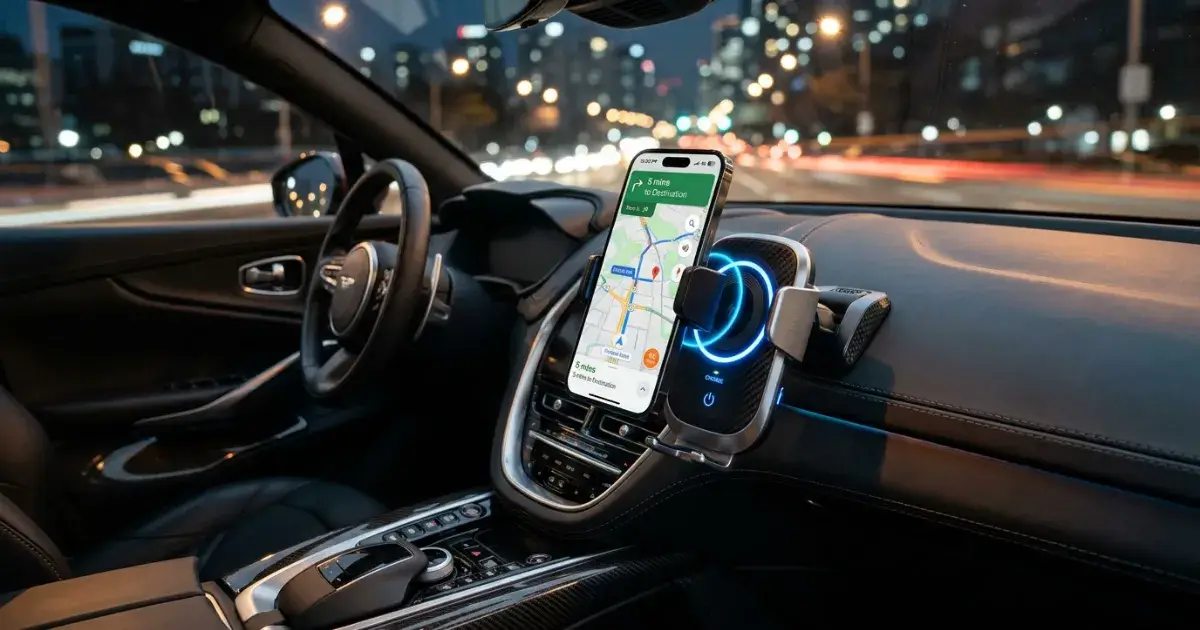
A dead phone battery while driving feels almost like running out of fuel on a highway. Your navigation disappears, music cuts off, hands-free calling stops working, and suddenly a simple drive becomes frustrating. That’s exactly why the best wireless car charger mount has transformed from a luxury gadget into an everyday driving essential. Modern drivers rely heavily on smartphones for GPS navigation, traffic updates, emergency communication, ride-sharing apps, and even digital car keys. Keeping the device charged safely and conveniently matters more than ever.
Wireless charging technology has evolved dramatically over the last few years. Early wireless chargers were slow, unreliable, and often overheated devices. Today’s premium wireless car charger mounts are faster, smarter, and designed specifically for life on the road. They can automatically clamp your phone, rotate for ideal viewing angles, and deliver fast charging speeds comparable to wired charging in many cases. Some even include intelligent cooling systems to prevent overheating during long trips.
The growing demand for wireless charging accessories is impossible to ignore. According to industry reports from Statista and Grand View Research, the global wireless charging market is expected to surpass $76 billion by 2030, fueled by the increasing adoption of Qi-enabled smartphones. Apple, Samsung, Google, and nearly every major smartphone manufacturer now support wireless charging, making these mounts more practical than ever before.
Choosing the right mount, though, can feel overwhelming. Hundreds of products promise “fast charging” and “ultimate stability,” but many fail under real driving conditions. Some shake violently on rough roads. Others lose charging connection during sharp turns. A few barely hold larger smartphones securely. This guide breaks down everything you need to know so you can choose a reliable, durable, and efficient wireless charger mount that actually improves your driving experience instead of adding frustration.
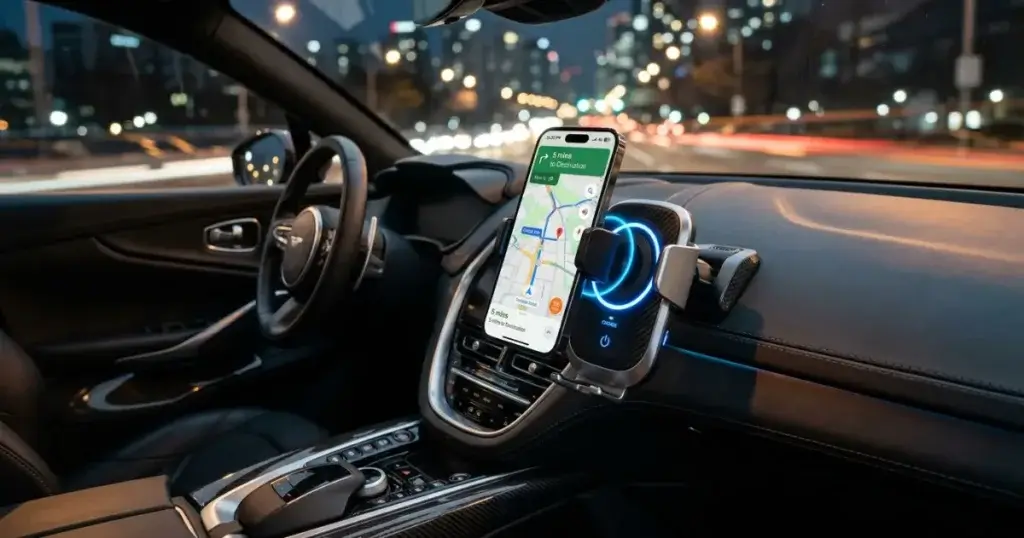
Image Credit: AI Genareted
Why Wireless Car Charger Mounts Have Become Essential
The average driver spends more time connected to their smartphone than ever before. Navigation apps like Google Maps and Waze continuously consume battery power, especially with brightness turned up during daytime driving. Streaming music, podcasts, and Bluetooth calls drain batteries even faster. Traditional charging cables can help, but they introduce clutter, tangles, and repeated plugging and unplugging that eventually damages charging ports.
Wireless car charger mounts simplify the entire experience. You simply place your phone on the mount, and charging begins instantly. No fumbling with cables at traffic lights or struggling to connect chargers while driving. That convenience alone explains why so many drivers are upgrading to wireless solutions.
Safety also plays a huge role. Distracted driving remains one of the leading causes of accidents worldwide. According to the National Highway Traffic Safety Administration (NHTSA), thousands of lives are lost every year due to distracted driving behaviors. A stable wireless charging mount keeps the phone securely positioned at eye level, minimizing the need to look down or handle the device while driving. It transforms the smartphone from a distraction into a streamlined driving assistant.
Another major factor is vehicle design. Many modern cars now include wireless charging pads, but they often sit in awkward locations that make navigation difficult to see. Wireless charging mounts solve this problem by combining visibility and charging into one accessory. Whether mounted on the dashboard, windshield, or air vent, they allow drivers to safely access maps and calls while keeping batteries fully charged.
The rise of larger smartphones has also increased demand for better mounting systems. Foldable phones, oversized flagship devices, and heavy protective cases require stronger support systems than older mounts could provide. Premium wireless charger mounts now use stronger arms, advanced suction systems, and magnetic stabilization to accommodate modern devices without wobbling or slipping during sudden stops.
The Rise of Smartphone Dependence While Driving
Smartphones have become the control center of modern driving. Before leaving home, drivers check traffic conditions, weather forecasts, fuel prices, and estimated arrival times. Once on the road, smartphones continue guiding nearly every aspect of the journey. The reliance is so complete that many people feel genuinely stranded if their phone battery falls below 10%.
Ride-share drivers, delivery workers, and frequent travelers depend even more heavily on their devices. For them, battery life directly affects income and productivity. A wireless charger mount ensures continuous charging throughout the day while keeping navigation accessible at all times.
There’s also a psychological convenience factor involved. Drivers no longer need to carry multiple cables for different devices or worry about forgetting a charger at home. The mount becomes a permanent charging station inside the vehicle. That seamless experience feels surprisingly luxurious once you get used to it.
Modern infotainment systems support Apple CarPlay and Android Auto, but many drivers still prefer direct smartphone access. Wireless charger mounts bridge that gap perfectly. They support hands-free interaction while maintaining device visibility for notifications, maps, and calls.
The shift toward electric vehicles has also increased interest in wireless accessories. EV interiors tend to emphasize minimalism and cable-free environments. Wireless charging mounts align perfectly with that futuristic aesthetic. Instead of messy wires dangling around the dashboard, drivers get a clean, organized setup that complements modern car interiors beautifully.
How Wireless Charging Improves Safety and Convenience

- 【Auto-Precise Alignment Charging】This wireless car…
- 【Upgraded Intelligent Auto-Clamping】The wireless c…
- 【Make Drive Easier】Combines the wireless charger &…
Convenience often sounds like a small benefit until you experience it every day. Imagine entering your car with coffee in one hand and keys in the other. Instead of wrestling with a charging cable, you simply place your phone into the mount, and it starts charging automatically. That effortless process becomes addictive surprisingly quickly.
Safety benefits are even more important. A properly positioned wireless charger mount keeps navigation visible without forcing drivers to glance away from the road for extended periods. Quick visual checks become easier and safer compared to looking down toward a center console or passenger seat.
Many advanced mounts now include automatic clamping arms powered by infrared sensors. When the phone approaches the mount, the arms open automatically and close securely around the device. This hands-free interaction reduces distraction and makes one-handed operation much easier.
Another underrated advantage is reduced wear and tear on smartphone charging ports. Constant plugging and unplugging eventually loosens charging connectors, especially on heavily used devices. Wireless charging eliminates that physical stress entirely.
Premium wireless mounts also feature intelligent charging systems that regulate power delivery. They detect compatible fast-charging devices and optimize output accordingly. Some models even include cooling fans or heat dissipation technology to maintain stable charging speeds during long drives or hot weather conditions.
How Wireless Car Charger Mounts Work

- 2025 Premium Design:LISEN MagSafe Car Wireless Charging Mount for iPhone uses official Tora-TC Heat Sink for long-term, …
- Wireless Charging Companion: Enjoy the convenience of seamless wireless charging with the MagSafe car mount, delivering …
- Battery Protection: Equipped with advanced safety technology, this charger helps protect your iPhone battery by preventi…
Wireless car charger mounts rely primarily on Qi wireless charging technology, which uses electromagnetic induction to transfer energy between the charger and smartphone. Inside the mount is a charging coil that creates an electromagnetic field. When a compatible smartphone is placed against it, another coil inside the phone receives that energy and converts it into battery power.
This process sounds highly technical, but in everyday use, it feels almost magical. No visible electrical connection exists between the phone and charger, yet power flows continuously. The technology has improved dramatically over the years, with newer standards supporting faster speeds and better energy efficiency.
Modern mounts usually connect to the car’s power source through USB-C or a 12V adapter. Fast charging models often require Quick Charge (QC) or Power Delivery (PD) adapters to deliver maximum charging speeds. Without the correct power adapter, charging performance may slow significantly.
Many premium wireless mounts also incorporate smart safety features. These include temperature monitoring, overcharge prevention, short-circuit protection, and foreign object detection. If metal objects interfere with charging, the mount can automatically pause power delivery to prevent overheating.
The mechanical side of the mount matters just as much as the charging technology. Strong suction cups, locking vent clips, and adjustable arms keep the phone stable while driving. Better models undergo vibration testing to ensure reliability even on rough roads.
Understanding Qi Wireless Charging Technology
The backbone of nearly every modern wireless car charger mount is Qi charging technology. Pronounced “chee,” Qi is the global wireless charging standard developed by the Wireless Power Consortium. It allows compatible devices to charge without a physical cable connection. What once felt futuristic is now part of everyday life, especially inside vehicles where convenience and accessibility matter constantly.
Qi charging works through electromagnetic induction. Inside the wireless mount is a transmitter coil, while your smartphone contains a receiver coil. When the phone is positioned correctly on the mount, energy transfers wirelessly between the two coils. This process generates electricity inside the smartphone battery, allowing it to charge continuously while mounted. The alignment between the coils matters significantly. Premium charger mounts are engineered to position phones precisely for stable charging even during sudden turns or bumpy roads.
One of the biggest improvements in recent years has been charging speed. Earlier wireless chargers were painfully slow compared to traditional cables. Drivers often watched their battery percentage barely increase during long trips. Modern fast wireless chargers support outputs ranging from 10W to 15W, and some proprietary systems go even higher. Apple MagSafe systems and Samsung Fast Wireless Charging technology have pushed wireless charging much closer to wired performance. According to recent consumer electronics market reports, over 70% of flagship smartphones released since 2023 support fast wireless charging, making these mounts far more practical than before.
Heat management is another area where quality matters. Wireless charging naturally produces some heat because energy transfers through electromagnetic fields rather than direct wiring. Cheap mounts often struggle with temperature control, causing phones to warm up excessively or charging speeds to slow down. Better wireless car charger mounts include ventilation systems, internal cooling fans, and smart power regulation to maintain stable temperatures. This becomes especially important during summer driving when dashboard temperatures can rise dramatically.
Qi technology also supports intelligent communication between the charger and smartphone. The mount can identify whether the device supports fast charging and adjust power delivery automatically. This prevents battery damage while maximizing efficiency. Some advanced models even remember charging preferences or switch modes depending on device temperature and battery percentage. What appears to be a simple mount on the surface actually contains surprisingly sophisticated engineering beneath the plastic shell.
Automatic Clamping and Smart Sensor Features
One of the most impressive upgrades in modern wireless car charger mounts is the addition of automatic clamping systems and smart sensors. These features transform the user experience from basic functionality into something that feels smooth, intuitive, and almost futuristic. Instead of manually stretching clamps every time you enter the vehicle, the mount reacts automatically when your phone approaches.
Most automatic clamping systems rely on infrared sensors or motion detection technology. As the smartphone moves near the charging area, small motors activate the side arms and gently secure the device. Once clamped, charging begins instantly. Some mounts also include touch-sensitive release buttons that open the arms automatically when you want to remove the phone. This creates a nearly seamless one-handed experience that feels particularly useful during busy commutes or quick stops.
The convenience factor becomes obvious in daily driving situations. Imagine entering your car carrying groceries, coffee, or a laptop bag. Instead of struggling with cables and clamps, you simply place the phone near the mount and let the system handle everything. It saves time, reduces distractions, and makes the interior feel more organized.
Smart sensor technology also improves safety. Many high-end mounts detect phone size and adjust grip pressure automatically. Larger devices receive stronger support while smaller phones remain securely positioned without excessive force. This matters because smartphones continue getting heavier and larger every year. Foldable devices and rugged protective cases can easily overwhelm older mounting systems.
Some advanced mounts now integrate capacitor backup systems, allowing the arms to open even after the car engine turns off. Without this feature, users might struggle to retrieve their phone if vehicle power cuts immediately after parking. It sounds like a small detail, but it dramatically improves real-world usability.
Premium models also include foreign object detection and intelligent charging interruption. If keys, coins, or metal objects accidentally enter the charging area, the mount pauses charging automatically to prevent overheating. This extra layer of protection protects both the smartphone and the charger itself.
Another emerging trend involves AI-enhanced positioning systems. Certain premium mounts analyze phone placement and optimize charging alignment automatically. While still relatively new, this technology reduces charging interruptions caused by vibration or imperfect positioning. As automotive technology becomes smarter overall, wireless charging mounts are evolving alongside it, becoming far more than simple phone holders.
Types of Wireless Car Charger Mounts
Choosing the best wireless car charger mount starts with understanding the different mounting styles available. Every vehicle interior is designed differently, and what works perfectly in one car might feel awkward in another. Some drivers prioritize visibility, while others care more about stability or preserving dashboard aesthetics. The mounting style directly affects comfort, usability, and charging performance during everyday driving.
The four most common mount types are dashboard mounts, air vent mounts, windshield mounts, and cup holder or CD slot mounts. Each offers unique strengths and weaknesses depending on driving habits and vehicle layout. Understanding these differences helps prevent the frustration many buyers experience after purchasing a mount that technically works but feels inconvenient in real life.
Mount placement affects more than convenience. It also impacts temperature exposure, vibration levels, and driving visibility. For example, windshield-mounted chargers often receive direct sunlight, potentially increasing device temperature during summer months. Air vent mounts can help cool the phone through air conditioning airflow but may partially block ventilation. Dashboard mounts provide strong visibility but require high-quality adhesive systems to remain stable over time.
Vehicle type also matters. Compact cars with limited dashboard space may benefit more from vent mounts, while larger SUVs often accommodate dashboard or windshield systems comfortably. Electric vehicles with minimalist interiors may favor magnetic mounting systems that maintain a clean appearance without bulky arms.
Some users even switch between multiple mounting styles depending on driving conditions. Long-distance travelers often prefer highly stable dashboard mounts, while city drivers may prioritize quick access and portability with vent-based systems. There is no single perfect option for everyone. The best wireless car charger mount is ultimately the one that fits naturally into your driving routine without becoming distracting or inconvenient.
Dashboard Mounts

- 【True Military-Grade, Version 6.0 BEST Ultimate Model】The leader in high-end car phone holders. Rigorously tested to mee…
- 【Larger & More Adhesive Suction Cup, Strongest Suction】Unmatched Vacuum Grip! According to the 2026 latest data from car…
- 【𝐃𝐞𝐭𝐚𝐢𝐥𝐬 𝐚𝐫𝐞 𝐊𝐢𝐧𝐠 & 𝐊𝐞𝐲, 𝐒𝐚𝐲 𝐆𝐨𝐨𝐝𝐛𝐲𝐞 𝐭𝐨 𝐎𝐥𝐝 𝐅𝐢𝐱𝐞𝐝-𝐟𝐨𝐨𝐭 𝐕𝐞𝐫𝐬𝐢𝐨𝐧】① 0″-0.78″ adjustable feet: wider and deeper for all 4″-7…
Dashboard mounts remain one of the most popular wireless charging solutions because they offer an excellent balance between visibility, accessibility, and stability. Positioned directly within the driver’s natural field of view, these mounts make navigation easier to follow without excessive eye movement away from the road. That placement can significantly improve driving comfort during long trips or unfamiliar routes.
Most dashboard mounts use either adhesive pads or suction systems to secure themselves to flat surfaces. High-quality models often combine both approaches for extra stability. Premium adhesive materials resist heat better and maintain grip even after prolonged sun exposure. Cheaper models sometimes fail during hot weather, causing the mount to detach unexpectedly, which can be frustrating and potentially dangerous.
One major advantage of dashboard mounting is reduced vibration compared to air vent systems. Since the mount attaches directly to the car structure rather than movable vent slats, phones remain steadier on rough roads. This stability helps maintain uninterrupted wireless charging alignment and improves screen readability while driving.
Dashboard mounts also work well with larger smartphones and heavier cases. Their sturdier support systems accommodate oversized devices more comfortably than many vent-mounted alternatives. This becomes increasingly important as flagship phones continue growing in size and weight every year.
There are a few potential downsides, though. Some dashboards have textured surfaces that reduce adhesive effectiveness. Drivers also need to position the mount carefully to avoid obstructing visibility or interfering with airbags. In certain vehicles, finding the perfect location may require experimentation.
Despite these minor challenges, dashboard mounts remain among the best all-around options for drivers who want reliable wireless charging and easy navigation access. They provide a balanced experience that works particularly well for commuters, road-trip enthusiasts, and rideshare drivers who spend long hours behind the wheel.
Air Vent Mounts

- Universal (compatible with most GPS devices and smartphones up to 5-inches)
- Keep your windshield clear, by securely mounting your device to your vehicle’s air vent.
- Its clip-on mounting system allows for simple one-hand docking and undocking.
Air vent mounts are incredibly popular because of their simplicity and convenience. Instead of relying on adhesives or suction cups, these mounts clip directly onto the car’s air vents. Installation usually takes only a few seconds, making them appealing for drivers who switch vehicles frequently or dislike permanent dashboard attachments.
One of the biggest advantages of vent mounts is temperature management. Since the mount sits directly in front of the vehicle’s air conditioning system, cool airflow helps reduce smartphone temperature during wireless charging. Heat is one of the main reasons wireless charging speeds slow down, so this cooling effect can noticeably improve charging consistency during hot weather.
Vent mounts also preserve dashboard aesthetics. Many modern drivers prefer minimal, uncluttered interiors, especially in luxury vehicles or electric cars. A compact vent mount blends more naturally into the cabin compared to large suction-mounted systems attached to the windshield.
Portability is another major strength. Drivers who travel often or use rental cars appreciate being able to remove and reinstall the mount quickly without leaving adhesive residue behind. This flexibility makes vent mounts especially attractive for business travelers and rideshare drivers using multiple vehicles.
Still, vent mounts are not perfect for every situation. Some car vents are too weak or oddly shaped to support heavier smartphones securely. Large flagship devices with thick protective cases may cause the mount to tilt downward over time. Rough roads can also create additional vibration because the vent slats themselves move slightly during driving.
Another consideration involves airflow direction. In winter, hot air blowing directly onto the phone may increase device temperature during charging. While not usually dangerous, excessive heat can slow charging performance and affect battery longevity over time.
Even with these limitations, vent mounts remain one of the most practical choices for everyday drivers seeking affordable, portable, and easy-to-install wireless charging solutions.
Windshield Mounts
![YRU True Military-Grade [360° Rotation Suction] 2026 Ultimate Car...](https://m.media-amazon.com/images/I/51LEZQzVMNL._AC_.jpg)
- 【𝐀𝐫𝐞 𝐘𝐨𝐮 𝐒𝐞𝐚𝐫𝐜𝐡𝐢𝐧𝐠 𝐟𝐨𝐫 𝐆𝐢𝐟𝐭𝐬? 𝐒𝐚𝐟𝐞𝐭𝐲 𝐢𝐬 𝐭𝐡𝐞 𝐁𝐞𝐬𝐭 𝐆𝐢𝐟𝐭】Birthday, Valentine’s Day, Mother’s Day, Father’s Day, Thanksgivin…
- 【True Military-Grade Certified, 2026 Ultimate Car Mount】Since 2010, YRU has been devoted to R&D High-end Car Mounts. Ove…
- 【Invincible Rotatable 90LBS Black Sucker, 2026 Strongest – No Melt, No Yellow】Our Upgraded Larger Rotatable Black Sucker…
Windshield mounts have remained a favorite among drivers for years because they offer excellent visibility and flexible positioning. These mounts attach directly to the windshield using strong suction cups, allowing the phone to sit close to eye level for easier navigation viewing. For many drivers, especially those who spend long hours on highways or unfamiliar roads, this positioning feels more natural and reduces the need to glance downward repeatedly.
One of the biggest strengths of windshield mounts is adjustability. Most models include telescoping arms, rotating heads, and multi-angle joints that let drivers customize the phone position exactly how they want it. Whether you prefer portrait mode for scrolling playlists or landscape mode for wide navigation maps, windshield mounts provide excellent flexibility. This level of customization makes them especially useful for delivery drivers, rideshare workers, and road trip travelers who rely heavily on constant navigation access.
High-quality windshield mounts use industrial-grade suction technology designed to handle vibration, temperature changes, and rough roads. Premium models often feature locking suction mechanisms that create a tighter seal against the glass, preventing accidental falls. Some manufacturers even include adhesive dashboard discs for drivers who want windshield-level positioning without attaching directly to the glass.
There are, however, a few drawbacks to consider. Direct sunlight exposure is one of the most common complaints. Since the mount sits near the windshield, phones can heat up quickly during sunny weather. Wireless charging already generates some warmth naturally, so combining that with sunlight can sometimes trigger temperature warnings on certain devices. Better mounts reduce this problem through ventilation systems or cooling fans, but placement still matters.
Legal restrictions are another factor. Some regions limit windshield-mounted devices if they obstruct driver visibility. Drivers should always check local laws before installing large mounts on the windshield area. Proper placement near lower corners usually avoids issues while still maintaining strong visibility.
Despite these considerations, windshield mounts continue to deliver one of the most user-friendly experiences available. Their elevated viewing angle, strong adjustability, and broad compatibility make them an excellent option for drivers who prioritize navigation visibility and ergonomic positioning during daily travel.
CD Slot and Cup Holder Mounts
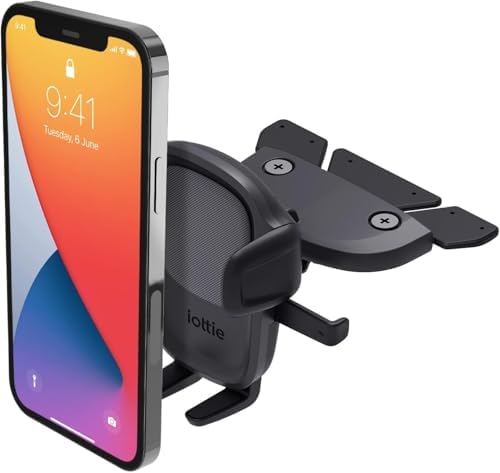
- EASY ONE TOUCH MECHANISM: Press the locking side arms with a quick one-handed motion, and place your phone against the t…
- WIDE COMPATIBILITY: The universal cradle that fits smartphones and cases from 2.3″ – 3.5″ in width.
- ADJUSTABLE BOTTOM FOOT: You can easily and securely adjust the bottom foot by squeezing the spring button.
CD slot and cup holder mounts may sound unconventional at first, but they solve several problems that traditional mounting styles sometimes struggle with. These designs cater to drivers who dislike windshield attachments, have unsuitable air vents, or want a more stable mounting location inside the vehicle cabin.
CD slot mounts slide securely into the car’s unused CD player slot. While physical CDs have become rare, many vehicles still include CD players that now serve little practical purpose. Manufacturers cleverly transformed this unused space into a stable mounting location. Since CD slots are usually positioned near the center console, these mounts often provide a balanced viewing angle that keeps navigation visible without blocking the windshield.
One major advantage of CD slot mounts is stability. The slot itself creates a firm anchor point, reducing vibration significantly compared to weaker vent clips. Larger smartphones remain secure even during sudden braking or uneven roads. Drivers also appreciate that these mounts avoid adhesive residue entirely, preserving dashboard appearance.
Cup holder mounts take a different approach by placing the charging system lower in the cabin. They use expandable bases that lock securely inside standard cup holders. Flexible gooseneck arms or adjustable stems then raise the phone into a comfortable viewing position. This style works particularly well in vehicles with limited dashboard space or uniquely designed interiors where other mount types fit poorly.
Cup holder mounts offer excellent stability because they rely on the solid structure of the center console rather than thin vent slats or glass suction systems. They also avoid windshield visibility concerns entirely. Many drivers prefer this lower positioning because it keeps the dashboard cleaner and less cluttered.
The downside is accessibility. Since the phone sits lower than dashboard or windshield mounts, drivers may need to glance further away from the road when checking directions. Cup holder mounts can also sacrifice valuable storage space, especially in vehicles with limited cup holders.
Both CD slot and cup holder mounts serve niche but important roles in the wireless charging market. They prove that the best wireless car charger mount is not always the most popular design. Sometimes the ideal solution depends entirely on the specific layout and ergonomics of your vehicle interior.
Key Features to Look for in the Best Wireless Car Charger Mount
Shopping for a wireless car charger mount can quickly become overwhelming because so many products appear similar at first glance. Nearly every listing promises fast charging, strong grip, universal compatibility, and premium quality. In reality, performance differences between cheap and high-quality models can be dramatic. A poorly designed mount may wobble constantly, charge inconsistently, or fail completely after only a few months of use.
The best wireless charger mounts combine several critical features into one reliable system. Charging speed matters, but stability, heat management, build quality, and ease of use are equally important. Drivers should think about how they actually use their phones inside the car rather than focusing only on technical specifications.
For example, someone commuting through rough urban streets may prioritize vibration resistance and strong clamping arms. Long-distance travelers might care more about cooling systems that maintain charging performance during extended drives. Drivers using oversized phones or thick protective cases need mounts capable of handling extra weight without slipping.
Build materials also reveal a lot about overall quality. Premium mounts typically use reinforced plastics, aluminum alloy components, silicone padding, and industrial-grade suction systems. Cheaper products often cut corners with brittle plastic parts that weaken over time, especially under heat exposure inside parked vehicles.
Compatibility has become increasingly important as smartphone designs evolve. Foldable phones, camera-heavy flagship devices, and magnetic charging ecosystems like Apple MagSafe require smarter engineering than older universal mounts provided. Some chargers perform perfectly with one phone brand but poorly with another.
A truly great wireless car charger mount should feel effortless during daily use. You should not need to constantly adjust positioning, reconnect charging alignment, or tighten loose clamps every few days. The best products quietly perform their job in the background while making driving safer, cleaner, and more convenient.
Fast Charging Capabilities
Fast charging is one of the first features most buyers look for, and for good reason. Navigation apps, music streaming, Bluetooth calls, and high screen brightness can drain smartphone batteries rapidly during driving. A weak charger may barely maintain battery percentage, while a powerful fast charger can actively recharge the device even during heavy usage.
Modern wireless car charger mounts commonly support charging outputs between 10W and 15W, though actual performance depends heavily on phone compatibility and power adapters. Apple iPhones with MagSafe support typically charge wirelessly at up to 15W under ideal conditions, while many Samsung and Android devices support similar or slightly higher speeds using proprietary fast charging standards.
The power source matters just as much as the mount itself. Many users mistakenly connect fast wireless chargers to weak USB ports inside older vehicles and then wonder why charging feels slow. High-performance mounts usually require Quick Charge 3.0 or USB Power Delivery adapters to unlock full charging speeds. Without sufficient power input, the mount automatically reduces charging output.
Temperature also directly affects charging performance. Wireless charging naturally generates heat, and excessive heat forces smartphones to slow charging speeds for battery protection. Premium mounts combat this problem with cooling vents, heat-dissipation materials, and internal fans that regulate temperature during long drives.
Charging alignment plays another important role. Better mounts maintain precise coil positioning even when driving over bumps or uneven roads. Cheap mounts often lose alignment slightly, causing charging interruptions that repeatedly stop and restart power delivery.
Real-world testing matters more than marketing claims. Some budget chargers advertise “15W fast charging” but deliver inconsistent performance under actual driving conditions. Reliable brands usually undergo certification testing and provide more stable charging speeds over time.
Drivers who depend heavily on navigation, rideshare apps, or delivery platforms should prioritize fast charging capability strongly. A powerful wireless charger transforms the smartphone from a battery-draining stress point into a dependable travel companion that stays ready throughout the entire journey.
Strong Grip and Stability
A wireless charger mount is useless if it cannot hold the phone securely. Grip strength and overall stability are among the most important factors separating premium mounts from frustrating low-quality alternatives. The moment a phone starts shaking excessively, slipping downward, or falling during turns, the entire convenience of wireless charging disappears instantly.
Modern smartphones are heavier than ever before. Large displays, advanced camera systems, metal frames, and rugged protective cases add significant weight. Foldable phones push mounting systems even harder because of their unusual shapes and thicker bodies. A strong mount must handle all these variations without losing stability.
High-quality mounts typically use reinforced clamping arms lined with silicone padding. The silicone increases friction while protecting the phone from scratches. Automatic clamping systems in premium models apply balanced pressure evenly across the device instead of squeezing awkwardly at specific points. This creates a more secure hold without damaging buttons or side controls.
Mounting base quality matters just as much as clamp strength. Weak suction cups or flimsy vent clips often fail after repeated temperature changes inside the vehicle. Industrial-grade suction systems and metal-reinforced vent clips dramatically improve long-term durability. Some premium mounts even include anti-vibration stabilizers that reduce shaking during rough driving conditions.
Stability directly impacts charging reliability as well. Wireless charging depends on consistent coil alignment between the phone and charger. Excessive movement interrupts that alignment, causing charging to stop intermittently. Better mounts maintain stable positioning even during sharp braking, potholes, or sudden lane changes.
Drivers using larger SUVs, trucks, or performance vehicles may experience stronger cabin vibrations depending on road conditions. In these situations, mount quality becomes even more critical. Spending slightly more on a well-engineered mount often prevents endless frustration later.
A good wireless charger mount should inspire confidence immediately. You should feel comfortable driving over uneven roads without worrying that your expensive smartphone will tumble onto the floor. Stability is not just about convenience. It directly affects safety, usability, and overall driving comfort.
Compatibility With Different Smartphones
One of the biggest mistakes buyers make when choosing a wireless car charger mount is assuming all chargers work equally well with every smartphone. While most modern devices support Qi wireless charging, real-world compatibility can vary significantly depending on phone size, charging standards, camera placement, magnetic alignment, and even protective case thickness. A mount that performs flawlessly with one device may struggle with another.
Today’s smartphone market is incredibly diverse. Apple’s MagSafe ecosystem introduced magnetic alignment technology that changed how many wireless chargers operate. Samsung devices often support different fast charging protocols compared to Google Pixel phones. Foldable devices from brands like Samsung and OnePlus have unusual dimensions that require wider clamping systems and stronger support arms. Premium wireless mounts now need to accommodate all these differences smoothly.
Size compatibility matters more than many people realize. Some older mounts were designed during an era when smartphones were smaller and lighter. Modern flagship devices regularly exceed 6.7 inches and become even bulkier when paired with rugged protective cases. A high-quality charger mount should support both compact devices and oversized phones without forcing awkward adjustments every time.
Camera bump placement has also become a challenge. Large rear camera modules can interfere with flat charging surfaces, causing alignment issues or unstable mounting. Better mounts solve this with raised support structures or magnetic positioning systems that distribute pressure evenly across the phone body rather than directly against the camera housing.
Case compatibility is another important factor. Many users prefer thick protective cases for durability, but poorly designed wireless chargers may struggle to transfer power effectively through heavy materials. Premium mounts usually support charging through cases up to 5mm thick, while cheaper models may fail entirely unless the phone is removed from its case.
MagSafe compatibility has become especially important for iPhone users. Magnetic alignment improves charging efficiency and stability dramatically. Instead of relying entirely on mechanical clamps, MagSafe mounts use built-in magnets to hold the phone securely in perfect charging position. This creates a cleaner, more elegant user experience that many drivers now prefer.
A truly versatile wireless charger mount should feel universal without sacrificing performance. Whether you upgrade phones every year or switch between Android and iPhone ecosystems, the mount should continue working reliably without requiring replacement. Long-term flexibility is one of the clearest signs of a well-designed charging system.
Adjustable Viewing Angles
The ability to adjust viewing angles may seem like a small feature initially, but it has a huge impact on comfort, safety, and usability during daily driving. A perfectly positioned phone allows drivers to glance quickly at navigation instructions without excessive eye movement or neck strain. Poor positioning, on the other hand, creates constant frustration and increases distraction behind the wheel.
Modern wireless car charger mounts usually include rotating ball joints, telescoping arms, or multi-axis hinges that allow extensive adjustment. Drivers can switch between portrait and landscape orientation easily depending on how they use their phone. Landscape mode is often preferred for navigation because it displays wider map coverage, while portrait mode works better for music apps, calls, or vertical content interfaces.
Height and distance adjustment matter as well. Every vehicle interior is different, and every driver has unique seating preferences. A mount positioned too low forces drivers to look away from the road repeatedly, while one positioned too high may partially obstruct visibility. Adjustable mounts allow fine-tuning until the phone feels naturally integrated into the driver’s field of view.
Long-distance driving makes ergonomic positioning even more important. Constantly glancing at an awkward angle can cause subtle neck fatigue over time. Flexible adjustment systems reduce this strain significantly, especially for drivers who spend several hours per day on the road.
Premium mounts typically provide smoother and more durable adjustment mechanisms compared to cheaper alternatives. Inferior hinges often loosen after repeated use, causing the phone to sag downward gradually while driving. Better designs use reinforced joints and tension-controlled pivots that maintain positioning securely over long periods.
Sunlight glare is another reason adjustability matters. Depending on the time of day, reflections can make screens difficult to read. Being able to tilt or rotate the phone slightly helps maintain visibility without increasing screen brightness excessively, which also preserves battery efficiency.
Some advanced mounts now include dynamic positioning systems that allow easier one-handed adjustments while driving. This convenience becomes surprisingly valuable during navigation changes or incoming calls. The best viewing angle is ultimately the one that minimizes distraction while maximizing comfort and readability. A well-adjusted mount feels less like an accessory and more like a seamless extension of the vehicle itself.
Best Wireless Car Charger Mounts in 2026
The wireless charging market has become incredibly competitive, which is excellent news for consumers. Manufacturers continue improving charging speeds, mounting stability, cooling systems, and overall design quality every year. In 2026, the best wireless car charger mounts combine strong performance with intelligent features that genuinely improve everyday driving experiences.
What separates top-tier models from average ones is consistency. Great mounts maintain stable charging over rough roads, hold phones securely without wobbling, and remain reliable through years of temperature changes inside vehicles. The best products are designed around real-world driving conditions rather than just laboratory specifications.
Drivers now have more choices than ever before. Some mounts focus heavily on MagSafe integration for iPhone users, while others prioritize universal compatibility for Android devices and larger foldable phones. Certain models emphasize minimalist aesthetics, while rugged options target professional drivers who spend entire workdays on the road.
Below is a comparison of some standout categories shaping the wireless charging market in 2026.


| Category | Recommended Style | Key Strength | Ideal User |
|---|---|---|---|
| Best Overall | Dashboard Wireless Mount | Balance of stability and fast charging | Everyday drivers |
| Best Budget Option | Air Vent Mount | Affordable and portable | Casual commuters |
| Best Premium Choice | Smart Sensor Dashboard Mount | Automatic clamping and cooling | Heavy daily users |
| Best for iPhone | MagSafe Wireless Mount | Magnetic alignment and seamless charging | Apple ecosystem users |
| Best for Large Phones | Heavy-Duty Windshield Mount | Extra support and vibration resistance | Foldable phone owners |
The “best” option ultimately depends on driving habits, smartphone type, and vehicle layout. Someone driving short city commutes may value simplicity and portability, while long-distance travelers may prioritize cooling systems and high-speed charging consistency.
Industry trends also show growing interest in eco-friendly materials and modular designs. Some manufacturers now produce mounts using recycled plastics and replaceable charging components to reduce electronic waste. As sustainability becomes a larger focus across the tech industry, car accessories are evolving alongside it.
Another major trend is integration with smart vehicle ecosystems. Premium mounts increasingly support voice assistant activation, automatic charging optimization, and even vehicle-aware positioning systems that adapt to driving conditions. The gap between automotive technology and smartphone accessories continues shrinking rapidly.
Best Overall Wireless Car Charger Mount

- Fast Charging: intelligent heat management enables you to charge at speeds nearly identical to official MagSafe chargers…
- Secure Magnetic Lock: powerful magnets with 1,600 g of holding force and a non-slip silicone ring keep your phone secure…
- Ready for Navigation: single-handedly switch between portrait and landscape for easy navigation
The best overall wireless car charger mount in 2026 is typically one that balances charging speed, mounting stability, ease of use, and broad compatibility without becoming excessively expensive. Dashboard-mounted models with automatic clamping systems currently dominate this category because they offer the most reliable all-around experience for everyday drivers.
A strong overall mount should support at least 15W fast charging, maintain secure alignment on rough roads, and accommodate a wide range of smartphone sizes. Premium silicone grip padding, reinforced mounting arms, and intelligent cooling systems have become standard expectations in top-performing products.
Automatic clamping remains one of the most appreciated features among drivers. Infrared sensors detect approaching phones and close the arms automatically, creating a smooth hands-free experience. Combined with touch-release buttons and capacitor backup systems, this functionality makes entering and exiting the vehicle far more convenient.
Cooling technology has become another major differentiator. Better mounts now include internal airflow channels or active cooling fans that prevent overheating during navigation-heavy drives. This helps maintain fast charging speeds consistently instead of slowing down due to heat buildup.
The best overall mounts also prioritize long-term durability. Reinforced hinges, heat-resistant materials, and industrial-grade suction systems ensure the charger continues performing reliably after months or years of daily use. Cheap mounts often feel acceptable initially but begin loosening or failing over time.
User experience matters just as much as specifications. The ideal mount should feel intuitive immediately. Drivers should not need constant repositioning or troubleshooting simply to maintain charging connection. Great products quietly integrate into daily routines without drawing attention to themselves.
Many of the top-rated overall mounts in 2026 also support both Android fast charging and Apple MagSafe-compatible alignment systems, making them flexible for households using multiple smartphone ecosystems. This versatility increases long-term value significantly.
The best overall wireless charger mount is not necessarily the most expensive. Instead, it is the one that consistently delivers convenience, safety, and reliability every single day without becoming another source of frustration inside the car.
Best Budget-Friendly Option
Not every driver wants to spend premium-level money on a wireless charger mount, and fortunately, budget-friendly options have improved dramatically in recent years. Affordable mounts in 2026 are far more capable than the cheap, unreliable chargers that flooded the market a decade ago. Many now offer respectable charging speeds, decent stability, and surprisingly good durability at accessible price points.
The best budget wireless charger mounts usually focus on simplicity rather than advanced automation. Manual clamping systems remain common because they reduce manufacturing costs while still providing reliable phone security. Although they lack automatic sensor-driven arms, many drivers actually appreciate the straightforward mechanical design because there are fewer electronic parts that could fail over time.
Air vent mounts dominate the budget category because they are inexpensive to manufacture and easy to install. Compact vent-mounted chargers often provide enough stability for everyday commuting while remaining highly portable for drivers who switch vehicles regularly. Many also benefit from natural airflow cooling during summer driving.
Charging speeds in the budget category typically range between 10W and 15W, depending on power adapter compatibility. While premium cooling systems and AI-enhanced positioning may be absent, good budget models still maintain stable charging for navigation and music streaming during regular use.
Build quality is where buyers should pay close attention. Extremely cheap mounts sometimes use brittle plastics or weak vent clips that loosen quickly. Spending slightly more for reinforced clips and silicone padding usually results in much better long-term performance.
Budget-conscious drivers should also prioritize compatibility carefully. Some low-cost chargers advertise universal support but struggle with larger phones or thicker protective cases. Reading real customer reviews often reveals these limitations more clearly than marketing materials.
The best budget-friendly wireless charger mounts succeed because they focus on practical functionality rather than flashy features. They may not feel futuristic or luxurious, but they still solve the core problem effectively: keeping your phone charged, visible, and secure while driving.
Best Premium Wireless Charger Mount

Premium wireless car charger mounts represent the highest level of convenience, engineering, and driving comfort currently available. These are the models designed for people who spend hours on the road every day, rely heavily on navigation systems, or simply want the smoothest possible experience every time they enter their vehicle. While premium mounts cost more upfront, the difference in usability and durability often becomes obvious within the first few days of use.
The defining feature of premium mounts is refinement. Everything feels more polished, from the responsiveness of automatic clamping arms to the stability of the mounting system itself. High-end models usually combine multiple technologies together, including infrared sensors, AI-assisted charging alignment, active cooling systems, and advanced vibration reduction. Instead of behaving like simple accessories, these mounts feel integrated into the driving experience itself.
Cooling systems are one of the biggest upgrades in premium devices. Wireless charging naturally generates heat, especially during long navigation sessions with screen brightness turned up. Top-tier mounts now include internal cooling fans or advanced airflow channels that regulate temperature continuously. This helps maintain fast charging speeds while protecting long-term battery health. Some models even adjust charging power dynamically depending on phone temperature and environmental conditions inside the vehicle.
Build quality is another major advantage. Premium mounts often use aluminum alloy frames, reinforced hinges, industrial-grade suction systems, and durable silicone padding designed to withstand years of daily use. Unlike budget chargers that may loosen or weaken over time, premium systems maintain their structure even after repeated temperature changes and constant movement.
Many flagship mounts now support dual compatibility for both Android fast charging standards and Apple MagSafe alignment systems. This flexibility is especially useful for households using multiple smartphone brands. Some advanced chargers also remember user preferences such as viewing angle positions or charging modes.
Premium models typically excel in quieter operation as well. Cheap automatic mounts often produce loud motor noises or jerky movement when clamping devices. Better systems operate smoothly and almost silently, adding to the overall feeling of sophistication.
Drivers who commute daily, work in rideshare services, or travel frequently often find premium mounts worthwhile because of the time and frustration they save over the long term. Instead of constantly adjusting unstable holders or reconnecting interrupted charging sessions, users get a seamless experience that simply works consistently every day.
Best for iPhone MagSafe Users

- ✅【Designed for Magsafe】 – The most fashionable iphone car mount in 2026 Magsafe is designed for iphone 17/16/15/14/13/12…
- ✅【STRONG MAGNETIC MagSafe Car Mount】 – This powerful magnetic phone holder can create a powerful attraction that firmly …
- ✅【SUPER STICK FORCE】 – VHB Dash Mounted Holders adhesive provides strong stick force between the dashboard and the car p…
Apple’s MagSafe ecosystem completely changed the wireless charging experience for iPhone users. Unlike traditional Qi charging systems that rely heavily on careful positioning, MagSafe uses built-in magnets to align the phone perfectly with the charging coil every time. This magnetic precision dramatically improves charging consistency and mounting stability, making MagSafe-compatible car mounts one of the best choices for iPhone owners in 2026.
The biggest advantage of MagSafe mounts is simplicity. Instead of manually opening clamps or adjusting phone positioning, drivers can simply place the iPhone near the mount and let the magnets snap it instantly into place. The experience feels smooth, fast, and surprisingly satisfying. Once attached, the magnetic hold remains secure even during sharp turns or rough road conditions.
Charging efficiency also improves significantly with proper magnetic alignment. Traditional wireless chargers sometimes lose efficiency if the phone shifts slightly while driving. MagSafe minimizes this issue because the magnets continuously maintain ideal coil positioning. This leads to more reliable charging and fewer interruptions during long trips.
Premium MagSafe car mounts often support Apple’s full 15W wireless charging speed, allowing iPhones to charge noticeably faster compared to standard Qi mounts with imperfect alignment. For drivers using navigation apps constantly, this extra efficiency can make a substantial difference in maintaining battery levels throughout the day.
Design aesthetics are another reason MagSafe systems have become so popular. Many MagSafe mounts are smaller and cleaner-looking than traditional clamp-based chargers. Without bulky side arms or mechanical grips, they blend naturally into modern vehicle interiors, especially in luxury cars and electric vehicles focused on minimalist cabin design.
There are some limitations, though. MagSafe mounts work best with iPhone 12 and newer devices that include integrated magnetic arrays. Older iPhones require magnetic adapter rings or compatible cases for full functionality. Extremely rough driving conditions may also challenge weaker magnetic systems, so choosing a mount with strong magnets and quality construction remains important.
Accessory ecosystems around MagSafe continue expanding rapidly. Some mounts now include rotating magnetic heads, detachable charging pads, or integrated cooling systems specifically optimized for Apple devices. As Apple deepens its focus on wireless technology, MagSafe car mounts will likely become even more advanced and efficient over time.
For iPhone users already invested in the Apple ecosystem, a high-quality MagSafe wireless charger mount often provides the most elegant and frustration-free driving experience available today.
Common Problems and How to Avoid Them
Even the best wireless car charger mounts can occasionally experience problems if they are installed incorrectly, paired with incompatible accessories, or exposed to harsh driving conditions. Understanding the most common issues helps drivers avoid frustration and extend the lifespan of both the mount and the smartphone itself.
One of the most frequent complaints involves inconsistent charging. Drivers place the phone on the mount, charging begins briefly, and then suddenly stops. In most cases, this happens because of poor alignment between the charging coils inside the phone and charger. Cheap mounts often struggle to maintain alignment during vehicle movement. Choosing a mount with stronger stabilization systems or magnetic positioning helps solve this issue significantly.
Thick phone cases also interfere with charging more often than people realize. Heavy-duty protective cases, especially those containing metal plates or wallet compartments, can block wireless energy transfer entirely. Drivers experiencing charging interruptions should test the mount without the case to determine whether compatibility is the problem.
Overheating is another common concern. Wireless charging naturally creates some heat, but excessive temperature buildup can slow charging speeds dramatically. Sunlight exposure makes the problem even worse. Mounts positioned directly on windshields may absorb intense heat during summer driving. To reduce overheating, drivers should position mounts away from direct sunlight whenever possible and choose models with cooling systems or ventilation features.
Weak mounting stability creates another major frustration. Suction cups may lose grip over time, especially in vehicles exposed to extreme temperatures. Cleaning both the dashboard surface and suction cup regularly improves adhesion. Some drivers also benefit from using adhesive dashboard discs for additional support.
Vent mounts occasionally damage weak air vent slats if paired with heavy smartphones. Drivers using larger devices should choose reinforced vent clips or consider dashboard-mounted alternatives instead. Weight distribution matters more today because modern phones are much heavier than older models.
Power delivery problems can also reduce charging performance. Many drivers unknowingly connect fast wireless chargers to underpowered USB ports. To achieve full charging speed, the mount often requires a compatible Quick Charge or USB Power Delivery adapter.
Finally, poor cable management can create clutter and wear over time. Organizing charging cables carefully and avoiding excessive bending near connection points helps extend accessory lifespan considerably.
Most wireless charging problems are preventable with proper setup and realistic expectations. A high-quality mount paired with the correct power source and compatible phone setup usually provides a smooth, reliable experience for years.
Installation Tips for Maximum Performance
Proper installation has a surprisingly large impact on how well a wireless car charger mount performs. Even expensive premium mounts can feel unstable or unreliable if positioned incorrectly. Taking a few extra minutes during installation can dramatically improve charging consistency, visibility, and long-term durability.
The first step is choosing the right mounting location. Drivers should prioritize a position that allows quick visibility without obstructing the road. Ideally, the phone should sit within natural eye movement range so navigation can be checked briefly without looking too far away from traffic conditions.
Dashboard mounts work best on clean, flat surfaces. Before attaching adhesive pads or suction systems, the dashboard area should be wiped thoroughly to remove dust, oils, and residue. Even small amounts of dirt can weaken adhesion over time. Allowing adhesive mounts to settle for several hours before use often improves long-term stability significantly.
Windshield mounts should be positioned carefully to avoid direct interference with driving visibility. Lower corners of the windshield generally provide the best balance between accessibility and safety. Drivers should also avoid placing mounts directly in front of airbag deployment zones.
Vent mounts require attention to airflow direction and vent strength. Horizontal vent slats usually support mounts better than vertical designs. Drivers using larger smartphones may need reinforced vent clips to prevent sagging during rough driving conditions.
Cable routing matters more than many people expect. Loose charging cables hanging across the dashboard create clutter and can become distracting while driving. Using cable clips or routing wires along trim edges creates a cleaner and safer setup. USB-C cables should also avoid sharp bends near connectors because repeated stress weakens internal wiring over time.
Phone positioning affects charging performance directly. The charging coils inside the smartphone must align correctly with the charger for maximum efficiency. If charging feels inconsistent, slightly adjusting phone height or placement often solves the issue immediately.
Temperature management is another overlooked factor. Wireless charging becomes less efficient when devices overheat. Mounting the charger near air conditioning vents or away from direct sunlight helps maintain stable charging performance during long drives.
Drivers should also test mount stability before relying on it fully. A short drive over uneven roads helps reveal whether adjustments are necessary. It is much better to discover mounting weaknesses early rather than having the phone fall unexpectedly during daily commuting.
A well-installed wireless charger mount should feel secure, natural, and almost invisible during driving. Once positioned correctly, it becomes one of those accessories you stop thinking about because it simply works exactly as expected every day.
Wireless Car Charger Mount vs Traditional Phone Holder
At first glance, a wireless car charger mount and a traditional phone holder may seem similar because both keep smartphones visible and accessible during driving. The real difference appears in daily convenience, charging functionality, and long-term usability. Once drivers experience a well-designed wireless charging mount, many find it difficult to return to basic holders and tangled charging cables.
Traditional phone holders focus only on securing the device physically. While they perform this task adequately, they still require separate charging cables whenever battery power runs low. This creates extra steps every time the driver enters or exits the vehicle. Repeatedly plugging and unplugging cables may seem minor initially, but over time it becomes surprisingly inconvenient.
Wireless charger mounts combine two essential functions into one system: secure mounting and automatic charging. Drivers simply place the phone onto the mount and charging begins instantly. This seamless interaction feels especially valuable during busy commutes or quick trips where convenience matters most.
Cable clutter is another major difference. Traditional setups often leave charging wires hanging around the dashboard or center console, creating a messy appearance. Wireless mounts reduce visible clutter significantly and contribute to a cleaner, more modern interior aesthetic.
Safety also improves with wireless charging systems. Drivers spend less time handling cables while driving, reducing distraction. Automatic clamping systems and magnetic alignment features further simplify interaction by minimizing manual adjustments.
Charging speed used to favor wired connections strongly, but the gap has narrowed considerably. Modern wireless mounts now provide fast charging speeds capable of maintaining battery levels even during heavy navigation use. While wired charging may still deliver slightly higher peak speeds in some situations, the convenience tradeoff often favors wireless systems for everyday driving.
Traditional holders still have advantages in certain situations. They are usually cheaper, mechanically simpler, and compatible with virtually any phone regardless of wireless charging capability. Drivers who rarely use navigation or have older smartphones may still find traditional mounts perfectly adequate.
The decision ultimately comes down to priorities. Drivers seeking maximum simplicity and lower cost may prefer traditional holders. Those wanting a cleaner, more automated, and more convenient driving experience usually benefit far more from a high-quality wireless charger mount.
Are Wireless Car Charger Mounts Worth Buying?
For many drivers, the answer is absolutely yes. Wireless car charger mounts have evolved far beyond being novelty accessories or luxury gadgets. They now solve several everyday driving problems at once by combining charging, navigation visibility, and hands-free convenience into a single device. The real value becomes clear not through technical specifications alone, but through how much smoother daily driving feels after using one consistently.
The biggest benefit is convenience. Modern life revolves around smartphones, especially inside vehicles. Navigation apps, music streaming, voice assistants, rideshare platforms, and hands-free calling all depend heavily on battery power. A wireless charging mount removes the constant need to connect and disconnect cables every time you enter or leave the car. That friction-free experience saves time and reduces distraction during driving.
Safety improvements are equally important. A properly mounted phone sits within easy viewing range, allowing drivers to glance at navigation instructions quickly without searching around the cabin or looking downward repeatedly. Wireless charging also reduces cable clutter, which creates a cleaner and less distracting interior environment.
Long-term durability benefits often go unnoticed initially. Charging ports experience wear over time from constant plugging and unplugging. Wireless charging eliminates that physical strain entirely. Drivers who keep smartphones for several years may appreciate this advantage more than expected.
There are financial considerations as well. While premium wireless mounts can cost significantly more than traditional holders, they often replace multiple accessories simultaneously. Instead of buying separate mounts, charging cables, and dashboard organizers, drivers get an integrated solution designed for daily use.
The value increases dramatically for certain groups of people. Delivery drivers, rideshare workers, sales professionals, and long-distance commuters rely heavily on smartphones throughout the day. For them, stable charging and navigation visibility directly improve productivity and comfort during work hours.
Wireless charging technology has also matured substantially. Earlier generations suffered from weak charging speeds, overheating, and unreliable alignment. Modern systems are faster, smarter, and far more dependable. Features like active cooling, magnetic positioning, automatic clamping, and intelligent power management have transformed the user experience completely.
Of course, not every driver needs a premium wireless setup. Someone who drives occasionally for short distances may not notice enough benefit to justify the cost. But for regular commuters and tech-focused drivers, a quality wireless charger mount often becomes one of those upgrades that quietly improves everyday life in surprisingly meaningful ways.
Conclusion
The search for the best wireless car charger mount ultimately comes down to finding the right balance between convenience, stability, charging performance, and compatibility with your driving habits. What started years ago as a niche accessory has now become an essential tool for millions of drivers who depend on their smartphones every day.
Wireless charging mounts simplify modern driving in ways that quickly become difficult to live without. They reduce cable clutter, improve navigation visibility, keep phones charged during long trips, and create a cleaner, more organized vehicle interior. Features that once seemed futuristic, such as automatic clamping arms and magnetic alignment systems, are now common even in mid-range models.
Different mount styles serve different needs. Dashboard mounts provide excellent visibility and stability. Vent mounts offer portability and cooling advantages. Windshield systems maximize adjustability, while CD slot and cup holder designs solve placement challenges in unique vehicle interiors. Choosing the right type matters just as much as choosing the right brand.
Premium models continue pushing innovation further with active cooling systems, AI-enhanced charging alignment, reinforced materials, and seamless MagSafe integration. At the same time, budget-friendly options have improved dramatically, making wireless charging more accessible than ever before.
The best mount is not necessarily the one with the most features or the highest price tag. It is the one that fits naturally into your daily driving routine and performs reliably without constant adjustment or frustration. A great wireless charger mount should quietly make life easier every time you drive.
As smartphones continue evolving into the center of navigation, communication, entertainment, and productivity, the importance of reliable in-car charging will only increase. Investing in a quality wireless car charger mount today is less about buying another gadget and more about improving comfort, safety, and convenience during every journey ahead.
FAQs
1. Do wireless car charger mounts work with all smartphones?
Most modern wireless car charger mounts work with smartphones that support Qi wireless charging. This includes many iPhones, Samsung Galaxy devices, Google Pixel phones, and other flagship Android models. Older phones without wireless charging capability may require special adapters or may not work at all.
2. Is wireless charging slower than wired charging in cars?
Wireless charging used to be much slower, but modern fast wireless chargers now support speeds up to 15W or more. While some wired chargers may still charge slightly faster, premium wireless mounts provide enough power to maintain or increase battery levels during navigation, streaming, and regular driving use.
3. Can I use a wireless charger mount with a phone case?
Yes, most quality wireless mounts support charging through cases up to around 5mm thick. Extremely thick rugged cases or cases containing metal plates, magnets, or wallet compartments may interfere with charging performance.
4. Are magnetic MagSafe mounts safe for smartphones?
Yes, MagSafe mounts are designed specifically for compatible iPhones and use safe magnetic alignment systems approved for wireless charging. They improve charging consistency and make mounting faster and more convenient without damaging the device.
5. Where should I place my wireless car charger mount for best performance?
The ideal placement depends on your vehicle layout and personal preference. Dashboard mounts generally offer the best balance between visibility and stability. Avoid placing the mount in direct sunlight whenever possible to reduce overheating during charging.